Crashes, No Sound, or Screen Glitches?
Random freezes, missing sound and display glitches usually trace back to one bad driver. Find and replace yours safely.Free scan · under a minuteWindows Errors? Fix Them Before They Spread
Repair common Windows errors and clear accumulated junk for a smoother, more stable PC - no reinstall needed.Free scan · no reinstallIn a June 22, 2016 All About Circuits interview, Alexander Murawski, then identified as CEO and founder of NOA Labs, argued that a working prototype is only an early milestone. Turning it into a reliable product also takes manufacturing engineering, supplier planning, testing, certification, production controls and delivery. The interview is a historical first-person account; NOA Labs’ current website describes a broader present-day service portfolio.
Who is Alexander Murawski?
In the 2016 interview, Murawski described himself as a mechatronics engineer with a Master of Science degree and prior experience with BMW, Airbus and TÜV Rheinland in Germany and Japan. He also discussed involvement with projects or companies including nexpaq, Makeblock and Senic, and experience connected with Y Combinator and HAX. These are biographical and affiliation statements made in that interview, rather than independently verified employment or project records.

His role at NOA Labs was presented as a bridge between product founders, engineering teams and manufacturing. That perspective shapes the interview: the product is not finished when a prototype turns on; it is ready only when its design, supply chain and production process can repeatedly meet defined requirements.
What NOA Labs offered—and what it says it offers now
Murawski described NOA Labs in 2016 as a turnkey hardware-development provider. Its work could begin with brainstorming and market validation, continue through industrial, electronic and packaging design and prototyping, and extend into mass production, sales channels, warehousing and shipping. The interview also pointed to PCB and prototyping services through Smart-Prototyping.com.
Quick wins for a faster PC:
Clear out junk files and repair common Windows errorsFree Scan →Scan for outdated or missing drivers - takes under a minuteDriver Scan →#1 Best Overall
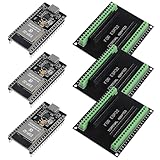
- The esp32s module has 38 pins and has more features than a 30-pin module, narrower width, compatible with breadboard
- ESP32 is a WiFi+Bluetooth chip developed. It is designed to provide access network functionality for embedded products.
- ESP32s development board support Lua program, easy to develop, support of three modes: AP, STA and AP + STA.
- The esp32 breakout board can expand one GPIO pin of esp32 development board to 2, convenient to reuse all pins in smart home DIY projects.
- The breakout board is only fit for 38PIN narrow version ESP32 without mounting holes. Notice: Don't fit with the ESP--32 DevKit V1 version.Please confirm your esp32 board pins width is coincide with the pin width of the breakout board
Today, NOA Labs’ services page groups its offering around design, engineering, prototyping and mass production. The listed work spans industrial and package design; mechanical and electronic engineering; firmware, software, apps, cloud and AI; design for manufacturing (DFM); tooling; compliance support; sourcing; contract manufacturing; quality control; and logistics. Its contact page identifies Alex Murawski as CEO and founder and lists Berlin and Shenzhen. These descriptions establish what the company advertises, not an independent audit of its capacity or results.
The company’s website says it has served more than 10,000 clients and has more than 100 experts. Those are current company-reported figures, not independently verified measures. They should not be confused with the interview’s historical figures: Murawski said NOA Labs had completed more than 600 projects in four years and described a 32-person team in 2016.
How a prototype moves toward production
The interview’s practical value is its account of the work between R&D and a production run. The stages below describe the process Murawski outlined, with standard explanations of what the validation acronyms generally mean. Not every product uses an identical sequence: the necessary tests, approvals and regulatory steps depend on the design, risk, destination markets and manufacturing plan.
Rank #2
- Define requirements and finish R&D. Before production preparation, the product team needs a sufficiently mature design and clear acceptance criteria. Preferences such as color, finish, battery type and charging connector must be explicit rather than left to interpretation.
- Prepare manufacturing information and a golden sample. Murawski said the supply-chain team requested manufacturing files and at least one “golden sample”—a reference unit against which later builds can be compared. The interview does not provide a universal file checklist. Depending on the product, a production package commonly includes items such as schematics, PCB fabrication data, a bill of materials (BOM), mechanical CAD and drawings, assembly instructions, firmware release details, test requirements and packaging specifications.
- Review the design for manufacturing. A DFM review checks whether the design and documentation can be made reliably with the intended process and suppliers. If the design is not ready, it returns to engineering for changes. This can expose issues that a one-off prototype does not reveal, such as difficult assembly, unavailable components or tolerances that are hard to hold at scale.
- Set up the supply chain and agree on the plan. The team identifies suppliers, assesses cost and schedule, and submits a plan for the client’s approval. A BOM is not just a parts list: component availability, approved alternatives, purchasing quantities and substitutions can affect both the product and its economics.
- Prepare tooling and production test equipment. Production may require molds or other tooling, assembly stencils, PCBA test equipment, calibration equipment and fixtures. Their purpose is to make assembly and testing repeatable, not merely to reproduce the appearance of the prototype.
- Build and evaluate EVT and DVT samples. EVT means Engineering Validation Test: a check that the engineering design functions as intended. DVT means Design Validation Test: evaluation of whether the design meets its requirements across its intended use conditions. These are useful stage names, not guarantees that every product follows a fixed industry-wide recipe.
- Complete applicable compliance work. Murawski mentioned samples for certification work such as CE and FCC. Regulatory obligations depend on product type, radio functions, electrical design, battery, destination market and product claims. A reference to CE or FCC in a project plan does not by itself establish compliance in every country or for every requirement.
- Test reliability and environmental performance. Examples Murawski gave included dropping, bending, twisting, heating and freezing a product in a climate chamber. These illustrate possible validation tests; they are not a universal mandatory test suite. The appropriate tests should follow the product’s use, risks and acceptance criteria.
- Run PVT and optimize the line. PVT means Production Validation Test. The production line is established and refined to check whether it can build the product consistently, at the expected quality and with a workable process. Problems may send the team back to engineering, tooling or process setup before volume production.
- Complete FAT and approve the pilot output. FAT means Final Acceptance Test. The client or its representatives review the pilot-production output against agreed criteria before approving the next production step. The exact test plan and sign-off authority should be documented in the project agreement.
- Ramp production and plan delivery. The interview gave 5,000 to 200,000 units as examples for an initial production run, depending on customer requirements. That historical range is not a universal minimum order quantity or current NOA Labs offer. A founder also needs to plan packaging, warehousing, shipping, customer support, warranty handling and the cash required to pay suppliers before customer revenue arrives.
Why a working prototype can still be far from a product
A prototype proves that some version of an idea can work. It may not prove that the design is economical to assemble, that components will remain available, that the enclosure tolerances are repeatable, or that a factory can test each unit quickly and reliably. A production-ready product also needs decisions about thermal behavior, battery safety, wireless performance, packaging, reliability, quality acceptance and post-sale support.
What’s actually slowing this PC down?
Pick the symptom - the matching free tool is one click away.
Murawski estimated in 2016 that the work after prototyping could take two to eight months. That was his historical estimate, not a current schedule promise; complexity, design maturity, tooling, component supply, testing and certification can materially change a program’s duration.
He also gave historical production categories: prototyping as 1–100 units, small production as 100–1,000, and a common first mass-production batch as 1,000–10,000. These were NOA Labs’ descriptions in that interview, not industry standards or present-day MOQs. Likewise, the interview’s sample PCB quote—$8.90 for ten 5×5 cm, two-layer boards and $360.40 for 1,000 boards—was a 2016 price example and should not be treated as a current quote.
Rank #3

- Convenient 3-Pack Set: Includes 2 small and 1 large prototyping boards, allowing you to work on multiple projects at the same time or preserve finished prototypes while starting new ones. Ideal for electronics enthusiasts, educators, and embedded software developers.
- Universal Layout: The boards feature holes with a standard 2.54 mm (100 mil) hole pitch, allowing a wide range of through-hole electronic components to be soldered onto the board and connected using wires or jumpers.
- Easy Connection and Debugging: Includes two pin headers (not soldered) compatible with the Flipper Zero GPIO header. Boards also provide footprints for optional duplicate headers (not included), enabling easy connection of a logic analyzer or oscilloscope during circuit debugging.
- High-Quality FR4 PCB Material: Manufactured from durable FR4 fiberglass for long-term use.
- Flipper Zero, logic analyzer, and oscilloscope are not included.
Why requirements, crowdfunding and wireless hardware complicate the plan
Undocumented requirements become expensive ambiguity
Murawski highlighted seemingly small product decisions: the exact color or Pantone reference, surface finish, whether a battery is replaceable or rechargeable, and the charging connector and power architecture. Those choices can affect materials, tooling, sourcing, testing and certification. A written specification and agreed acceptance criteria reduce the chance that a founder and a factory consider different outcomes “correct.”
Funding is not manufacturing readiness
The interview said NOA Labs sometimes worked with crowdfunding clients before or after campaigns, helping estimate the time and money needed after fundraising. A successful campaign can finance development, but it does not demonstrate that the BOM is stable, tooling is complete, compliance work is done or production yield is acceptable. Founders need to account for supplier lead times, substitutions, packaging and fulfillment, as well as working capital for production and the obligations that begin when units reach customers.
Wireless features reach beyond the circuit board
Murawski said many products the company handled included Bluetooth, Wi-Fi, Zigbee or cellular connectivity, often in compact designs with multilayer PCBs and tight power constraints. Wireless performance depends on more than selecting a radio module: antenna placement, enclosure materials, electromagnetic interference, battery life, firmware and the intended certification markets all interact. A change to the enclosure or board late in development can require renewed testing.
Rank #4

- The ESP32-S3-LCD-1.3 is a low-cost, high-performance MCU board equipped with 240MHz dual-core processor.
- It is compact in size, with onboard 1.3inch 262K color LCD display, Lithium battery recharge manager, 6-axis sensor (3-axis accelerometer and 3-axis gyroscope), RGB LCD, and Wi-Fi / Bluetooth antenna, which makes it easy for you to develop and integrate it into products quickly.
- Built-In ST7789V2 Display Driver Chip And 6-Axis IMU
- SPI Communication
- Supports 90° Hardware Rotation
When a turnkey partner may—and may not—fit
A turnkey provider can be useful when a startup has a promising prototype but lacks manufacturing engineering, supplier management or production test capability. It can also reduce coordination overhead when mechanical, electronic, firmware, app, packaging and logistics work must move together. NOA Labs’ current services page markets coverage across much of this lifecycle.
That breadth is not automatically the right choice. A startup with experienced in-house engineers and operations staff may prefer to retain product architecture and supplier governance while hiring specialists for defined tasks. A contract manufacturer may be a better fit once the design and documentation are mature. A specialist design house can address a technical gap while the founder selects manufacturing partners separately. Regional or domestic manufacturing may matter more than breadth where local-content rules, oversight, resilience or customer requirements dominate.
- Consider building internally when the product’s core advantage depends on continual engineering iteration or deep control of product knowledge.
- Consider a specialist consultancy when the team needs focused expertise but can manage the rest of the supply chain.
- Consider a contract manufacturer when production documentation is complete and the main need is assembly, sourcing, testing or fulfillment.
- Consider a hybrid model when the company wants to retain architecture, firmware, validation and supplier oversight while outsourcing tooling, specialized engineering or assembly.
Turnkey arrangements deserve particular scrutiny for highly regulated or safety-critical products, unclear regulatory classification, very low volumes, or projects requiring complete control of IP and source files. A general product-development partner may not replace a specialist laboratory or domain-specific compliance adviser.
Recommended Free Tools
Best Value

- ⚡ High-Performance Dual-Core MCU: Built with the ESP32-S3 chip featuring dual 32-bit LX7 processors up to 240 MHz. Includes 512 KB TCM SRAM and supports multiple low-power modes—ideal for IoT and embedded systems.
- 📶 Reliable WiFi & Bluetooth 5.0: Integrated 2.4 GHz WiFi (802.11 b/g/n) and Bluetooth 5.0 LE + Mesh for fast, stable, and long-range wireless communication in smart devices and automation projects.
- 🧠 Comprehensive Interface Support: Offers 45 programmable GPIOs with multiple interfaces—SPI, I2C, PWM, ADC, UART, SD/MMC host, and TWAI controller—ensuring flexibility for advanced hardware development.
- 💾 Expanded Memory & High-Speed Data: Supports Octal SPI flash and external 8 MB PSRAM for large data tasks. Features 2 Mbit/s PHY for improved transmission speed and high throughput.
- 🔧 Versatile Network Modes: Supports infrastructure BSS, Station, SoftAP, and Station + SoftAP modes. Perfect for IoT prototypes, robotics, and smart home applications.
Questions to resolve before hiring any development or manufacturing partner
- Ownership: Who owns CAD, PCB layouts, firmware repositories, source code, tooling, test fixtures and production data? How and when are files transferred?
- Supply chain: Which suppliers and subcontractors will be used, and can the client audit the factories or approve alternatives?
- Quality: What inspection, test coverage, corrective-action process and written acceptance criteria apply to each build?
- Change control: Who approves engineering changes, component substitutions and deviations from the golden sample?
- Compliance: Who determines applicable requirements, coordinates testing and maintains technical documentation? Which independent labs are involved?
- Commercial terms: What are the payment milestones, minimum order quantities, tooling charges, cancellation terms and assumptions behind the quoted schedule?
- Continuity: What happens if a component becomes unavailable, a test fails, production yields fall short or a supplier misses a delivery date?
- After launch: Who handles warranty issues, returns, repairs, product changes and customer support?
- Responsibility: How are product-liability obligations allocated, and what insurance and legal review are appropriate for the product and markets?
What the interview tells—and does not tell—readers today
The interview remains useful as a founder’s account of the transition from prototype to production, but it dates to June 22, 2016. Its project counts, headcount, production ranges, timeline and prices are historical statements, not current operating data. Murawski’s statements about prior experience and named projects should be read as interview claims rather than independent verification.
NOA Labs’ present website adds a current self-description: the company says it was founded in 2012, works from Berlin and Shenzhen, and offers services across engineering, software, compliance, manufacturing and logistics. Its products page says it displays a selection of more than 100 products and refers to more than 1,000 products worked on over the previous decade. Such figures and portfolio descriptions are company claims; public examples alone do not establish the scope of the company’s contribution to each product. The 2016 interview also said many customer projects were confidential, which limits what public case studies can show.
For a founder, the lasting lesson is less about any one provider than about the work a prototype leaves undone: turn assumptions into requirements, test the design against intended use, prove the production process, and agree in writing on ownership, quality and acceptance before committing to a volume run.
Quick Recap
Product prices and availability are accurate as of the date/time indicated and are subject to change. Any price and availability information displayed on Amazon at the time of purchase will apply.




