For interstate goods movement in India, an e-invoice and an e-way bill serve different GST purposes—and a shipment may need both. E-invoicing applies to specified documents issued by covered taxpayers; an e-way bill applies to goods movements covered by the rules. Check the supplier and invoice for e-invoice applicability, then check the consignment and movement separately for an e-way bill.
What is the difference between an e-invoice and an e-way bill?
An e-invoice is an authentication and reporting process for specified GST documents. A covered supplier reports invoice details to an Invoice Registration Portal (IRP), which returns an Invoice Reference Number (IRN) and a signed QR code. An e-way bill is the electronic movement document required in cases covered by GST rules; it records shipment and transport particulars.
| Question | E-invoice | E-way bill |
|---|---|---|
| What does it do? | Registers specified GST document details with an IRP and returns an IRN and signed QR code. | Documents a prescribed movement of goods. |
| What generally triggers it? | A covered taxpayer and a covered invoice or transaction, subject to scope and exclusions. | A covered goods consignment and movement; the general value threshold is above ₹50,000, subject to exceptions and exemptions. |
| Who generally acts? | The supplier reports the document, subject to specified arrangements. | The registered person or transporter causing the movement generates the bill; roles depend on the circumstances. |
| What should you verify? | Turnover history, document and transaction scope, and entity exclusions. | Value, goods exemptions, route, distance, validity, and transport details. |
These are separate compliance checks, not alternatives. If a supplier must e-invoice a covered transaction and the associated movement is subject to the e-way bill rules, both requirements apply. Interstate travel alone does not establish e-invoice eligibility, and an e-invoice does not automatically serve as an e-way bill.
When does e-invoicing apply?
GSTN’s e-invoice overview states that the general notified turnover threshold is aggregate turnover of ₹5 crore or more in any preceding financial year from FY 2017–18 onward. The threshold took effect on 1 August 2023. The calculation is not limited to the current year or to interstate sales; whether e-invoicing is required also depends on the taxpayer, document, transaction, and applicable exclusions. See the GSTN e-Invoice Overview and the official e-invoicing mandate timeline.
Quick wins for a faster PC:
Fix the driver behind crashes, sound loss and screen glitchesFind Drivers →Repair Windows errors before they cause bigger problemsFix Now →#1 Best Overall

- Two-Part Carbonless Invoice Book: Each invoice book has 50 sets of invoices, each with a white/light yellow section, with the yellow section retained in the invoice book to maintain detailed records.
- Consecutively Numbered: Enlarged red 6-digit numbers in the upper right corner of each invoice receipt book help you quickly navigate through your orders.
- Wraparound Divider Flap: A thick folded cardboard divider is integrated into the back of each invoice book for use between each two-part sales order to prevent the written content from rubbing off on subsequent copies of the invoice, resulting in wasted invoices.
- 2 Packs/50 Sets (100 Sets Total): Each invoice book provides 50 sequentially numbered carbonless sets of 2 invoice books for long-term use.
- Customizable Space: Each invoice book for small business has space at the top to add a company seal or sticker.
Businesses continue to prepare invoices in their accounting, billing, or ERP system and report covered documents through an authorized IRP. The IRP returns the IRN and signed QR code; an ordinary PDF invoice or an invoice newly created by the portal is not, by itself, the defined e-invoicing process. GSTN’s overview says reporting and IRN generation are free on the listed IRPs.
Portal enablement is not the same as a legal determination: GSTN notes that being enabled does not by itself mean a taxpayer is obligated to e-invoice. Equally, an enablement problem is not proof that the taxpayer is outside the mandate. Verify the relevant GSTIN, entity, current notification, and document coverage. The IRP FAQ describes coverage of specified B2B, deemed-supply, export, and related documents for notified taxpayers, as well as exclusions for certain entity and transaction classes. Exclusions depend on the legal category, so check the current notification rather than assuming an exemption.
Rank #2

- PROFESSIONAL FORMAT: Comprehensive job invoice template with dedicated sections for materials, labor, and miscellaneous charges for detailed work documentation
- CARBONLESS DESIGN: 50 sets of 2-part carbonless receipt book ensure clear copies for both business and customer records
- STANDARD SIZE: Measures 7.5 x 11 inches , perfectly sized for standard filing systems and document storage
- PRACTICAL FEATURES: Includes perforated lines for easy separation and a sturdy backing board for writing support
- DETAILED SECTIONS: Contains fields for job location, customer information, work description, and itemized pricing calculations
When is an e-way bill required?
The E-Way Bill System FAQ describes the general case as a document carried by the person in charge of a conveyance carrying a consignment valued above ₹50,000, under Section 68 of the GST Act and Rule 138. The registered person or transporter causing the movement generates it before movement. The rules can cover movement for a supply, inward supply—including from an unregistered person—or reasons other than supply, subject to applicable provisions and exceptions. Consult the E-Way Bill System FAQ for the general rule and qualifications.
₹50,000 is not a blanket exemption for every lower-value movement. The FAQ identifies handicraft and job-work circumstances in which an e-way bill may be required below that amount and points to exemptions under rules and notifications. It says consignment value includes applicable GST and cess and excludes freight charged by the transporter, with qualifications for mixed taxable and exempt supplies. Check the applicable valuation rule and any exemption for the particular goods and movement before dispatch.
What’s actually slowing this PC down?
Pick the symptom - the matching free tool is one click away.
Rank #3

- QUALITY INVOICES: Adams Order books provide a professional invoice or customer receipt; a great way to create and maintain a professional image for small businesses and service providers
- 50 TWO-PART CARBONLESS FORMS: Customers get the perforated white top copy; retain the canary and pink copies for your records
- WRAP-AROUND COVER: Fold the back cover between sets to keep invoices neat and legible
- ROOM FOR CUSTOMIZATION: A blank space at top leaves room for your company stamp; a big savings over custom-printed forms
- CONSECUTIVELY NUMBERED: Large 6-digit numbers in the upper right hand corner help you thumb through orders quickly
How the two workflows work together
For a covered invoice, the supplier reports invoice data to an IRP to receive the IRN and signed QR code. E-way bill generation may be part of the same workflow or handled separately through the e-way bill system, depending on the transaction and system setup. The fact that systems can connect the workflows does not merge the legal checks.
GSTN’s advisory dated 17 June 2026 addresses e-way bill generation together with an IRN, generation using an IRN, bill-to/ship-to transactions, and voluntary closure. It says Ship-to GSTIN is conditionally mandatory in specified flows when ship-to details and e-way bill generation are provided; where the consignee is unregistered, the advisory directs users to enter “URP” in the Ship-to GSTIN field. Businesses using an API or ERP integration should check the exact workflow and fields in the GSTN advisory.
Rank #4

- PACKAGE INCLUDES - Our invoice book per pack has 50 sets sheets, Total of 100 sheets. red code printed on each page with consecutive numbers
- Material - Receipt book is excellent quality carbonless paper is used in their production, tears off easily along the perforation.
- A5 Size - Sales invoice book size of 5.5" x 8.5", and forms are 2 part carbonless white/yellow sets on a sturdy chipboard backing
- WIDE APPLICATION - Sales reciepts/invoice book for small business is ideal for restaurants, food trucks, vendors, service provider, photographers, caterers, florists, bakeries, cafes, boutiques and salons
How long is an e-way bill valid?
Under the E-Way Bill System FAQ guidance accessed on 7 October 2026, validity for regular conveyances is one day for every 200 km or part thereof; for over-dimensional cargo it is one day for every 20 km or part thereof. The FAQ says validity begins from the first Part B entry. A current validity calculation and any applicable movement-specific conditions should be checked before dispatch.
The FAQ also describes limited exceptions to vehicle-detail requirements for certain movements of up to 50 km, and for a same-state movement of up to 20 km to a weighbridge subject to a delivery challan. These are conditional exceptions, not general rules for all short journeys. See the updated E-Way Bill System FAQ guidance.
Best Value
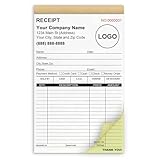
- Custom Receipt Book for Business: Custom receipt book designed for small business use, personalize with your company name, logo, address and contact details.Create a professional invoice book
- Receipt Book with Carbon Copies: This receipt book with carbon copies uses premium carbonless paper, allowing you to write once and get clean duplicate or triplicate copies. No messy carbon sheets, perfect for daily business operations
- Multiple Sizes & Sequential Numbering: Each set includes 2 books with 50 sets per book (100 sets total), all sequentially numbered for organized record keeping. Ideal invoice book for small business managing receipts, orders, and invoices efficiently
- Professional Design & Standard Sizes: Standard 5.5" x 8.5" size fits perfectly in hand or workspace. Strong binding with sturdy backing ensures durability, making this custom invoice book reliable for shops, contractors, and service professionals
- Versatile Use: Choose from two-part (white and yellow) or three-part (white, yellow, and pink) forms. Ideal for invoices, sales orders, purchase orders, work orders, and quotes. Perfect for small business owners, contractors, freelancers, retail stores, and restaurants. It also makes a thoughtful and practical gift for the entrepreneurs in your life
Pre-dispatch checklist for interstate goods
- Check the supplier. Identify the relevant GSTIN and PAN-based aggregate turnover history, including preceding financial years from FY 2017–18 onward. Compare it with the current e-invoice mandate and verify the document and transaction are covered.
- Check exclusions. Confirm whether an exception applies to the supplier or transaction. Do not treat portal enablement or a portal issue as a legal ruling.
- Check the consignment. Determine value using the applicable GST definition, identify the goods, and check current e-way bill exemptions and special cases.
- Check the movement. Confirm source, destination, movement type, transporter, vehicle or mode details, and route distance. Make sure the e-way bill validity will cover the trip.
- Match the records. Check that invoice or delivery-challan information agrees with transporter and vehicle details entered for the shipment.
- Check any integration. If e-invoice and e-way bill generation are linked, verify the current IRP and e-way bill fields and instructions, especially for bill-to/ship-to data.
- Confirm current rules before dispatch. Check applicable notifications and live portal instructions for the shipment date; legal and system requirements can change.
Can an interstate shipment below ₹50,000 move without an e-way bill?
The general e-way bill threshold is a consignment value above ₹50,000, but the threshold alone does not settle every case. Some circumstances, including specified handicraft and job-work movements, may require a bill below that value, while rules and notifications also provide exemptions. Check the goods, movement, and applicable exception for the specific consignment.
Quick Recap
Product prices and availability are accurate as of the date/time indicated and are subject to change. Any price and availability information displayed on Amazon at the time of purchase will apply.




