Crashes, No Sound, or Screen Glitches?
Random freezes, missing sound and display glitches usually trace back to one bad driver. Find and replace yours safely.Free scan · under a minutePC Slower Than It Used to Be?
A free scan shows the junk files, broken settings and background clutter dragging Windows down - then fixes them in one click.Free scan · Windows 10 & 11In November 2024, the U.S. Department of Justice and a group of states proposed a breakup-style remedy for Google’s search monopoly case: a forced sale of Chrome and possible divestiture of Android. That was a proposal, not an order. On December 5, 2025, the court entered a final judgment that did not require Google to sell either product. Instead, it imposed restrictions on distribution deals and required certain data access and search and advertising syndication. As of August 18, 2026, compliance oversight and appeals remain ongoing.
What case was this?
The proposal came in the U.S. search-monopoly case brought by the Justice Department and state attorneys general, not the separate lawsuit over Google’s digital-advertising technology. In August 2024, the court found Google liable under Section 2 of the Sherman Act for unlawfully maintaining monopolies in general search services and general search text advertising. The final judgment is available in the court document.

The separate ad-tech case concerns the technology used by publishers and advertisers to buy and sell open-web advertising. It has different allegations and remedies; it should not be conflated with the search case. The Justice Department describes that separate proceeding here.
What did the government propose in November 2024?
The DOJ and participating states’ initial proposed final judgment sought to change how Google controlled access to search, not simply to penalize the company for being large. Its proposed remedies included structural changes, contract restrictions, data access, and oversight. The proposal itself is available from the DOJ.
Recommended Free Tools
#1 Best Overall

- Attention-grabbing design meets the latest evolution of the Google Pixel Camera on the new Google Pixel 11 Pro XL; Gemini Intelligence helps manage details so you can live in the moment[1]; and the phone is available in two sizes
- Unlocked Android phone gives you the flexibility to change carriers and choose your own data plan: Works with Google Fi, Verizon, T-Mobile, AT&T, and other major carriers[2]
- Stay informed without looking at your screen: When your phone is face down, Pixel HiLight gently alerts you with subtle glowing lights when your favorite contacts are calling or you’re talking with Gemini; exclusive to Google Pixel 11 Pro phones
- Magic Capture catches the moment as you live it: With just one tap, Pixel 11 Pro captures video and photos, and automatically edits, crops, and unblurs a curated collection, ready to share – and you get the memory of how it felt to be in the moment
- Two new cameras for more brilliant photos: A larger telephoto sensor captures 30% more light for clear, beautiful photos and videos, even in the dark[3]; Pixel’s longest zoom ever helps you capture details from impressive distances[4]
Sell Chrome, with Android divestiture as a possible next step
The government proposed requiring Google to divest Chrome, arguing that the browser is a major route through which people reach search. It also proposed that Google be barred from owning or investing in a browser or related query-based AI product.
Android was treated differently. The proposal offered the court a choice: require Google to divest Android, or first impose behavioral restrictions intended to stop Google from favoring its own search and advertising products through Android. Structural relief could follow if those restrictions proved ineffective. The Chrome-sale proposal and the Android alternative were not equivalent demands.
Restrict default-search payments and distribution deals
The government sought to stop arrangements that paid device makers, browser companies, and other partners for preferential placement or for making Google the default in ways that excluded rivals. The reporting on the November proposal highlighted agreements involving partners such as Apple, Samsung, and Mozilla; the proposal’s stated aim was to loosen Google’s grip on distribution channels. The contemporary report is available here.
Open access to data, results, and advertising tools
The proposal would have required Google to provide qualified rivals with access to portions of its search index, certain user-side and advertising data, and search-result syndication. Syndication could let another search service use Google results while it built its own index and ranking systems. The government also sought advertising reforms to reduce switching costs and give advertisers more information and flexibility in Google’s search-text-ad ecosystem.
What’s actually slowing this PC down?
Pick the symptom - the matching free tool is one click away.
Address AI and monitor compliance
The proposal sought to prevent Google from reproducing its search-distribution advantages through query-based AI products or acquisitions and investments in emerging competitors. It also proposed a technical committee to oversee compliance with remedies spanning search, advertising, data, and distribution.
Rank #2

- Google Pixel 10a is a durable, everyday phone with more[1]; snap brilliant photography on a simple, powerful camera, get 30+ hours out of a full charge[2], and do more with helpful AI like Gemini[3]
- Unlocked Android phone gives you the flexibility to change carriers and choose your own data plan; it works with Google Fi, Verizon, T-Mobile, AT&T, and other major carriers
- Pixel 10a is sleek and durable, with a super smooth finish, scratch-resistant Corning Gorilla Glass 7i display, and IP68 water and dust protection[4]
- The Actua display with 3,000-nit peak brightness shows up clear as day, even in direct sunlight[5]
- Plan, create, and get more done with help from Gemini, your built-in AI assistant[3]; have it screen spam calls while you focus[6]; chat with Gemini to brainstorm your meal plan[7], or bring your ideas to life with Nano Banana[8]
Why did the government seek these remedies?
The government’s case was that specific conduct helped maintain Google’s monopoly, rather than that size alone made the company unlawful. It argued that default-search agreements and payments, Google’s control of major access points such as Chrome and Android, and incentives or restrictions affecting partners made it harder for rivals to reach users. It also pointed to Google’s accumulated search data and infrastructure as advantages that competitors would struggle to reproduce.
That theory explains why the proposed remedy reached beyond a ban on particular contracts. The government argued that if Google retained control of important gateways and advantages, rivals might still be unable to compete even after one set of agreements changed. The court’s liability finding concerned unlawful maintenance of monopolies in general search and search text advertising; it was not a finding that Google monopolized the entire internet.
What did the court actually order?
The final judgment, entered December 5, 2025, did not order Google to sell Chrome or Android. It instead adopted a package of conduct, data, syndication, and compliance measures. The central difference is between structural relief proposed in 2024 and the behavioral and infrastructure remedies in the final judgment.
Do these 3 things before closing this tab:
1Fix the driver behind crashes, sound loss and screen glitches2Repair Windows errors before they cause bigger problems3Scan for outdated or missing drivers - takes under a minute| Issue | November 2024 proposal | December 2025 final judgment |
|---|---|---|
| Chrome | Mandatory divestiture proposed. | No sale ordered. |
| Android | Divestiture or strict behavioral relief proposed. | No sale ordered; distribution restrictions imposed. |
| Defaults and distribution | Broad limits on exclusionary payments and arrangements. | Anti-tying and contract restrictions, including limits on certain agreements and payment conditions. |
| Search data | Access to index and specified user-side and advertising data proposed. | Defined index and user-side data disclosures for qualified competitors, subject to safeguards. |
| Search results | Search-result syndication proposed. | Five-year syndication offer required, with terms and usage limits. |
| Search advertising | Switching-cost and information reforms proposed. | Five-year search-text-ad syndication and reporting on certain auction changes. |
| AI | Restrictions on ownership, investment, and circumvention proposed. | Google generative-AI products included in distribution and default restrictions. |
| Oversight | Technical committee proposed. | Technical-committee compliance process established. |
Distribution, tying, and default arrangements
The judgment bars Google from conditioning Google Play licensing on distributing, preloading, displaying, using, or licensing Google Search. It also restricts tying Play or other Google applications to Chrome, Assistant, or Google generative-AI products, and bars certain conditions on payments or licenses that would prevent device makers or carriers from distributing rival search, browser, or generative-AI products.
It also limits tying payment for one Google access point to placement of another Google product. Certain distribution agreements may not last more than one year. For arrangements involving Apple or browser developers, permitted default deals must expire within one year and expressly allow promotion of rival search or AI products. The precise restrictions appear in pages 2–5 of the judgment.
Rank #3

- Google Pixel 10 Pro is the ultimate Pixel experience, featuring advanced AI with Gemini, unbelievable camera quality, impeccable design in two sizes, and the next-gen Google Tensor G5 chip[1]
- Unlocked Android phone gives you the flexibility to change carriers and choose your own data plan[2]; it works - Google Fi, Verizon, T-Mobile, AT&T, and other major carriers
- Get a head start on syncing your data before it even arrives: After you purchase your new Pixel, look for an email that explains how to transfer your photos, videos, passwords, and more in just a few quick steps[11]
- Pixel’s pro camera system makes everything look amazing, even in low light; capture more of the scene with advanced Google AI models, and bring out incredible details with 100x Pro Res Zoom, stunning 50 MP images, and super steady videos in 8K[10]
- Pixel 10 Pro is built with durable aluminum and Corning Gorilla Glass Victus 2 for scratch and drop resistance; the 6.3-inch Super Actua display with 3,300-nit peak brightness is easy on the eyes, even in direct sunlight[3,13,18]
Index and user-side data for qualified rivals
Google must make specified portions of its web-search index available to qualified competitors at marginal cost. The covered information includes items such as document identifiers, URL mappings, crawl dates, spam scores, and device-type flags. The judgment also requires access to specified user-side data subject to privacy and security safeguards.
This is not an order to hand over everything that makes Google Search work. The judgment does not require disclosure of Google’s algorithms, ranking signals, trade secrets, or post-trained large language models. The data provisions are detailed on pages 5–7 of the final judgment.
Search-result and search-ad syndication
For five years, Google must offer qualified competitors a search-syndication license with real-time API access to ranked organic web results and specified features and content, including certain query rewriting, Local, Maps, Video, Images, and Knowledge Panel material covered by existing syndication products. Use is capped in the first year at 40% of a qualified competitor’s annual U.S. queries; the cap declines over the five-year period to encourage rivals to build independent capacity.
Google must also offer a five-year search-text-ad syndication license on functionally equivalent performance and financial terms no worse than those it offers other users of its search-ad syndication products. These syndication rules apply to covered U.S.-originating human-user queries; they do not create a worldwide remedy. The detailed provisions are on pages 8–13 of the judgment.
Why is the final judgment not a Google breakup?
A structural breakup would separate ownership of products such as Chrome or Android from Google, potentially changing incentives as well as contractual behavior. The final judgment preserves Google’s ownership of those products and instead regulates how the company may use distribution, defaults, data, and syndication.
That approach avoids an immediate corporate separation, but it makes the remedy more dependent on detailed rules and enforcement. Chrome, Android, Google Play, Search, identity, security, updates, advertising, and AI services are commercially and technically connected. A sale would raise questions about operating resources, security, updates, compatibility, and continued dependence on Google services. Conduct remedies preserve existing products, but disputes can arise over eligibility, data scope, privacy protections, pricing, and technical performance. The judgment establishes what Google must offer or refrain from doing; it does not, by itself, establish that competitors have already received access or that the remedies will produce a particular market outcome.
What could change for Google’s partners and rivals?
Device makers, carriers, and browser companies
Partners may have more contractual room to preload or promote rival search, browser, and AI products without risking Google Play licensing or certain payments. But a one-year limit on particular arrangements does not guarantee that a partner will switch its default, and a contract can be formally nonexclusive while still being commercially difficult for a rival to match. Google may continue to distribute its own products so long as it does not use prohibited conditions or exclusionary arrangements.
Search competitors
Index and user-side data access, together with temporary result syndication, could lower the cost and time required to offer a search service. Syndicated results may help a rival launch while building independent systems, but they do not automatically supply an independent ranking system, consumer trust, distribution, protection from spam, or a durable business model. A competitor that relies heavily on Google results may remain dependent on the infrastructure it is trying to challenge.
Access is limited to qualified competitors and subject to privacy, security, licensing, and anti-resale restrictions. The syndication cap and five-year term are intended to make the service a bridge rather than a permanent substitute for independent capacity.
Advertisers
Search-text-ad syndication may give qualified competitors another way to offer search advertising, while reporting requirements address certain auction changes. It does not automatically create an independent advertising marketplace or remove the need for advertisers to evaluate how a rival’s audience, measurement, and products fit their needs.
Best Value
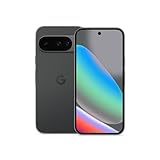
- Google Pixel 10 is the everyday phone unlike anything else; it has Google Tensor G5, Pixel’s most powerful chip, an incredible camera, and advanced AI - Gemini built in[1]
- Unlocked Android phone gives you the flexibility to change carriers and choose your own data plan[2]; it works with Google Fi, Verizon, T-Mobile, AT&T, and other major carriers
- Unlocked Android phone gives you the flexibility to change carriers and choose your own data plan[2]; it works - Google Fi, Verizon, T-Mobile, AT&T, and other major carriers
- The upgraded triple rear camera system has a new 5x telephoto lens - up to 20x Super Res Zoom for stunning detail from far away; Night Sight takes crisp, clear photos in low-light settings; and Camera Coach helps you snap your best pics[3]
- Pixel 10 is designed - scratch-resistant Corning Gorilla Glass Victus 2 and has an IP68 rating for water and dust protection[21]; plus, the Actua display - 3,000-nit peak brightness is easy on the eyes, even in direct sunlight[4]
What might ordinary users notice?
There is no automatic browser-choice screen or requirement that users change their defaults. The judgment does not separate Google Search, Chrome, Android, and Google Play into different companies, and it does not guarantee an immediate change to any device or browser interface.
Over time, users could encounter more meaningful choices if device makers and browser companies promote alternatives and if rivals turn access to data or syndicated results into useful products. Those are possible effects, not established outcomes: they depend on implementation, enforcement, competitor investment, and whether users adopt alternatives.
What is the case status as of August 18, 2026?
The final judgment remains under compliance supervision, and appellate activity is ongoing. The DOJ case page lists joint status reports dated July 22, July 30, August 6, and August 14, 2026, as well as a technical-committee process. The government filed a response and opening brief on cross-appeal on July 28, 2026. The case docket provides the listed filings, and the government’s July 28 brief is available separately.
The DOJ’s summary of the remedies says the judgment bars exclusive distribution contracts involving Google Search, Chrome, Google Assistant, and Gemini, and requires specified data disclosures and search and search-text-ad syndication. That summary is available here. The listed filings show an active process; they do not establish that every remedy has been fully implemented or that appeals are resolved.
Quick wins for a faster PC:
Repair Windows errors before they cause bigger problemsFix Now →Scan for outdated or missing drivers - takes under a minuteDriver Scan →Quick Recap
Product prices and availability are accurate as of the date/time indicated and are subject to change. Any price and availability information displayed on Amazon at the time of purchase will apply.




