Choose individual stocks if you want to select and monitor specific companies and are prepared to build your own portfolio. Choose a stock mutual fund if you prefer a pooled portfolio managed to a stated strategy. A fund can spread company-specific exposure, but its label does not guarantee broad diversification—and it still carries stock-market risk. The right fit depends on your goals, risk tolerance, account, costs and willingness to do the research.
What you own—and who makes the investment decisions
A stock represents an ownership interest in one company. When you buy individual stocks, you choose which companies to hold and decide when to trade them. A mutual fund pools investors’ money and gives each shareholder an interest in the fund’s portfolio; a stock mutual fund invests in stocks according to its stated objective. The portfolio may be managed by a professional adviser or designed to track an index. The SEC’s stock FAQs and mutual fund guidance explain these structures.


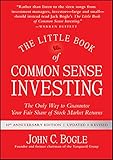
With individual stocks, company research and portfolio maintenance largely fall to you, particularly when investing through a discount broker. With a fund, the portfolio is managed within its mandate, but you still have to decide whether that fund’s objective, holdings, risks and costs suit you.
Compare the trade-offs that matter
| Consideration | Individual stocks | Diversified stock mutual fund |
|---|---|---|
| Ownership | Direct interests in the companies you select. | An interest in a pooled portfolio; holdings depend on the fund’s objective. |
| Diversification | You choose and maintain the number and mix of holdings. | May spread exposure across companies, but breadth and concentration vary. |
| Control | You select and trade each position. | The fund’s adviser or index strategy determines holdings within the mandate. |
| Research and upkeep | You research companies and monitor your positions. | You research the fund; its portfolio is managed under its strategy. |
| Costs | Plan, brokerage and transaction fees may apply. | Expense ratio and possibly sales loads, redemption, exchange, account, purchase or intermediary fees. |
| Risk and results | Depend on the companies you hold and their risks. | Depend on the fund’s holdings, objective and strategy; stock funds remain exposed to market risk. |
| Trading and price | Execution and price depend on the market or direct-plan route. | Shares generally transact at the next calculated net asset value (NAV). |
| Taxes | Depend on the holdings, transactions and account circumstances. | Taxable-account holders may owe tax on capital-gains distributions; account type matters. |
For fund pricing, costs, diversification and account-tax distinctions, see the SEC’s April 2024 comparison bulletin. These are structural differences, not a promise that either choice will produce better returns.
Free tools Windows power users keep installed
One-click scans. No signup required.
#1 Best Overall
Check what “diversified” means for a particular fund
Diversification is a property of the actual portfolio, not a guarantee implied by a fund’s name. A fund may hold many companies, focus on a narrow sector or have a small number of holdings. Examine its strategy and current holdings, including how much is concentrated in its largest positions and sectors. Spreading investments can reduce reliance on any one company, but it cannot eliminate broad stock-market losses or guarantee a positive return. The SEC warns that mutual funds vary in diversification in its fund comparison bulletin.
Distinguish index funds from active funds
A stock mutual fund’s strategy affects what it holds and how decisions are made. An index fund seeks to track an index, either by holding all its securities or by sampling them. An active fund relies on a manager’s security selection to pursue its stated objective. Neither approach removes investment risk.
- Index funds: Passive management can lower costs, but does not guarantee that a particular fund is cheaper. Index funds face the risks of their underlying securities and can underperform their index because of expenses, trading costs or tracking error.
- Active funds: The manager chooses securities under the fund’s objective, so results depend in part on those decisions. Review the strategy and risks rather than assuming active management will outperform.
The SEC describes these approaches and their limitations in its mutual fund guidance and index-fund bulletin.
Independent reader supportYour contribution helps us test, update, and keep practical guides available for everyone.Compare total costs, not just a headline fee
A fund’s expense ratio expresses its annual operating expenses as a percentage of average net assets. It is only one possible cost. Depending on the fund, share class and purchase channel, investors may also face sales loads, redemption or exchange fees, account or purchase fees, and charges from a broker or other intermediary that are outside the fund’s fee table. Individual-stock investors may have plan, brokerage or transaction fees. A fair comparison uses the specific fund share class, account and expected transaction pattern—not a general assumption that stocks or funds are always cheaper.
PC Slower Than It Used to Be?
A free scan shows the junk files, broken settings and background clutter dragging Windows down - then fixes them in one click.Free scan · Windows 10 & 11Crashes, No Sound, or Screen Glitches?
Random freezes, missing sound and display glitches usually trace back to one bad driver. Find and replace yours safely.Free scan · under a minuteThe SEC’s July 23, 2025 fee bulletin explains where mutual funds disclose operating expenses and shareholder fees. Compare the current prospectus fee table and any broker or adviser charges. Lower costs weigh less on returns, all else equal, but do not establish that a fund will outperform another investment.
Quick Recap
Use this decision process
- Decide how much control and work you want. If you want to choose and follow individual companies, direct stocks provide that control but put research and portfolio upkeep largely on you. If you prefer delegated selection, look for a fund whose mandate fits your aims.
- Set the diversification you want, then inspect holdings. Check the fund’s portfolio, position weights and sector exposure; do not infer breadth from its name alone. If buying stocks directly, decide how you will build and maintain your desired mix.
- Compare complete costs. Review the fund’s current prospectus fee table for its share class, then account for intermediary charges. Compare those costs with the applicable plan, brokerage and transaction fees for stocks. FINRA’s Fund Analyzer can help compare funds.
- Evaluate the objective and risks. For a fund, check its prospectus, benchmark, risks and whether it is index-based or active. For stocks, assess the risks of the companies you would own. Historical performance can describe past volatility or stability, but does not predict future returns or settle which option is best.
- Put the choice in account context. Tax treatment depends on the investment, transactions and account. The SEC notes that mutual fund investors in taxable accounts generally may owe tax on capital-gains distributions. Its comparison of mutual funds and ETFs says an ETF may have fewer such distributions because of its structure, while the cited bulletin says there is no mutual-fund-versus-ETF tax difference in a tax-advantaged account such as a 401(k) or IRA. That comparison does not establish a universal tax ranking between individual stocks and all mutual funds. Check current tax rules and the documents for your specific investment and account.
Documents to review before investing
- For a mutual fund: Read the prospectus for its objective, strategy, risks and full fee table, and review the latest shareholder report and holdings. The SEC’s mutual fund guide explains these documents.
- For a company: Review its filings and other available company information. The SEC’s stock FAQs explain how investors can use SEC EDGAR filings.
Product prices and availability are accurate as of the date/time indicated and are subject to change. Any price and availability information displayed on Amazon at the time of purchase will apply.




