The Tool Desk
Outbyte PC Repair FREEClear out junk files and repair common Windows errorsFree Scan →Outbyte Driver Updater FREEFix the driver behind crashes, sound loss and screen glitchesFind Drivers →No: the 2024 research did not announce a new $5.7 trillion iron ore deposit. It directly dated major, already known deposits in Western Australia’s Hamersley Province and found that their formation occurred much later than previously thought. The economic implication is potential guidance for future exploration—not a newly measured resource, a reserve ready to mine, or a forecast of global market change.
What did the scientists actually find?
The peer-reviewed 2024 study, A billion-year shift in the formation of Earth’s largest ore deposits, used in-situ iron-oxide U–Pb geochronology to date giant hematite deposits hosted in banded iron formations in the Hamersley Province, part of Western Australia’s Pilbara Craton.

The study places major ore formation between 1.4 and 1.1 billion years ago. Earlier age estimates had put formation at approximately 2.2–2.0 billion years ago. The result is a substantial revision to the timeline for deposits geologists already knew about; it is not the announcement of a newly discovered standalone deposit. Curtin University’s July 23, 2024 summary likewise describes a dating study.
Why could the revised age matter for exploration?
Curtin describes banded iron formations as ancient underwater layers of iron-rich rock. The study links the formation of the Hamersley ores to large-scale tectonic activity and cycles of supercontinent breakup and assembly. Establishing when ore formed can help geologists refine models of the conditions associated with major deposits.
#1 Best Overall

- Hematite sample approximately 1" (3cm) in size
- Ideal for students learning about mineral streak tests - hematite's distinct red streak is unlike any other
- Perfect size for use in classroom identification labs and exercises, correlates well to Next Generation Science Standards Evidence Statements
- Good visual aid for other iron-bearing rocks and minerals
- Specimen comes in clear labeled and barcoded bag for ideal storage
That may help researchers identify promising places to investigate in the future. It does not demonstrate that another deposit exists, establish its size or quality, or show that any future find could be mined profitably. The lead author, Dr Liam Courtney-Davies, said the link “improves our ability to predict where we should explore in the future” in Curtin’s July 23, 2024 release.
Where did the $5.7 trillion and 55-billion-tonne claims come from?
The $5.7 trillion valuation and a 55-billion-tonne claim appear in secondary coverage, including Geoengineer’s report. Neither figure is established by the cited peer-reviewed paper or Curtin University’s summary as the independently estimated value or resource of a newly discovered deposit. The underlying study dates known deposits; it does not price them or report a new 55-billion-tonne discovery.
Rank #2
A geological deposit is also not automatically an economically recoverable reserve. Establishing commercial value would require evidence about resource classification, ore grade, recoverable quantity, mining costs, infrastructure, environmental approvals, production timing and market demand. The cited study does not resolve those factors, so the headline valuation cannot be treated as a reliable measure of wealth or future supply.
Independent reader supportYour contribution helps us test, update, and keep practical guides available for everyone.What does it mean for the global economy?
On the evidence available, the finding is a geological update with a possible long-term exploration benefit. It does not establish that global iron ore supply will rise, that prices will fall, or that the deposits will change economic output. Those outcomes would depend on discoveries and development decisions that the study neither reports nor predicts.
Rank #3

- HEMATITE | Hematite is made up of iron and oxygen, giving it a distinct red, earthy color. Although hematite can form in a variety of appearances, this mineral is instantly recognized by the reddish brown streak it leaves behind when powdered
- GREAT FOR GEOLOGY CLASSROOMS | Ideal for identification & classification exercises. Ideal for learning about mineral streak tests and provides a great visual aid for iron bearing rocks & minerals
- GEOLOGIST SELECTED | Each specimen is selected and hand processed by an actual geologist, ensuring each sample exhibits defining features
- LOCALLY PROCESSED | Our rock and mineral samples are sourced from a variety of locations around the world and are processed in Victor, NY
- INDIVIDUALLY PACKAGED & LABELED | Each specimen sample is packaged in a transparent bag, and is labeled & barcoded for easy identification
Curtin’s 2024 release stated that iron ore was Western Australia’s largest export earner, at $131 billion in the last financial year referenced by the release. That is a historical, state-level sector figure—not the value of the Hamersley deposits and not a current estimate.
Quick Recap
Best Value
- 1.0
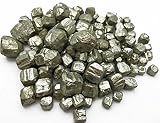
- Multiple pieces similar in size and quality to those pictured above
- Pieces measure approximately 1/4 to 1/2 inches
- Place of origin: China
Rank #4

- Stone Types: Pyrite
How to read the headline claims
- “Scientists just discovered”: misleading for this study; it dates major deposits already known in the Hamersley Province.
- “Biggest deposit ever”: the study concerns some of the world’s largest ore deposits, but it does not announce a new deposit.
- “Worth $5.7 trillion”: not substantiated as a valuation by the primary paper or Curtin’s summary.
- “Means for the global economy”: the demonstrated result is a revised geological timeline; any future economic effect remains uncertain.
Product prices and availability are accurate as of the date/time indicated and are subject to change. Any price and availability information displayed on Amazon at the time of purchase will apply.




