Do these 3 things before closing this tab:
1Repair Windows errors before they cause bigger problems2Scan for outdated or missing drivers - takes under a minute3Clear out junk files and repair common Windows errorsEric Schmidt reportedly took a controlling stake in Relativity Space and became its CEO, and his reported response to a suggestion that he was interested in orbital data centers supports that interpretation. But that is not the same as a publicly announced, funded project: Relativity has not disclosed a data-center design, customer, launch schedule, or financing plan. Its documented business remains rocket development and launch services.
What happened to Relativity Space?
The word “bought” compresses several reported developments. Bloomberg reported on January 9, 2025, that Schmidt had made a significant investment in Relativity and had backed the company since 2024; the report did not state the amount or precise ownership share. In March 2025, Axios reported that Schmidt had acquired a controlling stake and become CEO. Those accounts describe an investor taking control, not a documented purchase of the entire company.
Relativity co-founder Tim Ellis reportedly left the CEO role while remaining involved with the board, according to Ars Technica’s Relativity Space coverage. The transaction and leadership claims are based on reporting; the available public record cited here does not establish the purchase price or full ownership structure. See Bloomberg’s January 2025 report and Axios’s March 2025 report.
Why did orbital data centers become the explanation?
At an April 2025 congressional hearing, Schmidt discussed the scale of electricity demand associated with AI data centers. Ars Technica reported his comments about companies planning facilities requiring as much as 10 gigawatts, along with estimates of substantial additional generation needs by 2027 and 2030. These are Schmidt’s remarks and cited estimates, not settled forecasts.
Quick wins for a faster PC:
Clear out junk files and repair common Windows errorsFree Scan →Scan for outdated or missing drivers - takes under a minuteDriver Scan →#1 Best Overall

- BEGINNER MODEL-ROCKET LAUNCH SET: The Tandem-X rocket-model launch set offers adults and kids ages 10+ hours of fun during the holidays as they complete and launch our Amazon and Crossfire ISX rocket models. This set includes the easy-to-assemble Amazon model parts, the Crossfire ISX model parts, parachutes, and the launch pad system. It requires rocket engines, Starters, Recovery Wadding, and 4 high-quality 1.5-volt AA alkaline batteries for launch use (sold separately).
- 2 SOARING ALTITUDE HEIGHTS: Our Tandem X set offers a high-performing power duo with our giant 30-inch Amazon model (600-foot projected altitude with a C6-5 rocket engine) and our streamlined 15.6-inch Crossfire ISX model (1,150-foot projected altitude with a C6-7 rocket engine). Other compatible Estes model-rocket engines for Amazon model: B4-2, B4-4, B6-2, B6-4, C5-3, and C6-3. Other compatible engines for Crossfire ISX: A8-3, B4-4, B6-4, and C6-5. All engines sold separately.
- READY TO ASSEMBLE: Our beginner model-rocket launch set comes with 2 build options. The precolored Amazon model features plastic fins and self-stick graphics and can be built in an hour. The Crossfire ISX model comes with laser-cut wood fins, self-stick decals, and aerodynamic parts. Pair the rockets with the included Porta Pad II Launch Pad and Electron Beam Launch Controller for a hands-on educational activity or a unique Christmas gift for a budding scientist or a space aficionado.
- SAFETY FIRST, FUN ALWAYS: Our rockets and rocket launch accessories are designed to be used with the NAR (National Association of Rocketry) model-rocket safety code. Always ensure you have an appropriate launch site, stand back at least 15 ft., insert the safety key, issue a countdown, and then you can let your rocket fly!
- WE IGNITE IMAGINATIONS: Since 1958, Estes has created educational rocket kits and displays designed for an unforgettable aerospace experience. As a family-owned company, we have grown to offer exciting STEM products that engage aspiring rocketeers and the future minds of aerospace.
After the hearing, Ars space editor Eric Berger suggested on X that the power problem might explain Schmidt’s acquisition of Relativity. Schmidt reportedly replied “Yes.” That is meaningful evidence that orbital computing was of interest to him, but it does not disclose a business plan or prove that data centers were the sole or primary reason for the investment. It also does not show that Relativity had begun building them. The hearing comments and reported reply are recounted in Ars Technica’s account.
What is confirmed, inferred, and still unknown?
| Question | What the available evidence establishes |
|---|---|
| Did Schmidt invest in Relativity? | Yes. Bloomberg reported a significant investment and backing dating to 2024; it did not disclose the amount or exact ownership share. Bloomberg |
| Did he take control and become CEO? | Axios reported in March 2025 that he acquired a controlling stake and became CEO. This is a reported control transaction, not evidence that he bought the whole company. Axios |
| Is he interested in orbital data centers? | His reported “Yes” response to Berger’s interpretation strongly suggests interest, but is not a detailed announcement or commitment. Ars Technica |
| Has Relativity published an orbital-data-center design or named a customer? | No such design or customer is established in the company materials and reporting cited here. |
| What is Relativity publicly working toward? | Terran R development and launch services, including a multi-launch agreement with SES. SES’s November 2025 announcement planned a first Terran R launch for late 2026; that was a target, not a completed launch. SES |
A 2026 announcement by Planet Ventures, a third-party investor, said Relativity was exploring orbital data centers. That statement adds to the evidence of interest, but it is not a Relativity technical announcement and does not establish a funded program, hardware, or customer. Planet Ventures’ announcement should therefore be read as an investor’s characterization, not proof of an operating product.
Why would a rocket company matter to orbital computing?
A large launch vehicle could give an owner greater control over access to orbit for heavy infrastructure. Relativity describes Terran R as a partially reusable medium-to-heavy-lift rocket. Ars reported projected payload capacities of 33.5 metric tons to low Earth orbit in expendable mode and 23.5 metric tons with a reusable first stage. Those figures are vehicle-performance claims, not demonstrated service: Terran R has not yet established operational orbital launch capability.
Rank #2

- BEGINNER MODEL ROCKET LAUNCH SET: The Estes Alpha III launch set lets kids ages 10+ and hobbyists easily build and launch this iconic model rocket. The model rocket kit includes rocket parts, engine mount, decals, a parachute, a launch pad system, and instructions. For blastoff, you’ll need Estes rocket engines, Starters, Recovery Wadding, and 4 high-quality 1.5-volt AA alkaline batteries (not included).
- SOARS UP TO 1,150 FT.: Our Alpha III model rocket is designed for first-time STEM kit builders and climbs up to a projected altitude of 1,150 ft. (351 m). It’s compatible with 1/2A6-2, A8-3, A8-5, B4-4, B6-4, B6-6, C6-5, or C6-7 Estes rocket engines (sold separately).
- READY TO ASSEMBLE: Rocket building sparks creativity and a love for science and outer space! This beginner Alpha III model kit is easily put together with 1 hour of preparation and includes decals. It comes with a Porta-Pad II Launch Pad and Electron Beam Launch Controller for an unforgettable blastoff for first-time rocketeers.
- SAFETY FIRST, FUN ALWAYS: Our rockets are designed to be used with the NAR (National Association of Rocketry) model-rocket safety code. Always ensure you have an appropriate launch site, stand back at least 15 ft., insert the safety key, issue a countdown, and then you can let your rocket fly!
- ESTES EDUCATION: Since 1958, Estes has created educational rocket kits designed for an unforgettable launch experience. As a family-owned, US-based company, we offer exciting and engaging STEM products for all interests, skills, and power levels.
SES’s announcement tied the rocket to commercial satellite deployment and placed its first launch target in late 2026. The agreement provides evidence of a launch-services business, not an orbital-compute order. Relativity’s public updates page likewise documents company activity, but the cited public materials do not establish orbital computing as its main operating focus.
Crashes, No Sound, or Screen Glitches?
Random freezes, missing sound and display glitches usually trace back to one bad driver. Find and replace yours safely.Free scan · under a minutePC Slower Than It Used to Be?
A free scan shows the junk files, broken settings and background clutter dragging Windows down - then fixes them in one click.Free scan · Windows 10 & 11Could data centers work in orbit?
Some parts of the idea are plausible in principle, but the relevant comparison is the full cost and performance of compute delivered to a customer—not sunlight in space versus electricity on Earth. An orbital system must generate and condition power, reject waste heat, survive radiation, communicate data, replace aging hardware, and manage its orbit. Each requirement adds mass, complexity, or operating cost.
Power: abundant sunlight is not the same as usable power
Solar arrays could generate electricity in orbit, but a useful installation would also need power conditioning, structural support, deployment hardware, and protection against radiation and thermal cycling. In low Earth orbit, a spacecraft can pass through eclipse periods, so sustained output may require energy storage or another way to bridge those periods. Large terrestrial AI facilities can demand hundreds of megawatts or more; the concept should not be treated as an immediate orbital substitute for a 1–10-gigawatt data center.
Rank #3

- INTERMEDIATE MODEL-ROCKET-BUILDING KIT: This Estes model rocket kit bulk pack offers kids ages 10+ the chance to build and blast our high-flying 1754 Wizard model rocket during holidays and special occasions. Each intermediate building kit includes the model parts, an engine mount, design decals, a recovery parachute, and instructions. Each requires rocket engines, a launch pad system, Starters, Recovery Wadding, and 4 high-quality 1.5-volt AA alkaline batteries for launch (sold separately).
- SOAR UP TO 1,600 FT.: Our spellbinding 1754 Wizard rocket model was made for wind-drift studies or flight competitions. It has a projected altitude of 1,600 ft. (488 m) on a C6-7 Estes model-rocket engine (sold separately) and is also compatible with 1/2A6-2, A8-3, A8-5, B4-4, B6-4, B6-6, or C6-5 rocket engines.
- READY TO ASSEMBLE: Rocket-building kits are creative, educational gift ideas for Christmas or special-occasion surprises! Our intermediate-level rocket-building bulk pack comes with ready-to-build rockets that each require approximately 1 hour of assembly time. Add the included decals and pair the rockets with the right engines, Porta-Pad II Launch Pad, and Electron Beam Launch Controller (sold separately) for a memorable blastoff.
- SAFETY FIRST, FUN ALWAYS: Our rockets are designed to be used with the NAR (National Association of Rocketry) model-rocket safety code. Always ensure you have an appropriate launch site, stand back at least 15 ft., insert the safety key, issue a countdown, and then you can let your rocket fly!
- ESTES EDUCATION: Estes Education provides educators with the tools for success through our interdisciplinary STEM products, accessible lessons, and online resources. Our mission is to cultivate the skills and confidence necessary to easily implement science and rocketry in classrooms, youth programs, and beyond.
Heat: vacuum does not provide free cooling
In vacuum, there is no surrounding air to carry heat away by convection. Equipment must conduct heat to radiators, which then shed it as infrared radiation. As compute power rises, radiator capacity and area must rise too. Radiators bring mass, deployment and structural challenges, and their performance depends on temperature, emissivity, geometry, sunlight, and Earth’s infrared environment. Space offers a route for radiative heat rejection, not effortless cooling.
Radiation and reliability
Energetic particles can cause single-event errors, damage components over time, and degrade memory and processors. Solar storms add risk, while repairs are difficult or impossible unless a servicing system is built into the plan. A viable installation would need some combination of radiation-tolerant parts, shielding, redundancy, error correction, and remote recovery—each of which affects weight, reliability, and cost.
Communications and the location of the workload
Moving data between Earth and orbit can erase the value of doing the computation there. Orbital processing is more naturally suited to workloads whose data already originates in space or whose results can be sent down selectively, such as satellite imagery, sensor data, satellite coordination, or space-domain awareness. By contrast, interactive cloud services and large AI training pipelines typically depend on extensive terrestrial data movement and dependable links. The first question is whether the data and the needed result are in space or on Earth.
Rank #4
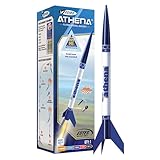
- BEGINNER MODEL ROCKET SET: The Estes Athena model rocket gives kids ages 10+ and beginners an easy way to experience real rocket launches with no building required! This ready-to-fly model rocket kit includes a fully prepared rocket with a parachute. This rocket requires Estes rocket engines, a launch pad system, Starters, Recovery Wadding, and 4 high-quality 1.5-volt AA alkaline batteries (sold separately) for launch use.
- SOARS UP TO 1,125 FT.: Our high-flying Athena rocket features a bright 12-inch parachute for safe recovery and soars up to a projected altitude of 1,125 ft. (343 m) with a C6-7 engine (sold separately). It is also compatible with the A8-3, B4-4, B6-4, and C6-5 rocket engines.
- READY TO FLY: Rocket-building kits are creative, educational gift ideas for Christmas or special-occasion surprises! This beginner-friendly Athena rocket comes fully assembled and just takes 15 minutes of preparation time. This model pairs with the Porta Pad II Launch Pad and Electron Beam Launch Controller (sold separately) for blastoff.SAFETY FIRST, FUN ALWAYS: Our rockets are designed to be used with the NAR (National Association of Rocketry) model-rocket safety code. Always ensure you have an appropriate launch site, stand back at least 15 ft., insert the safety key, issue a countdown, and then you can let your rocket fly!
- SAFETY FIRST, FUN ALWAYS: Our rockets are designed to be used with the NAR (National Association of Rocketry) model-rocket safety code. Always ensure you have an appropriate launch site, stand back at least 15 ft., insert the safety key, issue a countdown, and then you can let your rocket fly!
- ESTES EDUCATION: Since 1958, Estes has created educational rocket kits designed for an unforgettable launch experience. As a family-owned, US-based company, we offer exciting and engaging STEM products for all interests, skills, and power levels.
Hardware replacement, debris, and servicing
AI accelerators can become outdated quickly. Any operator would need a credible plan for upgrades, replacement launches, remote servicing or a short hardware life followed by disposal. A constellation would also have to address collision risk, orbital congestion, end-of-life disposal, spectrum coordination, and possible interference with astronomy and other satellites. These obligations remain even if launch costs fall.
Independent reader supportYour contribution helps us test, update, and keep practical guides available for everyone.Which use cases are most plausible?
Processing data in space is a more direct fit than recreating a hyperscale cloud campus above Earth. If imagery or measurements are produced by satellites, some processing could happen before transmission, potentially reducing the amount of raw data sent to the ground. Satellite networks and government or defense users may also have space-based coordination needs. Whether those applications justify orbital infrastructure depends on paying customers, reliable links, power and thermal design, and lifecycle costs; the concept alone does not establish demand.
Replacing terrestrial data centers is a harder proposition. If a workload’s data, users, and required low-latency connections are on Earth, an orbital facility adds a space-to-ground communications path as well as launch, radiation protection, replacement, and disposal costs. The relevant measure is the cost per useful compute operation over the system’s life, not launch cost per kilogram alone.
What would show that this is a real project?
The orbital-data-center idea would move beyond reported interest if Relativity or a named partner disclosed concrete evidence such as:
- A first-party company announcement describing the program and its funding.
- A spacecraft or payload design with stated power, thermal, and communications architecture.
- A named customer, contracted use case, or funded demonstration mission.
- A launch manifest or payload agreement specifically for compute hardware.
- Regulatory filings or spectrum and debris plans tied to the system.
- A successful Terran R flight and evidence of a repeatable launch cadence.
Until then, the defensible reading is that Schmidt appears to be pursuing strategic optionality: control of a launch company that could support ambitious space infrastructure if the technology and economics mature. Orbital computing may be part of that vision, but Relativity’s public, documented business remains Terran R and launch services.
Quick Recap
Product prices and availability are accurate as of the date/time indicated and are subject to change. Any price and availability information displayed on Amazon at the time of purchase will apply.




