Omdia forecast that the global data-center thermal-management market will reach $16.87 billion in 2028, up from $7.67 billion in 2023. The forecast, published June 18, 2024, is a projection—not a realized 2028 market total. It reflects rising demand for cooling as data centers handle more digital services and high-power computing, including AI workloads.
What does the $16.87 billion forecast measure?
Omdia’s figure covers the data-center thermal-management market, a broader category than liquid cooling alone. Its June 2024 announcement put the 2023 market at $7.67 billion and forecast $16.87 billion for 2028, equivalent to an 18.4% compound annual growth rate (CAGR) through 2028. CAGR describes the average annual growth rate over a period; it does not mean the market is expected to grow by exactly 18.4% in each individual year.
The date and scope matter: as of October 2026, the $16.87 billion figure remains Omdia’s 2024 forecast for 2028, not a confirmed result. A separate estimate from Dell’Oro Group concerns liquid cooling specifically, so it should not be added to or compared directly with Omdia’s broader total.
| Estimate | Market scope | Value and period | Source and date |
|---|---|---|---|
| Reported market size | Data-center thermal management | $7.67 billion in 2023 | Omdia, June 18, 2024 |
| Forecast | Data-center thermal management | $16.87 billion in 2028; 18.4% CAGR through 2028 | Omdia, June 18, 2024 |
| Opportunity estimate | Data-center liquid cooling, a narrower category | More than $15 billion over 2024–2028 | Dell’Oro Group, July 23, 2024 |
The Dell’Oro estimate is an opportunity over a five-year period; Omdia’s number is a forecast for the size of the wider thermal-management market in a particular year. The different scopes and measures explain why their headline figures may look close without describing the same thing.
#1 Best Overall

- Condition: 100% Brand New and in Perfect package to ensure you receive a perfect product
- Model: DV4600-492
- Bearing Type: Ball; Fan Diameter: 120mm; Maximum Fan Speed: 2650/3100 RPM; Material: Plastic; Type: Axial cooling fan
- Packaging: Carton; Power Connection: 2-Pin; Voltage: 115VAC
- Fan size: 120*120*38MM
Why are AI and high-density servers increasing cooling demand?
Servers turn electricity into computation and heat. As data centers deploy more powerful processors and accelerated servers, operators need systems that can remove heat from increasingly demanding equipment while keeping it within operating limits. That makes heat management an important part of planning capacity for AI and other high-performance workloads.
Omdia identifies digitalization, demand for high power capacity, and AI-related computing as factors supporting the thermal-management market. Dell’Oro likewise points to the thermal demands of high-end processors and accelerated servers as drivers of liquid-cooling adoption. These explanations describe demand pressures; they do not establish how much of either market forecast is attributable to AI alone.
Is liquid cooling replacing air cooling?
Omdia describes a mix of air and liquid approaches, rather than a simple handover from one to the other. It identifies rear-door heat exchangers (RDHx) and one-phase direct-to-chip (1-P) cooling among the technologies gaining attention, and says liquid cooling is emerging as the largest technology segment in its market view. That is an observation about the market’s direction, not a claim that every data center should replace air cooling.
Rank #2

- APPLICATION: USB computer fans cool off gaming systems, routers, amplifiers, and receivers. 120mm case fan keep entertainment centers' stereos and cables cool and help with air flow in various spaces
- PLAY AND PLUG: Just plug this server fan into any USB source—like a charger, power bank, phone adapter, game console, or USB outlet. It's a breeze to use
- PACKAGE INCLUDING: This usb cooling fan set comes with two USB fans, one USB cable to control two fans (high speed medium speed low speed), and a metal shield to protect your hands. Easy to use, safe and reliable
- Variable Speed Fan: It has a variable-speed controller so you can adjust the pc fan for the best mix of quiet operation and airflow
- Specification: 120 x 120x 25 mm ( 4.72 x 4.72 x 0.98 in. ) | Rated Voltage : 5V | Rated Current: 0.25A | Airflow: 77 x 2 CFM | Noise: 32dBA | Speed: 2000 RPM (MAX)
Air cooling
Air-based systems remain part of the mix. Whether an air-focused setup can serve a particular workload depends on the equipment’s heat load, rack density, and the facility’s design. The available forecasts do not provide a universal threshold at which a site must switch technologies.
Rear-door heat exchangers
An RDHx is a heat exchanger fitted at the rear of a server rack. It is one of the approaches Omdia identifies alongside direct-to-chip cooling. The cited market material does not establish a single retrofit cost or performance outcome for RDHx installations.
Direct-to-chip cooling
Direct-to-chip cooling brings liquid to a cooling plate attached to a heat-producing component, transferring heat from that component into a liquid circuit. Omdia highlights one-phase direct-to-chip cooling as part of the evolving technology mix. A reference to 1-P describes that category; it does not by itself specify a facility design, fluid, or expected savings.
Rank #3

- An ultra-quiet UL-certified fan system designed for cooling cabinets that requires minimal noise.
- Features a multi-speed controller to set the fan’s speed to optimal noise and airflow levels.
- Contains a CNC machined aluminum frame with a modern brushed black finish.
- Powered by wall outlet or USB port, included Turbo Adapter increases performance by 25%.
- Dimensions: 8.5 x 4.4 x 1.3 in. | Total Airflow: 52 CFM | Total Noise: 18 dBa | Bearings: Dual Ball
Dell’Oro Research Director Lucas Beran described the broader market shift in the group’s July 23, 2024 announcement: “After tracking the Data Center Liquid Cooling market for five years, it’s finally transitioning from a niche technology deployed in specific segments of the market to mainstream applicability.” That is Beran’s characterization of adoption, not a guarantee that every operator will adopt liquid cooling.
What could liquid cooling save on energy?
An IEA 4E/EDNA liquid-cooling publication from 2026 reports potential energy savings of around 8% in servers and 30–40% at facility level, corresponding to overall savings in the order of 10–21%. These are reported potentials, not guaranteed results for an individual data center. Actual outcomes depend on the site, its cooling design, equipment, workload, and how energy use is measured.
Free tools Windows power users keep installed
One-click scans. No signup required.
The same publication cautions that Power Usage Effectiveness (PUE) can systematically understate liquid cooling’s efficiency gains. PUE compares total facility energy with the energy used by IT equipment; it is a useful metric, but it may not capture every benefit of a cooling change. A lower PUE is therefore not a necessary condition for every liquid-cooling project to deliver an efficiency benefit, nor does the reported potential savings range establish what a given site will achieve.
Rank #4
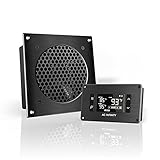
- An ultra quiet UL-certified fan system designed for cooling cabinets that requires minimal noise.
- Features an on board processor that provides a digital read-out of the cabinets temperatures.
- Programming includes thermostat control, fan speed control, and SMART energy saving mode.
- Dimensions: 6.3 x 6.3 x 1.3 in. | Airflow: 52 CFM | Noise: 18 dBA | Bearings: Dual Ball
What can prevent a data center from adopting liquid cooling?
Cooling technology choices depend on more than heat-transfer potential. Omdia says capacity constraints—particularly for cooling distribution units (CDUs), which circulate and manage coolant—constrained market growth. IEA 4E/EDNA identifies broader adoption barriers:
- Upfront cost: New cooling equipment and facility changes can require substantial initial investment.
- Retrofit complexity: Existing buildings and cooling systems may not be configured for liquid circuits, making upgrades challenging.
- Reliability concerns: Operators need confidence in the cooling system and its maintenance requirements.
- Standards and integration: A lack of standardization can complicate compatibility among equipment and systems.
- Supply capacity: Constraints in components such as CDUs can limit deployment even when demand is present.
These barriers help explain why market growth does not translate automatically into a rapid conversion of existing facilities. A site evaluating a change would need to weigh its supported heat load and rack density against retrofit needs, capital and operating costs, maintenance, reliability, standards, and energy and water implications. The cited sources do not provide a complete apples-to-apples cost, reliability, or water comparison across all technologies, so they do not establish one universal winner.
Independent reader supportYour contribution helps us test, update, and keep practical guides available for everyone.What does Omdia’s supplier coverage say about the market?
Omdia reported that Vertiv, Johnson Controls, and Stulz retained its top three positions in its ranking. It also named CoolIT as a direct-to-chip leader, Sugon in immersion cooling, and Lenovo among suppliers active in liquid cooling. These are Omdia’s observations, not a complete comparison of vendors or a basis for choosing a supplier: the announcement does not provide full ranking methodology or comparable market shares for all companies.
Best Value
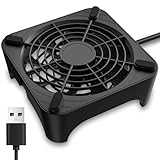
- 【Universal Compatibility】This USB cooling fan works seamlessly with Mini PC, PS5, routers, Apple TV, modems, PlayStation, receivers, Rokus, T-Mobile 5G Home Internet, Xbox Series, and other audio-video electronics. Whether cooling a gaming console, router, or streaming device, it eliminates overheating worries across your digital ecosystem.
- 【Powerful Cooling Performance】Equipped with a 120mm fan boasting 55.8 CFM airflow and 850RPM±10% speed, this USB PC fan delivers rapid cooling—dropping device temperatures by 20% in seconds. The 9-blade design ensures powerful airflow to tackle heat buildup in routers, mini PCs, and gaming consoles, preventing lag and performance drops caused by overheating.
- 【Ultra-Quiet Operation & Scratch-Proof Protection】 Designed for ultra-quiet and scratch-resistant cooling needs, this USB computer fan comes with 4 shock-absorbing pads and operates at just 18dB(A)±10% noise—whisper-quiet, quieter than library silence (30dB) and close to the sound of rustling leaves (20dB). It enables efficient device cooling without noise interference or surface scratches, letting you fully immerse in video, audio, and gaming. It’s perfect for home offices, living rooms, and gaming setups.
- 【USB-Powered & Space-Saving Setup】This USB powered fan features an integrated 530mm (20.87-inch) USB cable, connecting easily to chargers, mobile power banks, or laptops—no extra wires needed. With dimensions of 130mm×130mm×48.6mm (5.12×5.12×1.91 inches), it can be placed flat or upright, making it perfect for narrow spaces while keeping your setup tidy.
- 【Sturdy & Long-Lasting Durability】Made from premium eco-friendly ABS material, this USB fan (with a box fan-like structure) supports heavy-duty use and can withstand weights up to 11LB. With a lifespan of 40000 hours, it offers long-term cooling for your devices, ensuring stable performance and protection against overheating for years to come.
Omdia also said its coverage expanded from 40 to 49 companies, including Chinese original equipment manufacturers (OEMs) and direct-liquid-cooling component suppliers. It reported that the top-five and top-ten concentration ratios each rose 5% year over year in 2023. The announcement does not specify that change in percentage points, so it should not be restated that way.
How should personal-finance readers interpret the market headline?
A large industry forecast can signal an area of expected business investment, but it is not by itself evidence that any particular supplier’s revenue, profit, or share price will rise. Omdia’s forecast covers a broad equipment and services category, while the Dell’Oro estimate covers a narrower liquid-cooling opportunity; neither figure is an investment return estimate. For personal-finance decisions, treat these numbers as attributed market forecasts rather than audited current totals or a stand-alone reason to buy a security.
Omdia Principal Analyst Shen Wang summarized the publisher’s view in its June 18, 2024 announcement: “Data center cooling is projected to be a $16.8 bn market by 2028, fueled by digitalization, high power capacity demand, and a shift towards eco-friendly infrastructure, with liquid cooling emerging as the biggest technology in the sector.” The same announcement gives the more precise forecast of $16.87 billion; both figures are projections for 2028.
Quick Recap
Product prices and availability are accurate as of the date/time indicated and are subject to change. Any price and availability information displayed on Amazon at the time of purchase will apply.




