Quick wins for a faster PC:
Repair Windows errors before they cause bigger problemsFix Now →Fix the driver behind crashes, sound loss and screen glitchesFind Drivers →Clear out junk files and repair common Windows errorsFree Scan →Institutional custody is the safekeeping and administration of assets under an agreed mandate. Choosing a custodian means assessing more than its name or regulatory status: investors need to understand how assets are recorded and controlled, what services the contract actually covers, how any sub-custodians are overseen, and how records can be independently checked. U.S. rules differ by institution, asset, and legal context; neither a custodian’s status nor its controls guarantee against loss.
What does an institutional custodian do?
A custodian holds or administers assets for a client and maintains records of those holdings and related activity. The exact service set depends on the mandate, assets, markets, and contract. The OCC’s Comptroller’s Handbook provides a U.S. banking-focused starting point for securities custody fundamentals and prudent risk management, but a custody relationship is not automatically a complete investment, trading, or cash-management service.
| Service area | What to establish in the mandate or service documents |
|---|---|
| Safekeeping and recordkeeping | Which assets and accounts are covered, how holdings are recorded, and how client assets are distinguished from the custodian’s own assets and other accounts. |
| Settlement and transaction processing | Whether the custodian processes trades or transfers, which markets and instruments are supported, and who is responsible for instructions, failed transactions, and reconciliation. |
| Asset servicing | Whether corporate actions, income collection, tax documentation, or other events are handled, and what deadlines, client approvals, and service commitments apply. |
| Reporting and cash services | What statements, transaction records, and cash-management functions are included, who receives reports, and how often records are made available. |
| Optional activities | Whether securities lending or other uses of assets are permitted, what separate authorization is required, and what fees, risks, and rights apply. |
Do not infer that a function is included because a provider offers it to some clients. Confirm the specific legal entity, account, asset type, market, and service in the governing agreement and service documentation.
What does “qualified custodian” mean?
In the United States, “qualified custodian” is a defined category in the SEC’s investment-adviser custody framework. The SEC rule identifies specified banks or savings associations, broker-dealers, certain futures commission merchants for specified assets, and qualifying foreign financial institutions, subject to the rule’s conditions. The category is not a general endorsement of every service, asset, or jurisdiction offered by an institution.
#1 Best Overall
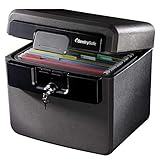
- FIRE AND FLOOD PROTECTION FOR ESSENTIAL PAPERS: UL Classified to withstand high temperatures for up to thirty minutes and ETL Verified to protect contents during water exposure, helping safeguard critical paperwork during common home emergencies
- DESIGNED FOR IMPORTANT DOCUMENT STORAGE: Spacious interior fits hanging file folders and is ideal for organizing passports, birth certificates, insurance records, and legal paperwork
- KEY LOCK SECURITY YOU CONTROL: Durable key lock helps prevent unauthorized access and keeps the lid securely closed during fire events. Two keys are included for backup access
- HOME FRIENDLY SIZE WITH PORTABLE DESIGN: Compact footprint fits easily in closets, offices, or under desks while remaining portable enough to relocate when needed
- BUILT FOR EVERYDAY PEACE OF MIND: Black exterior offers a clean, neutral look that blends into home or office spaces while providing dependable document protection year round
The SEC adviser custody rule concerns SEC-registered investment advisers with custody of client funds or securities. It should not be treated as a single rule for every bank custody account, broker-dealer relationship, futures customer fund, state trust arrangement, or foreign market. The OCC’s banking custody guidance and the SEC’s adviser framework have different remits. Which requirements apply depends on the parties, assets, activities, and governing law; obtain advice on the specific arrangement where needed.
How are custody assets protected—and what does protection not mean?
Protection is a combination of legal structure, accurate books and records, operational safeguards, and oversight. OCC materials identify asset separation, accounting records, safeguards, dual controls, and segregation of duties as relevant risk-management topics. These controls can reduce operational vulnerabilities; they do not eliminate the possibility of error, fraud, disruption, or loss.
Asset treatment and legal rights
Ask how each asset is titled and recorded, how it is separated from the custodian’s proprietary assets and from other clients’ accounts, and what rights attach to it if the custodian or an intermediary becomes insolvent. Answers depend on account structure, the asset, and governing law. Do not treat “segregated” or “bankruptcy remote” as a conclusion without asset-specific legal support.
Rank #2

- Ultimate Fireproof & Water-Resistant Protection: Keep your valuables safe with our DocSafe Hard-Shell fireproof file organizer. It is made of thickened silicone coated fireproof heat insulated cotton material and hard-shell material which can stands up against fire and passed the UL94 -V0/5VA flame retardant test. Fireproof box is both fireproof and water-resistant, ensuring your documents stay protected during fires, floods, or wet weather. It may fit both letter and legal-size files
- Upgraded Hard-Shell Design Fireproof Box: Our fireproof document box combines hard-shell construction with fireproof materials, offering unmatched protection and durability. Unlike traditional soft case, our design withstands extreme conditions while maintaining a sleek, professional look. The Non-dusty material actively repels dust,hair and stains, keeping your box clean and tidy for years. It’s the ultimate solution for safeguarding your important documents, laptop, and valuables
- Large-capacity: Outside size: 15.5" x 11.5" x 3"(Thickness can be expanded up to 4"). Our Accordion fireproof document box adopts a multi-layer design that can meet all your storage needs. These include 13 accordion Pockets with labels,1 zipper pocket,4 pen slot,14 card slots,4 passport holder,4 small mesh bags,2 mesh bags,and 1 main pocket. It can store your important documents,money,passport,U Disk,cards,laptop,certificates in a safe and orderly way. Perfect for daily file filing and storage
- Fireproof File Organizer with Lock: Protect your valuables with the built-in high-quality combination lock (No keys required). Featuring a double metal zipper for convenient opening and closing. Design with a strong handle for carrying everything you needed easily. The fireproof file folder is suitable for business, travel, office, school, home storage, you can be 100% sure that your important documents are in a safe place. Of course, giving it as a gift to your family is also a good choice
- Trusted after sales service: Nothing is completely foolproof, but added protection is always a good idea. In an emergency, our fireproof document organizer ensures your files stay intact, giving you time to save your important documents. It is lighter, easier to carry than fireproof safes and quick to grab and go. If there any quality problem, please feel free to let us know. We are committed to solving your problem immediately, your suggestion has a great impact on the upgrade of our products
Operational controls and evidence
Request an explanation of authorization controls, separation of duties, reconciliations, access management, incident handling, and the evidence available to demonstrate that controls operate as described. Ask who can initiate and approve transfers, how exceptions are detected and escalated, and what independent assurance or audit materials the institution can provide. A control description is not the same as evidence of its implementation.
Do these 3 things before closing this tab:
1Clear out junk files and repair common Windows errors2Scan for outdated or missing drivers - takes under a minute3Repair Windows errors before they cause bigger problemsStatements and independent verification
For advisers within the SEC custody framework, direct delivery of account statements by the qualified custodian is an important verification feature described in SEC guidance. Investors should establish who sends each statement, who receives it, how often it arrives, and how holdings and transactions will be reconciled against internal records. The SEC’s investor materials caution that regulatory safeguards do not replace investor diligence.
What should investors ask about sub-custodians?
A primary custodian may rely on sub-custodians or other market intermediaries to hold or process assets in particular markets. That creates a chain of institutions and contracts, so identify where responsibility sits at each link rather than assuming the primary custodian directly holds every asset.
Rank #3

- FIREPROOF: The safe is UL Classified to endure 1/2 hour at 1550°F to protect irreplaceable documents, small valuables, DVDs, and USBs from fire
- WATERPROOF: The safe is ETL Verified for 72 hours of water submersion offering peace of mind in the event of a flood
- COLOR: Dark Gray Color offers a sleek and professional appearance
- MEASUREMENTS: Exterior: 16. 6 in. W x 13. 8 in. D x 14. 1 in. H; Interior: 12 in. W x 8. 1 in. H x 11. 6 in. H; large capacity 0. 66 cubic feet; weighs 41 pounds
- DURABLE: Fireproof lock box features a flat key lock to prevent the lid from opening in the event of a fire; includes two keys
- Which sub-custodians and market intermediaries may be used, and for which assets, markets, or services?
- What criteria govern their selection, and how does the primary custodian perform due diligence before appointing them?
- How are they monitored on an ongoing basis, and what events trigger reassessment or replacement?
- Which entity is responsible for records, transaction processing, incident notification, and resolving discrepancies?
- What laws and account structures govern the assets at each stage, and what remedies are available if an intermediary fails?
- Can the investor receive notice of material changes to the custody chain or the markets in which assets are held?
The OCC’s custody risk-management materials specifically emphasize due diligence in selecting sub-custodians and ongoing oversight. The investor should verify how those responsibilities are implemented and allocated in the relevant agreements.
Independent reader supportYour contribution helps us test, update, and keep practical guides available for everyone.How to conduct a custody review
Use the same review process for each candidate and keep the scope fixed: the same assets, markets, accounts, and services. This makes differences in legal status, controls, reporting, and contract terms easier to identify.
Free tools Windows power users keep installed
One-click scans. No signup required.
- Define the mandate. List the assets, markets, accounts, and functions required. Separate essential custody from optional services such as lending or cash management.
- Confirm the contracting entity and regulatory context. Identify the exact legal entity that will contract with the investor, its relevant regulator, and which regulatory framework applies to the service and asset under consideration.
- Trace asset treatment. Obtain the proposed account structure and an explanation of how assets are identified, recorded, and separated. Ask counsel to assess insolvency rights under the applicable law rather than relying on marketing language.
- Review control design and proof. Ask for details and available evidence on authorization, segregation of duties, reconciliations, access controls, incident escalation, and independent assurance.
- Map the custody chain. Record sub-custodians and other intermediaries by market or asset, then examine selection standards, monitoring, change notification, and allocation of responsibilities.
- Test reporting and reconciliation arrangements. Specify the records delivered, recipients, frequency, and process for resolving mismatches. Establish how the investor can verify positions independently.
- Negotiate rights and exit mechanics. Review liability limits, indemnities, liens, any authority to lend or reuse assets, termination rights, transfer support, and service-level commitments. These terms are provider- and contract-specific.
- Assess operational continuity. Seek evidence about business continuity, cyber and operational controls, staff access, incident escalation, and the ability to process transfers and corporate actions. Treat provider assertions as claims to substantiate.
- Set ongoing oversight. Assign responsibility for reviewing statements, reconciliations, control evidence, service issues, and material changes to the provider or sub-custody chain. Define escalation and review intervals appropriate to the mandate.
How to compare custodians on a like-for-like basis
There is no regulator-published scoring model in the cited OCC and SEC materials. A useful institutional comparison is a consistent internal framework, applied to the same scope and supported by documents rather than headline claims.
- Legal and regulatory fit: Does the provider’s status and the relevant legal framework apply to this entity, service, asset, and jurisdiction?
- Asset treatment and controls: Are account structures, segregation practices, records, authorizations, and reconciliation controls sufficiently clear and evidenced?
- Sub-custody exposure: Is the custody chain visible, and are selection and continuing oversight responsibilities defined?
- Reporting quality: Can the investor obtain timely records and independently reconcile positions and activity?
- Operational resilience: Are continuity arrangements, incident escalation, transfer processing, and asset servicing supported by credible evidence?
- Contract and exit: Are recourse, liability, asset-use permissions, termination, and transfer rights acceptable?
- Service fit and total cost: Do the contracted services meet the mandate without paying for or accepting optional functions the institution does not need?
Regulatory status is one input, not a substitute for reviewing the service actually being provided. A sound decision depends on the fit among the legal structure, operational controls, custody chain, reporting, and contract.
Quick Recap
Product prices and availability are accurate as of the date/time indicated and are subject to change. Any price and availability information displayed on Amazon at the time of purchase will apply.




