What’s actually slowing this PC down?
Pick the symptom - the matching free tool is one click away.
Craig Station Unit 1, a Colorado coal unit scheduled to retire in December 2025, has been ordered to remain available for emergency dispatch through December 25, 2026. The U.S. Department of Energy’s latest order does not require it to generate electricity continuously. Instead, it keeps the unit available when grid authorities call on it, with dispatch limited to hours needed to meet the stated emergency.
What the latest order requires
On December 30, 2025, the Department of Energy (DOE) issued an emergency order covering Craig Station Unit 1 in Craig, Colorado, just before its planned retirement. DOE has renewed the requirement three times. The latest identified order, No. 202-26-49, is effective September 27 through December 25, 2026. DOE’s order listing provides the current order details.
The requirement is to keep Unit 1 available at the direction of designated grid authorities—not to run it around the clock. The September order says economic dispatch should occur only during hours necessary to meet the emergency and should minimize costs to ratepayers. Availability means the unit can be called on; it does not establish that it is producing power at all times.
| Order | Effective period |
|---|---|
| 202-25-14, original | December 30, 2025–March 30, 2026 |
| 202-26-21 | March 31–June 28, 2026 |
| 202-26-31 | June 29–September 26, 2026 |
| 202-26-49, latest identified | September 27–December 25, 2026 |
Craig Station has three coal units. DOE’s original order lists Unit 1 and Unit 2 at 446.4 megawatts each and Unit 3 at 534.8 megawatts, for a combined nameplate capacity of 1,427.6 megawatts. The order at issue concerns Unit 1 only; it does not order the other two units to remain open.
The Tool Desk
Outbyte Driver Updater FREEScan for outdated or missing drivers - takes under a minuteDriver Scan →Outbyte PC Repair FREERepair Windows errors before they cause bigger problemsFix Now →#1 Best Overall

- These are hobby grade products securely packed for protection in shipping
- Please handle with care when removing from package or breakage could occur
Why DOE says it is needed—and why Colorado disagrees
DOE invoked section 202(c) of the Federal Power Act, finding an energy emergency in the Western Electricity Coordinating Council’s Northwest assessment area. Its stated rationale includes projected demand growth, planned generating-unit retirements and reliability concerns. In the original order, DOE cited a forecast that peak demand in the Northwest-Central subregion would grow 8.5%, from 33 gigawatts in 2025 to 36 gigawatts in 2034. That is a forecast cited by DOE from a 2024 regional assessment, not a measured increase. Secretary Chris Wright wrote that reliable power from the plant was “essential for keeping the region’s electric grid stable.” The DOE order sets out that federal rationale.
Colorado officials and other opponents dispute that conclusion. Colorado’s Public Utilities Commission had found, according to Ars Technica’s reporting, that Craig Unit 1 was not required for reliability or resource adequacy. Colorado Energy Office executive director Will Toor told CNN the state expected significant ratepayer costs “for no benefit.” These are the state’s and its officials’ positions, not a final technical or legal resolution of the dispute.
Rank #2

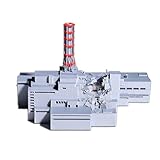
- Tall smokestack
- Detailed metal siding
- Rooftop vents
- Molded in three colors and clear plastic
- Realistic design in a size that fits most Layouts
What the published cost estimates do—and do not—show
A December 2025 Grid Strategies report prepared for the Sierra Club estimated that keeping Craig Unit 1 available and operating for 90 days would cost at least $20 million. It estimated approximately $85 million per year at its assumed output, and around $150 million per year in a scenario where the order effectively required continuous must-run operation. These are modeled estimates, not final invoices; the figures depend on operating assumptions and how often the unit is dispatched. The report and its cost analysis describe the methodology.
For context, Grid Strategies analyzed Federal Energy Regulatory Commission data and calculated that Craig Unit 1’s average annual operating costs for 2022–2024 were $84.7 million: $57.1 million for fuel and $27.6 million for operations and maintenance. The report calculated $20.9 million as the equivalent for 90 days. It also estimated that nearby market prices were below the unit’s variable costs in 90.7% of hours from September 2024 through August 2025. Those are the report’s findings under its specified data and methodology, prepared for an advocacy organization; they do not establish the final cost of the extension or the amount any household will pay.
Rank #3
- ATMOSPHERE-BOOSTING HUMIDIFIER MORE THAN JUST MIST: Bring your space to life with a soft green glow and fine ultrasonic mist. This USB-powered humidifier doesn't just add moisture - it creates a calm, immersive atmosphere for bedrooms, desks, or late-night work sessions
- USB POWERED FOR EASY USE ANYWHERE: No bulky setup needed. Simply plug into your laptop, power bank, or adapter and enjoy instant mist anytime. Suitable for office desks, gaming setups, travel, or small personal spaces
- COMPACT SIZE FOR DESKTOP SPACES: Designed to fit seamlessly into your workspace without taking up room. Whether placed beside your monitor, bedside, or shelf, it adds both function and visual appeal without clutter
- SOFT GREEN LIGHT FOR RELAXING AMBIENCE: The built-in green LED light enhances the overall mood, making it suitable for stress relief, relaxation, or creating a unique aesthetic setup. Works well for night use without being too harsh on the eyes
- HUMIDIFIER AND DECOR IN ONE UNIQUE PIECE: Not just a humidifier - a conversation-starting decor piece. Combines practical air moisture benefits with a visually striking design, making it a thoughtful gift or personal setup upgrade
At the original order’s issuance, CNN reported that Unit 1 was offline after a critical part broke on December 19, 2025, and that repairs were required before it could generate electricity. Tri-State Generation and Transmission Association CEO Duane Highley said the cooperative’s members would bear compliance costs unless a way could be found to share them regionally. That described the expected cost allocation at the time; the final allocation under subsequent orders is not established in the available reporting. CNN’s separate report that Consumers Energy spent $80 million to keep a Michigan plant open from late May through late September 2025 concerns a different plant and should not be treated as Craig’s cost.
Independent reader supportYour contribution helps us test, update, and keep practical guides available for everyone.What federal emergency authority allows
Section 202(c) of the Federal Power Act allows emergency orders when statutory conditions are met, including a sudden increase in demand or a shortage of electric energy or generation or transmission facilities. The law says an order should meet the emergency and serve the public interest. It directs regulators to limit generation to the hours necessary to meet the emergency and, as practicable, comply with environmental law and minimize adverse environmental impacts. For orders that may conflict with environmental requirements, the statute provides for expiration within 90 days, while allowing renewals or reissuances for subsequent periods subject to the law’s conditions. The text of section 202(c) states these limits.
Rank #4

- Classic brick powerhouse structure
- Parts molded in appropriate colors
- Finished kit measures: 6-5/8 x 4-1/8" 17 x 10.5cm
- These are hobby grade products securely packed for protection in shipping
- Please handle with care when removing from package or breakage could occur
DOE’s original order says Unit 1 must comply with applicable environmental requirements to the maximum extent feasible while operating consistently with emergency conditions. It does not give the unit general relief from emissions-related fees, allowances or offsets. The order also says the unit is not to be considered a capacity resource.
Colorado’s court challenge remains unresolved
Colorado Attorney General Phil Weiser sought rehearing and then filed a petition for review in the U.S. Court of Appeals for the D.C. Circuit on March 18, 2026. The state argues DOE unlawfully used emergency authority and asks the court to vacate the order. Those are Colorado’s allegations and requested remedy. DOE has issued later orders, but the sources available as of October 8, 2026, do not establish a final judicial disposition. The Colorado Attorney General’s announcement describes the state’s challenge.
Do these 3 things before closing this tab:
1Clear out junk files and repair common Windows errors2Fix the driver behind crashes, sound loss and screen glitches3Repair Windows errors before they cause bigger problemsQuick Recap
Product prices and availability are accurate as of the date/time indicated and are subject to change. Any price and availability information displayed on Amazon at the time of purchase will apply.




