The Tool Desk
Outbyte PC Repair FREEClear out junk files and repair common Windows errorsFree Scan →Outbyte Driver Updater FREEScan for outdated or missing drivers - takes under a minuteDriver Scan →Cost of goods sold (COGS) is the carrying cost of the inventory a business sold during a period. On an income statement, it is deducted from revenue to calculate gross profit. For an inventory-based business, a common calculation is beginning inventory plus purchases and other includable costs, minus ending inventory.
What is cost of goods sold on an income statement?
COGS represents the cost assigned to goods sold in the period—not every item purchased, every dollar paid, or every business expense. Under IAS 2, the carrying amount of inventory is recognized as an expense when the related revenue is recognized (IFRS Foundation, IAS 2).


A conventional multi-step income statement shows the relationship this way:
- Revenue or net sales
- Less: cost of goods sold
- Gross profit
- Less: operating expenses and other expenses
- Net income, after the remaining statement items
The U.S. Securities and Exchange Commission describes an income statement as reporting revenues and the costs and expenses associated with earning them, including amounts spent to produce goods or services sold (SEC, Investor Bulletin: How to Read a Financial Statement). Gross profit is therefore not the same as net income: operating expenses and other items come later in the statement.
Free tools Windows power users keep installed
One-click scans. No signup required.
#1 Best Overall

- Income And Expense Log Book: This Income and Expense Record Book(8.5" x 10.5") is a necessary item for any small business owner or entrepreneur. It is an essential part of any business - helping you understand your overall earnings to determine if you are profitable.
- Daily Tracking and Weekly Overview: let our log tell you if you are profitable today! There are two pages per week to help you you track your income and expenses. At the end of each day or week, you can note whether you made a profit or a loss for the day.
- Clear P&L Statement For Your Business: This income and expense book makes it easy to see your expenses and how they fluctuate from time to time. This makes it easy for you to decide where you can cut back on expenses and assess your total annual net profit.
- Main Features: Expense Review + Income Review + Weekly Pages + Summary of The Year + Twin-Wire Binding + Waterproof Cover + Rounded corner design + Thicker paper
- Effective Organization: This budget book has a twin-wire binding and you can easily lay it flat at 180°. This effective design can help you work better and bring you great convenience in the process of using.
How do you calculate COGS?
A common inventory calculation is:
Beginning inventory + purchases and other includable costs − ending inventory = COGS
The IRS Form 1125-A computation similarly lists beginning inventory, purchases, labor, additional costs, and other costs, then subtracts ending inventory (IRS Form 1125-A). The exact costs and form requirements depend on the applicable tax rules and business circumstances.
Hypothetical example
Suppose a business begins the period with $10,000 of inventory, incurs $45,000 in purchases and other includable costs, and has $12,000 of inventory at the end. The calculation is $10,000 + $45,000 − $12,000 = $43,000 of COGS. This is an arithmetic illustration, not a determination of which costs qualify for a particular business.
Subtracting closing inventory from the cost of goods available for sale leaves the cost of goods sold during the tax year, as the IRS explains in Publication 334 (2025), “Line 42—Cost of Goods Sold”.
Recommended Free Tools
Rank #3
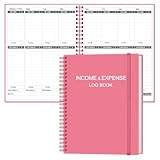
- EASY TO MANAGE - Use this income & expense log book to record your income and expenses each day.Keep your budget in balance, and develop good bookkeeping habits to meet your financial goals
- ACCOUNTING FOR THE WHOLE YEAR - This account ledger notebook is undated and is used to lasts a whole year.The keeping log has 1 page Year Overview, 53 weekly spreads, 2 pages annual summary, 10 notes pages, to track weekly and yearly income & expenses
- HIGH QUALITY - The accounting bookkeeping tracking ledger log book is used to high quality 100gsm pure white paper, teal elastic band and a back pocket for extra space. Make sure you have enough space for all financial activities
- UNIQUE DESIGN & A4 SIZE - Income and expense log book cover is lovely, golden spiral bound design, size of 8" x 10.5". Just the perfectly size to fit in your backpack, purse or laptop case. Without taking up your space and always helping you keep track of your small business
- THE PERFECT GIFT - Income & expense notebook as gift for woman & man. Use it to track your week-to-week progress, make efficient adjustments whenever needed
What costs are included in COGS?
COGS generally follows the cost of acquiring or producing the inventory that was sold. In its small-business tax guidance, the IRS identifies inventory categories including merchandise held for sale, raw materials, work in process, finished products, and supplies that physically become part of items for sale (IRS Publication 334).
That publication also describes freight-in on raw materials, production supplies, and merchandise purchased for resale as part of COGS, and includes direct and necessary manufacturing overhead in the described context. The treatment is framework- and circumstance-specific; do not assume that every cost a business pays belongs in inventory.
Rank #4

- EASY TO MANAGE - Use this income & expense log book to record your income and expenses each day.Keep your budget in balance, and develop good bookkeeping habits to meet your financial goals
- ACCOUNTING FOR THE WHOLE YEAR - This income and expense tracker is undated and is used to lasts a whole year.The keeping log has 1 page Year Overview, 53 weekly spreads, 2 pages annual summary, 10 notes pages, to track weekly and yearly income & expenses
- HIGH QUALITY - The accounting bookkeeping tracking ledger log book is used to high quality 100gsm pure white paper, teal elastic band and a back pocket for extra space. Make sure you have enough space for all financial activities
- UNIQUE DESIGN & A4 SIZE - Income and expense log book is spiral bound design, size of 8" x 10.5". Just the perfectly size to fit in your backpack, purse or laptop case. Without taking up your space and always helping you keep track of your small business
- THE PERFECT GIFT - Income & expense notebook as gift for woman & man. Use it to track your week-to-week progress, make efficient adjustments whenever needed
Selling and administrative costs are distinct from inventory acquisition and production costs. IRS Publication 334 treats certain shipping or selling costs that are not integral to a manufactured product as shipping or selling expenses in the circumstances it describes. A business should apply the rules for its reporting framework rather than treating this tax guidance as a universal financial-reporting definition.
Independent reader supportYour contribution helps us test, update, and keep practical guides available for everyone.When does COGS become an expense?
For financial reporting under IAS 2, inventory remains an asset until its carrying amount is recognized as an expense in the period the related revenue is recognized. This matching explains why the ending inventory is subtracted in the basic calculation: costs assigned to unsold inventory remain in inventory rather than being included in that period’s COGS.
Best Value
Businesses may use different inventory cost formulas depending on the nature of the items. IAS 2 specifies specific identification for items that are not ordinarily interchangeable, and FIFO or weighted-average cost formulas for ordinarily interchangeable items. These methods assign costs between goods sold and inventory remaining; they can therefore affect reported COGS and ending inventory. IAS 2’s summary does not list LIFO as a permitted formula.
Is COGS an expense?
Yes. COGS is an expense recognized against revenue when the related goods are sold, and it appears before gross profit in a conventional income statement. It is not the same as cash paid during the period: a purchase may remain in inventory until sale, and the accounting period’s COGS reflects the cost assigned to goods sold.
Why COGS differs across businesses and reports
COGS comparisons are meaningful only when the underlying accounting and business context is understood. A retailer and a manufacturer may have different inventory costs, while companies may also report under different financial-reporting frameworks or tax jurisdictions. Inventory cost formulas and the timing of related revenue recognition matter as well.
U.S. tax guidance and financial-reporting standards are related but not interchangeable. IRS Publication 334 describes an exception to inventory rules for qualifying small-business taxpayers, while Form 1125-A sets out a tax computation for applicable returns. Those provisions should not be read as general rules for financial statements, and the available IAS 2 summary is not a full comparison with U.S. GAAP.
Do these 3 things before closing this tab:
1Scan for outdated or missing drivers - takes under a minute2Clear out junk files and repair common Windows errors3Fix the driver behind crashes, sound loss and screen glitchesQuick Recap
Product prices and availability are accurate as of the date/time indicated and are subject to change. Any price and availability information displayed on Amazon at the time of purchase will apply.




