In a March 23, 2026 episode of Decoder, host Nilay Patel confronted Shishir Mehrotra, CEO of Superhuman, over Grammarly’s now-removed “Expert Review” feature. It presented AI-generated writing advice through named experts, including Patel, without first asking those people to participate. Mehrotra apologized, but the interview left a harder question open: when does crediting someone’s published ideas become using that person’s identity to sell a product?
What happened in the interview
Patel’s interview with Mehrotra focused on a feature Grammarly had launched under the name “Expert Review.” The episode was published March 23, 2026, and identifies Mehrotra as CEO of Superhuman, the company formerly known as Grammarly. Apple Podcasts lists the episode and its publication date; the episode summary describes the feature and the company’s response.
Patel’s name was among those used as an AI “expert.” According to Patel’s account, he and other writers whose names appeared had not been asked to authorize the use. The summaries available for the episode describe the system broadly, but do not establish every interface detail, the complete roster, or the technology behind its outputs. It is therefore more precise to say that the feature presented advice under named experts’ identities than to claim it cloned their voices or trained a model on each person’s work.
The conversation was tense at points. Mehrotra apologized, while the underlying disagreement persisted: the company described the feature in terms of synthesizing and attributing ideas from public writing; Patel challenged whether making a person’s name a selectable source of AI advice crossed into impersonation. A transcript and episode-insights page summarizes the exchange, though it is a secondary source rather than a substitute for the recording.
Recommended Free Tools
#1 Best Overall

- 【PCM Recording and Automatic Noise Reduction】:This digital voice recorder is equipped with advanced dual noise reduction microphones and supports 1536 kbps PCM HD audio recording, ensuring crystal-clear sound capture in any environment. Recorder device with automatic noise reduction and voice-activated recording, the recorder only picks up the sound when there’s speech, reducing background noise,Excellent sound quality can meet the needs of students, journalists, music lovers and more people
- 【136GB Memory and Long Battery Life】Voice Recorder with Playback with 8GB built-in storage and includes a complimentary 128GB TF card, this digital voice recorder can hold up to 9775 hours of recordings in MP3 format or WAV format;Recorder for lectures with a built-in 1100mAh rechargeable lithium battery, this voice recorder can continuously record for up to 68 hours on a single charge, making it perfect for back-to-back meetings, interviews, or extended classroom sessions
- 【One Click Record and Save】: Our voice recorder supports one click recording and saving functions. Even when the product is in a powered-off state, simply push up the side recording button to immediately enter recording mode, and push down the recording button to save the recording. This allows for capturing as much information as possible.Easily transfer your recordings to your computer using the USB-C connection, allowing for fast and secure file management
- 【Easy-to-Use】This portable voice recorder is designed with a simple, user-friendly interface featuring a large, easy-to-read LCD screen. The voice-activated recording (VOR) feature makes hands-free operation a breeze. With one-touch recording, users can start or stop recording instantly, even during busy moments. A-B repeat function and password protection ensure that important segments are easily accessible and secure
- 【Portable and Durable Design】Designed with portability in mind, this lightweight screen recorder fits comfortably in your pocket or bag, weighing only 97 grams. Its sleek and durable metal casing ensures longevity and protection from everyday wear and tear. Whether you’re traveling, in the office, or attending a lecture, this compact recorder is always ready to capture clear, high-quality audio
What “Expert Review” did—and what is not established
At the level established by episode descriptions, Expert Review generated writing suggestions framed as coming from named experts. Patel and other reporters and writers were among the people whose names were used. That is enough to explain the controversy, but not enough to confidently describe precisely what every user saw or how the system assembled an answer.
- Established: The feature used real people’s names to frame AI-generated advice, and the people identified had not given permission according to Patel’s account.
- Not established by the available descriptions: The exact screen wording, whether users chose a named expert or encountered one in a recommendation, what badges or disclaimers appeared, the complete list of names, and whether the system relied on retrieval, prompts, a curated database, model training, or a combination.
- Do not assume: The use of a person’s name proves the product cloned their voice, copied a particular passage, or reproduced a specific opinion. Those claims require evidence about the interface and outputs.
These distinctions matter because “AI based on published work” can describe very different products. A search tool that links to an article, a summary attributed to its author, a synthetic persona that answers in the author’s name, and a human-like voice clone are not interchangeable.
Why critics called it impersonation
Attribution tells users where an idea came from. Impersonation concerns whether a product makes a person seem to be speaking, advising, participating, or endorsing something when they are not. Between those poles are style imitation and persona simulation: a system may imitate recognizable writing traits or offer an “AI version” of someone without literally claiming the person generated the output. The presentation and the user’s likely understanding matter.
Critics’ strongest objection was not simply that Grammarly might have consulted public writing. It was that a real person’s name functioned as part of the product: a signal of expertise attached to newly generated advice. That can lend an answer authority and commercial value while leaving the named person without approval over what the system says in their name. The episode’s discussion of names and check-mark-like signals is summarized by AudioScrape’s transcript page; exact UI claims should be checked against the original interface before being stated as definitive.
What’s actually slowing this PC down?
Pick the symptom - the matching free tool is one click away.
Rank #2

- 【One Click Record and Save】This voice recorder features instant one-click recording and saving. Even when powered off, simply push up the side button to start recording and push down to save. Designed with ergonomic controls, this digital voice recorder ensures fast operation so you never miss important moments—perfect as a voice recorder with playback, mini recorder device, or portable recorder for interviews, lectures, and field work
- 【64GB Memory & High-Capacity Battery】Equipped with a built-in 64GB TF card, this recorder device stores up to 4,600 hours of recordings. Its 600mAh battery supports up to 48 hours of continuous use (MP3 at 32kbps). Ideal for students, journalists, and professionals, this tape recorder portable mini excels in lectures, meetings, interviews, and even for paranormal sound research
- 【PCM Recording & Automatic Noise Reduction】Capture audio in WAV format with up to 1536kbps PCM quality. Advanced noise reduction minimizes background sounds, delivering crystal-clear playback on headphones or professional gear. This makes it an excellent audio recorder, digital audio recorder, or sound recorder for music creation, interviews, and high-detail sound archiving
- 【Voice-Activated Recorder, Big Screen & Password Protection】The voice activated recorder automatically starts/stops when sound reaches your set level, helping save storage and battery. A large 1.44-inch screen offers easy navigation, while password protection safeguards your files—perfect for storing personal memos and important audio files when using it as a dictaphone voice recorder or recording device for professional use
- 【Multi-Function Recorder】This versatile digital recorder supports internal and external recording, file segmentation, scheduled recording, A-B loop playback, MP3 music, and bookmarking. Functions as a USB storage drive and MP3 player with quick transfer via USB cable. Great as a pocket recorder, lecture recorder, mini voice recorder, or recording devices for travel and daily use
The company’s counterargument, as reflected in the interview summaries, is that synthesis of public ideas with attribution is different from claiming that the person personally wrote or approved the new advice. That distinction is meaningful: citing a source is not automatically impersonation. But attribution alone does not answer whether a named person agreed to become a product feature, whether users could mistake the output for authorized advice, or who bears the reputational risk if the system gets that person wrong.
Consent, opt-out, and the company’s response
The reported sequence is that Grammarly launched Expert Review, initially offered affected people an email-based opt-out after objections, and later removed the feature. Episode summaries place the launch “back in August”; because the interview aired in March 2026, that appears to mean August 2025, but the year is an inference from the chronology rather than a separately verified launch announcement. The summaries do not establish how long the feature remained available, the precise opt-out procedure, or what data or outputs were deleted when it was removed.
An opt-out is not equivalent to opt-in. Under opt-out, people may need to discover an unwanted use, identify the responsible company, and request removal after the feature is already live. Opt-in puts the choice before launch. Removal of a feature also does not by itself show whether names, cached outputs, prompts, training material, or other associated data were deleted.
The episode description reports that journalist Julia Angwin filed a class-action lawsuit related to the feature. That is a reported legal challenge, not a finding that the company broke the law. The available material does not establish the complaint’s specific claims, court, class definition, requested relief, or current procedural status, so none should be inferred from the existence of the suit.
Windows Errors? Fix Them Before They Spread
Repair common Windows errors and clear accumulated junk for a smoother, more stable PC - no reinstall needed.Free scan · no reinstallCrashes, No Sound, or Screen Glitches?
Random freezes, missing sound and display glitches usually trace back to one bad driver. Find and replace yours safely.Free scan · under a minuteRank #3

- ENHANCED CONTEXT WITH MULTIMODAL INPUT: Capture audio, type notes, add images, and press to highlight key moments for richer context. During recording, instantly mark key moments with a single button press. Simultaneously enrich your audio by snapping photos of important documents or typing in ideas
- CHAT WITH YOUR RECORDINGS USING "ASK Plaud": Unlock deeper insights with this interactive AI. Ask questions, extract key points, draft emails, and get next-step suggestions—all grounded in your original audio for reliable, ready-to-use answers
- INTELLIGENT RECORDING WITH AI DIRECTIONAL AUDIO: Enjoy seamless, intelligent recording with Plaud Note Pro. Its AI automatically switches between call and meeting modes while recording, while directional audio and real-time spatial awareness minimize noise to capture voices with crystal clarity
- Everything Included: Includes Plaud Note Pro, magnetic case, magnetic ring, charging cable, and a free Starter Plan with 300 transcription minutes per month. Upgrade anytime in the Plaud app to Pro Plan (1,200 min/mo) or Unlimited Plan(Up to 24 hours of transcription per user per day)
- PREMIUM ULTRA-SLIM DESIGN WITH INSTANTVIEW DISPLAY: Meticulously designed, the AI Note Taker is just 0.12 inches thin and 1.06 oz —about the size of a credit card. Its sleek aluminum body with a textured wave finish features a vivid AMOLED display, letting you check battery and recording status at a glance, while it seamlessly works with Apple Find My to ensure you never misplace it
The legal questions are separate, not one “AI law” issue
Whether a company may use a person’s work and whether it may commercialize that person’s identity are different questions. The relevant legal theories depend on the product’s exact presentation, the material used, the jurisdiction, and the facts alleged.
- Name and likeness rights: Some jurisdictions recognize rights that can limit commercial use of identity without consent. The rules and exceptions vary, and the facts here would matter.
- False endorsement or association: A claim could turn on whether users might reasonably think the person sponsored, approved, or participated in the feature.
- Copyright: Questions about copying articles, summarizing them, or using them in model development are distinct from whether a person’s name appeared in the interface. A name’s use does not prove that particular works were copied.
- Consumer protection and unfair competition: These theories may be relevant if the product presentation misled users or created confusion, but the applicable elements are fact- and jurisdiction-specific.
- Expression and public interest: Companies may argue that discussing public figures or their published ideas is protected expression. A commercial product that turns identity into a branded feature may raise different considerations from ordinary reporting or citation.
- Contracts: A creator’s agreements with an employer, publisher, or platform could create separate obligations; the episode summaries do not establish whether any such contracts apply.
These are possible lines of analysis, not conclusions about Angwin’s case or the feature’s legality. A court’s ruling, if any, would depend on the actual pleadings and evidence.
Public writing is not blanket permission to market a persona
Making an article, book, or interview publicly accessible lets people read and discuss it. It does not, by itself, settle whether a company may turn its author into a synthetic adviser, use the author’s name as a product hook, imply endorsement, or generate advice that the author would reject. At the same time, that distinction does not mean every commercial use of public text is unlawful. Access to information, use of copyrighted expression, and commercial exploitation of identity are related but separate issues.
That separation is especially important when an AI answer is presented under a person’s name. A user may treat the identity as a guarantee of expertise or as evidence the person approved the advice. If the output is inaccurate or simplistic, the company may capture the product benefit while the named individual absorbs the reputational cost.
Rank #4
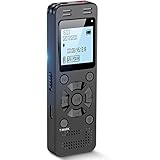
- Clear PCM Recording: Adopts upgraded noise cancelling microphone with professional recording chip. Capture 1536Kbps premium quality sound. Voice recorder with playback function, which is well designed for the users to easily access. Customer Service includes real life phone call from a specialist to give instructions on this high-quality recording device. We ensure your satisfaction on this product.
- 128GB Digital Recorder, Computers Compatible: stores 9296hours of recording, or 40,000songs, up to 54 hours of continuous recording with full battery. Recording can be pre-set into mp3 128kbps,192kbps, or wav 1536kbps format. A wonderful voice recording device for lectures, meetings, and conversations.
- Voice Activated Recorder: This recorder device can set voice decibels at 6 different levels. Regardless the level of the volume, with correct voice decibel level, this recorder will catch talking voice only, reduce blank and whispering snippet.
- Powerful Feature: Multi-usage as a voice recorder, an USB flash drive, and a Mp3 Player. Newly developed 4-folder storage(A/B/C/D) for file management make your recording and other files more organized. Many other helpful features like password protection, A-B repeat, auto record, bookmark, ideal recorder for lectures, meetings, speeches, and interviews.
- Fast File Download: V618 can easily transfer files onto computers. A rechargeable voice recorder that can be quickly recharged, suit for students, teachers, seniors, businesspeople, writers, and bloggers
Who should be paid—and what payment would not solve
Patel pressed Mehrotra on how much a company should pay people to use their names; a social post about the episode also highlights that compensation question. That post is commentary on the exchange, not evidence of a compensation proposal. The available episode summaries do not establish that Superhuman offered a payment framework.
Possible models range from a one-time license to recurring royalties, subscription-revenue sharing, collective licensing, or payment specifically for use of a name and persona. Another model could require permission and editorial control without payment. Each allocates value differently, but money alone cannot answer whether the person may veto a use, approve the description of their views, correct generated advice, withdraw later, or prevent the product from implying endorsement.
For an identity-based AI feature, consent and control are not merely add-ons to a price. A responsible arrangement would make clear what the person is licensing, how outputs are labeled, how they can be reviewed or corrected, whether the person can withdraw, and what happens to existing material after withdrawal.
A practical standard for AI products using real people
For companies, a defensible approach to named synthetic advisers would start with affirmative permission before launch, not an email opt-out after discovery. The permission should cover the person’s name and representation, the product context, and the kinds of outputs users may receive. The interface should clearly distinguish authorized participation from a system that merely draws on published work.
Quick wins for a faster PC:
Scan for outdated or missing drivers - takes under a minuteDriver Scan →Repair Windows errors before they cause bigger problemsFix Now →Best Value
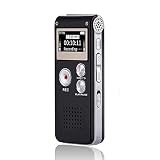
- 【Simple Operation】- switch on your voice recorder, one button for recording. press the "REC", start the recording, press "STOP", end the recording, press “PLAY”, listen what you just recorded, and then Press A-B, select your important section to repeat. Easy to playback with inner powerful speaker, support external sound speaker playback, let you enjoy superior recording quality.
- 【Clear Voice Record】- high quality recording with noise redution, you will get super clear recorded voice, the sensitive microphone help you to catch speaker's words in an interview, lectures, meetings.
- 【Voice Activated Recording】- automatic voice reduction function, it starts recording when sound is detected or turn to standby state, saving recording time and reduce power consumption.
- 【 Player Function】- this voice recorder can be used as an music player, you could enjoy the music after your tired study, meeting and so on. Also can function as a detachable data storage device.you can take along your favorite pictures and documents whenever you go.Simply cut-and-paste or drag-and -drop files to or from it via USB connection, the player will appear as a removeable drive in Windows.
- 【High quality and long time】 uses DSP noise reduction technology to filter out environmental noise, has high-quality recording, 【1536kbps】to restore the real scene. It can continuously record for more than 30 hours and play for 7 hours.
- Obtain explicit opt-in for using a living person’s identity as a feature or authority signal.
- Let the person review and approve their biography, descriptors, and representative examples.
- Label synthesis clearly; do not use first-person speech, badges, or wording that implies personal review unless authorized.
- Provide a workable correction and withdrawal process, including a clear account of what removal does and does not delete.
- Keep provenance that distinguishes direct quotation, paraphrase, and generated synthesis.
- Consider compensation where a person’s identity is part of the product’s commercial value, while treating payment as separate from consent.
For writers and other creators who discover their identity in an AI product, useful first questions are concrete: Is the name displayed to users? Does the product imply participation or endorsement? Can the company show what sources or outputs are associated with the name? Is there a written removal and deletion process? Those answers clarify the issue without assuming that every use of published work has the same legal or ethical status.
Why the corporate context matters
At the time of the interview, Superhuman was the corporate name formerly associated with Grammarly; Grammarly remained its flagship product, and the company also operated Coda and a Mail product, according to the episode description. The rebrand places the incident within a broader productivity-platform strategy, but it is not evidence that the name change was intended to avoid responsibility. The relevant accountability question is whether the company’s approach to identity, consent, and attribution changes across products—not what its branding implies.
The interview is useful because it makes a difficult boundary visible. Citing a person’s ideas can help users find expertise; turning the person’s name into a synthetic product interface can also suggest a relationship that does not exist. The unresolved test is whether users can tell the difference, and whether the person whose identity supplies the feature’s authority had a meaningful choice.
Quick Recap
Product prices and availability are accurate as of the date/time indicated and are subject to change. Any price and availability information displayed on Amazon at the time of purchase will apply.




