Recommended Free Tools
Code.org laid off 18 employees in January 2026, saying the cuts were intended to ensure the education nonprofit’s long-term sustainability. GeekWire reported that the reduction was about 14% of staff and left 107 employees. The organization later rebranded as CodeAI; that subsequent change is part of a broader strategic transition, not evidence that the layoffs alone caused it.
What happened in January 2026?
On January 21, 2026, GeekWire reported that Seattle-based Code.org had laid off 18 employees. The organization confirmed the reduction to GeekWire. The outlet described the cuts as about 14% of staff and reported that 107 employees remained. Those figures imply roughly 125 employees beforehand (18 divided by 125 is 14.4%), but that is arithmetic based on the published figures, not a separately reported pre-layoff headcount. GeekWire’s January 2026 report
Why did Code.org say it made the cuts?
In an emailed statement quoted by GeekWire, Code.org said: “Code.org has made the difficult decision to part ways with 18 colleagues as part of efforts to ensure our long-term sustainability.” The organization also said: “Their contributions helped millions of educators and students around the world, and we are grateful for their efforts.” The statements were attributed to Code.org, not to a named executive.
Code.org said, “Our mission remains unchanged,” and said it would continue the Hour of AI campaign, policy work, and curriculum supporting CS+AI education in classrooms. These are the organization’s stated intentions; they do not establish that every specific activity or program was unaffected, or independently demonstrate its outcomes.
#1 Best Overall
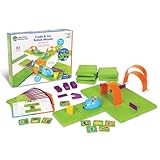
- SCREEN-FREE CODING: Kids practice sequencing, problem-solving, and early robot coding with this hands-on coding robotics kit that teaches programming basics through simple buttons and matching coding cards
- BUILT FOR YOUNG CODERS AGES 4+: Designed with early learners in mind, this coding toy supports coding for kids ages 4+ and helps emerging programmers build confidence through playful trial-and-error
- FOR CLASSROOM STEM CENTERS: Teachers can set up repeatable coding activities using the maze grids, walls, tunnels, and activity cards for classroom rotations, STEM labs, and small-group work
- INCLUDES: Comes with Colby the robot mouse, 16 maze grids (build a 20" x 20" board), 22 maze walls, 3 tunnels, 30 double-sided coding cards, 10 double-sided activity cards, a cheese wedge, and an Activity Guide; requires 3 AAA batteries (not included)
- CRITICAL THINKING & EARLY PROGRAMMING: Children strengthen sequencing, logic, and directional understanding as they program the mouse to navigate mazes-an easy-to-use kids robot toy and a strong introduction to robotics coding
What later reporting says about the nonprofit’s finances and strategy
A 2026 report by The Chronicle of Philanthropy put the layoffs in the context of financial pressure and a shift toward AI education. The Chronicle reported that Code.org’s revenue peaked in 2023, an unusual year that included six multiyear gift commitments and federal COVID-19 relief dollars. It reported 2025 revenue of $25 million, which was $6.6 million below spending, and said the organization drew on reserves to develop AI courses and AI-powered teaching and tutoring tools. These are figures reported by the Chronicle, not independently verified audited statements here. The Chronicle of Philanthropy’s report
The Chronicle also described possible revenue models CEO Karim Meghji was considering. They were options under exploration, not products or services reported as launched:
Rank #2
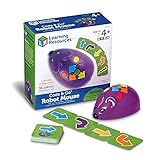
- SCREEN-FREE CODING FUNDAMENTALS: Kids practice sequencing, problem-solving, and early programming by using simple button commands to code the robot mouse-no apps or screens needed
- HANDS-ON CODING CHALLENGES: Use the 30 double-sided coding cards to plan step-by-step paths, then test, debug, and try again as kids build confidence through trial-and-error play
- DESIGNED FOR KIDS AGES 4+: Built for early learners, this coding toy supports STEM learning as kids develop logic, directional skills, and problem-solving through interactive play
- INCLUDES: Comes with Jack the robot mouse, 30 double-sided coding cards, and an Activity Guide; the mouse lights up, makes sounds, has 2 speeds, and requires 3 AAA batteries (not included)
- ADD-ON CODING MOUSE FOR HOME OR CLASSROOM: Use the robot mouse on its own to code routes using household obstacles, or add it to the Code & Go Robot Mouse Activity Set (LER2831, sold separately) for expanded play options
| Possible model | Intended audience | How it might generate revenue | Status in the Chronicle’s report |
|---|---|---|---|
| Workforce-credential pathway | Workers | A credential pathway potentially offering college credit | Being considered; not reported as launched |
| Direct-to-consumer product | Families | Sale of a product directly to consumers | Being considered; not reported as launched |
| Learning-assessment data products | School districts | Subscriptions | Being considered; not reported as launched |
The Chronicle attributed two reach figures to the organization: 11.1 million students using AI curricula and 36.7 million learners participating in Hour of AI short activities. These measures are distinct from GeekWire’s January article, which cited 102 million students and 3 million teachers. The figures describe different measures and reporting contexts and should not be treated as interchangeable or as independent evidence of program impact.
Is Code.org still operating?
The available reporting describes an ongoing organization and strategic transition: Code.org said its mission remained unchanged in January, and the Chronicle later reported its rebrand to CodeAI and its developing AI-education strategy. Code.org’s newsroom presents AI literacy, guidance, and curriculum among its education work and historical announcements. That official material documents the organization’s stated focus; it does not show that the layoffs had no effect on particular programs.
Free tools Windows power users keep installed
One-click scans. No signup required.
Rank #3

- Entry-level Coding Robot Toy: mBot robot kit is an excellent educational robot toys, designed for learning electronics, robotics and computer programming in a simple and fun way. From Scratch to Arduino, this STEM projects for kids ages 8-12 helps kids to learn programming step by step via interactive software and learning resources
- Easy to Build: With clearly building instructions, this building kit can be easily built within 15 minutes. Kids will learn more about electronics, machinery, and robotics components through building mBot. You can also play this STEM projects for kids ages 8-12 as a remote control car with its multi-functions: line-follow, obstacle-avoidance and so on
- Rich Tutorials for Programming: With Offerring coding cards and lessons, children can easily use all fonctions of mBot and creat projects by themselves. Matched with 3 free Makeblock apps and mBlock software, kids can enjoy remote control, play programming games, and coding with mBot robot kit. Note that the remote controller needs a CR2025 battery(NOT INCLUDED), and the robot kit needs 4 AA batteries (NOT INCLUDED)
- Awesome Gift for Kids: Surprise your little Kids with super cool robotics kit and let them discover the secrets of programming and electronics. Being well packaged and metal material, this robot kit is a perfect learning and educational toy gift for boys and girls on Birthday, Children's Day, Christmas, Easter, Summer Camp Activities, Back To School, Home Fun Time
- Creative Robot with Add-on Packs: So many fun configuration with an open-source system, this programmable robot is compatible with rich add-on packs. mBot can be connected to 100+ electronic modules and 500+ parts from the Makeblock platform, compatible with LEGO parts
What is not established about the layoffs
The cited reports do not specify which departments or roles were affected, what severance employees received, or whether a named program was reduced because of the cuts. They also do not establish that the layoffs alone drove the rebrand or every later strategic decision.
Quick Recap
Best Value

- Andy, The Code & Play Robot, comes prebuilt and ready to offer a hands-on, screen-free intro to the world of robotics and coding for preschoolers, ages 4 and up!
- Control Andy's movements by pushing the big, intuitive buttons on its head; program up to 30 actions at a time!
- Built-in lights, sounds, and movements bring coding lessons to life.
- Includes a series of games and activities that explore coding and robotics basics.
- Learn about real-world robots and their functions in the full-color manual.
Rank #4

- SCREEN-FREE CODING - Kids practice sequencing, problem-solving, and early robot coding with this hands-on coding robotics kit that teaches programming basics through simple buttons and matching coding cards
- BUILT FOR YOUNG CODERS AGES 5-7 - Designed with early learners in mind, this coding toy supports coding for kids 5-7 and helps emerging programmers build confidence through playful trial-and-error
- FOR CLASSROOM STEM CENTERS - Teachers can set up repeatable coding stem kits activities using the maze grids, walls, tunnels, and challenge cards to use for classroom rotations, STEM labs, and small-group work
- INCLUDES - Comes with the rechargeable Code & Go Robot Mouse, USB charging cord, maze grid pieces, maze walls, tunnels, coding cards, activity cards, cheese wedge, and an activity guide to support hands-on coding play
- CRITICAL THINKING & EARLY PROGRAMMING - Children strengthen sequencing, logic, and directional understanding as they program the mouse to navigate mazes-making it an easy-to-use kids robot toy and a strong introductory robotics coding kit
Product prices and availability are accurate as of the date/time indicated and are subject to change. Any price and availability information displayed on Amazon at the time of purchase will apply.




