China did not simply impose a permanent blanket ban on every Nexperia chip, and the Netherlands did not straightforwardly nationalize the company. In late 2025, the Dutch government intervened in Nexperia’s governance while an Amsterdam court transferred effective control of almost all its shares to a trustee. China then imposed company-specific export controls requiring licenses for products made by Nexperia China and relevant subcontractors.
The measures disrupted a supply chain running through Nexperia’s approximately 80,000-square-metre (861,000-square-foot) assembly and testing facility in Dongguan, Guangdong. Later exemptions and approved civilian-use shipments eased the immediate shock, but the corporate dispute remained unresolved in the latest available update, dated May 2026.



As an Amazon Associate I earn from qualifying purchases.
The short version
Nexperia is headquartered in Nijmegen but owned by China’s Wingtech Technology. The dispute combined three separate issues: a Dutch economic-security intervention, a court-supervised corporate-governance case, and China’s export licensing controls.
Recommended Free Tools
On September 30, 2025, the Dutch economic-affairs minister invoked the Wet beschikbaarheid goederen, commonly translated as the Goods Availability Act. The government said it was acting to protect critical semiconductor production, technology, knowledge and European supply continuity. Separately, the Enterprise Chamber of the Amsterdam Court of Appeal suspended Nexperia’s chief executive, appointed temporary management authority and transferred all but one share to a court-appointed trustee during the proceedings.
#1 Best Overall
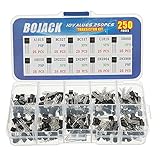
- BOJACK High Quality Power Transistors Assortment Kit.
- Product Name: Power Transistors
- Transistor Type: PNP & NPN
- Transistor Model: 10 Values, Include: A1015 PNP, BC327 PNP, BC337NPN, C1815 NPN, S8050 NPN, S8550 PNP, 2N2222 NPN, 2N2907 PNP, 2N3904 NPN, 2N3906 PNP.
- Package Quantity: 250pcs (Each model 25pcs), Packed in A Rugged Convenient Re-sealable Plastic Storage Case.
On October 4, China introduced export controls affecting Nexperia China and relevant subcontractors. Dutch parliamentary answers described the measure as an export-license requirement. That could still block or severely delay shipments when licenses were not issued, but it is more precise to call the action an export control or licensing restriction rather than an unconditional ban on all Nexperia exports.
By November and December, Chinese authorities said compliant civilian-use exports could receive exemptions or approvals, and the Dutch government said it expected supplies from Nexperia’s Chinese facilities to resume. That easing did not settle the underlying ownership and management dispute.
The Dutch government’s account of the intervention and Dutch parliamentary answers provide the clearest official explanation of the legal and export-control distinction.
The Tool Desk
Outbyte Driver Updater FREEScan for outdated or missing drivers - takes under a minuteDriver Scan →Outbyte PC Repair FREERepair Windows errors before they cause bigger problemsFix Now →What happened, and when?
- September 30, 2025: The Dutch economic-affairs minister invoked the Goods Availability Act against Nexperia, citing serious governance and economic-security concerns.
- September–October 2025: The Enterprise Chamber of the Amsterdam Court of Appeal took separate measures in the corporate case, including suspending the CEO, appointing temporary authority and placing almost all shares with a trustee.
- October 4, 2025: China imposed company-specific export controls affecting Nexperia China and relevant subcontractors.
- November 6, 2025: The Dutch government said China would take measures intended to resume supplies from Nexperia’s Chinese facilities.
- November–December 2025: China described exemptions or approvals for compliant civilian-use exports. Shipments were eased, but the available record did not establish an immediate return to completely unrestricted trade.
- February 11, 2026: The Enterprise Chamber found valid reasons to doubt proper management under the previous governance and ordered an investigation.
- May 22, 2026: Nexperia said it was still working to restore supply continuity and remained in dispute and dialogue with Wingtech.
Was Nexperia seized by the Netherlands?
“Seized” is a misleading shorthand unless it is immediately qualified. The Dutch government did not simply confiscate Nexperia’s assets, nationalize the company or turn it into a state-owned enterprise.
There were two parallel Dutch actions:
- Government action: The Goods Availability Act gave the economic-affairs minister an exceptional mechanism to intervene where the availability of strategically important goods could be threatened.
- Court action: The Enterprise Chamber intervened in Nexperia’s governance. The CEO was suspended, temporary management authority was appointed, and almost all shares were transferred to a trustee while the court-supervised investigation proceeded.
The practical result was Dutch-backed control over important management decisions. That is different from ordinary ownership. Wingtech remained the Chinese parent company, while voting rights, management authority and legal control were affected by the court process.
The Dutch government said its objective was to prevent production, technology, knowledge or assets critical to European supply from being moved or made unavailable. The intervention was therefore simultaneously a corporate-governance dispute and a national-economic-security measure.
Who owns Nexperia?
Nexperia is a semiconductor company headquartered in Nijmegen, Netherlands. Its parent is Wingtech Technology, a Chinese semiconductor and electronics company.
That ownership structure explains why the episode became politically sensitive. A Chinese-owned company operated through a European headquarters, manufacturing and technology assets, and production facilities in Asia. The Netherlands was concerned not only with who legally owned the business, but also with whether strategic capacity and know-how could be redirected away from Europe.
Ownership, governance and day-to-day operations should not be treated as the same thing:
| Question | Answer |
|---|---|
| Who owned Nexperia? | Wingtech Technology, subject to the effects of the Dutch court proceedings. |
| Where was Nexperia headquartered? | Nijmegen, Netherlands. |
| Who affected management control? | The Dutch government through its statutory intervention and the Enterprise Chamber through its court orders. |
| Where was the key affected Chinese operation? | Dongguan, Guangdong, a back-end assembly and testing facility. |
What triggered the Dutch intervention?
Dutch authorities cited serious governance concerns and the risk that production, money, technology, knowledge or capacity could be transferred away from Europe. Those concerns should be distinguished from allegations made by the company’s management and from facts finally established by a court.
Nexperia alleged that China-based management had rejected wafer deliveries on arms-length terms, reallocated stock, withheld payments, misused corporate seals, created unauthorized bank accounts and disregarded instructions from global management. These claims describe Nexperia’s position; they should not all be presented as independently proven facts.
The Enterprise Chamber’s February 11, 2026 finding was more significant than a simple repetition of government allegations: it found valid reasons to doubt proper management under the previous governance and ordered an investigation. That still was not a final judgment that every allegation had been proven.
Wingtech’s legal and corporate position also matters. The dispute was not an uncomplicated case of one government taking over an unrelated foreign company; it involved a Chinese parent, a Dutch-headquartered subsidiary, contested management authority and competing claims about the legitimacy of the intervention.
What did China do?
China imposed export controls on products made by Nexperia China and relevant subcontractors. Nexperia said the October 4 measure covered specific finished components and subassemblies manufactured in China. Dutch parliamentary material said exporters had to apply for licenses for Nexperia products.
The terminology matters:
- Export control: A government restriction requiring approval before specified goods can leave the country.
- License requirement: Shipments may proceed if the relevant authorization is granted.
- Effective export blockage: A shipment can be stopped in practice if a license is delayed or denied.
- Blanket export ban: A much broader claim that every shipment is prohibited regardless of product, customer or end use.
The evidence supports the first three descriptions for the relevant period, not the broadest one. China’s Ministry of Commerce later said compliant civilian-use exports could receive exemptions or approvals. An exemption for a particular civilian shipment, however, does not guarantee unrestricted exports, immediate delivery or the absence of further administrative friction.
Quick wins for a faster PC:
Clear out junk files and repair common Windows errorsFree Scan →Scan for outdated or missing drivers - takes under a minuteDriver Scan →Repair Windows errors before they cause bigger problemsFix Now →China’s official position also rejected the idea that its measures were simply retaliation. Chinese authorities said the Dutch intervention had caused the disruption and called for it to be revoked. In sequence, however, the Dutch intervention came first and China’s export controls followed, which is why many analysts describe the controls as a retaliatory response.
Why the Dongguan facility mattered
The affected Guangdong operation was Nexperia’s Dongguan assembly and testing facility. It is approximately 80,000 square metres, or about 861,000 square feet.
Dongguan is a back-end semiconductor site, not a conventional front-end wafer fabrication plant. In a simplified production chain:
- Silicon wafers are manufactured at a wafer-fabrication site.
- Those wafers or semi-finished materials are shipped to a back-end facility.
- The facility cuts, assembles, packages and tests the devices.
- Finished components are shipped to distributors, tier-one suppliers and manufacturers.
Nexperia operates a distributed production network, including European wafer-fabrication operations and assembly and testing sites in Asia. Dongguan therefore does not manufacture every Nexperia chip from start to finish. Its importance is that assembly and testing can be a critical chokepoint: wafers made elsewhere may not become customer-ready components until they pass through a qualified back-end process.
Free tools Windows power users keep installed
One-click scans. No signup required.
Reports and official statements pointed to low wafer inventory at the Dongguan operation and warned that shortages could affect Chinese and foreign automakers, including companies operating in China. The available evidence does not establish that the plant was permanently or completely shut down.
Why mature chips can stop modern production lines
Nexperia is known for high-volume, relatively mature components used in automotive electronics, industrial equipment, mobile products and consumer devices. These include basic switching, protection and power-management functions.
They are less technologically advanced than leading-edge processors, but that does not make them easy to replace. A substitute component may require:
- electrical and mechanical compatibility;
- matching package and performance specifications;
- reliability testing;
- automotive or industrial customer approval;
- qualification of the new manufacturing site;
- available capacity and inventory.
Automotive supply chains are especially exposed to part-number-specific shortages. A vehicle maker may have many months of general component inventory but still lack a particular diode, transistor or protection device approved for a specific module. The immediate risk was therefore not that every automaker would run out of chips at once. It was that a localized shortage could interrupt a tier-one supplier or a production line before a replacement was qualified.
Do these 3 things before closing this tab:
1Fix the driver behind crashes, sound loss and screen glitches2Repair Windows errors before they cause bigger problems3Scan for outdated or missing drivers - takes under a minuteHow export controls travel through the supply chain
The disruption mechanism is straightforward:
- Wafers or semi-finished materials are produced at one location.
- They move to Dongguan or another back-end facility for assembly and testing.
- Finished components are exported to customers or distributors.
- Export-license delays interrupt delivery of particular products.
- Alternative facilities cannot necessarily take over immediately.
Alternative assembly sites may use different equipment, have different qualified processes or lack spare capacity. Customers may also have approved only one factory for a particular part number. Inventory can vary substantially across products and customers, so the same restriction may create an immediate shortage for one supply chain and a manageable delay for another.
This is why the episode exposed a vulnerability without proving a universal “global chip shortage.” The immediate risk was concentrated in specific Nexperia products, facilities and shipping routes.
The competing narratives
| Party | Position |
|---|---|
| Dutch government | The intervention was an exceptional step needed to protect European semiconductor supply, technology and economic security. |
| Chinese government | The Dutch administrative and court intervention caused the crisis and should be reversed; China later emphasized compliant civilian-use exports. |
| Nexperia management | Actions by former or China-based management allegedly undermined governance and global supply continuity; the company continued efforts to restore normal operations. |
| Wingtech | The Chinese parent remained central to the ownership and legal dispute, whose ultimate corporate and governance outcome was unresolved in the latest available update. |
These positions overlap on the existence of disruption but diverge sharply on its cause, legitimacy and responsibility. A court finding that there were valid reasons to doubt proper management supports the continuation of the investigation; it does not settle every political or factual claim made by either side.
Independent reader supportYour contribution helps us test, update, and keep practical guides available for everyone.What changed after the initial shock?
The October restrictions did not remain an unchanged total blockade through the latest available reporting. In November and December 2025, Chinese authorities described exemptions or approvals for compliant civilian-use exports. The Dutch government said it expected supply from Nexperia’s Chinese facilities to resume, while Nexperia characterized the development as an easing through exemptions rather than proof that all trade had returned to normal.
Rank #4
That distinction is important for customers and supply-chain planners. A shipment-by-shipment approval process can reduce the immediate shortage while leaving uncertainty about timing, eligible end users and future availability. Resumption of some supplies also does not resolve the underlying question of who controls Nexperia or how its global operations should be managed.
As of Nexperia’s May 22, 2026 update, the company described continuing efforts to restore supply continuity and ongoing dialogue with Wingtech. The corporate and legal dispute remained unresolved in the supplied record.
How this fits the wider technology conflict
The Nexperia episode was not an isolated bilateral quarrel, although it should not be reduced to a generic “trade war” story either.
It occurred amid:
- U.S. export controls affecting Wingtech and its corporate group;
- Dutch and European concern about strategic semiconductor dependence;
- China’s expanding use of export licensing and supply-chain leverage;
- the wider U.S.–China struggle over semiconductor technology and manufacturing;
- European efforts to reduce dependence on concentrated production chains.
The broader lesson is that governments increasingly treat ownership, corporate control, manufacturing location and supply continuity as national-security matters. A company can be headquartered in Europe, owned by a Chinese group and dependent on Asian back-end production. That structure creates multiple points at which a corporate dispute can become a trade and supply-chain crisis.
What Europe should learn from the episode
Europe’s semiconductor resilience cannot be measured only by the number of wafer fabs located within Europe. Assembly, packaging and testing are also strategic stages. If wafers must travel to a single overseas facility before they become usable, local wafer capacity may not protect manufacturers from an interruption.
The case also highlights four policy challenges:
- Ownership screening: Governments may scrutinize foreign ownership of strategically important companies even when the transaction is legally completed.
- Back-end capacity: Europe may need more diversified and qualified assembly and testing options.
- Customer qualification: A nominally available alternative factory is not an immediate substitute until customers approve its output.
- Supply-chain visibility: Automakers and suppliers need to understand not only their direct vendors but also the locations where components are assembled, tested and released for shipment.
For businesses, the practical response is not simply to stock more generic chips. They need to identify single-site dependencies by part number, understand license exposure and qualify alternatives before a crisis occurs.
Bottom line
This was not simply a Dutch seizure followed by a clean Chinese export ban. It was a layered confrontation involving a Chinese-owned company, Dutch governance and economic-security intervention, Chinese export licensing, and a globally important back-end manufacturing chain.
The Dongguan facility showed why mature semiconductors can become strategic bottlenecks: a relatively basic component can stop production when its package, qualification, manufacturing site and delivery route are difficult to replace. Later exemptions reduced the immediate danger, but the continuing legal dispute demonstrated that supply continuity and corporate control had not been permanently separated.
Outdated Drivers Are Slowing You Down
One free scan finds every outdated or missing driver and matches the right update for your exact hardware.Free scan · exact hardware matchWindows Errors? Fix Them Before They Spread
Repair common Windows errors and clear accumulated junk for a smoother, more stable PC - no reinstall needed.Free scan · no reinstallSources: Government of the Netherlands; Dutch parliamentary record; China’s Ministry of Commerce; and Nexperia’s May 2026 statement.
Quick Recap
Product prices and availability are accurate as of the date/time indicated and are subject to change. Any price and availability information displayed on Amazon at the time of purchase will apply.




