What’s actually slowing this PC down?
Pick the symptom - the matching free tool is one click away.
China’s smart-card market was expanding rapidly in 1998–1999 because the government-backed Golden Card Project was creating demand across banking, telecommunications, public transport and security. More than 80 million IC cards were reportedly issued in 1998—described as a 200% increase over 1997—and more than 150 million cards were expected to be in circulation during 1999. Those figures describe a historical market, not China’s current payments industry.
The opportunity attracted chipmakers, card manufacturers, systems integrators and foreign companies forming local partnerships. Success depended on more than semiconductor technology: suppliers faced factory inspections, product qualification, registration, evolving standards and pressure to manufacture or integrate inside China.
What China’s IC-card market meant in 1999
In the period covered by a July 1999 EE Times report (a secondary bibliography dates the article to August 2, 1999), an IC card could mean several different technologies. Memory cards combined nonvolatile memory with logic or encryption for relatively simple stored-value and prepaid uses. MCU smart cards included a microcontroller, enabling more sophisticated security and applications. Contactless cards used radio communication and were especially attractive for transit and access-control systems.
The market was moving from basic memory-card deployments toward MCU-based financial cards and contactless systems. “IC card” therefore covered banking cards, prepaid telephone cards, GSM subscriber-identity modules (SIMs), fare media, identification, security credentials and other electronic-payment applications.
Recommended Free Tools
#1 Best Overall
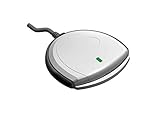
- Fully Compliant - Complies With All Major Industry Standards, Including Iso/Iec 7816, Usb Ccid, Pc/Sc, And Microsoft Whql. As Well As, Emv 2011 Ver 4.3 Level 1 And Gsa Fips 201.
- Seamless Integration - With Identiv-Specific Smartos You’Ll Get Easy, Complete Support Of All Major Contact Smart Card Ics And Technologies In One Simple Reader.
- Universal Compatibility - Works With Virtually All Contact Chip Cards And Pc Operating Systems, Including Windows, Macos, Linux And Android.
- Fast And Convenient- Shorten Your Transaction Time With A Reader That’S Optimized For Speed. It’S Ultra-Compact And Robust Design Is Streamlined For Mobile Operation, Making This Reader The Best Choice For Convenience, Security And Reliability.
- Ergonomic and cost efficient design
The contemporary report is the source for the figures and company descriptions below.
The Golden Card Project created the demand
China launched the Golden Card Project in 1993 as a nationwide electronic-currency initiative. It established 12 provincial and municipal exchange centers, with a National Bank Card Exchange Center expected to link them. The project was more than a card-issuance program: it provided a government framework for coordinating financial applications, telecommunications, cable television and SIM services while officials worked on standards, registration, security and testing.
That state coordination made the market unusually attractive to international suppliers. A vendor could see large potential volumes, but could not assume that an internationally successful product would be accepted without local qualification or compliance with Chinese requirements.
How large was the reported opportunity?
| Indicator | Reported figure | How to read it |
|---|---|---|
| IC cards issued in 1998 | More than 80 million | The report said this was a 200% increase over 1997; the total includes applications beyond banking. |
| Expected cards in circulation during 1999 | More than 150 million | An expectation for the year, not a later audited count of unique users. |
| Chinese banks issuing cards | More than 20 | The report did not provide a bank-by-bank breakdown. |
| Bank cards reported | Approximately 110 million | Described in the article as “credit cards,” although Chinese deposit or debit-style cards were especially important. |
| IC cards among those bank cards | Approximately 3 million | A subset of the reported bank-card total. |
| Construction of the approval system | Four chipmakers, 14 cardmakers and two application developers in the second approved group | The Ministry of Information Industry announcement was made in July 1999. |
These measures are not interchangeable. “Cards issued in a year,” “cards in circulation,” bank cards and IC cards across all sectors use different denominators. The report does not establish how many distinct people held cards or how many cards were active.
Rank #2
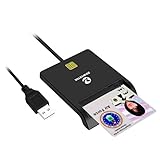
- Advanced Realtek Chipset; PIV, EMS, ISO-7816 & EMV2 2000 Level 1, CE, FCC, VCCI and Microsoft WHQL certifications.
- Supports ActivClient, AKO, OWA, DKO, JKO, NKO, BOL, GKO, Marinenet, AF Portal, Pure Edge Viewer, ApproveIt, DCO, DTS, LPS, Disa Enterprise Email and etc. CAC chip cards
- Sleek ergonomic flat design, precise slot, convenient to horizontally plug card
- Compatible with Windows10/11, Mac OS 10.15 or later. Driver free, plug and play.
- New generation DOD Military CAC USB smart chip card reader, no firmware upgrade requirements
Why banking was the strategic battleground
Magnetic-stripe ATM cards were already widespread, but Chinese banks favored deposit cards, creating a potential chip-card market broader than conventional revolving credit. A financial IC-card specification announced by the People’s Bank of China reportedly accelerated interest in MCU cards.
Banks were also cooperating with electricity and transportation organizations to extend cards into electronic payments. The strategic attraction was not simply replacing a magnetic stripe. A secure MCU could combine account functions with identification, stored value or access to other services, provided banks, terminals and back-end systems could work together.
Telecommunications supplied early scale
Prepaid telephone cards and GSM SIMs were among the most visible nonbank applications. They required cards in very large volumes and gave foreign manufacturers an early route into China’s market. The report said Gemplus had announced delivery of its 100 millionth SIM card in China and was expanding local production.
Other applications mentioned or implied in the period included cable-television subscriptions, health care, driver’s licenses, security and access control, electricity-related payments and subscriber management. Smart cards appealed to these operators because they could provide identification, authorization, stored value and controlled data in a portable credential.
The Tool Desk
Outbyte Driver Updater FREEScan for outdated or missing drivers - takes under a minuteDriver Scan →Outbyte PC Repair FREERepair Windows errors before they cause bigger problemsFix Now →Rank #3

- USB-C/Type C CAC card reader military, compatible with Windows 10/11, Mac OS 10.15 or later verison. (Windows 11 need a driver)
- MAC user: Java is necessary for MAC user. Please install Java firstly on Java's official website. DOD and USG users: need a third-party CAC Enabler program
- ID/IC strong compatibility. Supports Government ID, ActivClient, AKO, OWA, DKO, JKO, NKO, BOL, GKO, Marinenet, AF Portal, Pure Edge Viewer, ApproveIt, DCO, DTS, LPS, Disa Enterprise Email and etc. CAC chip cards.
- Don't support Iphone and ipad
- Compatible with US Military and Government DOD ID cards. Good for online banking and credit card payment apps, etc
Why transit made contactless technology important
Contactless cards were being promoted for public transportation and security. Hong Kong’s integrated fare-collection system was cited as an influential example; Motorola and Australia’s ERG were identified as suppliers to that system. Philips’ MIFARE technology was described at the time as a widely accepted contactless-card standard.
The report said more than 30 mainland cities were considering IC-card transit systems. A transit project required much more than a chip: cards, readers, gates or validators, fare rules, clearing systems, maintenance and integration with each operator. That widened the opportunity from component sales to complete fare-collection and systems contracts.
How foreign companies entered the market
International participation covered several layers of the supply chain. Some companies supplied semiconductor dies or modules; others produced cards, readers or applications, and some pursued joint ventures and full systems integration.
Chip and module suppliers
- Infineon Technologies, then Siemens Semiconductor, and Atmel were described as early memory-card suppliers and leading suppliers in mainland China.
- STMicroelectronics (identified in the article as STM) and Philips Semiconductors were seeking to expand from memory products into MCU and contactless cards.
- The report attributed a 45% global smart-card MCU share to a Dataquest estimate for STMicroelectronics at the time. That figure concerns the MCU segment, not all IC cards or all semiconductor sales.
Card manufacturers and application specialists
- Gemplus, Bull and Schlumberger were identified as early entrants connected with GSM, banking and other applications.
- Card makers competed on module design, assembly, personalization, security and manufacturing capacity, not only on the silicon inside a card.
Systems and local-partner strategies
- Motorola and ERG were associated with the Hong Kong fare-collection example.
- Motorola formed a joint venture with Huaxu Golden Card to produce contact and contactless smart cards.
- Foreign suppliers also relied on Chinese distributors, card makers and integrators to reach bank, telecom and municipal customers.
Localization was part of market access
The report’s investments show why exporting finished products was only one possible strategy. Gemplus’ Tianjin joint venture was reported to have annual capacity for 80 million phone and SIM cards. Gemplus also announced a $30 million investment to expand its Zhuhai IC-card facility and establish a research center.
Do these 3 things before closing this tab:
1Clear out junk files and repair common Windows errors2Fix the driver behind crashes, sound loss and screen glitches3Repair Windows errors before they cause bigger problemsRank #4

- Compact And Lightweight Dongle Form-Factor Card Reader
- Accepts Cards In Id1 Format (Iso8716)
- Ccid Compliant
- Compact and lightweight dongle form-factor card reader
- Accepts cards in ID1 format (ISO8716)
Motorola and Huaxu Golden Card were reported to have formed a $30 million joint venture, with planned annual output of two million contactless and five million contact smart cards. These were announced capacities and investments, not independently audited production or utilization.
Local manufacturing or a joint venture required more capital and operational commitment than exporting, but it could improve access to qualification, capacity, local customers and systems work. Distribution partnerships required less investment but left a foreign supplier more dependent on a Chinese card maker or integrator.
Independent reader supportYour contribution helps us test, update, and keep practical guides available for everyone.Approval, standards and the price of entry
In July 1999, the Ministry of Information Industry announced a second group of qualified product and system providers: four chipmakers, 14 cardmakers and two application developers. Companies had to pass factory inspection to receive approval to produce IC cards for the Chinese market. The report also said overseas suppliers needed registration before their products and systems could be sold in China.
Officials were working on technical standards, security rules, registration requirements and quality testing. Approval was therefore evidence of qualification, not a guarantee of commercial deployment. Foreign companies had to decide whether to export, use a local distributor, license technology, build a factory or share risk through a joint venture.
Quick wins for a faster PC:
Scan for outdated or missing drivers - takes under a minuteDriver Scan →Clear out junk files and repair common Windows errorsFree Scan →Best Value

- Smart-fold mechanics means ultra-compact, convenient-to-carry, and easy-to-handle ID1 smart card use
- EMV Level 1 and FIPS 201-certified
- SmartOS powered
- MacBook, phones and tablets with (reversible) Type C USB ports
- Supports all major smart cards 5V, 3V, and 1.8V, ISO/IEC 7816 Class A/B/C
Three technology tracks and their trade-offs
Memory cards
Memory cards suited prepaid and simpler stored-value applications and were already established in some deployments. Their relative simplicity could support low-cost, high-volume programs, but they offered less processing capability than MCU cards.
MCU smart cards
MCU cards offered stronger security and were central to the emerging financial-card market. They also brought greater requirements for operating software, personalization, readers, certification and interoperability. Suppliers with an early memory-card position faced competition as banks moved toward more capable cards.
Contactless cards
Contactless cards were well suited to high-throughput transit and security uses. They required a complete reader, terminal and back-end ecosystem, so the commercial prize could include integration and maintenance rather than a card-chip sale alone.
What remained unresolved in 1999
- Whether national standards would become fully unified across provincial and municipal deployments.
- How security rules and registration procedures would evolve.
- Whether banking, transit, telecom and other systems would interoperate.
- Which foreign suppliers would retain an advantage as Chinese manufacturing and systems capability increased.
- How announced capacity and approval status would translate into actual shipments and user adoption.
The market was therefore large but not frictionless. China’s policy program created demand while its approval and localization requirements shaped who could capture it.
How to interpret this story today
Every number, company position, investment and standards description in this article belongs to the 1998–1999 reporting period. The Golden Card Project account should not be treated as a current description of China’s payments, mobile-wallet, QR-payment, NFC or semiconductor markets. Company names and joint-venture arrangements are retained as they were reported then; their later ownership, operations or status would require separate current research.
Quick Recap
Product prices and availability are accurate as of the date/time indicated and are subject to change. Any price and availability information displayed on Amazon at the time of purchase will apply.




