Recommended Free Tools
China is the world’s largest location for battery production, and Chinese-headquartered producers supply a similarly large—but not identical—share of batteries installed in electric cars. The distinction matters: one measure counts where batteries are made; the other counts who supplies them. The latest figures show the scale of China’s position, but they do not provide a consistent annual series proving exactly how its share changed across the entire decade.
What does “China dominates EV batteries” mean?
It describes two separate measures, not one market-share figure. The International Energy Agency (IEA), in its 2026 analysis of 2025, reports that China accounted for more than 80% of global battery production. In the same analysis, Chinese producers accounted for almost 75% of global electric-car battery deployment.
| Measure | What it counts | Latest figure in the cited IEA analysis |
|---|---|---|
| Production by location | Batteries made in factories located in China | More than 80% of global battery production in 2025 |
| Deployment by supplier nationality | Batteries supplied by Chinese producers and deployed in electric cars worldwide | Almost 75% of global electric-car battery deployment in 2025 |
These figures answer different questions. A battery made in China by a non-Chinese company counts toward China’s production share; a battery made abroad by a Chinese company can count toward the Chinese-producer deployment share. The percentages should not be added, treated as interchangeable, or read as shares of the same measure.
Why does China dominate EV battery production?
A large vehicle-manufacturing base
China’s battery position sits alongside a major electric-car industry. The IEA’s Global EV Outlook 2025 reports that China produced 12.4 million electric cars in 2024, out of 17.3 million worldwide—more than 70% of global output. It describes China as the world’s electric-car manufacturing hub. A large vehicle industry and battery industry operate at substantial scale in the same country, but these figures alone do not establish how much the vehicle base caused battery-sector growth.
What’s actually slowing this PC down?
Pick the symptom - the matching free tool is one click away.
#1 Best Overall

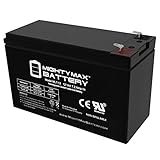
- IMPORTANT: RED 2-PIN CONNECTOR REQUIRED – This battery ONLY works with the red 2-pin connector shown in the product photos. Many ride-on toys use similar-looking connectors that are not compatible. Compare your connector carefully before purchasing.
- IMPORTANT: VERIFY BATTERY SIZE BEFORE PURCHASE – Battery dimensions are 5.9 x 2.5 x 3.9 inches (151 x 65 x 99 mm). Measure your existing battery and battery compartment before ordering. This battery may not fit all ride-on vehicles.
- HIGHER 9.5AH CAPACITY FOR LONGER PLAYTIME – Premium sealed lead acid battery provides extended runtime compared to many standard 7AH batteries while delivering reliable power for compatible ride-on vehicles.
- INCLUDES REPLACEABLE 40A FUSE HARNESS – Includes SafeAMP 12V 9.5AH SLA battery, red 2-pin connector harness, and replaceable 40-amp fuse for added protection and convenient installation.
- DESIGNED FOR COMPATIBLE 12V RIDE-ON VEHICLES – Intended as a replacement battery for ride-on toys using the red 2-pin connector and requiring a battery measuring approximately 151 x 65 x 99 mm.
LFP’s cost relevance and concentration
Lithium iron phosphate (LFP) batteries are relevant to China’s position because the chemistry can reduce production costs and remains concentrated mainly in China. The IEA reports that Chinese companies lead in LFP batteries and materials. That makes LFP an important part of the industrial picture, not a complete explanation: the available figures do not show that one chemistry alone accounts for China’s lead.
A system, not a single-company result
The gap between China’s production share and Chinese producers’ deployment share also shows why the story cannot be reduced to one national factory base or one supplier. Production location, supplier headquarters, vehicle manufacturing, and chemistry are related but distinct parts of the market. The cited figures establish their scale and overlap; they do not rank the causal contributions of industrial policy, domestic demand, materials processing, manufacturing learning, or company strategy.
Rank #2

- Universal Compatibility: Works with alarm systems, security devices, UPS, kids ride-on cars. 12V7Ah/20HR rechargeable battery replaces 1270 batteries, UB1270, RT1270, CA1270, 12FM7 and more.
- Long-Lasting Performance: 12V 7Ah rechargeable battery provides reliable power with maintenance-free & spill-proof design. Delivers consistent 12 volt output as deer feeder battery, ride on replacement battery, and house alarm battery.
- Easy Installation: Simple replacement for your existing 12V 7Ah 20HR battery. Compatible with standard F1 terminals, no special tools required. Ideal 12V battery pack for home alarm. Dimensions: 5.94" x 2.56" x 3.70" (height with terminals: 3.94")
- Versatile Applications: Ideal 12V SLA battery for alarm systems, emergency lighting, exit signs, deer feeders, 12V UPS battery systems, power wheels, and other devices requiring a dependable 12V 7Ah sealed battery.
- Premium Construction: Rugged ABS case protects our lead acid batteries from damage. Leak-proof design prevents acid spills, engineered with high-density plates for extended battery life. Resists vibration and environmental conditions.
How did China become the leader in electric vehicle batteries?
The evidence here supports a description of the outcome and its industrial context more strongly than a detailed year-by-year history. It shows a very large battery-manufacturing base, a dominant position in electric-car output, and a strong role for Chinese firms in LFP. It does not provide comparable annual battery-market shares from 2015 through 2025 or quantify how much any one policy, market force, or business decision contributed to the rise.
One related trend should not be mistaken for battery-market history: the IEA says Chinese automakers made more than 80% of domestic EV production in 2024, up from roughly two-thirds in 2021. That is a measure of vehicle production by automaker nationality, not battery production or battery deployment. It cannot be used to calculate a decade-long increase in China’s battery share.
Rank #3
- Ml7-12 Sla Is A 12V 7 2Ah Sealed Lead Acid (Sla) Rechargeable Maintenance Free Battery
- Dimensions 5 94 Inches X 2 56 Inches X 3 94 Inches Terminal F1 Listing Is For The Battery Only No Wire Harness Or Mounting Accessories Included
- Package Quantity : 1
- Rechargeable Battery That Can Be Mounted In Any Position Resists Shocks And Vibration Long Lasting High Performance In High And Low Temperatures
Is CATL bigger than BYD in EV batteries?
The figures cited here do not support a like-for-like CATL-versus-BYD ranking. CATL’s March 10, 2026 annual-report release says the company’s lithium-ion battery sales reached 661 GWh in 2025. The release also reports a 39.2% global power-battery market share, attributing that figure to SNE Research. These are CATL-reported figures; the market-share figure should not be mistaken for an independently verified IEA estimate, and the available material gives no comparable BYD figure using the same metric and year.
Sales, market share, production, and deployment are not interchangeable measures. A comparison needs the same geography, period, battery category, and measurement basis for both companies. Without those matched figures, this evidence cannot establish which company is bigger overall.
Rank #4
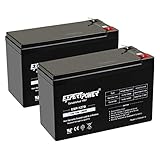
- Universal Compatibility: Works with alarm systems, security devices, UPS, kids ride-on cars. 12V7Ah/20HR rechargeable battery replaces 1270 batteries, UB1270, RT1270, CA1270, 12FM7 and more.
- Long-Lasting Performance: 12V 7Ah rechargeable battery provides reliable power with maintenance-free & spill-proof design. Delivers consistent 12 volt output as deer feeder battery, ride on replacement battery, and house alarm battery.
- Easy Installation: Simple replacement for your existing 12V 7Ah 20HR battery. Compatible with standard F1 terminals, no special tools required. Ideal 12V battery pack for home alarm. Dimensions: 5.94" x 2.56" x 3.70" (height with terminals: 3.94")
- Versatile Applications: Ideal 12V SLA battery for alarm systems, emergency lighting, exit signs, deer feeders, 12V UPS battery systems, power wheels, and other devices requiring a dependable 12V 7Ah sealed battery.
- Premium Construction: Rugged ABS case protects our lead acid batteries from damage. Leak-proof design prevents acid spills, engineered with high-density plates for extended battery life. Resists vibration and environmental conditions.
What share of EV batteries are made in China?
For 2025, the IEA’s 2026 analysis puts China’s share of global battery production above 80%. That is the answer when “made in China” means factory location. It is not the same as the almost 75% share of global electric-car battery deployment attributed to Chinese producers, which measures supplier nationality.
Are Chinese battery makers expanding production outside China?
Yes. The IEA’s Global EV Outlook 2025 identifies the European Union as the largest single destination for Chinese producers’ overseas manufacturing capacity. It projects their share of EU manufacturing capacity to rise from less than 10% in 2024 to more than 30% by 2030.
Quick wins for a faster PC:
Scan for outdated or missing drivers - takes under a minuteDriver Scan →Repair Windows errors before they cause bigger problemsFix Now →Fix the driver behind crashes, sound loss and screen glitchesFind Drivers →The 2030 figure is a projection, not an observed result. It is based on projects considered committed through the end of the first quarter of 2025; the IEA’s definition includes installed capacity and projects that had reached a final investment decision and begun construction. Whether the projected share is reached depends on project delivery and other developments.
What does China’s battery-recycling capacity show?
The IEA’s 2026 analysis reports that China hosts more than 85% of global battery-recycling capacity. Capacity is the ability to process material, not a count of batteries actually recycled or materials recovered. The IEA also notes that global recycling capacity currently exceeds available feedstock, so the capacity figure should not be read as evidence that plants are running at full utilization or recovering an equivalent share of materials.
Quick Recap
How to read claims about China’s battery lead
- Check the measure: production by factory location, deployment by supplier, company sales, and nameplate capacity describe different things.
- Check the year and geography: the production and deployment shares refer to 2025 globally; the vehicle-output figures refer to 2024.
- Separate observed results from projections: the EU capacity share for 2030 is conditional, not current.
- Do not turn correlation into a causal ranking: the cited figures show China’s vehicle and battery scale, but do not quantify why each part grew or how much it contributed.
Product prices and availability are accurate as of the date/time indicated and are subject to change. Any price and availability information displayed on Amazon at the time of purchase will apply.




