The January 2026 NVIDIA H200 episode was a reported customs hold-up, not proof that NVIDIA lost $54 billion. Washington opened a restricted, case-by-case export-licensing path on January 13. The next day, Reuters reported that Chinese customs agents had been told H200 chips could not enter China. The roughly $54 billion figure was an estimate based on reported demand for more than two million chips at about $27,000 each—not confirmed, paid or recognized NVIDIA revenue.
What the H200 is—and why it mattered
NVIDIA’s H200 is a Hopper-generation data-center accelerator for AI model training and inference, cloud infrastructure and enterprise computing. It is not a consumer gaming graphics card. NVIDIA positions the product for large-scale AI systems; specifications and platform details are available on its official H200 page.

The chip was more capable than NVIDIA’s China-specific H20 and therefore sat directly inside the U.S.–China technology-control dispute. For a transaction to complete, a customer needed both U.S. authorization to export and Chinese permission to import, clear customs and use the hardware.
What happened on January 13 and 14
| Date | Reported development | What it established |
|---|---|---|
| January 13, 2026 | The U.S. Commerce Department opened a conditional, case-by-case licensing path for H200-class products. | Some exports could be reviewed; no blanket sales authorization was issued. |
| January 14, 2026 | Reuters reported that Chinese customs agents had been told H200 chips were not permitted to enter China. | A Chinese import barrier was reported, based on three people briefed on the matter. |
| January 27, 2026 | Reuters reported initial Chinese approval for ByteDance, Alibaba and Tencent to buy a first batch. | The reported restriction was not permanent or universal. |
The Chinese customs account came from Reuters sources, not a publicly released Chinese customs order. The reporting did not initially establish whether the instruction covered existing orders, new orders, or both. “Blocked” or “effectively halted” is therefore more precise than describing a published nationwide legal ban. The Reuters report is at Investing.com.
#1 Best Overall

- Standard Memory: 40 GB
- Host Interface: PCI Express 4.0
- Cooler Type: Passive Cooler
- Product Type: Graphics Card
Why U.S. approval was not a green light
The January policy revised the review standard for advanced-computing exports. It created a licensing pathway for NVIDIA H200, AMD MI325X and comparable products, subject to conditions described by the Bureau of Industry and Security and the Federal Register.
- U.S. supply had to remain adequate, with no diversion of available domestic production capacity.
- Customers needed export-compliance procedures and end-user screening.
- Independent third-party testing had to occur in the United States.
- Military use was restricted.
- Shipment volumes were limited relative to U.S. sales.
Those are conditions for reviewing individual licenses—not permission for NVIDIA to ship unlimited inventory. A license, shipment, arrival and customs clearance are separate events. China could still refuse entry after Washington authorized an export.
Rank #2

- GPU processor: NVIDIA RTX A5500
- CUDA cores: 10240
- 24GB GDDR6 ECC Graphics Memory
- System Interface: PCI-Express 4.0 x16
- 1 x DisplayPort to HDMI adapter
Where the $54 billion estimate came from
Reuters reported that Chinese technology companies had ordered or sought more than two million H200 chips, while the approximate reported price was $27,000 per chip. The arithmetic is:
2,000,000 chips × $27,000 = $54,000,000,000
That produces an approximate gross pipeline value, not booked sales. The two-million figure was reported demand or orders of uncertain legal status, and the price was approximate. The calculation may not include discounts, taxes, financing, servers, networking, installation, software or support. Reuters also reported NVIDIA inventory of roughly 700,000 chips at the time and that the company contacted TSMC about additional production capacity (Reuters report).
Some customer commitments were reportedly conditional on Beijing’s approval. NVIDIA was also reported to seek full upfront payment from Chinese customers amid the import uncertainty (Tom’s Hardware). A conditional or unpaid order can be delayed, reduced, cancelled, rejected by regulators or reallocated. It should not be called lost revenue.
“Orders” can mean several different things
The headline compresses multiple commercial stages that have different financial significance:
Rank #4
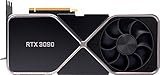
- Chipset: NVIDIA GeForce RTX 3090
- Video Memory: 24GB GDDR6X
- Memory Interface: 384-bit
- Output: DisplayPort x 3 (v1.4a) / HDMI 2.1 x 1
- Nvidia India 3 Year *
- Interest: a customer signals that it wants capacity.
- Purchase order: a formal request that may still contain regulatory or delivery conditions.
- Paid order: money has been received, potentially subject to refund or cancellation terms.
- Licensed order: U.S. export permission has been issued for a specified customer and quantity.
- Manufactured unit: NVIDIA has built the chip.
- Exported unit: the product has left the United States under an authorized shipment.
- Customs-cleared unit: Chinese authorities have admitted it.
- Recognized revenue: NVIDIA has met the accounting requirements to record a sale.
No public evidence identified here shows $54 billion of firm, paid H200 revenue recognized by NVIDIA. The reported number belongs at the demand or pipeline stage unless NVIDIA or the buyers document otherwise.
How the situation evolved after the reported blockage
| Date | Development | Implication |
|---|---|---|
| December 22, 2025 | NVIDIA reportedly hoped to begin shipments before the Lunar New Year, although Beijing had not approved imports. | Customer planning preceded Chinese import authorization (Reuters). |
| December 31, 2025 | Reported demand exceeded two million chips versus roughly 700,000 in inventory; NVIDIA reportedly explored more TSMC capacity. | Supply, allocation and production risks were already material (Reuters). |
| January 13–14 | Washington opened conditional review; Reuters then reported the Chinese customs instruction. | Two governments controlled separate gates. |
| January 27 | ByteDance, Alibaba and Tencent reportedly received approval for an initial batch. | Import access began reopening for selected buyers (Reuters). |
| February | NVIDIA’s SEC filing said small amounts had U.S. approval for specific China-based customers and required U.S. inspection before shipment. | Licenses and inspections remained customer- and shipment-specific (NVIDIA filing). |
| March | Jensen Huang reportedly said NVIDIA was restarting H200 production for China and had purchase orders from Chinese customers. | Partial reopening did not demonstrate that the entire reported pipeline had shipped (Axios; Tom’s Hardware). |
| May 14 | Reuters reported U.S. clearance for approximately 10 Chinese firms, with no deliveries yet. | U.S. approval still exceeded physical shipments (Reuters). |
| July 14 | A U.S. official told Congress that a small number of H200 chips had shipped to China. | The channel had reopened on a limited basis (Reuters). |
What the episode means for NVIDIA and AI infrastructure
Inventory and manufacturing exposure
If demand exceeds available inventory while import approval is uncertain, NVIDIA must decide whether to build more chips, reserve capacity for other markets or wait. Production commitments can leave the company with units that cannot legally reach the intended customer. The reported outreach to TSMC shows why the issue was also a supply-planning problem.
Free tools Windows power users keep installed
One-click scans. No signup required.
Best Value

- Graphics Card Interface: Pci E
Two-country compliance risk
U.S. export licensing cannot compel China to admit a product. Chinese customs and end-user decisions can delay or prevent delivery even after a U.S. license. Conversely, Chinese approval cannot override U.S. export controls. Enterprise buyers therefore face compliance obligations on both sides, plus U.S. inspection requirements.
China’s policy trade-off
Chinese AI companies have an incentive to obtain advanced accelerators, while Beijing also wants to develop domestic alternatives and control which organizations receive imported hardware. Restricting or conditioning imports can support local suppliers and provide bargaining leverage, but it can also slow domestic AI deployment. These are policy incentives, not proof of a single stated motive.
U.S. security debate
Critics argued that allowing H200 exports could strengthen China’s military capabilities and erode the U.S. lead in AI. The debate was reflected in coverage by The Associated Press and a congressional letter available at banking.senate.gov.
What remained unknown on August 18, 2026
- The exact number of binding, unconditional H200 purchase orders.
- How much, if anything, customers paid upfront.
- How many chips China approved, imported and cleared through customs.
- How much H200 revenue NVIDIA recognized from China.
- Whether the original estimate of more than two million chips remained valid after the restrictions and later approvals.
- Whether every U.S.-approved customer could actually receive a shipment.
By August 18, the defensible status was that the January customs hold-up was real as a reported action, selected Chinese customers later obtained access, U.S. approvals expanded, and small shipments had begun by July. The evidence did not show that the original $54 billion estimate had converted into revenue.
Bottom line for investors and procurement teams
This was not a permanent blanket ban and not a $54 billion loss. It was a two-government regulatory trap: Washington created a narrow export path, while Beijing temporarily impeded imports. The reported value represented potential demand calculated from chip volume and an approximate price. Until a chip is licensed, shipped, admitted by customs and recorded under accounting rules, it is a pipeline claim—not NVIDIA revenue. For enterprise buyers, the practical lesson is to verify both export and import eligibility, inspection requirements, end-user restrictions and delivery status before treating H200 capacity as available.
Quick Recap
Product prices and availability are accurate as of the date/time indicated and are subject to change. Any price and availability information displayed on Amazon at the time of purchase will apply.




