Quick wins for a faster PC:
Fix the driver behind crashes, sound loss and screen glitchesFind Drivers →Repair Windows errors before they cause bigger problemsFix Now →A certificate of insurance (COI) is a summary showing that an insurance policy exists and listing key details such as the insured, coverage type, limits, and policy dates. It is useful proof to share with a client, landlord, or business partner—but it is not the policy itself, and it does not establish coverage beyond the policy’s terms and endorsements.
What a certificate of insurance shows—and what it does not
A COI commonly identifies the insured business and insurer, policy type and number, coverage limits, and effective and expiration dates. It helps a requester check whether specified coverage appears to be in place for a particular business relationship or job. The Hartford describes a certificate as evidence of an existing policy, not a substitute for the policy wording. The policy and relevant endorsements determine the actual coverage.


As The Hartford puts it, “Certificates of insurance from The Hartford only establish that the insurance policy exists.” A certificate is not, by itself, a promise that a claim will be covered or that the coverage meets every contract requirement.
How to get a COI for your business
- Get the requirements first. Ask the client, landlord, or other requester for the exact coverage types, limits, certificate-holder details, and any additional-insured requirement. Use the contract or written instructions rather than guessing.
- Contact your insurer or agent. Request the certificate through your insurance company or broker’s process. The Hartford, for example, says its policyholders can request a COI through an online account, as well as contact an agent or use phone support. Those channels and its statement that most requests are processed instantly describe The Hartford’s process, not a guaranteed turnaround for all insurers. The Hartford says it does not charge its policyholders separately for issuing a certificate; that does not mean the underlying insurance policy is free.
- Do not edit the certificate yourself. If a name, limit, or other detail needs changing, ask the authorized agent or insurer to issue a corrected certificate or provide the relevant policy documentation.
- Confirm additional-insured coverage if required. If the contract requires it, ask the insurer or agent what policy change or endorsement is needed and how to confirm it is in force.
How to check a contractor’s or vendor’s COI
Before work begins, compare the certificate with the contract and the dates of the work. Check these details:
What’s actually slowing this PC down?
Pick the symptom - the matching free tool is one click away.
- Insured name: Does the named business match the contractor or vendor’s correct legal entity?
- Insurer and policy type: Is the listed insurer identifiable, and does the certificate show the type of coverage the contract calls for?
- Limits: Do the stated limits meet the contract’s requirements?
- Policy dates: Are the effective and expiration dates current and broad enough to cover the work period?
- Required status or wording: If the contract calls for additional-insured protection, is there confirmation in the policy documentation or endorsement—not just a certificate listing?
If information is missing, inconsistent, or out of date, ask the insured’s agent or insurer for clarification or corrected documentation. When verification matters, contact the issuing insurer or authorized agent rather than relying only on a document supplied by the insured.
Certificate holder vs. additional insured
A certificate holder receives a copy of the certificate and may be named on it. That administrative status alone does not grant rights under the insured’s liability policy.
An additional insured is a party provided coverage under the policy, subject to the policy’s terms. If a contract requires this status, the insured generally needs to arrange the appropriate coverage through an endorsement or another policy mechanism. Ask the insurer or agent to confirm the required protection and review the relevant policy documentation. Merely listing a business as certificate holder is not enough.
What an ACORD certificate means
ACORD is not an insurance company. The Hartford describes an ACORD liability certificate as a one-page form that communicates basic policy details, and says its general-liability policyholders receive an ACORD certificate. It is a convenient summary, not the policy or an endorsement. Use the policy documents to establish the actual terms of coverage.
Check the contract and local requirements
Accepted proof formats and requirements can depend on the contract, job, and jurisdiction. The Hartford advises readers to check what is acceptable in their state. For a specific state or regulated job, consult the requester’s contract and the relevant regulator, and ask a licensed agent or insurer about the required documentation. The Hartford’s COI overview was updated February 26, 2026, and its ACORD certificate page May 1, 2026; insurer procedures and requirements can change.
Quick Recap
Best Value
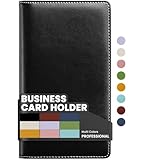
- Large capacity business card storage: This book-style business card organizer can hold up to 240 business cards, two cards back-to-back in each pouch. It is very compact & professional. Enough capacity for your different cards: business cards, credit card, social security, gift cards, insurance cards, name cards, personal IDs, mini photos, and more
- Sturdy & Long-lasting card book: Name card holder is made from high-quality pu leather cover and PVC pocket sheets. Long-lasting and sturdy
- Easy to find & read: Card holder book transparent slots are good for reading and finding information on the business card
- Compact size business card folder: The slim profile and lightweight design make carrying a breeze – Carry it in your hand, pocket or handbag when on the go. Dimension: 7.7"x 4.5" x 0.7"
Product prices and availability are accurate as of the date/time indicated and are subject to change. Any price and availability information displayed on Amazon at the time of purchase will apply.




