What’s actually slowing this PC down?
Pick the symptom - the matching free tool is one click away.
For federal tax years 2025 through 2028, eligible taxpayers may deduct up to $10,000 a year in interest on a qualifying new-vehicle loan. The deduction is reduced at higher modified adjusted gross income (MAGI), and strict rules apply to the vehicle, loan, use and final assembly. It is a deduction from taxable income—not a tax credit—and it is available whether or not you itemize.
How much car loan interest can you deduct?
The maximum deduction is $10,000 per year per return. For tax year 2025, the IRS sets MAGI thresholds of $100,000 for filing statuses other than married filing jointly and $200,000 for married filing jointly. The deduction phases down above the applicable threshold; use the Schedule 1-A instructions for the tax year you are filing or tax software to calculate the reduction. The IRS does not describe the deduction as a dollar-for-dollar tax credit: a deduction reduces taxable income, so it does not mean a $10,000 tax reduction or refund.


The deduction applies to tax years 2025 through 2028 and is available to both itemizing and non-itemizing taxpayers, according to IRS Topic 505. The thresholds and filing steps below are those in the 2025 Form 1040 instructions; check the instructions for the year of the return you are preparing.
Which vehicles and loans qualify?
Eligibility depends on the particular vehicle and loan, not just the vehicle’s make or model. The IRS’s Publication 6126 (January 2026) describes eligible vehicles as cars, minivans, vans, SUVs, pickup trucks and motorcycles with a gross vehicle weight rating (GVWR) below 14,000 pounds and final assembly in the United States.
The vehicle must be new to you in the tax-law sense
The vehicle’s original use must begin with you. A used vehicle does not qualify, even if you are buying it for the first time. A lease also does not qualify: lease payments are not interest paid on a qualifying purchase loan.
The loan must meet the purchase and security rules
The debt must be incurred after December 31, 2024, to buy the vehicle, generally originated by you, and secured by a first lien on the vehicle. The vehicle must be for personal use. Interest on the refinanced amount of a qualifying loan may generally qualify, but refinancing details can affect eligibility; check the applicable IRS instructions before claiming it. The IRS outlines the core requirements in its Working Families Tax Cuts individual guidance and the 2025 Form 1040 instructions.
Rank #2
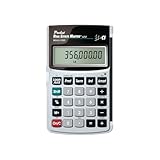
- Loan Amortization and Remaining Balances
- Instant Principal, Interest, Interest Only and Total Payments
- Future Values
- Date math function
Confirm U.S. final assembly for your specific vehicle
Do not infer eligibility from the automaker’s headquarters or the model name. Check the vehicle information label at the dealership or use VIN-based assembly information, including the NHTSA VIN Decoder. Save the VIN and evidence of the vehicle’s assembly information with your tax records.
How to claim the deduction on a 2025 return
For interest paid or accrued in 2025, the IRS directs eligible taxpayers to Schedule 1-A (Form 1040), Part IV. The vehicle identification number (VIN) must be entered on the return; if you claim qualifying interest for more than one vehicle, provide each relevant VIN as instructed.
- Gather lender statements or other records showing the amount of qualifying interest paid or accrued during 2025.
- Confirm that each vehicle and its purchase loan meet the eligibility requirements, and retain the purchase and loan documents, VIN and assembly information.
- Complete Schedule 1-A, Part IV, using the instructions for the tax year on your return. Apply the MAGI reduction using those instructions rather than estimating it.
- Enter the required VIN information on the return and keep supporting records in case the IRS asks for them.
Lenders or other recipients of interest must report qualified-interest information to taxpayers, but transition relief applies to reporting for 2025. A missing lender form by itself does not establish whether you qualify; determine eligibility from the loan, vehicle and interest records as well as the applicable instructions. See the IRS’s 2025 Form 1040 instructions.
What if the vehicle is used for both personal and business purposes?
Mixed-use interest may need to be allocated. Under the IRS instructions, the personal-use share may be considered for the Schedule 1-A deduction, while the business-use share may be deductible on Schedule C if it meets the business-expense rules. The correct allocation depends on the facts; do not claim the same interest twice. Consult the relevant IRS instructions or a tax professional if you are unsure how to divide the expense. The IRS discusses this treatment in the 2025 Form 1040 instructions.
Independent reader supportYour contribution helps us test, update, and keep practical guides available for everyone.Which tax year’s rules apply?
The deduction is temporary: it covers taxable years beginning after December 31, 2024, and before January 1, 2029. This article’s filing steps and MAGI thresholds refer to the 2025 return. Later-year amounts, forms and instructions should be checked against that year’s IRS guidance rather than carried forward automatically.
The IRS published final regulations in Internal Revenue Bulletin 2026-39 with an effective date of November 9, 2026. As of October 8, 2026, that effective date was still in the future, so the regulations should not be described as already effective. See Internal Revenue Bulletin 2026-39.
Best Value

- TRACK ALL VEHICLE MAINTENANCE IN ONE PLACE -Easily record essential services including oil changes, tire rotation/balance, tire replacement, wheel alignment, air and fuel filter changes, brake servicing, spark plugs, transmission checks, wiper blades, batteries, radiator, belts and hoses, and mileage.
- IDEAL A5 SIZE — PORTABLE & PRACTICAL -Convenient 5.8 × 8.3 inch A5 size makes it perfect for glove compartments, toolboxes, or keeping in your vehicle for quick updates after each service.
- DETAILED SERVICE & REPAIR LOG PAGES - Includes structured pages for Date, Time, Mileage, Service Type, and Notes, plus separate sections for "Other Maintenance / Repairs" with space for descriptions and additional work done.
- IMPROVE VEHICLE LONGEVITY & RESALE VALUE - Keeping a written history of maintenance helps prevent costly problems, ensures timely servicing, and increases buyer confidence when selling your vehicle.
- EASY TO USE FOR ALL VEHICLE TYPES - Ideal for cars, trucks, SUVs, motorcycles, and commercial vehicles. Great for personal use, mechanics, fleet owners, and anyone wanting organized service records.
This is a federal deduction. State treatment was not established by the IRS materials cited here, so do not assume your state return follows the federal rule.
Quick Recap
Product prices and availability are accurate as of the date/time indicated and are subject to change. Any price and availability information displayed on Amazon at the time of purchase will apply.




