As of 4 October 2026, Russia’s published digital-ruble rollout schedule does not establish that employers must pay wages in digital rubles or explain how to do so lawfully. The Bank of Russia says individuals choose whether to use digital rubles and that a person must open their platform account personally, with consent. But that statement is not a complete answer to the employment-law questions: the wage-payment method, employee instruction or consent, and employer procedure still need to be verified against current Russian labor law and authoritative guidance.
What a digital-ruble account is—and what the consent statement means
A digital-ruble account is held on the Bank of Russia’s digital-ruble platform. It is distinct from an ordinary bank account used for conventional payroll transfers. In The Bank of Russia’s Work in 2025: Results in Brief, the Bank says an individual may open a platform account only personally; it cannot be opened automatically without that person’s consent. The Bank also says individuals choose whether to use digital rubles.

As an Amazon Associate I earn from qualifying purchases.
This establishes an individual-account consent principle, not the full legal process for paying wages into such an account. It does not by itself say whether an employee can request this wage-payment method, what form that request must take, whether an employer can propose or select it, or how an employer must document and execute a payment. Those points require current labor-law provisions and authoritative interpretation specific to wage payments.
What’s actually slowing this PC down?
Pick the symptom - the matching free tool is one click away.
What the rollout schedule covers
The Bank of Russia FAQ, updated 1 September 2026, sets out phased access for banks and acceptance obligations for qualifying retailers and service businesses. These milestones concern rollout and retail acceptance; they do not, on their own, create a wage-payment requirement or provide an employer payroll procedure.
#1 Best Overall

- Proven security at scale: Over 9 years and millions of cards issued with no known remote hacks, while military‑grade EAL6+ security keeps your private keys locked inside the chip. Your cryptocurrencies stay strongly protected from online attackers.
- Tap once to manage your entire crypto wallet across 90 blockchains - no USB cables or Bluetooth, no batteries, no setup. Access 14,100+ coins & tokens, DeFi, NFTs, and staking instantly from your phone
- Smart backup: Use your second Tangem Wallet as your Backup keys with end‑to‑end encryption; no more papers, pictures. If one card is lost, the remaining can still restore full access, with an optional seed phrase available for advanced users.
- Engineered to last up to 25 years: Waterproof (IP69K), shockproof and tested for extreme temperatures from −25°C to 50°C. A durable cold wallet with long‑term protection and independently audited security.
- Trusted by 6 million users worldwide - buy, sell, swap, stake, and spend cryptocurrency directly. The secure offline storage wallet designed for how people actually use crypto wallets
| From | Groups named in the Bank of Russia FAQ | What employers should take from it |
|---|---|---|
| 1 September 2026 | The largest banks and qualifying retail and service companies | This is the first stated rollout phase, not a wage-payment mandate. |
| 1 September 2027 | Universal-license banks and a further group of businesses | The published schedule continues in stages; it does not set out wage instructions. |
| 1 September 2028 | Basic-license banks and retailers in the stated annual-revenue band of ₽20 million to ₽30 million | The schedule extends through 2028 and addresses the specified bank and retail cohorts. |
The same FAQ states exemptions for retail locations with preceding-year revenue under ₽5 million or with no internet access. These are retail-location exemptions, not stated exemptions from an employer’s wage-payment duties.
What the pilot figures do—and do not—show
The Bank of Russia’s 2025 results report says the pilot began in August 2023 and was planned to continue until 1 September 2026. By the end of 2025, participating companies had opened more than 130 platform wallets and individuals had opened more than 2,600. Those figures count pilot wallets; they are not counts of employers paying wages, payroll transfers, or salary accounts.
Rank #2

- Proven security at scale: Over 9 years and millions of cards issued with no known remote hacks, while military‑grade EAL6+ security keeps your private keys locked inside the chip. Your cryptocurrencies stay strongly protected from online attackers.
- Tap once to manage your entire crypto wallet across 90 blockchains - no USB cables or Bluetooth, no batteries, no setup. Access 14,100+ coins & tokens, DeFi, NFTs, and staking instantly from your phone
- Smart backup: Use your second Tangem Wallet as your Backup keys with end‑to‑end encryption; no more papers, pictures. If one card is lost, the remaining can still restore full access, with an optional seed phrase available for advanced users.
- Engineered to last up to 25 years: Waterproof (IP69K), shockproof and tested for extreme temperatures from −25°C to 50°C. A durable cold wallet with long‑term protection and independently audited security.
- Trusted by 6 million users worldwide (4.9 App Store, 4.8 Google Play) - buy, sell, swap, stake, and spend cryptocurrency directly. The secure offline storage wallet designed for how people actually use crypto wallets
What employers can verify before changing payroll
The official material available here does not support a step-by-step instruction for moving an employee onto digital-ruble payroll. Before offering or implementing that option, an employer should get answers to the following questions from current legal and operational sources rather than infer them from the rollout dates:
Quick wins for a faster PC:
Scan for outdated or missing drivers - takes under a minuteDriver Scan →Clear out junk files and repair common Windows errorsFree Scan →Fix the driver behind crashes, sound loss and screen glitchesFind Drivers →- Legal eligibility and employee choice: What do the current Russian Labor Code provisions say about wage-payment methods and employee-selected bank or account details? Do amendments effective in 2026 or authoritative guidance address digital-ruble accounts specifically?
- Employee instruction: Can an employee request wages to a digital-ruble account, and what form of instruction or consent is required? Is an employer permitted to initiate or require this method? The Bank’s statement about opening an individual account does not settle these employment questions.
- Bank and platform access: Which employer and employee bank or platform steps apply to a wage transfer, and are they available to the parties involved? The rollout FAQ alone does not specify a payroll workflow.
- Payroll operations: How should payroll records, payment confirmations, reconciliation, exceptions, and failed or returned payments be handled? The standards index identifies technical versions but does not establish a universal employer software or equipment change.
- Fees and controls: What current tariff applies to the relevant business transfer, and how does it compare with the employer’s existing payroll arrangement? Confirm approval, security, and exception-handling requirements before making an operational decision.
Technical standards and fees: what is established
The Bank of Russia’s technical standards index lists platform onboarding standard version 2.0, dated 30 July 2026, and operational and technological interaction standard version 5.0, dated 16 July 2026; both apply from 1 September 2026. The index establishes the versions and effective date, but does not show which changes, if any, each employer’s payroll software or equipment needs.
The Bank’s 2025 results report describes transactions by individuals as fee-free and business fees as low. It does not provide a wage-transfer tariff or a like-for-like comparison with ordinary payroll transfers. Employers should check the current tariff for their actual transaction rather than assume a particular saving.
Independent reader supportYour contribution helps us test, update, and keep practical guides available for everyone.Where to check the governing material
The Bank of Russia legal-documents index lists Regulation No. 820-P of 3 August 2023, concerning the platform, and later amendments. It also identifies Direction No. 7342-U dated 7 April 2026, registered on 11 June 2026 and officially published on 19 June 2026. The index is a starting point for reviewing primary rules, but the index entry alone does not establish a payroll procedure.
Rank #4

- EAL5+ CERTIFIED SECURE ELEMENT + FINGERPRINT PROTECTION — Your private keys stay encrypted offline on a certified EAL5+ chip, the same security tier used in EMV bank cards. Built by DCENT, securing crypto since 2018. Fingerprint authentication adds a second layer no PIN-only wallet can match.
- 10,000+ ASSETS NATIVE ON 100+ BLOCKCHAINS — Hold Bitcoin, Ethereum, XRP, Solana, Cardano, popular stablecoins (USDT, USDC), and NFTs in one wallet. No third-party apps, no fragmented setup — every supported asset works straight out of the box.
- TAP-TO-SIGN MOBILE EXPERIENCE — Pair your wallet with the DCENT mobile app over Bluetooth. Manage tokens, review transactions, and access in-app swap features directly from your phone — no cables, no desktop required.
- WEB3 & dAPP ACCESS VIA METAMASK — Connect to MetaMask and other browser extension wallets to manage NFTs, claim airdrops, and access dApps. A large screen and intuitive 4-button interface keep every transaction clearly visible before you sign.
- SEAMLESS FIRMWARE UPDATES & 30-DAY MONEY-BACK GUARANTEE — Apply security updates without resetting your wallet or migrating funds. Backed by Amazon's 30-day money-back guarantee — your purchase is risk-free.
For the rollout dates and retail exemptions, consult the Bank of Russia FAQ updated 1 September 2026. For the individual-account consent statement, consult The Bank of Russia’s Work in 2025: Results in Brief. The FAQ and platform standards have dated versions; confirm that the official pages and operative legal texts remain current before relying on them.
Recommended Free Tools
Quick Recap
Best Value
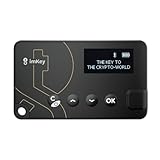
- Top-Tier Security Chip, Bank-Grade Asset Protection: Equipped with an industry-leading Infineon CC EAL 6+ certified security chip, also certified by EMVCo, this chip is widely used in bank payment and identity verification systems. Your private keys are generated and stored entirely offline within the chip, ensuring they never touch the internet. This physically blocks remote hacker attacks and eliminates the risk of private key leakage, building an impregnable first line of defense for your digital assets.
- What You See Is What You Sign, Hardware Button Protection: Every transaction requires manual confirmation via physical buttons on the imKey Pro's clear display. The device intuitively shows key transaction details like the amount and address, ensuring the data hasn't been tampered with during transmission—truly achieving "What You See Is What You Sign." It also features secure PIN code protection and a self-destruct mechanism after multiple incorrect attempts (the private key is wiped after 5 consecutive wrong entries), effectively preventing brute-force attacks even if the device is lost.
- Comprehensive Multi-Chain Asset Support, Access the Web3 Ecosystem: Fully supports major mainnets and Layer 2 networks, including Bitcoin (BTC), Ethereum (ETH), LTC, ATOM, FIL, TRX and more. By adding custom RPCs, you can easily access all EVM-compatible chains like BSC, Polygon, and Avalanche. Furthermore, imKey Pro perfectly supports Layer 2 solutions such as zkSync and Arbitrum, as well as the display and storage of NFTs, meeting all your diverse on-chain needs.
- Cold & Hot Wallet Separation, A Seamless Experience: Utilizing Bluetooth 4.1 wireless technology, it pairs seamlessly with the imToken App on your mobile phone or browser extension wallets on your PC without needing any cables. It combines the ultimate security of a cold wallet (offline private key storage) with the convenience of a hot wallet (online interaction). When a transaction is needed, you sign it offline with your imKey, and the app broadcasts it to the chain. This guarantees asset security without sacrificing the fluidity of use.
- Extremely Thin and Light, A Portable Digital Vault: The device is smaller than a credit card, measuring just 2.3mm thick and weighing approximately 17g. Crafted with a zinc alloy body and a PC panel, it offers a premium feel and is extremely portable. The built-in 33mAh lithium-polymer battery provides a battery life of up to approximately four weeks on a single charge. The package includes the hardware wallet, a USB cable, and mnemonic cards, making it ready to use right out of the box—a secure and reliable gateway to the crypto world.
Product prices and availability are accurate as of the date/time indicated and are subject to change. Any price and availability information displayed on Amazon at the time of purchase will apply.




