Free tools Windows power users keep installed
One-click scans. No signup required.
Cambricon has become one of China’s most prominent listed AI-chip specialists, and its 2025 results mark a dramatic commercial turning point. But it is not China’s overall AI-chip leader by shipment volume: IDC estimates reported by Reuters put Huawei far ahead of Cambricon in domestic shipments that year. “Champion” fits Cambricon best as a description of a high-profile listed pure play—not an undisputed market or technology leader.
What Cambricon is—and what “champion” means here
Beijing-based Cambricon Technologies Corporation Limited is listed on the Shanghai Stock Exchange’s STAR Market under ticker 688256. It designs AI processors and sells accelerator cards, servers and related software for cloud and data-center computing, edge computing, and terminal or embedded applications. Its filings describe a self-developed MLU instruction set used across its intelligent chips, processor cores and foundational system software (SSE filing; annual-report mirror).
Cambricon is therefore more accurately described as an AI-accelerator and computing-platform company than simply a GPU maker. It is a credible contender for China’s leading publicly traded, independent AI-chip specialist. That is a narrower claim than being the country’s largest supplier, the fastest chip designer, or a technical match for Nvidia across workloads.
Why Cambricon’s business changed so quickly
China’s demand for domestic AI computing has grown as cloud companies and other institutions build capacity for training and inference. U.S. export controls have raised the strategic value of locally sourced accelerators, while the growth of Chinese models such as DeepSeek has increased demand for hardware that can run domestic workloads. Government and enterprise procurement priorities around secure, reliable supply add another incentive to localize.
#1 Best Overall
![Arduino® UNO™ Q 4GB [ABX00173]- Hybrid Board, Qualcomm Dragonwing QRB2210 microprocessor (MPU) & STM32U585 Microcontroller(MCU), AI Vision, Voice, IoT, Robotics, Linux Debian OS, Wi-Fi 5, USB-C](https://m.media-amazon.com/images/I/51cl4xygwGL._SL160_.jpg)
- Dual-Brain Hybrid Power: Combines the Qualcomm Dragonwing QRB2210 MPU (Quad-core Arm Cortex-A53 @ 2.0 GHz CPU, Adreno GPU, AI acceleration) and the real-time, low-power STM32U585 MCU for advanced applications like object recognition, voice commands, and motion detection.
- AI & Linux Capabilities: Unlocks AI-powered vision and sound solutions; runs Linux Debian OS for coding in Python and supports the Arduino ecosystem with libraries and Sketches; quick start with Arduino App Lab.
- Advanced Features: Equipped with 4 GB LPDDR4 RAM, 32 GB eMMC built-in storage, ideal for single-board computer (SBC) mode, running multiple simultaneous high-level processes, more complex AI or ML models, extensive logs. Dual-band Wi-Fi 5 (2.4/5 GHz), Bluetooth 5.1, and high-speed headers for vision, audio, and display peripherals.
- Seamless Expansion & Connectivity: Features the classic UNO form factor for shields compatibility, an 8x13 LED matrix, and a Qwiic connector for easy expansion with Modulino nodes; power and connect via the USB-C connector.
- Intended Use & Development: The perfect platform for prototyping robotics or IoT projects, empowering innovators with a unified development experience to mix Arduino Sketches, Python scripts, and containerized AI models in a single interface.
Those forces have benefited Chinese suppliers as a group, not just Cambricon. IDC data reviewed by Reuters estimated that Chinese vendors shipped about 1.65 million AI accelerator cards in China in 2025, or roughly 41% of that market. Nvidia still led overall, with an estimated 55% share and about 2.2 million cards shipped. Shipment estimates measure units, not revenue, installed base or useful compute performance; they do not by themselves show which supplier has the best chips.
The financial inflection: from losses to a profitable year
Cambricon reported approximately RMB6.5 billion in 2025 revenue, about 450% higher year over year, and roughly RMB2.06 billion in net profit. It was the company’s first full-year profit since its 2020 listing. Cloud-computing products generated almost all of the reported revenue, according to coverage of the annual filing (South China Morning Post; Bloomberg).
This is a substantial shift for a research-intensive chip designer: it shows that demand translated into reported sales and a profitable year, rather than remaining only a technology proposition. But the growth rate starts from a comparatively small base, and a single strong year does not establish that the pace can continue. Cloud-product concentration also makes performance more exposed to a limited set of large customers and procurement programs than the headline growth figure alone suggests.
The company proposed its first cash dividend, RMB15 per 10 shares, with a proposed total distribution exceeding RMB632 million, as well as a planned RMB20 million share buyback. The dividend remains subject to required corporate approvals and implementation (South China Morning Post).
Do these 3 things before closing this tab:
1Scan for outdated or missing drivers - takes under a minute2Clear out junk files and repair common Windows errors3Fix the driver behind crashes, sound loss and screen glitchesRank #2
- Dual-Brain Hybrid Power: Combines the Qualcomm Dragonwing QRB2210 MPU (Quad-core Arm Cortex-A53 @ 2.0 GHz CPU, Adreno GPU, AI acceleration) and the real-time, low-power STM32U585 MCU for advanced applications like object recognition, voice commands, and motion detection.
- AI & Linux Capabilities: Unlocks AI-powered vision and sound solutions; runs Linux Debian OS for coding in Python and supports the Arduino ecosystem with libraries and Sketches; quick start with Arduino App Lab.
- Advanced Features: Equipped with 2 GB LPDDR4 RAM, 16 GB eMMC built-in storage, ideal to develop in PC-connected mode, running the OS, Python scripts, and basic network services (SSH) without a demanding GUI or heavy multitasking; great for lightweight AI and memory-optimized TinyML applications, needing local storage for basic OS and core libraries. Dual-band Wi-Fi 5 (2.4/5 GHz), Bluetooth 5.1, and high-speed headers for vision, audio, and display peripherals.
- Seamless Expansion & Connectivity: Features the classic UNO form factor for shields compatibility, an 8x13 LED matrix, and a Qwiic connector for easy expansion with Modulino nodes; power and connect via the USB-C connector.
- Intended Use & Development: The perfect platform for prototyping robotics or IoT projects, empowering innovators with a unified development experience to mix Arduino Sketches, Python scripts, and containerized AI models in a single interface.
What Cambricon sells—and what product claims do not prove
Cloud and data-center accelerators
Cambricon’s Siyuan and MLU product families include chips and accelerator cards aimed at AI workloads in data centers. The company’s official product listings include MLU370-S4 and MLU370-S8 cards (Cambricon product listings). A card’s nominal computing figures are not enough to establish how it will perform in a real deployment. Meaningful comparisons depend on the workload, numerical precision, memory configuration, interconnect, software stack and scale of the system.
Edge and embedded AI
Cambricon also sells products for computing closer to devices and endpoints. The company reported that sales of its Siyuan 220 surpassed one million units since its 2019 launch. That is a company-reported cumulative unit-sales claim, not an independently established market-share measure (South China Morning Post).
The software test: can customers make the hardware useful?
For an accelerator buyer, software can matter as much as the chip. Organizations must consider the cost of porting models, compiler maturity, operator coverage, distributed-training support, inference optimization, debugging tools and the availability of engineers familiar with the platform. If existing workloads require extensive rewriting or tuning, hardware availability alone may not make migration worthwhile.
Cambricon’s MLU software stack is part of its effort to build a usable platform around its silicon. The company has been reported to support or adapt to Chinese models including DeepSeek, Alibaba’s Qwen family and Tencent’s Hunyuan. That establishes a compatibility effort as reported by the company and its coverage; it does not establish performance parity with Nvidia systems or prove that every model version, workload or deployment scales equally well.
What’s actually slowing this PC down?
Pick the symptom - the matching free tool is one click away.
Rank #3
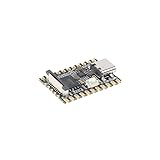
- Single core ARM Cortex-A7 32-bit core, integrated with NEON and FPU
- Built in Micro's self-developed 4th generation NPU, with high computational accuracy and support for mixed quantization of int4, int8, and int16. Among them, int8 has a computing power of 0.5 TOPS and int4 has a computing power of up to 1.0 TOPS
- Built in self-developed 3rd generation ISP3.2, supports 4 million pixels, and supports various image enhancement and correction algorithms such as HDR, WDR, and multi-level denoisin
- It has powerful encoding performance, supports intelligent encoding, adapts to save bit rates according to the scene, and saves more than 50% of the bit rate compared to conventional CBR mode, making the captured images high-definition, smaller in size, and doubling the storage space
- The design with built-in RISC-V MCU supports low-power fast startup, 250ms fast capture, and simultaneous loading of AI model library, enabling facial recognition to be completed within 1 second
Huawei is the domestic volume benchmark
IDC estimates reported by Reuters put Huawei clearly ahead of Cambricon in China’s 2025 AI-accelerator server market. Huawei shipped about 812,000 chips. Cambricon and Baidu’s Kunlunxin each shipped approximately 116,000 cards, jointly ranking third among Chinese vendors. These are shipment estimates, not direct measures of sales revenue, installed capacity or performance (Reuters report via Investing.com).
Huawei’s position reflects more than its Ascend processors: the company can combine chips with servers, networking and broader infrastructure, and it has a stronger shipment position in strategic domestic accounts. Cambricon, by contrast, is a more focused listed specialist whose profile gives investors a more direct public-market exposure to AI accelerators. That distinction helps explain why Cambricon can be highly visible without leading domestic shipments.
The competitive field is wider than those two companies. Baidu’s Kunlunxin, Alibaba’s T-Head, Hygon, Moore Threads, MetaX, Iluvatar CoreX and Biren Technology are among the other domestic names. Nvidia and AMD remain relevant foreign competitors where their products are available and permitted. Each supplier may compete in different segments—training, inference, cloud cards, edge processors or complete systems—so a single “AI chip” ranking can obscure important differences.
Independent reader supportYour contribution helps us test, update, and keep practical guides available for everyone.Nvidia remains the global reference point, not a simple like-for-like comparison
Nvidia’s advantages include its CUDA software ecosystem, broad developer adoption and extensive experience in large-scale data-center deployment. Cambricon’s opportunity is different: domestic localization, Chinese procurement needs and the constraints affecting Nvidia’s China business may make a local alternative attractive even without demonstrated global technical parity.
Rank #4

- 【POWERFUL ESP32‑S3 CONTROLLER】Built‑in Xtensa 32‑bit LX7 dual‑core processor, 512KB SRAM, 8MB PSRAM, 16MB Flash for stable AI voice computing and multitask processing.
- 【Preloaded Dual AI Platforms】Comespre-installed with complete Deepseek and OpenAI voice dialogue projects.Experience intelligent voice interaction instantly. (Note: OpenAI functionality requires your own API key.)
- 【STABLE WIRELESS & CLEAR AUDIO】Integrated 2.4GHz Wi‑Fi + Bluetooth 5 (LE); dedicated audio decoding module for natural, responsive voice interaction.
- 【USER‑FRIENDLY VISUAL & PLUG‑AND‑PLAY】2” TFT‑SPI color screen shows real‑time chat; modular design, no extra wiring, ready to use after setup.
- 【FULL LEARNING SUPPORT】45 programmable GPIOs, rich interfaces, online web tutorials, free technical support for beginners & developers.
Replacing an imported product in selected Chinese deployments is not the same as matching Nvidia worldwide. Export rules and Chinese procurement policy can change the competitive balance, while customers’ software and system requirements remain decisive. The 2025 market estimates themselves underscore the distinction: Nvidia led China’s overall market, while Huawei led Chinese vendors.
The RMB100 billion plan is a hurdle, not an achieved forecast
Cambricon’s employee stock-incentive plan ties awards to revenue milestones of more than RMB13.5 billion in 2026, more than RMB40.5 billion cumulatively across 2026 and 2027, and more than RMB100 billion over the three-year period covered by the plan. It covers five million restricted shares, approximately 0.8% of total share capital, and more than 85% of the workforce, based on a reported year-end 2025 headcount of 1,107. These are incentive-plan conditions and management-linked targets, not revenue already earned or an independent forecast (South China Morning Post).
The scale of the ambition is clear against 2025 revenue of about RMB6.5 billion. Delivering on it would require much more than continuing to win attention: Cambricon would need foundry and packaging capacity, reliable accelerator-card production, repeat customer demand, a mature software environment and the ability to deliver systems at scale while facing competition from Huawei and other suppliers.
What investors and technology buyers should watch
Cambricon’s business story is now about whether a sharp increase in demand can become repeatable, well-supported deployment. Readers assessing the company can watch for evidence in several areas:
Windows Errors? Fix Them Before They Spread
Repair common Windows errors and clear accumulated junk for a smoother, more stable PC - no reinstall needed.Free scan · no reinstallOutdated Drivers Are Slowing You Down
One free scan finds every outdated or missing driver and matches the right update for your exact hardware.Free scan · exact hardware match- Customer concentration and order quality: whether sales depend heavily on a small number of customers or procurement programs, and whether announced demand becomes delivered product.
- Cash conversion: whether receivables and inventory rise disproportionately to revenue, and how cash collection compares with reported sales.
- Supply capacity: whether foundry access, advanced packaging and memory availability allow the company to fulfil orders reliably.
- Software adoption: whether model support translates into lower porting costs, useful tooling and sustained customer deployments.
- Repeat shipments: whether customers reorder after initial deployments, rather than purchases being driven by one-off localization initiatives.
- Policy and competition: how export-control changes, procurement rules and offers from Huawei or other domestic vendors affect demand.
- Valuation versus execution: whether market expectations assume years of growth before operating results demonstrate that scale.
Technical comparisons deserve particular care. A benchmark is useful only when it identifies the workload, precision, software version, memory and system configuration, and competing chips tested. Compatibility announcements, theoretical peak figures and shipment estimates answer different questions and should not be treated as interchangeable proof.
So, is Cambricon China’s AI-chip champion?
It is fair to call Cambricon one of China’s leading listed AI-chip specialists and a major beneficiary of the country’s push to localize AI computing. Its first profitable year and rapid revenue growth make that status commercially significant. But shipment estimates put Huawei well ahead among domestic vendors, and Nvidia remained the largest supplier in China overall in 2025. “Champion” is therefore defensible only when the category is stated—such as listed pure play or investor visibility—not as an established claim of shipment leadership or global technical superiority.
Quick Recap
Product prices and availability are accurate as of the date/time indicated and are subject to change. Any price and availability information displayed on Amazon at the time of purchase will apply.




