The Tool Desk
Outbyte Driver Updater FREEFix the driver behind crashes, sound loss and screen glitchesFind Drivers →Outbyte PC Repair FREEClear out junk files and repair common Windows errorsFree Scan →In February 2025, reports described exploratory discussions about splitting parts of Intel—not a signed bid to buy the company. Broadcom was reportedly interested in Intel’s chip-design and marketing operations, while TSMC was said to be considering some or all of Intel’s manufacturing business, especially U.S. fabs. No definitive Broadcom–Intel or TSMC–Intel acquisition agreement was identified in the sources reviewed through August 16, 2026. Intel instead pursued selective transactions and restructuring.
What the February 2025 reports actually said
The story, published by CRN on February 16, 2025, synthesized reporting attributed to the Wall Street Journal and other outlets. It described informal exploration of a possible breakup, not a formal offer or an agreement. The reported division of roles was:
| Intel business or assets | Potential party | Reported interest |
|---|---|---|
| Intel Products | Broadcom | Chip-design and marketing operations, including businesses behind Core and Xeon processors |
| Intel Foundry | TSMC, potentially with partners | Some or all manufacturing operations, with particular attention to U.S. fabs |
| Other participation | Semiconductor companies and private-equity investors | Possible participation in a consortium structure |
The reporting also said Broadcom’s interest depended on a separate solution for Intel Foundry. “Intel’s chip business” therefore should not be read as every Intel product group, nor should the reports be described as Broadcom and TSMC agreeing to buy Intel. CRN’s account of the February reports is the available source for the reported scenario.
Why Intel attracted breakup speculation
Intel was trying to fund two demanding businesses at once: selling processors and platforms, and building an advanced manufacturing operation that could also win outside customers. A foundry requires sustained investment in factories, process development and production capacity; it also has to attract customers willing to commit products to its technologies. If those customers do not arrive at scale, the capital burden becomes harder to justify.
PC Slower Than It Used to Be?
A free scan shows the junk files, broken settings and background clutter dragging Windows down - then fixes them in one click.Free scan · Windows 10 & 11Outdated Drivers Are Slowing You Down
One free scan finds every outdated or missing driver and matches the right update for your exact hardware.Free scan · exact hardware match#1 Best Overall

- Get ultra-efficient with Intel Core Ultra desktop processors that improve both performance and efficiency so your PC can run cooler, quieter, and quicker.
- Core and Threads 24 cores (8 P-cores plus 16 E-cores) and 24 threads. Integrated Intel Graphics included
- Performance Hybrid Architecture Integrates two core microarchitectures, prioritizing and distributing workloads to optimize performance
- Performance Unlocked Up to 5.7 GHz unlocked. 40MB Cache
- Compatibility Compatible with Intel 800 series chipset-based motherboards
At the same time, Intel faced competitive pressure in PC and data-center processors and questions about its ability to execute its manufacturing road map. Investors could therefore ask whether product design and manufacturing would be worth more, or easier to finance, under separate ownership. Intel’s 2024 restructuring included a roughly $10 billion cost-reduction target and more than 15,000 job cuts, figures cited in the contemporary coverage. Those were elements of a restructuring effort, not evidence that a sale was inevitable.
A split could appear to relieve Intel Products of the cost of owning fabs, while giving a manufacturing buyer access to facilities and a skilled workforce. But the businesses are not cleanly separable: product teams and manufacturing engineers coordinate on process choices, packaging, performance targets, yields and launch schedules.
Why Broadcom might have considered Intel Products
The reported strategic logic was plausible but not confirmed as Broadcom’s own stated rationale. Intel would bring an established x86 CPU franchise, PC and server customers, and a wider portfolio of infrastructure semiconductors. Combined with Broadcom’s networking, connectivity, custom silicon and infrastructure businesses, those assets could create opportunities to streamline overlapping operations or manage product lines differently.
Rank #2

- Game Without Compromise. Play harder and work smarter with Intel Core 14th Gen processors
- 20 cores (8 P-cores plus 12 E-cores) and 28 threads. Integrated Intel UHD Graphics 770 included
- Up to 5.6 GHz with Turbo Boost Max Technology 3.0 gives you smooth game play, high frame rates, and rapid responsiveness
- Compatible with Intel 600-series (with potential BIOS update) or 700-series chipset-based motherboards
- DDR4 and DDR5 platform support cuts your load times and gives you the space to run the most demanding games
The risks would be substantial. A buyer would inherit Intel products’ execution challenges and have to maintain customer and ecosystem commitments. x86 licensing and other intellectual-property arrangements add complexity, while a transaction of this scale could face antitrust scrutiny in the United States, Europe, China and other markets. Separating product operations from Intel’s manufacturing organization could also weaken the close engineering feedback needed to tune chips to a process technology.
Do these 3 things before closing this tab:
1Fix the driver behind crashes, sound loss and screen glitches2Repair Windows errors before they cause bigger problems3Scan for outdated or missing drivers - takes under a minuteWhy TSMC might have considered Intel’s fabs—and why that would be hard
Intel’s factories could offer additional U.S.-based capacity, established infrastructure and an experienced workforce. A manufacturing operator might seek to increase utilization by serving more customers, and a U.S. presence could align with pressure to expand domestic semiconductor production. A consortium or facility-by-facility arrangement might have been more feasible than TSMC buying Intel Foundry as a whole.
Still, ownership of a fab does not instantly make it a TSMC-style foundry. Intel’s facilities were designed around Intel process technology, manufacturing systems, contracts and product needs. TSMC’s operating model and customer ecosystem are different, and adapting facilities, qualifying processes and attracting customers could require time and significant expense. Some fabs might not fit a prospective buyer’s needs.
Rank #3

- 20 cores (8 P-cores + 12 E-cores) and 20 threads. Integrated Intel Graphics included
- Performance hybrid architecture integrates two core microarchitectures, prioritizing and distributing workloads to optimize performance
- Up to 5.3 GHz. 36 MB Cache
- Compatible with Intel 800 series chipset-based motherboards
- Turbo Boost Max Technology 3.0, and PCIe 5.0 & 4.0 support. Intel Optane Memory support. No thermal solution included
Any transaction would also have to address government funding, national-security conditions and the use of particular facilities. A minority investment, an operating partnership, a sale of selected fabs and full ownership are materially different arrangements; the headline alone did not establish which, if any, could have been pursued.
Why a breakup could be more plausible than buying all of Intel
A whole-company buyer would take on Intel’s product businesses and capital-intensive manufacturing operations together, as well as debt, contractual obligations, government commitments and global regulatory exposure. A breakup could let different investors focus on products and factories separately, potentially improving the fit between each business and its owner.
That financial logic runs into industrial reality. Intel’s chip designs depend on manufacturing road maps, process technology, advanced packaging and shared engineering work. A separation would need durable agreements on supply, capacity, product qualification and technology access. Poorly designed boundaries could disrupt both product launches and fab operations, or leave one side dependent on a supplier it no longer controls.
Rank #4

- Game without compromise. Play harder and work smarter with Intel Core 14th Gen processors
- 24 cores (8 P-cores plus 16 E-cores) and 32 threads. Integrated Intel UHD Graphics 770 included
- Leading max clock speed of up to 6.0 GHz gives you smoother game play, higher frame rates, and rapid responsiveness
- Compatible with Intel 600-series (with potential BIOS update) or 700-series chipset-based motherboards
- DDR4 and DDR5 platform support cuts your load times and gives you the space to run the most demanding games
The U.S. government was a central obstacle
Contemporary coverage placed the possible TSMC arrangement in the context of the Trump administration’s interest in Intel and U.S. semiconductor manufacturing. It also reported that a White House official believed President Trump would probably oppose a foreign company owning Intel’s factories. That was reporting about political resistance—not formal administration approval, a government decision or proof that a transaction had been rejected.
Any structure involving control of U.S. fabs would have required extensive government scrutiny and a negotiated approach to Intel’s CHIPS Act commitments and other security-related obligations. Foreign ownership, operational control and minority investment can carry different consequences, so the form of any deal would have mattered as much as its headline value.
Independent reader supportYour contribution helps us test, update, and keep practical guides available for everyone.What happened after the reports
| Date | Development | What it means |
|---|---|---|
| February 2025 | Reports described possible separate interest in Intel Products and Intel manufacturing assets. | Exploratory reporting, not a confirmed transaction. |
| August 18, 2025 | Intel announced an agreement for SoftBank to invest $2 billion in Intel common stock. | A strategic equity investment, not an acquisition of Intel. Intel’s announcement. |
| September 12, 2025 | Intel completed the sale of a 51% interest in Altera to an affiliate of Silver Lake and retained 49%. | A divestiture of a business unit, not a Broadcom-led takeover. Intel’s SEC filing. |
| April 1, 2026 | Intel announced an agreement to repurchase Apollo’s 49% interest in the Fab 34 joint venture in Ireland for $14.2 billion. | A proposed repurchase of a specific joint-venture interest, not a sale of Intel Foundry to TSMC. Intel’s announcement. |
Intel’s 2025 filing also described a possible future manufacturing path: if it could not secure a significant external customer for Intel 14A, it might pause or discontinue pursuit of that node and could eventually use third-party foundries, particularly TSMC, for products beyond Intel 18A and Intel 18A-P. That would be outsourcing or a supply relationship, not TSMC ownership of Intel’s fabs. The possibility is described in Intel’s filing.
Best Value
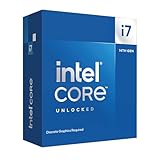
- Game Without Compromise. Play harder and work smarter with Intel Core 14th Gen processors
- 20 cores (8 P-cores plus 12 E-cores) and 28 threads. Discrete graphics required
- Up to 5.6 GHz with Turbo Boost Max Technology 3.0 gives you smooth game play, high frame rates, and rapid responsiveness
- Compatible with Intel 600-series (with potential BIOS update) or 700-series chipset-based motherboards
- DDR4 and DDR5 platform support cuts your load times and gives you the space to run the most demanding games
What the reports mean now
The lasting significance is the pressure created by Intel’s dual role as a major chip designer and a company trying to build a large external foundry business. That combination can offer strategic advantages, but it also demands capital and coordination. Separate ownership was one reported possibility for addressing that tension; selective divestitures, investments, joint-venture changes and possible manufacturing outsourcing are other paths.
Through August 16, 2026, the later record described those narrower moves, not a confirmed Broadcom/TSMC takeover. The reports remain useful as evidence of how seriously Intel’s corporate structure and manufacturing costs were being questioned, but they do not establish that a consortium was formed or that the proposed division was completed.
Quick Recap
Product prices and availability are accurate as of the date/time indicated and are subject to change. Any price and availability information displayed on Amazon at the time of purchase will apply.




