To integrate buy now, pay later (BNPL), choose a provider-supported route—direct API or SDK, a wallet such as Google Pay, or a commerce-platform integration—then build and test the full payment lifecycle, not just the checkout button. Confirm your merchant account’s country, currency, basket rules and customer terms before implementation; these vary by provider and market.
Choose an integration route that fits your checkout
The right route depends on your existing payment stack, how much control you need over checkout, and whether the provider supports your merchant account and region. Compare the options on the same operational questions: who creates and confirms the transaction, how status changes reach your system, and who owns cancellations and refunds.
As an Amazon Associate I earn from qualifying purchases.
Direct provider API or client
A direct integration gives your team more control over checkout and payment handling, but also means more responsibility for implementing the provider’s required flow. Affirm’s developer quickstart outlines a sequence of retrieving environment-specific API keys, installing a web or mobile client, making a test request and completing a confirmed purchase through a server-side transaction request. Follow its current documentation for exact steps: Affirm’s developer quickstart.
Do these 3 things before closing this tab:
1Clear out junk files and repair common Windows errors2Scan for outdated or missing drivers - takes under a minute3Repair Windows errors before they cause bigger problemsWallet or existing payment platform
If you already accept Google Pay, its web API documentation describes BNPL options in that checkout flow. The guide calls for appropriate card and transaction configuration; the response’s paymentMethodData.description can identify the BNPL provider. Google says its flow supports USD or GBP transactions, but that does not establish availability for every merchant or provider. See Google Pay’s BNPL guide.
#1 Best Overall

- With Square Terminal, you can ring up sales, accept payments, and print receipts, all with one device. Use it at the counter or ring up customers anywhere in your store.
- Accept all major credit and debit cards and pay one low rate with no hidden fees and no long-term contracts.
- Process chip cards in just two seconds.
- Get your money as soon as the next business day.
- Use it cordlessly with the built-in battery, designed to last all day.
Google Pay does not make the financing decision: “Google doesn’t determine eligibility or financing options offered to users.” The provider determines eligibility and available financing, so your checkout should not imply approval is guaranteed.
SDK or commerce-platform integration
PayPal documents both a JavaScript SDK route and commerce-platform integrations for Pay Later. Its documentation says, “Specific Pay Later products vary by country.” Confirm that the product is offered for your market and that the chosen route covers the status, refund and reconciliation work your business needs. See PayPal’s Pay Later overview, last updated August 3, 2026.
Rank #2

- The Clover Compact and Clover Mini /Station sync with each other through the Clover Dashboard and cloud-based network. This allows you to manage transactions, track sales, and access business data across both devices seamlessly. Plug in, not battery/mobile. Requires New Processing account through Powering POS. (US, PR, USVI). CANNOT be used with a different Processor. Rate match guarantee. Contact us for questions
Compare the practical constraints before choosing
| What to compare | What to verify |
|---|---|
| Geography and currency | Whether the product is supported for your merchant account, customers and transaction currency. PayPal states that products vary by country; Google Pay’s described web flow supports USD or GBP. |
| Basket eligibility | Provider-specific minimums, maximums and excluded products, if any. Check the live provider documentation and merchant account terms; do not assume a limit from one market applies elsewhere. |
| Integration and control | Whether you need a direct API/client, a wallet flow, or a commerce-platform implementation—and which party owns order and payment state. |
| Payment lifecycle | Authorization and confirmation steps, redirects, status updates, refunds, webhook signing and reconciliation capabilities. |
| Commercial terms | Provider pricing and processing costs. Google says it charges no separate fee for BNPL within Google Pay, while merchants remain responsible for interchange or similar processing fees; contact providers for their pricing. |
| Customer experience | Checkout steps, disclosures, provider underwriting and what the customer sees if they cancel, are declined or have an ineligible basket. |
Official integration pages do not establish a universal conversion increase or comparable all-in merchant cost across providers. Treat those as questions for provider-specific commercial terms and your own measurement, not as guaranteed benefits.
What’s actually slowing this PC down?
Pick the symptom - the matching free tool is one click away.
Plan the transaction lifecycle before writing checkout code
BNPL is more than an option shown at checkout: your store needs to associate its order with the provider transaction and respond correctly as the transaction changes state. The following is an implementation checklist, not a shared API contract; use the selected provider’s current documentation for its exact endpoints, events and state names.
Rank #3

- This is a stand alone credit/debit payment terminal, does not connect to a Clover Station or Mini. Plug in, not battery/mobile. Requires New Processing Account Through Powering POS. (US, PR, USVI). CANNOT be used with a different Processor. Rate match guarantee. Contact us for questions
- Compact Size: Space-efficient design saves counter space
- Faster Processing: Accommodates customers’ preferred methods (EMV, contactless, MSR, PIN debit, EBT, check payments)
- Surcharging: Apply surcharging to help reduce operational costs and increase profit margins
- Gift Card: Gift card increases repeat business and expands customer base
- Confirm account and market support. Complete merchant onboarding and check account permissions, supported countries and currencies, eligible products, basket ranges and any required merchant configuration.
- Separate test and live environments. Store sandbox and production credentials separately. Use the matching environment for each request; do not mix live credentials with sandbox objects or vice versa.
- Present the provider’s approved flow and accurate terms. Use the provider’s supported checkout or SDK experience. Show applicable installment amounts, schedules, charges and terms before the customer commits.
- Create or authorize the transaction as documented. Follow the provider’s sequence for starting checkout and handling redirects or returns. If the provider requires server-side completion of a confirmed purchase, perform that step on your server rather than treating the browser return as proof of completion.
- Link the provider transaction to the store order. Persist a stable mapping between your order ID and provider transaction ID so your system can reconcile status changes, support inquiries and refunds.
- Process updates and verify notifications. Handle status updates using the provider’s documented method. If it sends signed webhooks, verify the signature before accepting an event or changing order state.
- Define the exception paths. Specify what happens on approval, decline or ineligibility, customer cancellation, delayed status, repeated notification, order cancellation, and partial or full refund. Provide a support escalation path for cases your system cannot resolve automatically.
- Validate production readiness. Before rollout, check production credentials, webhook endpoints, monitoring and reconciliation processes alongside the checkout itself.
Test more than the successful checkout
Use the provider’s sandbox credentials and test cases to exercise the transaction flow from order creation through final status. A successful authorization alone does not show that redirects, delayed updates or refunds will leave your store and provider records consistent.
- Test an approved purchase and confirm the store records the provider transaction against the correct order.
- Test declines or ineligible baskets, customer cancellation, and a customer who does not complete the provider flow.
- Test delayed status updates and repeated notifications. Confirm your system does not accidentally create duplicate orders or apply the same state change twice.
- Test order cancellation and the provider’s documented partial- and full-refund flows; reconcile the resulting status in both systems.
- Where webhooks are used, test signature verification and confirm that invalid or unverifiable events cannot change order state.
- Check the customer-facing schedule and terms against the actual offer shown by the provider for the transaction.
Affirm’s quickstart specifically includes making a test request and completing a confirmed purchase server-side. For other providers, use their own sandbox instructions rather than assuming their transaction states or event behavior match Affirm’s.
Rank #4
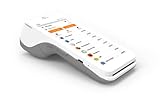
- A 5” touchscreen with Android software.
- An EMV chip card, NFC contactless, and magstripe reader.
- PIN debit.
- Front and back cameras for easy barcode scanning.
- 4G and WiFi Connectivity.
Make eligibility and payment terms clear to customers
Do not describe every BNPL offer as interest-free, fee-free or available to every shopper. Terms vary, eligibility is determined by the provider, and some plans may involve fees. The CFPB’s consumer explainer says consumers should review loan documents for charges and that missed-payment fees may apply: CFPB: What is a Buy Now, Pay Later loan? Show the applicable provider terms at the point of decision and give customers a clear explanation when an option is unavailable or not approved.
Account for the current U.S. regulatory context
For U.S. compliance context, the CFPB’s current BNPL page says the agency withdrew several guidance documents, including its 2024 BNPL Interpretive Rule, on May 12, 2025. Do not present that withdrawn rule as current CFPB guidance. The CFPB’s current status page is Buy Now, Pay Later (BNPL) products; the former rule text is at Use of Digital User Accounts to Access Buy Now, Pay Later Loans. The status of that rule does not determine every legal obligation for a particular lender, merchant or transaction. Obtain current, jurisdiction-specific advice for your business and the markets it serves.
Best Value

- Important Order Information - The purchase of this listing requires a new merchant account to be set up with SwyftPAY. Please contact us prior to purchasing if you have any questions.
- Accept payments – fast, contactless, and in style
- Security baked right in Every payment you accept is end-end encrypted, and your data is kept safe according to the most stringent industry standards. Poynt is fully PCI DSS and PCI PTS certified.
- Accessories galore Poynt smart terminals play nice with all your favorite accessories including wired and wireless printers, cash drawers, and barcode scanners, so you can focus on selling.
- Accept payments in minutes.
Provider-specific details to check
Google Pay BNPL
Google’s guide describes card and transaction configuration for the web API and a response field that can identify the BNPL provider. It also says Google does not determine a shopper’s eligibility or financing. Check the live guide and your provider arrangement for the supported currency and basket requirements applicable to your flow: Google Pay BNPL documentation.
PayLater API example
PayLater’s developer reference describes OAuth 2.0 authentication, payment links, transaction tracking, refunds, sandbox testing and signed real-time webhooks. The order constraints illustrated on that documentation page are denominated in QAR; they are not a general limit for other countries or providers. Confirm the requirements applicable to your own account in PayLater’s developer documentation.
Quick Recap
Product prices and availability are accurate as of the date/time indicated and are subject to change. Any price and availability information displayed on Amazon at the time of purchase will apply.




