Checked in the U.S. on August 9, 2026: the best straightforward purchase is the Nintendo-licensed Samsung 256GB card at about $59, while the Lexar PLAY PRO 512GB is the stronger all-purpose deal at $109.99. For 1TB, wait for a Lexar PLAY PRO or TeamGroup APEX SD7.1 listing around $180–$220; a $300-plus card is poor value for most owners.
Prices and stock for microSD Express cards change quickly. The prices below are before tax and may depend on the retailer, membership, seller, location, and availability at checkout.
Quick verdict
| Best for | Card and target price | Why it makes sense |
|---|---|---|
| Lowest-risk 256GB purchase | Samsung Nintendo-licensed 256GB at about $59–$60 | Mainstream brand, Nintendo licensing, clear compatibility, and a three-year limited warranty. |
| Most digital players | Lexar PLAY PRO 512GB at $109.99 | A strong capacity-to-price balance with up to 900MB/s read and 600MB/s write ratings. |
| Lowest 512GB price | Walmart onn 512GB at $84.77 | Potentially excellent capacity value, but verify the exact model, seller, warranty, and Express marking before buying. |
| Premium 512GB option | ADATA Premier Extreme 512GB around $130–$140 | Up to 800/700MB/s and a lifetime warranty; Tom’s Hardware ranked it highly in independent testing. |
| Best 1TB target | Lexar PLAY PRO or TeamGroup APEX SD7.1 at $180–$220 | Enough space for a large digital library without paying the extreme premiums seen in some listings. |
| Card to approach cautiously | PNY 1TB at about $309.99 | Strong quoted speeds, but PNY publishes a firmware-update path for users experiencing problems with the 1TB Switch 2 card. |
Important: Nintendo Switch 2 requires a genuine microSD Express card for Switch 2 game data. A regular microSD, microSDHC, or microSDXC card from the original Switch will not work for storing or loading Switch 2 games.
U.S. microSD Express deal snapshot
The following is a price snapshot rather than a permanent price list. “Listed” means the product or price was observed in the cited listing; it does not guarantee that the item will still be in stock or sold by the same seller when you check out.
What’s actually slowing this PC down?
Pick the symptom - the matching free tool is one click away.
| Card | Retailer or reference | Capacity | Advertised speed | Observed price | Approx. price per GB | Seller, stock and SKU warning |
|---|---|---|---|---|---|---|
| Samsung Nintendo-licensed microSD Express | Best Buy or Walmart | 256GB | Up to 800MB/s read; up to 90MB/s in UHS-I mode | About $59–$59.99 | About $0.23 | Major-retailer listings observed. Confirm the seller and exact model/SKU on the product page and package. |
| Lexar PLAY PRO | Amazon | 256GB | Up to 900/600MB/s read/write | $79.99 snapshot | About $0.31 | Too expensive if Samsung is $59. Verify whether Amazon or a marketplace seller fulfills the order. |
| Lexar PLAY PRO | Amazon | 512GB | Up to 900/600MB/s read/write | $109.99 snapshot | About $0.21 | Strong documented value. Check the active seller, return policy, and exact capacity SKU before payment. |
| onn microSD Express | Walmart | 512GB | Verify the exact listing | $84.77 snapshot | About $0.17 | Potential capacity bargain, not a performance recommendation until the model, seller, warranty, and Express specification are confirmed. |
| SanDisk microSD Express/GamePlay | Retail listings vary | 512GB | Up to 880/650MB/s; cited model has a 220MB/s minimum sustained write rating | About $149.99 snapshot | About $0.29 | Good specifications, but this is only a deal near $100–$120. Confirm the exact Nintendo Switch 2 Express model; ordinary SanDisk UHS-I cards do not qualify. |
| ADATA Premier Extreme | ADATA direct | 512GB | Up to 800/700MB/s read/write | $129.99–$139.99 snapshot | About $0.25–$0.27 | ADATA’s U.S. store showed low stock. Confirm availability and the exact capacity SKU. |
| Lexar PLAY PRO | Costco deal report or Amazon | 1TB | Up to 900/600MB/s read/write | $179.99 Costco target; $349.99 Amazon snapshot | About $0.18 at $179.99; $0.35 at $349.99 | Costco price was a repeated member-deal benchmark, not a guarantee of current stock. Treat $300-plus as poor value. |
| TeamGroup APEX SD7.1 | TeamGroup product page | 1TB | Up to 800/700MB/s read/write | About $209.99 in Tom’s Hardware’s July testing snapshot | About $0.21 | Strong 1TB candidate if available near $200. The cited 1TB model number is TAPMSDE1TIV30A102; confirm the retailer’s exact SKU. |
| PNY microSD Express | PNY direct | 1TB | Up to 890/850MB/s read/write | $309.99 snapshot | About $0.31 | PNY documents a firmware-update route for users with 1TB compatibility problems. Verify firmware support before purchase. |
| GameStop Express | GameStop | 256GB, 512GB and 1TB listings | GameStop lists 800MB/s-class performance | Prices have ranged widely | Depends on live price | Check the live price, return policy, warranty, and exact model before treating it as a deal. |
Checked date: August 9, 2026. The supplied retailer snapshots do not expose a stable model number for every listing. That matters because marketplace listings can change controllers, capacities, or sellers under similar titles. Match the exact model/SKU on the listing and packaging, not just the brand name.
#1 Best Overall

- Nintendo Switch 2 uses a new standard of expandable memory card called microSD Express (sold separately). This kind of memory card is needed for faster access speeds and to ensure games will run smoothly.
- Please note: Nintendo Switch 2 is only compatible with microSD Express cards. If the microSD cards you have used for Nintendo Switch do not support microSD Express standards, you cannot use them with Nintendo Switch 2.
What price is actually a good deal?
These thresholds are practical buying targets based on manufacturer MSRPs, retailer snapshots, and independent-tested-card listings. They are not a formal industry price index, and a shortage or product refresh can temporarily move the market.
| Capacity | Excellent | Good | Acceptable | Poor value |
|---|---|---|---|---|
| 128GB | Buy only when substantially cheaper than 256GB. | Near-256GB pricing | ||
| 256GB | $50 or less | $51–$60 | $61–$75 | Above $75 unless it has a specific advantage |
| 512GB | $90 or less | $100–$120 | $121–$140 | Above $150 |
| 1TB | $180 or less | $181–$220 | $221–$250 | Above $250 unless supply is unusually constrained |
Lexar announced North American MSRPs of $49.99 for 256GB, $99.99 for 512GB, and $199.99 for 1TB. Actual retail pricing has diverged sharply: a 512GB PLAY PRO at $109.99 is reasonable, while the same family’s 1TB listing at $349.99 is not. This is also why a deal page that shows Samsung at $59 but describes it elsewhere as $39 should not be treated as proof of a $39 price. Use the direct retailer checkout price, seller, and stock status.
Why Switch 2 needs a microSD Express card
Switch 2 does not use ordinary microSD storage for Switch 2 game data. The expansion card must support the microSD Express standard, which uses a faster PCIe/NVMe interface than the UHS-I cards commonly used in the original Switch.
Free tools Windows power users keep installed
One-click scans. No signup required.
Look for the microSD Express label and the Express or EX symbol on the card or package. The following labels do not prove compatibility by themselves:
- microSDXC
- UHS-I
- U3
- V30
- A1 or A2
- Nintendo Switch compatible
- High read-speed claims without the Express logo
Nintendo says a genuine microSD Express card up to 2TB is supported. That does not mean every online 2TB listing is genuine, available, correctly identified, or good value. Check the product’s exact specification and buy from Nintendo, the manufacturer, or a major retailer selling the item directly where possible. Nintendo’s compatibility guidance is the final authority for supported card types.
Which capacity should you buy?
Switch 2 includes 256GB of internal UFS storage, with some space reserved for system use, according to Nintendo’s technical specifications. The best card size depends less on the number printed on the package than on how often you buy digital software and how willing you are to migrate to a larger card later.
128GB: only for a small library or temporary expansion
A 128GB card is technically useful but adds less capacity than the console’s advertised internal storage. It makes sense only when it is substantially cheaper than a good 256GB card or when you need short-term space. Do not pay nearly as much for 128GB as you would for 256GB.
256GB: the sensible low-cost choice
Buy 256GB if you mainly purchase physical games, download selectively, or want the lowest upfront cost. The Nintendo-licensed Samsung 256GB at roughly $59 is the simplest recommendation. It has an advertised read speed of up to 800MB/s in Express mode, up to 90MB/s in UHS-I mode, and a three-year limited warranty according to Samsung’s datasheet.
The drawback is value per gigabyte. If a 512GB card is only $40–$50 more, the larger card is usually the better long-term purchase.
512GB: the best general recommendation
For a mostly digital player, 512GB is the sweet spot. It provides twice the advertised capacity of the console’s internal storage and avoids the sharp 1TB price premium found in some listings.
The Lexar PLAY PRO 512GB at $109.99 is the best-documented value in the supplied snapshot. Its official specification is up to 900MB/s read and 600MB/s write, and it includes a limited lifetime warranty plus lifetime access to Lexar’s recovery tool. The onn 512GB at $84.77 could be cheaper, but it belongs in the budget-alternative category until the exact model, seller, warranty, and Express marking are confirmed.
1TB: worth it for large digital libraries
Choose 1TB if you frequently download large games, buy game-key cards that require substantial downloads, keep many digital titles installed, or want to avoid replacing the card later. A Lexar PLAY PRO or TeamGroup APEX SD7.1 around $180–$220 is a sensible target. At $300 or more, the extra capacity is difficult to justify unless you urgently need 1TB and no lower price is available.
Rank #2

- NEXT GEN GAMING: Works with Nintendo Switch 2.
- READY FOR TOMORROW. Ready for future products with a PCIe-NVMe interface; performs at UHS-I speeds with microSD UHS-I and UHS-II devices.
- EXPONENTIALLY FASTER PERFORMANCE. Up to 4.4 times faster transfer speeds than our fastest microSD UHS-I cards [9]. Transfer a 2-hour HD movie in less than 3.5 seconds [1]; save up to 2.8 minutes transferring 60 minutes of 4K UHD video [4] shot at 30 fps when paired with the SanDisk PRO-READER SD Express Dual Card (sold separately) [9]
- DURABILITY YOU CAN COUNT ON: Cards are waterproof, temperature-proof, humidity-proof, drop-proof, shock-proof, magnetic-proof, x-ray proof, and wear-out proof [5].
- HEAT MANAGEMENT REIMAGINED. SanDisk ThermAdapt helps keep devices from overheating with a specially designed enclosure and controller that uses dynamic adaptive thermal management.
2TB: supported, but not automatically a smart purchase
Switch 2 supports microSD Express cards up to 2TB. However, 2TB products are less common in the tested retail market than 1TB cards, and suspiciously cheap listings deserve particular scrutiny. Confirm that the card is truly Express, that the capacity is genuine, that the seller offers a meaningful return policy, and that the warranty is valid in your country.
Best cards by buyer and use case
Samsung Nintendo-licensed 256GB: safest simple purchase
This is the pick for a buyer who wants a clear Nintendo-branded package from a mainstream retailer and does not need more than 256GB. Licensing is a useful confidence and identification signal, but it is not a separate performance standard. Samsung lists PCIe Gen 3.0 x1, NVMe 1.3, and SD 7.1 support, with up to 800MB/s Express read performance.
At around $59, it is a good 256GB deal. It is less attractive at $70 or more, especially when a reputable 512GB card is near $100–$110.
Crashes, No Sound, or Screen Glitches?
Random freezes, missing sound and display glitches usually trace back to one bad driver. Find and replace yours safely.Free scan · under a minutePC Slower Than It Used to Be?
A free scan shows the junk files, broken settings and background clutter dragging Windows down - then fixes them in one click.Free scan · Windows 10 & 11Lexar PLAY PRO 512GB: best current balance
Lexar is the strongest general recommendation when the 512GB listing is near $110. The official numbers are excellent for the price, and the product is available in 256GB, 512GB, and 1TB capacities. Lexar’s announced MSRP also makes it easier to recognize when a listing has been inflated.
Do not assume that its maximum quoted write speed predicts every real-world task. In TechRadar’s testing, the 1TB PLAY PRO reached roughly 832MB/s read and 310MB/s write, below the advertised 900/600MB/s figures. TechRadar reported no noticeable gameplay problems in its testing, but the difference can matter more when copying or downloading large files than during ordinary game loading.
SanDisk microSD Express/GamePlay: good, but avoid a branding premium
SanDisk offers Nintendo Switch 2 Express models in capacities including 128GB, 256GB, and 512GB, depending on the product family and region. The cited 512GB model is rated up to 880MB/s read, 650MB/s write, and 220MB/s minimum sustained write, with a lifetime limited warranty. See the SanDisk datasheet and compatibility guide.
SanDisk’s ordinary Extreme, Extreme PLUS, Extreme PRO, Creator, and other UHS-I cards are not Express cards for Switch 2 game storage. A SanDisk Express card can be a good purchase, but roughly $150 for 512GB is not compelling when Lexar is close to $110.
ADATA Premier Extreme: premium 512GB candidate
ADATA’s Premier Extreme is available in 256GB and 512GB versions and is rated up to 800MB/s read and 700MB/s write. It uses PCIe Gen3 x1, NVMe, and SD7.1, carries a V30 rating, and includes a lifetime warranty subject to regional terms.
Tom’s Hardware ranked the Premier Extreme as its best 512GB and best 256GB card in its comparison based on its own testing. That makes it a strong technical candidate, but its value depends on the live price. At $130–$140 it is a premium alternative; at about $110 it becomes much more competitive with Lexar. Availability at ADATA’s U.S. store was inconsistent in the snapshot.
TeamGroup APEX SD7.1: strong 1TB alternative
The APEX SD7.1 comes in 128GB, 256GB, 512GB, and 1TB capacities and is rated up to 800MB/s read and 700MB/s write. TeamGroup markets it for microSD Express handheld devices including Switch 2 and lists a lifetime warranty, subject to regional conditions.
Tom’s Hardware ranked the 1TB version as its best overall 1TB card in its benchmarked comparison. At about $200–$210 from a reputable retailer, it is a serious alternative to Lexar. If its price rises well above $220, compare it against the Lexar PLAY PRO rather than buying on the benchmark ranking alone.
PNY: strong specifications with a 1TB firmware qualification
PNY’s current product information lists capacities from 128GB through 1TB, and the 1TB page quotes up to 890MB/s read and 850MB/s write. Those are impressive manufacturer figures, but the observed $309.99 price makes it a poor default recommendation.
Rank #3

- Ultra-Fast Read Speeds — Experience read speeds up to 900 MB/s and write speeds up to 620 MB/s, delivering rapid file transfers and smooth performance for gaming, photography, and 4K video recording.
- Optimized for Gaming & Devices – Tested with Switch 2 and compatible with laptops, tablets, cameras, and Android devices that support microSD Express or UHS-I. Ideal for expanding storage without lag.
- 4K Video & High-Resolution Support – Capture and store 4K UHD videos and high-res photos seamlessly thanks to Class 10, U3, V30, and A2 performance ratings.
- Reliable & Durable Design – Built for long-term use with shockproof, temperature-resistant, waterproof, and X-ray-resistant protection, keeping your data safe wherever you go.
- Multiple Capacity Options – Available in 256GB, 512GB and 1TB options to suit your storage needs. Note that actual usable storage may be slightly less due to system formatting and a portion reserved for card management functions, which is a standard industry practice to ensure optimal performance and reliability.
More importantly, PNY says users experiencing issues with the 1TB Switch 2 card may need to update the card’s firmware with PNY’s firmware tool. This does not prove that all PNY cards fail. It does mean buyers should verify the exact SKU, read PNY’s support instructions, and confirm that they can perform the update if necessary before choosing this card.
Does Nintendo licensing make a card faster?
No. A Nintendo-licensed Samsung or SanDisk card may offer clearer packaging, Nintendo-themed branding, and an additional compatibility-assurance signal. Licensing does not itself guarantee faster loading, greater endurance, or better long-term reliability.
Nintendo’s rule is standards-based: a genuine, compatible microSD Express card up to 2TB is supported. Compare the actual price, capacity, warranty, seller, and documented specifications rather than paying a large premium solely for the Nintendo logo.
Quick wins for a faster PC:
Fix the driver behind crashes, sound loss and screen glitchesFind Drivers →Repair Windows errors before they cause bigger problemsFix Now →Scan for outdated or missing drivers - takes under a minuteDriver Scan →Do quoted speeds improve game loading?
Only partly. Manufacturers generally quote maximum sequential speeds measured under particular conditions. Actual performance depends on the Switch 2 host, card controller, firmware, temperature, file sizes, and the workload.
| What the number means | Where it matters most | What not to assume |
|---|---|---|
| Sequential read speed | Moving or reading large blocks of installed data | A 900MB/s rating does not mean every game loads 900MB/s faster. |
| Sequential write speed | Downloading or copying large game files | The advertised maximum may not match sustained performance. |
| Independent benchmark | Comparing tested cards under a stated test setup | A PC benchmark does not perfectly reproduce Switch 2 gameplay. |
| In-game behavior | Actual loading and play experience | Small benchmark differences may be difficult to notice in games. |
Tom’s Hardware and TechRadar reached different measured results in their testing, especially for Lexar write performance. That is why this guide separates manufacturer claims from independent results. Higher write performance is most useful for large downloads and transfers; it should not be treated as proof that one card will make ordinary game loading several times faster.
Budget-brand cards: when the low price is worth investigating
onn, Next, GameStop, Silicon Power, AGI, and similar value brands may offer attractive prices. They should not automatically be treated as interchangeable with products that have clearer specifications and support documentation.
Before buying a budget listing, verify all of the following:
Do these 3 things before closing this tab:
1Clear out junk files and repair common Windows errors2Fix the driver behind crashes, sound loss and screen glitches3Repair Windows errors before they cause bigger problems- The item explicitly says microSD Express, not merely microSDXC, UHS-I, A2, V30, or Nintendo Switch compatible.
- The exact capacity and model number are shown.
- The item is sold by the retailer or by a marketplace seller with a strong return policy.
- The read and write ratings are published and apply to that exact capacity.
- The warranty length is clear, including who handles a claim.
- The seller has not substituted a different manufacturer or controller under the same listing.
- The price remains attractive after comparing it with a documented Lexar, Samsung, SanDisk, ADATA, or TeamGroup card.
GameStop lists Express cards in 256GB, 512GB, and 1TB capacities. Consider one only after checking the live price, exact specifications, seller terms, and warranty. A low price is not a bargain if the listing does not identify the Express standard or cannot be returned.
How to install a microSD Express card
- Hold the console’s POWER button for at least three seconds.
- Select Power Options, then Power Off.
- Open the adjustable stand to expose the microSD Express slot.
- Insert the card with its label facing away from the console. Press it down until it clicks.
- Connect the Switch 2 to the internet and perform a system update before first use. Nintendo says an internet update is required the first time a microSD Express card is used.
- If the console prompts you to format the card, allow it to do so if the card is new and empty.
Use Nintendo’s compatibility and installation guidance if the card is not recognized. SanDisk also provides a card-not-detected support note.
How to format the card
Formatting deletes the card’s contents permanently. Copy screenshots and videos elsewhere first. Formatting the card does not delete game saves because saves remain in system memory.
On the console, go to:
HOME Menu → System Settings → System → Formatting Options → Format microSD Card → Continue → Format
Recommended Free Tools
Use this option for a new card that needs formatting or when Nintendo’s troubleshooting steps direct you to reformat it.
Rank #4

- The perfect card for the Nintendo Switch 2 delivers revolutionary performance that is 4x faster than typical UHS-I microSD cards
- PCIe technology delivers read speeds up to 900MB/s so the game loads faster
- Write speed up to 600MB/s deliver accelerated download speeds when paired with the Lexar microSD Express card reader
- Level-up your handheld gaming experience with next-gen tech
- 1TB microSD Express card offers more space for your favorite games
How to move games between internal storage and the card
To move installed software, use:
HOME Menu → System Settings → Data Management → Move System / microSD Express Card Data
Select the software to move and confirm. Save data and some update data cannot be moved. This function also does not permanently force every future installation to one location, so check available space in both system memory and the card.
How to upgrade from one Express card to a larger one
Nintendo recommends using one microSD Express card with one Switch 2 rather than building a library across several cards. If you need more space, copy the entire card to a larger card:
The Tool Desk
Outbyte PC Repair FREEClear out junk files and repair common Windows errorsFree Scan →Outbyte Driver Updater FREEScan for outdated or missing drivers - takes under a minuteDriver Scan →- Insert the new card into the Switch 2 and format it through the console.
- Power off the console and remove the old card.
- Insert the old card into a computer card reader.
- Copy the entire contents of the old card to the computer.
- Eject the old card.
- Insert the newly formatted card.
- Copy the complete folder structure from the computer to the new card.
- Insert the new card into the Switch 2.
- Redownload any software the console cannot use from the copied data.
- Verify that the games and media work before erasing or selling the original card.
Nintendo warns that this copying process may not work correctly in environments other than Windows, including macOS. Do not rename, rearrange, or selectively alter individual files or folders. Follow Nintendo’s card-transfer instructions and keep the original card untouched until the replacement has been verified.
Can you reuse an old Switch microSD card?
Not for Switch 2 game data. An ordinary card used in the original Switch cannot store or load Switch 2 games, downloadable software, DLC, or required game-key-card downloads.
You can use the old card for certain media-transfer purposes. Insert it and choose Import From a Nintendo Switch Console’s microSD Card to import screenshots and videos to system memory. Nintendo’s microSD Express FAQ limits ordinary microSD-card use on Switch 2 to this type of media import.
What the card does not store
MicroSD Express is storage expansion, not a save-data backup device. Nintendo says save data remains in system memory and cannot be copied or saved to the card. The card stores downloadable software, update data, DLC, screenshots, and captured video.
Physical game cards do not always eliminate the need for expansion storage. Some Switch 2 physical releases, especially game-key cards, require substantial software data to be downloaded to the console or microSD Express card. Check the game packaging or the Nintendo eShop listing for the required storage before assuming a physical purchase avoids downloads.
Using multiple cards
Nintendo recommends one microSD Express card with one Switch 2. Downloaded software on a card is tied to the console and account context, and data from several cards cannot simply be combined into one library by swapping cards. You may be able to copy to a larger card, but planning to rotate several cards is less convenient and creates more opportunities for loss or confusion.
If you already expect a large digital library, buying 512GB or 1TB at a reasonable price is usually better than starting with 256GB and maintaining several smaller cards.
Troubleshooting a card that is not recognized
- Remove and reinsert it. Power off first, inspect the contacts and slot for dirt or debris, and confirm the orientation.
- Update the console. Connect to the internet and install the latest available Switch 2 system update. The first use of a microSD Express card requires an internet update.
- Confirm the card type. Check for the microSD Express or EX marking. A UHS-I card, even one marketed for the original Nintendo Switch, is not a substitute.
- Format through the console. Back up screenshots and videos first because formatting permanently deletes the card’s contents.
- Check the manufacturer’s support page. Look for card-firmware tools or compatibility notices. PNY specifically publishes a firmware-update route for users experiencing problems with its 1TB card.
- Test another known-good Express card. If several genuine Express cards fail, contact Nintendo service rather than repeatedly formatting cards.
Do not claim that a particular system-software version universally breaks a particular brand without dated primary evidence. Start with Nintendo’s unrecognized-card troubleshooting page and then check the card maker’s current support documentation.
The Tool Desk
Outbyte PC Repair FREEClear out junk files and repair common Windows errorsFree Scan →Outbyte Driver Updater FREEScan for outdated or missing drivers - takes under a minuteDriver Scan →How to avoid a counterfeit or misidentified listing
Marketplace listings sometimes use phrases such as Nintendo Switch compatible, microSDXC gaming card, UHS-I, A2/V30, or up to 200MB/s. None of those terms alone proves Switch 2 compatibility.
Best Value
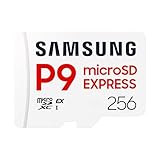
- TRANSFER SPEEDS UP TO 800 MB/S: With sequential read speeds up to 800 MB/s, get into your game up to 4× faster than our standard microSD cards (UHS I)¹.
- DYNAMIC THERMAL GUARD: Keeps its cool even when the action heats up. Dynamic Thermal Guard helps reduce overheating for fast, smooth gameplay.
- ALL YOUR GAMES ON ONE TINY CARD: Store all your games and downloadable content (DLCs) with up to 512GB of reliable storage. No deleting. No compromises.
- 6-PROOF PROTECTION WITH 3-YEAR LIMITED WARRANTY: Built to last, made for peace of mind. Anything can happen when you’re gaming on the go. With 6 types of protection²⁻⁹, the P9 Express can handle it all—helping maintain your game progress.
- NEXT-GEN AND BACKWARD COMPATIBLE: Your microSD Express card is compatible with Nintendo Switch 2¹⁰ and microSD UHS-I¹¹ devices, including tablets, drones, cameras and more.
Buy from Nintendo, the card manufacturer, or a major retailer selling the product directly when possible. When the package arrives, compare the brand, capacity, product family, and exact model number with the listing. Keep the packaging and test the card promptly so that you remain within the return window.
A small difference between the printed capacity and the usable capacity shown by the console is normal because manufacturers use decimal gigabytes and the card is formatted for system use. Nintendo says a discrepancy greater than 1GB from the labeled capacity is a reason to contact the retailer; see its capacity-discrepancy support guidance.
Frequently Asked Questions
Can I use my old Nintendo Switch microSD card in Switch 2?
Not for Switch 2 game data. Ordinary microSD, microSDHC, and microSDXC cards can be used only for supported screenshot and video import from an original Switch. Switch 2 game data requires microSD Express.
Do these 3 things before closing this tab:
1Fix the driver behind crashes, sound loss and screen glitches2Repair Windows errors before they cause bigger problems3Scan for outdated or missing drivers - takes under a minuteAre Nintendo-licensed cards required?
No. Nintendo supports any genuine microSD Express card up to 2TB. Licensed Samsung and SanDisk cards can make compatibility and packaging clearer, but licensing does not automatically make a card faster or more durable.
Can I use a 2TB microSD Express card?
Nintendo supports capacities up to 2TB. Check that a 2TB listing is genuine, explicitly microSD Express, sold with a useful return policy, and backed by a valid warranty. A 2TB card is not automatically a good deal just because it is the largest capacity.
Do Switch 2 game saves go on the microSD Express card?
No. Save data remains in system memory and cannot be copied or saved to the card. The card stores downloadable software, DLC, updates, screenshots, and captured video.
Does a faster microSD Express card improve game loading?
Not necessarily by the amount suggested by the maximum sequential speed. Faster write performance is more useful for large downloads and transfers, while real game-loading differences depend on the console, firmware, card controller, file sizes, and workload.
Do physical Switch 2 games need extra storage?
Sometimes. Game-key cards and some other physical releases require software data to be downloaded to internal storage or a microSD Express card. Check the packaging or Nintendo eShop listing for the required space.
Should I buy 256GB, 512GB, or 1TB?
Choose 256GB for a mostly physical library and the lowest upfront cost, 512GB for most digital players, and 1TB for frequent downloads, a large digital library, or game-key-card users. At the August 9, 2026 U.S. snapshot, reasonable targets were about $59 for 256GB, $100–$120 for 512GB, and $180–$220 for 1TB.
What does the EX symbol mean?
It identifies the microSD Express standard. Look for the Express or EX marking on the card and package. Labels such as microSDXC, U3, V30, A1, or A2 do not establish that a card is compatible with Switch 2 game storage.
Can I keep several Express cards and swap them?
Nintendo recommends one card per Switch 2, and data from multiple cards cannot simply be combined. If you need more space, copy the complete card contents to a larger card using Nintendo’s documented transfer process rather than planning a rotating-card library.
The Bottom Line
Bottom line: buy the Samsung Nintendo-licensed 256GB at about $59 if you want a simple, low-risk upgrade. For most digital players, wait for the Lexar PLAY PRO 512GB near $100–$120; the $109.99 snapshot is a strong buy. Target a Lexar PLAY PRO or TeamGroup APEX SD7.1 1TB at $180–$220, and treat prices above $250 as poor value. Whatever you choose, verify the microSD Express/EX marking, exact SKU, seller, warranty, and return policy before checkout.
Quick Recap
Product prices and availability are accurate as of the date/time indicated and are subject to change. Any price and availability information displayed on Amazon at the time of purchase will apply.




