PC Slower Than It Used to Be?
A free scan shows the junk files, broken settings and background clutter dragging Windows down - then fixes them in one click.Free scan · Windows 10 & 11Outdated Drivers Are Slowing You Down
One free scan finds every outdated or missing driver and matches the right update for your exact hardware.Free scan · exact hardware matchThere is no single best programming laptop: choose the operating system and toolchain first, then match memory, storage, screen, and battery to the work you actually do. For most students and web developers, a recent laptop with 16GB RAM and a 512GB SSD is a sensible starting point. For containers, virtual machines, Android emulators, or heavier projects, aim for 32GB RAM; for CUDA, Unreal Engine, or 3D work, look for a Windows laptop with an Nvidia GPU and strong cooling.
Quick recommendations
| Need | Best direction | Why it fits |
|---|---|---|
| Professional general development | 14-inch MacBook Pro with a Pro-class Apple chip, at least 24GB unified memory, and preferably 1TB storage | Combines a strong Unix-like development environment, sustained performance, battery life, and a high-quality display. This is an editorial recommendation, not a hands-on test claim. |
| Students and general web development | MacBook Air with at least 16GB memory and 512GB storage; consider the 15-inch model for more screen space | Portable, quiet, and sufficient for web work, scripting, and many general coding projects. |
| Windows-only tools or enterprise software | A current x86 ThinkPad, Dell business laptop, or comparable Intel/AMD Windows system | Offers broad compatibility with Windows applications and x86 development environments. Check the exact generation and configuration. |
| Linux and repairability | Framework Laptop 13 or 16, System76, or a Linux-verified ThinkPad or Dell | Can offer modularity, upgrade options, or Linux preinstallation; support still depends on the exact hardware and configuration. |
| Game development, CUDA, or 3D work | Windows laptop with a discrete Nvidia GPU, 32GB or more RAM, 1TB SSD, and substantial cooling | Better suited to GPU-dependent tools, at the cost of weight, noise, heat, price, and battery life. |
| Lower-cost programming laptop | Recent AMD Ryzen 5/7 or Intel Core Ultra 5/7 laptop with 16GB RAM and a 512GB SSD | Avoids paying for graphics power most coding tasks do not need while providing practical baseline capacity. |
Product lines and configurations change. Current coverage does not consistently identify the same Apple Pro-chip lineup: RTINGS’ programming recommendations and other coverage differ on availability. Confirm the specific chip and configuration on Apple’s current MacBook Pro page before buying rather than assuming a model name from an older roundup is still current.
Choose for your development work
Programming spans very different workloads. Editing a website, running several containers, compiling a large project, and rendering a 3D scene do not place the same demands on a laptop. Start with the software you must run, then buy enough capacity for it.
| Workload | Practical target | Important fit check |
|---|---|---|
| Schoolwork, beginner coding, web/frontend | 16GB RAM, 512GB SSD, modern midrange CPU | Prioritize a usable screen and keyboard; a discrete GPU is usually unnecessary. |
| Backend or full-stack with databases and containers | 32GB RAM, 1TB SSD | Check sustained performance and how much storage local images and databases use. |
| Android Studio and emulators | 32GB RAM, 1TB SSD where possible | Confirm the operating system and processor architecture work with the emulator and required tools. |
| iOS/macOS development | Mac with 24GB or more memory for heavier work; 1TB storage for multiple simulators and projects | Xcode requires macOS; memory cannot generally be upgraded after purchase on Apple laptops. |
| Docker, Kubernetes, multiple services | 32GB–64GB RAM, 1TB SSD | Containers compete with the IDE, browser, databases, and host operating system for memory. |
| Virtual machines or cybersecurity labs | 64GB preferred for several concurrent VMs; 32GB can suit lighter use | Check guest architecture, virtualization support, and any required drivers or security tools. |
| Local AI, large datasets, GPU development | At least 32GB system memory; 64GB or more for larger workloads, plus a suitable GPU when required | GPU memory and framework support matter; an Apple unified-memory pool is shared and finite. |
| Game development and 3D | 32GB–64GB RAM, discrete Nvidia GPU, 1TB SSD | Cooling, graphics support, and sustained performance matter more than a brief CPU benchmark. |
How much memory and storage do you need?
RAM
For a new programming laptop, treat 16GB as the sensible floor rather than buying 8GB just to lower the price. Eight gigabytes can run basic coding tools, but an IDE, browser tabs, local services, and the operating system can quickly create memory pressure, slowdowns, and swapping to storage.
Quick wins for a faster PC:
Scan for outdated or missing drivers - takes under a minuteDriver Scan →Repair Windows errors before they cause bigger problemsFix Now →Fix the driver behind crashes, sound loss and screen glitchesFind Drivers →#1 Best Overall
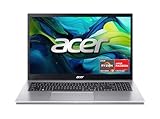
- Exceptional Performance and Productivity: Experience smooth and responsive performance powered by an AMD Ryzen 7 7730U processor and 16GB memory and 512GB SSD. Enjoy extended productivity thanks to exceptional battery life and the support of Copilot, your everyday AI companion.
- Copilot in Windows - your AI Assistant: Do more, quicker than ever across multiple applications with the centralized generative AI assistance of Copilot in Windows Accessible with a single touch of the Copilot Key
- Immersive Visuals: With its narrow bezel design the 15.6" 1080p Full HD IPS display is perfect for casual web browsing and watching movies or streaming, allowing for a sharp, detailed view of what's in front of you. And with Acer BluelightShield, lower the levels of blue light to lessen the negative effects of blue light exposure.
- User-Friendly by Design: Seamlessly connect or charge your devices through a full-function USB Type-C port, while Wi-Fi 6 and HDMI 2.1 connectivity enhance your digital experiences to be faster, smoother, and more enjoyable.
- Unlock More with AcerSense: Intuitive device control is available at the touch of a button with AcerSense, which manages battery life, storage, and apps for optimal performance. Acer TNR solution and Acer PurifiedVoice enhance your video calling experience to a new level of clarity and quality.
Move to 32GB if your regular work includes containers, multiple services, Android emulators, substantial projects, or data science. Consider 64GB for several virtual machines, larger local AI or data workloads, or demanding development environments. Apple’s unified memory is shared by the CPU, GPU, applications, containers, and virtual machines: its efficiency does not make the pool larger. Many thin laptops have soldered memory, so choose the capacity you expect to need rather than assuming you can upgrade it later.
Storage
A 512GB SSD is a practical minimum for most developers; 1TB is more comfortable for professional work involving SDKs, Docker images, emulators, datasets, and repositories. Consider 2TB or more for game assets, virtual machines, video, local AI models, or large datasets. IDE caches, package managers, operating-system updates, and build artifacts also accumulate.
A 256GB model can serve basic programming, but it is a constrained long-term choice. An external SSD can help with archives and large files, though it is less convenient for active projects and cannot solve every internal-storage limitation. Check whether the particular laptop permits SSD replacement.
Match the processor and operating system to your tools
Apple silicon and macOS
Apple silicon is a strong choice for general development, web and backend work, and especially iOS or macOS development. Its performance per watt, quiet operation, battery life, and Unix-like terminal make it appealing for mobile professionals. A Mac is a poor fit if your work depends on CUDA, Windows-only applications, certain x86 virtual machines, or extensive GPU and hardware expansion. Some x86-only tools, drivers, security utilities, and embedded packages may need emulation or workarounds.
For general use, the MacBook Air suits students, frontend work, scripting, and travel; select at least 16GB memory and 512GB storage, with 24GB preferable if you expect heavier multitasking. A 15-inch screen gives more room when you code on the laptop itself. For sustained builds and broader professional workloads, a 14- or 16-inch MacBook Pro with a Pro-class chip and at least 24GB unified memory is a stronger target. Check Apple’s live configuration pages for current availability: MacBook Air and MacBook Pro.
For context rather than a current price promise, Consumer Reports’ 2026 buying guide listed a 14-inch MacBook Pro with an M4 Pro, 24GB memory, and 512GB storage at $2,150, and recorded 17 hours of web battery life. The guide’s listed price and test result are tied to that configuration and test, not necessarily today’s Apple Store price or a coding workload. Its guide also listed a 13-inch M3 MacBook Air with 16GB/512GB at $1,100. See the 2026 Consumer Reports buying guide.
Windows on Intel or AMD
Windows on x86 is the safer default when you depend on Visual Studio, .NET, enterprise software, specialist drivers, or tools whose support for other architectures is uncertain. It also offers the broadest range of laptops with discrete GPUs and, on some models, replaceable memory or storage. Recent Intel Core Ultra and AMD Ryzen processors cover a wide range; demanding processor classes are unnecessary for ordinary coding. The laptop’s cooling and power settings affect sustained work, so processor branding alone does not predict compile speed.
Rank #2

- 【Ryzen 5 6600H for Demanding Daily Performance】AMD Ryzen 5 6600H processor features 6 cores, 12 threads, and boost speeds up to 4.5GHz, delivering stronger performance for office multitasking, coding, content handling, and sustained daily workloads. Compared with many common thin-and-light Intel Ryzen 5 7430U, Core i3-1315U, Core i5-1334U, AMD Ryzen 5 7520U, and Ryzen 7 5825U configurations, it is a better fit for users who need more performance headroom.
- 【Radeon 660M Graphics】AMD Radeon 660M integrated graphics with RDNA 2 architecture supports everyday visual work, smooth media playback, light photo editing, and casual gaming needs like LoL or CS2 at 1080p settings. It is a balanced fit for students, remote workers, and entry-level creators who want capable graphics without the extra heat and power draw of a dedicated GPU.
- 【16GB RAM & 1TB SSD with Upgrade Room】16GB DDR5 memory and a 1TB PCIe SSD deliver smooth out-of-the-box performance for multitasking, large file handling, and daily storage needs. With dual SO-DIMM slots and an M.2 2280 design, the system still leaves room to upgrade up to 64GB RAM and up to 4TB SSD as your needs continue to grow.
- 【2 Year Warranty Support】Includes a 2-year manufacturer warranty and a 90-day hassle-free return window, with final assembly in the United States and after-sales replacement handled in the United States under this listing workflow. That added service clarity gives students, professionals, and home users more confidence when choosing a laptop for long-term daily use.
- 【53.58Wh Battery and 100W PD】A 53.58Wh smart battery paired with a separate 100W PD charger gives this laptop more flexibility for campus study, coffee shop work, and moving between rooms at home. The USB-C setup also supports convenient power and display connectivity, helping reduce the hassle of slow charging and frequent outlet hunting during a busy day.
Windows can also host Linux development through WSL2, dual boot, or a virtual machine. WSL2 is useful but not identical to native Linux: device access, graphics, networking, filesystems, permissions, and performance can differ. Verify any workflow that depends on those details.
Do these 3 things before closing this tab:
1Clear out junk files and repair common Windows errors2Fix the driver behind crashes, sound loss and screen glitches3Repair Windows errors before they cause bigger problemsWindows on ARM
ARM Windows machines can be attractive for battery life, but compatibility is application-specific. Before buying, verify that your required IDE, Docker images, virtualization setup, Android emulator, VPN, security software, USB-device drivers, database, and enterprise applications run properly. A program that launches through emulation may still not support its drivers or virtualization features. Consumer Reports’ 2026 guide includes Snapdragon X machines with battery results, but battery performance alone does not establish development-tool compatibility.
If a critical tool is unsupported, check the tool vendor’s system requirements and ARM documentation, look for a native ARM build, and test the exact container or VM workflow. Prefer x86 Windows or Linux hardware when the workflow still depends on unsupported x86 software, drivers, or guests.
Linux
Linux is a natural fit for systems programming, DevOps, infrastructure, cybersecurity, embedded work, and users who want control over their environment. System76 sells laptops with Linux preinstalled; Framework emphasizes modular, repairable designs. See System76 laptops, Framework Laptop 13, and Framework Laptop 16.
Compatibility is model- and component-specific, not guaranteed by a brand label. Check the exact SKU, Wi-Fi chipset, GPU, fingerprint reader, webcam, dock, distribution version, and suspend/resume behavior. “Linux boots” does not establish that every peripheral works reliably. Vendor support and warranty terms also differ.
Free tools Windows power users keep installed
One-click scans. No signup required.
What to look for beyond the processor
Screen size, aspect ratio, and panel
A 14-inch laptop usually balances portability and workspace; 15- or 16-inch models make split-screen coding, terminals, documentation, and debugging easier. Look for a 16:10 or 3:2 panel for more vertical space than 16:9. On a 14-inch Windows laptop, 1920×1200 is a reasonable baseline; 2560×1600 or similar can make text more comfortable, provided scaling remains usable.
Matte or low-glare screens are useful in bright rooms. OLED offers deep contrast and vivid color, but can reduce battery life and its flicker bothers some people. RTINGS flags OLED flicker on one Lenovo alternative in its programming laptop coverage; compare reviews of the exact panel, particularly if you are flicker-sensitive. Resolution and color alone do not determine comfort.
Rank #3

- THE POWER TO STAY PRODUCTIVE – Looking to make your everyday work and home life more manageable without breaking the bank? The Lenovo V15 Gen 4 offers long-term reliability with top-of-the-line features to make you your most productive self.
- CRUSH YOUR TO-DO LIST – The AMD Ryzen CPU pairs quiet performance and enhanced operating power to crush your high-demand workday. It optimizes performance and allows for seamless multitasking.
- TRUE-TO-LIFE VISUALS – The 15.6” FHD IPS display is anti-glare with 300 nits brightness to see your best outside or in. Its 88% screen-to-body ratio makes viewing detailed applications like spreadsheets a breeze.
- SEAMLESS COLLABORATION – Lenovo Smart Appearance enhances your camera effects to protect your privacy and to make you the focus of every video conference. Intelligent noise cancelation minimizes distraction and Dolby Audio provides an elegantly sonorous experience.
- BUILT TO WITHSTAND – Built for military-grade toughness, the V15 Gen 4 is tested to withstand harsh temperatures, pressure, humidity, vibrations and more. Keep your work safe from the board room to your living room and everywhere in between.
Keyboard and trackpad
For hours of daily typing, assess key travel and feedback, arrow-key size, function-row behavior, and access to Home, End, Insert, Delete, and Page Up/Down. Check trackpad accuracy and palm rejection, too. Thinness can come at the expense of typing comfort. Business laptops such as ThinkPads remain worth considering when keyboard feel, service options, and enterprise support matter more than a minimal profile.
Battery and ports
Manufacturer battery claims are not the same as a day of coding. IDE indexing, builds, brightness, browser tabs, Docker, emulators, video calls, an external display, and a discrete GPU can all reduce runtime. Independent web and video tests are useful but still differ from a developer’s workload. Consumer Reports reports web and video results separately in its 2026 guide; treat them as controlled comparisons, not guarantees for your setup.
Check the actual ports for USB-C charging, USB-A devices and development boards, external-monitor support, and an audio jack. SD or microSD can be useful for media and embedded work; Ethernet can be added through a dock or adapter. Some Macs require docks or adapters, but thin Windows laptops can have limited ports too. Confirm how many external monitors the exact laptop and dock support.
GPU, cooling, and upgradeability
Most web, backend, Python, and business programming does not need a discrete GPU. One becomes important for CUDA, Unreal Engine, demanding Unity work, Blender and 3D rendering, GPU compute, or local AI inference. The trade-off is generally more cost, weight, heat, fan noise, and lower battery life. Do not buy a gaming laptop solely for its GPU if your work will not use it.
Thin designs may throttle during long builds or rendering even when short benchmark bursts look fast. If your work runs for extended periods, seek evidence about sustained performance and cooling for the exact model. Repairability is another trade-off: Framework’s modular ports and user-replaceable components are practical advantages, while RTINGS notes the Framework Laptop 16 has shorter battery life and less overall polish than some premium competitors. Replaceability is useful, but it does not guarantee that parts will remain available indefinitely or that every owner will want to do repairs.
Independent reader supportYour contribution helps us test, update, and keep practical guides available for everyone.Shortlist by laptop type
MacBook Pro 14: premium general-purpose choice
Consider a 14-inch MacBook Pro with a Pro-class Apple chip, at least 24GB unified memory, and 1TB storage if you use Docker, simulators, or virtual machines. Choose the 16-inch version if you prioritize workspace and cooling over portability. It suits professional general development, iOS work, and substantial builds; it is a poor match for CUDA, Windows-only tools, or workflows requiring user-replaceable RAM. Verify which Pro-class chips are currently offered rather than relying on conflicting third-party 2026 model references.
Recommended Free Tools
MacBook Air 13 or 15: student and general coding choice
The Air is suited to students, frontend developers, web work, Python, scripting, and travel. Choose 16GB memory and 512GB storage at minimum, or 24GB if you expect heavier multitasking or containers. Prefer the 15-inch model for a larger built-in coding workspace. It is less suitable for sustained heavy compilation, several VMs, large emulator workloads, or GPU-heavy development. TechRadar lists an M4 Air with up to 24GB RAM and up to 512GB storage, and reports 14 hours 51 minutes of battery life in its own testing; those figures describe the configuration and test in its programming laptop guide, not every current Air or a coding session.
Rank #4

- 【High Speed RAM And Enormous Space】32GB high-bandwidth RAM to smoothly run multiple applications and browser tabs all at once; 1TB PCIe M.2 Solid State Drive allows to fast bootup and data transfer
- 【Processor】AMD Ryzen 7 7730U (8 Cores, 16 Threads, 16MB L3 Cache, 2.0GHz base frequency, up to 4.50GHz max turbo frequency), with AMD Radeon Graphics
- 【Display】15.6" diagonal, FHD (1920 x 1080), IPS, Anti-glare, Micro-edge, 250 nits, 45% NTSC
- 【Tech Specs】2 x Superspeed USB Type-A, 1 x Superspeed USB Type-C, 1 x HDMI, 1 x Headphone/Microphone Combo, Webcam, Wi-Fi 6 and Bluetooth
- 【Operating System】Windows 11 Pro - Get all the features of Windows 11 Home operating system plus enterprise-grade security, powerful management tools like single sign-on, and enhanced productivity with remote desktop and Cortana
Framework Laptop 13: modular, repairable option
Consider the Framework 13 if you value repairability, modular ports, and a potential upgrade path, particularly for Linux-oriented use. Check the precise processor, memory configuration, distribution support, and total configured price. Its battery life and performance may not match the most efficient Apple laptops, and modularity does not guarantee long-term parts availability. Current configurations are listed at Framework’s Laptop 13 page.
Framework Laptop 16: larger modular system
The Framework 16 suits developers who want more performance or a GPU-capable configuration with a modular design, including Linux users and some game developers. It is heavier and less travel-friendly than compact ultrabooks. RTINGS notes shorter battery life and a less polished overall experience than some premium rivals in its programming laptop coverage. Check live configuration and pricing at Framework’s Laptop 16 page.
ThinkPad X1 Carbon or another ThinkPad
A ThinkPad can suit business developers and frequent travelers who value a keyboard, enterprise support, and docking. The X1 Carbon is a product family, not one fixed specification: generation, CPU, display, memory, battery, and regional Linux support vary. Many thin configurations have soldered memory, and some prioritize portability over sustained performance. Consider a T-series when value, ports, or serviceability matter more than the lightest chassis, or a P-series for workstation needs. Review Lenovo’s current ThinkPad X1 family and verify the exact SKU.
Dell business or Linux-capable laptop
Dell’s range includes Windows business and workstation options, and some configurations ship with Ubuntu; Linux availability is not uniform across the brand. Check the exact model’s display, thermal behavior, ports, and Linux option rather than assuming an XPS-style machine is the best developer fit. Dell’s current laptop listings show configurations and availability.
Windows laptop with Nvidia graphics
For CUDA, Unreal Engine, 3D rendering, or GPU compute, target a discrete Nvidia GPU, 32GB RAM or more, a 1TB SSD, a suitable H-class or HX-class processor, and robust cooling. Expect greater weight, noise, heat, and cost and shorter battery life than an ultraportable. Match the GPU to the specific framework or engine requirements rather than buying by gaming branding alone.
System76: Linux preinstalled
System76 is an option for buyers who want Linux installed by the vendor and prefer a Linux-focused support experience. Models, pricing, battery life, and hardware vary, and a smaller product range may not suit every budget or design preference. Compare the precise configuration with a Linux-verified ThinkPad, Dell, or Framework system on System76’s laptop page.
Budget by what you need
Prices and discounts change by date, region, and configuration, so treat these as US-dollar planning bands rather than live quotes.
| Budget | What to prioritize | Who it suits |
|---|---|---|
| Under $800 | Recent Ryzen 5 or Core Ultra 5, 16GB RAM, 512GB SSD, 1080p-class or better screen; a replaceable SSD is a plus | Students and basic to moderate development. Avoid 8GB memory and very small storage; check ARM compatibility carefully. |
| $800–$1,300 | Better display and build, or a base MacBook Air during a sale; retain 16GB and 512GB as targets | Strong value range for general coding, students, and web developers. |
| $1,300–$2,000 | Consider 32GB RAM, 1TB SSD, premium business models, better displays, Framework configurations, or entry discrete graphics | Developers with heavier multitasking or a specific need for a premium chassis or GPU. |
| Above $2,000 | Buy only for a clear need such as a Pro-class CPU, 32GB–64GB memory, discrete GPU, larger storage, workstation support, or sustained cooling | Professional workloads that can use the added capacity or support. |
Consumer Reports’ 2026 guide lists several machines in the $800–$1,300 vicinity and configurations at higher prices, but its figures are guide listings rather than guaranteed current offers. For example, its cited MacBook prices above are tied to specific older-generation configurations. Check the manufacturer or retailer for the model, memory, storage, region, and price actually available when you buy.
Avoid common buying mistakes
- Choosing 8GB to save money: This can constrain IDEs, browsers, containers, and future projects; make 16GB your baseline for a new machine.
- Choosing 256GB without checking your tools: SDKs, simulators, container images, and build artifacts can consume the space quickly.
- Assuming a fast CPU guarantees fast builds: Cooling, power limits, memory, storage, and sustained rather than burst performance all matter.
- Buying ARM Windows without checking critical apps: Verify drivers, VMs, Docker, emulators, VPNs, and specialist tools individually.
- Assuming Linux works because it installed: Check the exact model and peripherals, including suspend, Wi-Fi, camera, fingerprint reader, GPU, and dock.
- Paying for an unused GPU: A discrete GPU can impose cost, weight, noise, and battery penalties without helping ordinary coding.
- Ignoring panel comfort: Check reflections, scaling, and potential OLED flicker rather than choosing on resolution alone.
- Choosing portability over a workable setup: A small screen, shallow keyboard, limited palm rest, fan noise, and dongle dependence can make a nominally portable machine uncomfortable for long sessions.
- Assuming low memory can be upgraded later: Confirm whether RAM is soldered before buying.
Make the final choice
- If you need Xcode, choose a Mac and budget enough memory and storage for your projects and simulators.
- If you need CUDA, Unreal Engine, or GPU rendering, choose a Windows system with a supported Nvidia GPU and strong cooling.
- If you need native Linux and repairability, compare Framework, System76, and an exact Linux-verified ThinkPad or Dell configuration.
- If you mainly do schoolwork or web development, target 16GB RAM and 512GB SSD; choose a MacBook Air or a comparable Windows laptop based on your required software.
- If you run containers, emulators, or VMs regularly, move toward 32GB RAM and 1TB storage, and check architecture compatibility before purchase.
- If you work on the laptop screen all day, weigh a 15- or 16-inch display and keyboard comfort against the extra size and travel weight.
For current configuration details, use the official vendor pages linked above; treat third-party recommendations and battery tests as evidence about specific tested models, not guarantees about every configuration or today’s price.
Quick Recap
Product prices and availability are accurate as of the date/time indicated and are subject to change. Any price and availability information displayed on Amazon at the time of purchase will apply.




