Savings account yields near 5.00% APY in March 2026 appear counterintuitive to many savers, yet they are a rational outcome of current monetary policy, banking competition, and balance sheet economics. APY, or annual percentage yield, reflects the total annual return including compounding, making it the correct metric for comparing savings accounts. Understanding why these rates persist requires separating short-term policy effects from how banks and credit unions fund themselves.
Federal Reserve Policy and the Interest Rate Transmission Mechanism
The primary driver of elevated savings rates remains the federal funds target range set by the Federal Reserve, which continues to anchor short-term interest rates. Banks earn interest on excess reserves held at the Federal Reserve and on short-duration Treasury securities, creating a benchmark for what they can afford to pay depositors. When policy rates remain high, competitive institutions pass a portion of that yield to savers to attract and retain deposits.
Why Online Banks and Credit Unions Can Pay More
Institutions offering 5.00% APYs are typically online-only banks or federally insured credit unions with minimal physical branch networks. Lower fixed operating costs allow these institutions to allocate more revenue toward deposit interest rather than real estate or in-branch staffing. In addition, many are in active growth phases, using high savings rates as a customer acquisition tool rather than as a permanent pricing commitment.
Deposit Competition and Balance Sheet Strategy
High-yield savings accounts are often priced strategically to meet liquidity needs rather than to maximize long-term profitability. Deposits classified as non-maturity deposits, meaning funds that can be withdrawn at any time, are still valuable because they tend to be more stable than market sentiment suggests. Institutions facing loan growth, upcoming debt maturities, or regulatory liquidity requirements may temporarily pay above-market rates to strengthen their funding base.
Free tools Windows power users keep installed
One-click scans. No signup required.
#1 Best Overall

- EFFECTIVELY MANAGE YOUR MONEY - Our budget planner helps you take control of your finances by providing sections for financial goals, savings, debts, daily expenses, monthly budget, monthly budget review. This finance planner is a good finance book and will help you manage your money effectively.
- PREMIUM QUALITY - Our budget planner is made with high-quality 100gsm paper that reduces ink leakage, fraying, and shade issues. The sturdy and flexible cover,, helps protect the pages. The metal lay-flat twin-wire binding ensures durability and longevity.
- ORGANIZED MONTHLY GOALS & BUDGETS - Our 12-month budget planner helps you set monthly goals, budgets, reviews, and develop good monetary habits, strategies, and action plans. Write down monthly financial goals, put reminders of bills and payments on the calendar, plan your monthly budget in each category, track daily expenses, and review the monthly budget at the end of the month.
- FLEXIBLE USAGE - Our undated finance planner allows you to start at any time and place, making it convenient to use. It has a perfect size of 8.6x5.9 inches and fits in every bag, so it's always at hand.
- CREATE FINANCIAL FREEDOM - Our budget planner is your chance to develop monthly habits, monetary strategies, and action plans to start your journey to long-term financial freedom. It allows you to track monetary flow and review each area for improvements. With this 1-Years budget book, you can take the first step towards financial freedom.
Why “Free” Accounts Can Still Offer Top-Tier APYs
A genuinely free savings account is one without monthly maintenance fees, minimum balance penalties, or pay-to-earn requirements. High APYs do not inherently require fees because the institution’s revenue is generated from interest spread, the difference between what it earns on assets and what it pays on deposits. However, many top-rate accounts impose indirect conditions such as balance caps, limited withdrawals, or required companion checking accounts, which affect who can realistically earn the advertised yield.
Teaser Rates Versus Sustainable Rates
Not all 5.00% APYs are designed to last. Teaser rates are elevated yields offered for a limited time, often three to six months, after which the rate resets to a lower ongoing APY. Sustainable high-rate accounts disclose no expiration date but remain variable-rate products, meaning the yield can change at any time based on market conditions and institutional decisions.
Insurance, Risk, and Why High Yield Does Not Mean High Risk
Savings accounts offering up to 5.00% APY remain low-risk when they are insured by the Federal Deposit Insurance Corporation (FDIC) or the National Credit Union Administration (NCUA). These agencies insure deposits up to $250,000 per depositor, per institution, per ownership category. Yield differences reflect business models and pricing strategies, not increased credit or market risk for insured balances.
What the March 2026 Landscape Signals to Savers
The persistence of near-5.00% APYs indicates a market where cash is still valuable to financial institutions and where competition remains intense. For savers, this environment rewards careful evaluation of rate conditions, access limitations, and fine-print requirements rather than focusing solely on the headline APY. The presence of multiple free, insured accounts at this yield level underscores that high interest on savings is no longer an anomaly but a structural feature of the current rate cycle.
What “Free” Really Means in 2026: Eliminating Fees, Minimums, and Hidden Conditions
As competition among banks and credit unions has intensified, the definition of a “free” savings account has become more precise and more scrutinized. In March 2026, a genuinely free account is not simply one without a monthly maintenance fee, but one that avoids structural barriers that reduce effective yield or restrict access. Understanding these distinctions is essential when comparing accounts advertising up to 5.00% APY.
No Monthly Maintenance Fees: The Baseline Standard
A monthly maintenance fee is a recurring charge for keeping an account open, often ranging from $5 to $15. In 2026, truly competitive high-yield savings accounts universally eliminate this fee without requiring qualifying activities such as direct deposits or debit card usage. Accounts that waive fees only if certain conditions are met should not be considered fully free, as the waiver can be lost unexpectedly.
The absence of a maintenance fee ensures that interest earned is not partially or fully offset by recurring charges. This is particularly important for smaller balances, where even modest fees can negate the benefit of a high APY. For beginner and intermediate savers, fee predictability is as important as the rate itself.
Minimum Balance Requirements and Yield Erosion
Some savings accounts advertise no minimum balance to open but impose a minimum balance to earn the advertised APY. This distinction is critical, as balances below the threshold may earn a significantly lower rate or no interest at all. In practice, this creates a tiered system that disadvantages savers with fluctuating balances.
Quick wins for a faster PC:
Fix the driver behind crashes, sound loss and screen glitchesFind Drivers →Repair Windows errors before they cause bigger problemsFix Now →Scan for outdated or missing drivers - takes under a minuteDriver Scan →The best free savings accounts in March 2026 apply their full APY from the first dollar saved, with no penalty for balance volatility. This structure aligns with the needs of emergency funds and short-term savings, where balances naturally rise and fall. Accounts that require maintaining a constant high balance introduce implicit conditions that undermine their accessibility.
Withdrawal Limits and Access Restrictions
While federal Regulation D limits on savings withdrawals were lifted in 2020, many institutions continue to impose their own transaction caps. These limits typically allow six to ten withdrawals per month before triggering fees or account restrictions. Such policies are not inherently problematic, but they affect how “free” an account is in practical use.
In 2026, the most consumer-friendly savings accounts clearly disclose withdrawal limits and either impose no fees for exceeding them or convert the account to a checking structure temporarily. Hidden excess-withdrawal fees remain a common source of unexpected costs. Savers who prioritize liquidity should weigh access rules as carefully as the APY.
Pay-to-Earn and Companion Account Requirements
A growing number of high-rate savings accounts condition their top APY on holding a linked checking account, meeting monthly transaction quotas, or maintaining external account relationships. These are often referred to as pay-to-earn structures, as the saver must engage in specific behaviors to unlock the yield. While not inherently harmful, they reduce flexibility and increase administrative complexity.
Crashes, No Sound, or Screen Glitches?
Random freezes, missing sound and display glitches usually trace back to one bad driver. Find and replace yours safely.Free scan · under a minutePC Slower Than It Used to Be?
A free scan shows the junk files, broken settings and background clutter dragging Windows down - then fixes them in one click.Free scan · Windows 10 & 11Genuinely free accounts pay their advertised APY without requiring companion products or activity thresholds. This simplicity lowers the risk of accidentally falling out of qualification and earning a reduced rate. For savers seeking passive cash growth, unconditional yield is a defining feature of a truly free account.
Balance Caps and Partial-Yield Structures
Some institutions limit the amount of money that earns the highest APY, commonly capping interest eligibility at $10,000 to $50,000. Balances above the cap may earn a much lower rate, creating a blended yield that is meaningfully below the headline figure. These caps are often disclosed but easily overlooked.
In evaluating free savings accounts offering up to 5.00% APY, it is essential to assess whether the rate applies to the entire balance. Accounts without balance caps provide more predictable outcomes and scale more effectively as savings grow. For larger emergency funds or medium-term cash reserves, uncapped structures are generally more transparent.
Fee Transparency and the Role of Account Disclosures
Hidden conditions most often surface in account disclosures, formally known as deposit agreements. These documents outline fee schedules, rate-change authority, and account restrictions, and they carry legal weight. A free account in name only often reveals its true cost structure within these disclosures.
In March 2026, leading institutions compete on transparency as much as on yield. Clear disclosure of fees, variable-rate policies, and access rules is a hallmark of the best genuinely free savings accounts. Savers benefit most when high APYs are paired with simple, stable terms that require minimal ongoing monitoring.
Top Free High‑Yield Savings Accounts (Up to 5.00% APY): Verified Rates, Banks, and Key Terms
Against the backdrop of balance caps, conditional yields, and disclosure complexity, a smaller subset of institutions continues to offer genuinely free high‑yield savings accounts. These accounts pay competitive interest without activity requirements, monthly fees, or companion products. The accounts highlighted below represent the most consistently competitive options available to U.S. savers in March 2026, based on publicly disclosed rate sheets and deposit agreements.
All accounts discussed pay a variable annual percentage yield, commonly abbreviated as APY. APY reflects the total annual return after compounding and is the standard metric used to compare savings products. Because these rates can change at any time, ongoing verification through the institution’s disclosures remains essential.
Rank #2

- Effective Budget Planning - Take control of your finances with the budget account book. This comprehensive planner allows you to plan and track your income, expenses, savings, and financial goals in one convenient place. With its intuitive layout and easy-to-use sections, you can stay organized and make informed decisions to achieve financial success.
- User-Friendly Layout - The budget planner features a user-friendly layout designed for easy navigation and organization. Each month, you'll find dedicated budget pages where you can set financial goals, track your income, and plan your expenses. Additional sections include debt trackers, savings goals, bill payment trackers, and more, making it simple to stay on top of your finances.
- Undated Monthly Calendar & Bonus Stickers - Featuring undated calendar each month, you'll have ample space to mark paydays, bills due, appointments, and important dates. Say goodbye to difficult writing spaces. Plus, we've included 3 cute sticker sheets that allow you to personalize your financial organizer and make budgeting more fun. Dates are not pre-printed and are completed by the user.
- Reliable and Convenient Design - Our monthly budget planner is designed for your convenience and built to last. The elastic band keeps everything securely in place, and the dual-sided pocket provides extra storage. Experience a budget planner that combines practicality and durability.
- Master Budgeting with Ease - Our financial planner includes a complete guidebook that provides valuable insights and instructions for optimal usage. From setting financial goals to tracking expenses, this guidebook offers step-by-step guidance and practical tips. Whether you're new to budgeting or an experienced user, this resource will help you make the most of your budget planner, empowering you to achieve financial success.
Leading Online Banks Offering Unconditional High Yields
Online-only banks continue to dominate the top tier of free savings yields due to lower operating costs and centralized deposit platforms. In March 2026, several nationally available online banks advertise savings APYs ranging from approximately 4.60% to 5.00% on standard savings accounts. These rates apply without minimum balance requirements and without transaction or maintenance fees.
The Tool Desk
Outbyte PC Repair FREEClear out junk files and repair common Windows errorsFree Scan →Outbyte Driver Updater FREEFix the driver behind crashes, sound loss and screen glitchesFind Drivers →These institutions typically allow unlimited deposits and electronic withdrawals, subject only to standard ACH transfer timelines. While Regulation D withdrawal limits were removed federally in 2020, many banks still reserve the right to restrict excessive withdrawals under their account agreements. This is a contractual control rather than a regulatory one and is disclosed in the deposit agreement.
Credit Unions With Competitive Free Savings Rates
Select federally insured credit unions also offer high‑yield savings products with rates approaching the upper end of the market. These accounts are insured by the National Credit Union Administration (NCUA), which provides coverage equivalent to FDIC insurance at $250,000 per depositor, per institution, per ownership category.
Credit union eligibility is often broader than it appears, with many allowing membership through geographic location or a one‑time association donation. Importantly, some credit unions impose balance caps on high‑yield tiers, while others do not. Only uncapped accounts should be considered genuinely free for larger balances.
Understanding Rate Structures and Teaser‑Rate Risk
Most top free savings accounts use variable rates, meaning the APY can move up or down at the institution’s discretion. Variable rates typically track broader interest‑rate conditions but are not contractually tied to any benchmark. Rate‑change authority is always outlined in the deposit agreement.
Do these 3 things before closing this tab:
1Clear out junk files and repair common Windows errors2Fix the driver behind crashes, sound loss and screen glitches3Repair Windows errors before they cause bigger problemsA subset of banks markets elevated introductory rates, commonly referred to as teaser rates. These rates apply for a limited period, often three to six months, before reverting to a lower standard APY. Truly free high‑yield accounts disclose a single ongoing rate rather than a temporary promotional yield.
Fee Structures and Access Considerations
The defining feature of the accounts in this category is the absence of recurring fees. No monthly maintenance fees, minimum balance penalties, or inactivity charges apply. Optional services, such as expedited wire transfers or paper statements, may still carry fees and are disclosed separately.
Access is typically digital-first, with mobile apps and online portals serving as the primary interface. Cash deposits are often limited or unavailable, which may affect savers who require frequent physical cash access. For purely savings-oriented use, this limitation is usually immaterial.
Deposit Insurance and Risk Profile
All accounts included in this category are insured either by the Federal Deposit Insurance Corporation (FDIC) or the NCUA. Insurance coverage protects deposits up to $250,000 per depositor, per institution, per ownership category, against bank or credit union failure. This insurance does not protect against rate changes or inflation risk.
Recommended Free Tools
From a credit-risk perspective, these savings accounts are considered low risk when held within insurance limits. The primary trade‑offs are liquidity features, rate variability, and user experience rather than safety of principal.
Matching Account Features to Savings Goals
For emergency funds and short‑term reserves, priority should be given to accounts with no balance caps, no teaser rates, and immediate liquidity. Medium‑term savers may place greater emphasis on consistently competitive yields and stable institutions with transparent rate histories.
Choosing among top free high‑yield savings accounts ultimately involves aligning yield, simplicity, and access needs. By focusing on unconditional APYs, clear disclosures, and insured institutions, savers can identify accounts that maximize interest income without introducing unnecessary complexity.
Rate Mechanics Explained: Variable APYs, Teaser Rates, Balance Caps, and How Long 5.00% Can Last
Understanding how high advertised savings rates function in practice is essential to evaluating whether a 5.00% APY meaningfully improves long‑term cash returns. The mechanics behind these rates determine not only how much interest is earned, but also how stable and predictable that yield will be over time.
Variable APYs and Why Savings Rates Change
Nearly all high‑yield savings accounts offer variable APYs, meaning the interest rate can change at any time at the institution’s discretion. Variable rates are typically influenced by short‑term benchmark interest rates, competitive pressures, and a bank’s internal funding needs.
When market interest rates rise, savings APYs tend to increase with a delay; when rates fall, savings yields often decline more quickly. A 5.00% APY advertised in March 2026 reflects current conditions rather than a guaranteed future return.
Variable APYs differ fundamentally from fixed‑rate products such as certificates of deposit, which lock in a rate for a defined term. With savings accounts, rate flexibility favors liquidity but introduces yield uncertainty.
Teaser Rates Versus Ongoing Rates
Some institutions advertise a headline APY that applies only for a limited introductory period, commonly referred to as a teaser rate. After the promotional window ends, the APY typically resets to a materially lower ongoing rate.
Teaser rates are often conditioned on account opening dates, minimum balances, or new‑customer status. The promotional duration may range from a few months to one year, after which the account behaves like a standard variable‑rate savings account.
Accounts with clearly disclosed ongoing rates provide greater transparency for long‑term savers. In contrast, teaser structures require active monitoring to avoid unintended yield erosion once the promotion expires.
Rank #3

- TAKE CONTROL OF YOUR MONEY & ACHIEVE YOUR FINANCIAL GOALS - Are you looking for the best monthly budget planner to keep your finances organized? Clever Fox Budget Book will help you keep your money organized, spend well and start saving.
- FIND THE BEST WAY TO ACHIEVE YOUR FINANCIAL GOALS - This budget organizer is not just a tool; it's a framework for achieving your financial goals. The finance planner helps you develop a strategy and break your ambitious goals into manageable monthly tasks.
- EASILY CONTROL YOUR SPENDING, DEBTS & SAVINGS - This money planner is undated and covers 12 months. Every month features a calendar, a budget plan, and an expense tracker. The budgeting planner also includes 8 savings and 12 debt trackers.
- USER GUIDE & BUDGETING STICKERS - Measuring 5.8 by 8.3 inches, this bill planner features a vegan leather hardcover, thick 120gsm paper, pen loop, elastic band, 3 bookmarks, pocket for receipts, budgeting stickers, and a user guide.
- 60-DAY GUARANTEE - We will exchange or refund your Budget Planner Organizer if you aren’t satisfied with your budgeting workbook for any reason. Reach out to us via message to refund your financial planner.
Balance Caps and Tiered Interest Structures
Many accounts advertising rates near 5.00% impose balance caps that limit how much money earns the top APY. A balance cap restricts the highest rate to a defined dollar amount, with excess balances earning a lower yield.
Tiered interest structures apply different APYs to different balance ranges within the same account. For example, the first portion of the balance may earn a high rate, while additional funds earn progressively less.
What’s actually slowing this PC down?
Pick the symptom - the matching free tool is one click away.
Balance caps and tiers reduce the effective blended yield for larger balances. For savers holding substantial cash reserves, these structures can materially lower total interest earned compared with accounts offering a single uncapped rate.
Eligibility Conditions That Affect the Advertised Rate
Some high advertised APYs are contingent on ongoing activity requirements rather than being fully unconditional. Common conditions include monthly direct deposits, transaction minimums, or linked checking account usage.
Failure to meet these requirements typically results in the account reverting to a lower base rate for that month. While such accounts may still be fee‑free, they introduce operational complexity and monitoring risk.
Genuinely free savings accounts offering top‑tier yields disclose the APY without behavioral conditions. The stated rate applies regardless of account activity, provided the balance remains within any disclosed limits.
Quick wins for a faster PC:
Scan for outdated or missing drivers - takes under a minuteDriver Scan →Repair Windows errors before they cause bigger problemsFix Now →Fix the driver behind crashes, sound loss and screen glitchesFind Drivers →How Long a 5.00% APY Can Reasonably Persist
The sustainability of a 5.00% savings APY depends on broader interest rate policy, competitive dynamics, and institutional strategy. Historically, peak savings rates tend to cluster near the upper end of monetary tightening cycles and decline as policy rates normalize.
Online banks and credit unions may temporarily maintain elevated rates to attract deposits, even as market rates plateau. Over time, competitive compression typically narrows the spread between top‑paying accounts and average market yields.
Rather than assuming persistence, a high APY should be evaluated as a snapshot of current conditions. Rate history, disclosure clarity, and absence of promotional fine print provide stronger signals of durability than the headline number alone.
Access, Liquidity, and Usability: Transfers, Withdrawals, Mobile Apps, and Customer Experience
While interest rates determine earnings, access and usability determine whether a savings account functions effectively as a cash management tool. For genuinely free high‑yield savings accounts in March 2026, operational friction often differentiates otherwise similar APYs. Transfer speed, withdrawal flexibility, and digital experience directly affect how practical an account is for both emergency savings and near‑term goals.
Crashes, No Sound, or Screen Glitches?
Random freezes, missing sound and display glitches usually trace back to one bad driver. Find and replace yours safely.Free scan · under a minutePC Slower Than It Used to Be?
A free scan shows the junk files, broken settings and background clutter dragging Windows down - then fixes them in one click.Free scan · Windows 10 & 11Transfers and Funding Speed
Most top‑yield savings accounts rely on ACH transfers, an electronic bank‑to‑bank system typically settling in one to three business days. Outbound transfers are usually slower than inbound transfers, especially for newer accounts with limited transaction history. Some institutions offer same‑day or next‑day transfers for internal moves between linked checking and savings accounts held at the same bank.
Initial funding limits and daily transfer caps are common, particularly at online banks managing fraud risk. These limits rarely affect routine savers but can delay large one‑time deposits or withdrawals. Disclosure of transfer limits is a practical usability marker often overlooked in rate comparisons.
Withdrawals and Liquidity Constraints
Federal Regulation D previously limited savings withdrawals to six per month, but this rule was suspended in 2020 and remains unenforced as of 2026. Despite this, many banks voluntarily maintain soft monthly withdrawal limits and may impose restrictions or account reviews if activity resembles transactional checking behavior. These limits are contractual rather than regulatory and vary widely by institution.
True liquidity also depends on how withdrawals are executed. Savings accounts typically do not provide debit cards or check‑writing, requiring funds to be transferred elsewhere before spending. For emergency access, accounts paired with an internal checking option provide faster liquidity than standalone savings products.
Do these 3 things before closing this tab:
1Scan for outdated or missing drivers - takes under a minute2Clear out junk files and repair common Windows errors3Fix the driver behind crashes, sound loss and screen glitchesMobile Apps and Digital Banking Experience
Since most high‑yield savings accounts are offered by online‑first institutions, mobile app quality is a core usability factor rather than a convenience feature. Key functions include real‑time balance updates, transaction tracking, external account linking, and customizable alerts. App reliability during peak usage periods is particularly important when rates are adjusted or market volatility increases transfer activity.
Advanced features such as automated savings rules, goal labeling, and in‑app customer support enhance usability but do not affect yield. These tools primarily support behavioral consistency rather than financial performance. Their presence signals platform maturity but should not be confused with account value.
Customer Service and Operational Reliability
Customer experience becomes most visible during exceptions such as transfer delays, verification holds, or account access issues. Institutions offering the highest APYs sometimes operate with lean support models, relying heavily on email or chat rather than phone access. Response time and issue resolution consistency matter more than channel availability alone.
Clear disclosures, predictable processing times, and transparent communication reduce friction even when problems arise. For savers prioritizing reliability over marginal yield differences, operational track record is a meaningful differentiator. In practice, the best genuinely free savings accounts balance competitive rates with systems designed for low‑maintenance, error‑resistant use.
What’s actually slowing this PC down?
Pick the symptom - the matching free tool is one click away.
Safety First: FDIC vs. NCUA Insurance, Bank Stability, and Risk Considerations
Operational reliability and usability matter, but safety is the non‑negotiable foundation of any savings account. High advertised APYs are only meaningful if deposited funds are protected against institutional failure and excessive risk‑taking. For retail savers evaluating free savings accounts offering up to 5.00% APY in March 2026, understanding how deposit insurance and institutional stability work is essential.
Rank #4

- Effective Budget Plan Book – Take control of your finances with the SUNEE budget account book. This all-in-one budget planner allows you to plan and track your income, expenses, savings, and financial goals. Its intuitive layout and easy-to-use sections help you stay organized and make smart decisions to reach financial success. Our financial planner also included a comprehensive guidebook with valuable tips and instructions to help you get the most out of your budgeting planner.
- Full-Page Calendars – Each month’s full-page calendar provides plenty of space to track paydays, bills due dates, appointments, and important events. No more cramped boxes or tight writing areas, you can easily plan and organize your schedule at a glance.
- Colorful Pages Layout and Tabs – This vibrant budget planner features a user-friendly design for easy navigation and organization. Each month includes dedicated budget pages to set financial goals, track income, and plan expenses. Additional sections like debt trackers, savings goals, and bill payment trackers make managing your finances a breeze. The colorful backgrounds on each page offer clear, instant visibility.
- Bonus 4 Stickers and Convenient Design – This monthly budget planner is built for convenience and durability. Water-resistant cover protects against spills, while the elastic band keeps everything secure, and the dual-sided pocket offers extra storage. Plus, we’ve included 4 adorable sticker sheets to personalize your planner and make budgeting more enjoyable. Experience a budget planner that combines practicality with lasting quality.
- UNDATED DESIGN & 1 YEAR USE - Undated finance books start with 1 page-financial goals, 1 page-Mind Map, 1 page-Financial Strategy, 1 page-Tactics, 2 pages-Important Dates, 4 pages-Bill Tracker, 4 pages-Saving Tracker, 8 pages-Debt Tracker, followed by 12 Months(10 pages per month, 1 unique color for each month). 2 pages-Christmas Budgeting, 2 pages-Yearly Summary, 2 pages-Check Register and 12 pages-Notes(dotted). It is UNDATED, so you could start at any time, suitable for 1 year use.
FDIC Insurance: Coverage, Limits, and Scope
The Federal Deposit Insurance Corporation (FDIC) insures deposits held at federally insured banks. Coverage is limited to $250,000 per depositor, per insured bank, per ownership category, including accrued interest. Ownership categories include individual accounts, joint accounts, and certain trust arrangements, each with separate coverage limits.
FDIC insurance applies only to deposit products such as savings accounts, checking accounts, and certificates of deposit. It does not cover investments, market losses, or promotional yields that change over time. Insurance protects principal and earned interest if a bank fails, not against rate reductions or access delays caused by operational issues.
NCUA Insurance: Credit Union Parity and Structural Differences
Credit unions are insured by the National Credit Union Administration (NCUA) through the National Credit Union Share Insurance Fund. Coverage limits mirror FDIC insurance at $250,000 per depositor, per insured credit union, per ownership category. From a depositor protection standpoint, FDIC and NCUA insurance are functionally equivalent.
The structural difference lies in ownership. Credit unions are member‑owned cooperatives, while banks are shareholder‑owned institutions. This distinction can influence pricing, service models, and risk appetite, but it does not change the insurance protection applied to savings balances.
Bank Stability vs. Deposit Insurance: What Insurance Does and Does Not Solve
Deposit insurance eliminates credit risk related to bank failure within coverage limits. It does not eliminate all forms of risk experienced by savers. Operational disruptions, prolonged transfer holds, account freezes due to compliance reviews, and temporary service outages can still occur even at insured institutions.
Large, well‑capitalized institutions typically offer more operational resilience, while smaller or fintech‑partnered banks may offer higher APYs to attract deposits. These higher rates do not imply greater default risk if FDIC or NCUA insurance applies, but they can correlate with leaner infrastructure and narrower support capacity.
Fintech Platforms and “Pass‑Through” Insurance Structures
Many high‑yield savings accounts with top‑tier APYs are offered through fintech platforms rather than traditional banks. In these arrangements, customer funds are deposited at one or more partner banks that hold the FDIC insurance. This is known as pass‑through insurance, meaning coverage applies to the end depositor if program requirements are met.
Savers must confirm that the platform clearly identifies its partner banks and maintains accurate account records. If documentation is incomplete or disclosures are vague, insurance protection may be delayed or disputed during a bank failure. Transparency in partner relationships is a key safety indicator, not a cosmetic detail.
Concentration Risk and Account Structuring
Concentration risk arises when balances exceed insurance limits at a single institution. High interest rates can accelerate balance growth, causing accounts to unintentionally cross coverage thresholds. This risk is often overlooked in rising‑rate environments where yields compound more quickly.
Managing concentration risk involves monitoring total balances, including accrued interest, and spreading funds across multiple insured institutions when necessary. Some platforms automatically sweep deposits across multiple banks to extend coverage, but these programs vary in structure and disclosure quality.
Teaser Rates, Sustainability, and Behavioral Risk
APYs near the top of the market often reflect promotional or variable‑rate pricing strategies rather than permanent yields. Teaser rates are introductory rates offered for a limited period before reverting to lower levels. While not inherently unsafe, they introduce behavioral risk if savers chase yield without monitoring rate changes.
The Tool Desk
Outbyte Driver Updater FREEScan for outdated or missing drivers - takes under a minuteDriver Scan →Outbyte PC Repair FREERepair Windows errors before they cause bigger problemsFix Now →A sustainable savings strategy prioritizes insured principal, predictable access, and transparent rate mechanics over short‑term yield maximization. Safety, in this context, is not only about institutional failure but also about minimizing surprises that undermine liquidity or expectations.
Independent reader supportYour contribution helps us test, update, and keep practical guides available for everyone.Side‑by‑Side Comparison Table: Best Free Savings Accounts by Use Case (Emergency Fund, Short‑Term Goals, Large Balances)
Building on the risk considerations discussed above, a side‑by‑side comparison clarifies how top free savings accounts differ by intended use. “Free” in this context means no monthly maintenance fees, no minimum balance requirements, and no mandatory bundled products. APYs listed are variable annual percentage yields as of March 2026 and may change without notice.
The table below groups accounts by the use case they are structurally best suited for, rather than by headline rate alone. This approach highlights trade‑offs between yield, liquidity, insurance structure, and operational complexity.
| Use Case | Institution / Platform | APY (Variable) | Insurance Structure | Fees & Minimums | Access & Liquidity | Key Limitations |
|---|---|---|---|---|---|---|
| Emergency Fund | Ally Bank Online Savings | 4.25% | FDIC, single bank (up to $250,000) | No fees, no minimum | Unlimited transfers, ACH 1–2 days | Lower APY than fintech leaders |
| Emergency Fund | Capital One 360 Performance Savings | 4.30% | FDIC, single bank (up to $250,000) | No fees, no minimum | Same‑day internal transfers, ACH | No rate tiers or relationship boosts |
| Short‑Term Goals | SoFi Savings (Direct Deposit) | 4.75% | FDIC pass‑through via partner banks | No fees, $0 minimum | Instant internal transfers, ACH | High APY requires qualifying deposits |
| Short‑Term Goals | Marcus by Goldman Sachs | 4.40% | FDIC, single bank | No fees, no minimum | ACH only, no checking integration | Slower access than hybrid platforms |
| Large Balances | Wealthfront Cash Account | 5.00% | FDIC pass‑through, multi‑bank sweep | No fees, no minimum | ACH and limited bill pay | Fintech dependency, variable sweep partners |
| Large Balances | Betterment Cash Reserve | 4.85% | FDIC pass‑through, multi‑bank sweep | No fees, no minimum | ACH transfers, no debit card | Access slower than bank‑based accounts |
How to Read the Comparison Table
The APY column reflects the headline yield but should be interpreted alongside eligibility requirements. Some platforms condition top rates on behaviors such as recurring direct deposits or account linking, which can effectively lower realized yields if conditions are not met.
Recommended Free Tools
Insurance structure is central to risk management. Single‑bank FDIC coverage is simpler to understand, while pass‑through coverage relies on accurate recordkeeping and disclosure by the platform. Multi‑bank sweep programs can extend coverage well beyond $250,000 but add operational complexity.
Use Case Alignment and Trade‑Offs
Emergency funds prioritize certainty and immediate access over yield maximization. Accounts in this category tend to offer slightly lower APYs but provide predictable liquidity, straightforward insurance, and minimal behavioral risk during market stress.
Short‑term goal savings, such as funds earmarked for near‑term purchases, can tolerate modest access friction in exchange for higher yields. These accounts often balance competitive rates with reasonable transfer speeds, making them suitable for horizons measured in months rather than days.
Large Balances and Concentration Control
Accounts optimized for large balances typically rely on automated sweeps across multiple partner banks. This structure directly addresses concentration risk by distributing funds to stay within insurance limits, including accrued interest.
Best Value
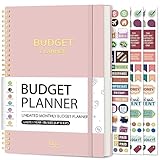
- Effective Budget Planning - Take control of your finances with the budget account book. This comprehensive planner allows you to plan and track your income, expenses, savings, and financial goals in one convenient place. With its intuitive layout and easy-to-use sections, you can stay organized and make informed decisions to achieve financial success.
- User-Friendly Layout - The budget planner features a user-friendly layout designed for easy navigation and organization. Each month, you'll find dedicated budget pages where you can set financial goals, track your income, and plan your expenses. Additional sections include debt trackers, savings goals, bill payment trackers, and more, making it simple to stay on top of your finances.
- Undated Monthly Calendar & Bonus Stickers - Featuring undated calendar each month, you'll have ample space to mark paydays, bills due, appointments, and important dates. Say goodbye to difficult writing spaces. Plus, we've included 3 cute sticker sheets that allow you to personalize your financial organizer and make budgeting more fun. Dates are not pre-printed and are completed by the user.
- Reliable and Convenient Design - Our monthly budget planner is designed for your convenience and built to last. The elastic band keeps everything securely in place, and the dual-sided pocket provides extra storage. Experience a budget planner that combines practicality and durability.
- Master Budgeting with Ease - Our financial planner includes a complete guidebook that provides valuable insights and instructions for optimal usage. From setting financial goals to tracking expenses, this guidebook offers step-by-step guidance and practical tips. Whether you're new to budgeting or an experienced user, this resource will help you make the most of your budget planner, empowering you to achieve financial success.
However, these platforms require ongoing transparency and monitoring. Savers must be comfortable reviewing partner bank disclosures and understanding that yields and sweep allocations may change as rates and program terms evolve.
How to Choose the Right Free Savings Account for You in 2026: Practical Decision Framework and Common Mistakes to Avoid
Selecting among the best free savings accounts in 2026 requires moving beyond headline APYs and evaluating how account mechanics interact with individual cash‑management needs. The comparison table and use‑case analysis above establish that yield, access, and insurance structure are interdependent rather than independent variables.
A disciplined decision framework reduces the risk of choosing an account that performs well on paper but poorly in practice. The following criteria provide a structured way to assess genuinely free, low‑risk savings options offering up to 5.00% APY.
Start With Cash Purpose and Time Horizon
The intended role of the savings determines acceptable trade‑offs. Emergency reserves prioritize immediate liquidity and operational simplicity, even if the APY is modestly lower than the market maximum.
Free tools Windows power users keep installed
One-click scans. No signup required.
Funds earmarked for short‑term goals can tolerate slower transfers or platform‑based access if the yield premium is durable. In contrast, idle surplus cash with no near‑term use may benefit most from multi‑bank sweep structures designed for large balances.
Evaluate APY Sustainability, Not Just the Headline Rate
Annual Percentage Yield (APY) reflects the total annualized return including compound interest, assuming the rate remains unchanged. In practice, many top‑of‑market APYs are conditional or promotional.
Accounts that require recurring direct deposits, minimum monthly activity, or external account linking may deliver lower realized yields if conditions lapse. A slightly lower but unconditional APY often produces more predictable outcomes over time.
Confirm That “Free” Truly Means No Structural Fees
A free savings account should have no monthly maintenance fees, no minimum balance penalties, and no transaction‑based charges for standard usage. Some platforms avoid explicit fees but impose indirect costs through forced account bundling or limited free withdrawals.
Review fee schedules carefully, including ancillary services such as paper statements, expedited transfers, or account closure. Structural simplicity reduces the risk of silent yield erosion.
Understand the Insurance Model in Detail
FDIC insurance (for banks) and NCUA insurance (for credit unions) protect deposits up to $250,000 per depositor, per institution, per ownership category. Single‑bank accounts offer the clearest protection structure and are easiest to audit.
Pass‑through insurance and multi‑bank sweep programs extend coverage by distributing funds across partner institutions. While effective, these models depend on accurate recordkeeping and timely disclosures, making ongoing monitoring a necessary responsibility for the saver.
Assess Access Speed and Operational Friction
Liquidity is not binary. Access varies by transfer method, cutoff times, and settlement processes, even among accounts labeled as “high‑yield savings.”
Bank‑based accounts typically support faster ACH transfers and internal transfers to checking accounts. Fintech platforms may offer higher yields but rely on external transfers that introduce delays, especially during periods of elevated withdrawal demand.
Factor in Behavioral and Platform Risk
Accounts with complex rules increase the likelihood of behavioral slippage, such as missing activity requirements or misunderstanding rate tiers. Over time, these frictions can materially reduce effective returns.
Platform risk also matters. Established banks and well‑capitalized fintechs with transparent disclosures tend to offer more stable terms than newer entrants competing aggressively on yield alone.
Common Mistakes That Undermine Savings Outcomes
A frequent error is optimizing exclusively for the highest advertised APY without considering eligibility conditions or access constraints. This often results in chasing rates rather than building a durable cash strategy.
Free tools Windows power users keep installed
One-click scans. No signup required.
Another mistake is underestimating insurance complexity, particularly with large balances spread across sweep programs. Failure to track partner banks or ownership categories can unintentionally expose funds beyond insured limits.
Finally, treating savings accounts as set‑and‑forget products ignores the reality of rate cycles. Periodic reviews are necessary to ensure that an account remains competitive, fee‑free, and aligned with its original purpose.
Integrating Yield, Safety, and Usability
The most suitable free savings account in 2026 is not universally the one paying the highest rate. It is the account that delivers a competitive APY consistently, preserves full insurance protection, and allows access aligned with the saver’s real‑world needs.
By grounding selection decisions in cash purpose, rate durability, fee transparency, and insurance clarity, savers can use high‑yield savings accounts as stable financial infrastructure rather than speculative rate instruments.
Quick Recap
Product prices and availability are accurate as of the date/time indicated and are subject to change. Any price and availability information displayed on Amazon at the time of purchase will apply.




