The best document management software depends on whether you need a better place to store files or a controlled system for invoices, contracts, tax records, approvals, and retention. Those are different jobs.
For most businesses already paying for Microsoft 365, SharePoint is the strongest overall value. Google Drive with Shared drives is the easiest choice for Google Workspace users, while Dropbox remains excellent for simple synchronization and sharing. Larger organizations that need governance may prefer Box. If your priority is metadata, audit trails, OCR, or approval workflows, look at M-Files or DocuWare instead.
Pricing note: the current prices and plan details cited here were checked on August 9, 2026. They should not be read as historical 2025 prices; vendors can change pricing, editions, storage limits, and included features.
Best document management software: quick comparison
| Software | Best for | Repository model | Notable limitation |
|---|---|---|---|
| SharePoint | Organizations using Microsoft 365 | Document libraries, folders, metadata | Needs careful permissions and information architecture |
| Google Drive | Google Workspace and browser-first teams | My Drive and Shared drives | Less suitable for formal records management and complex workflows |
| Dropbox | Simple syncing and external file sharing | Folders and team folders | Weaker metadata, retention, and approval controls |
| Box | Enterprise content management with predictable storage | Folders, metadata, governance controls | Some advanced controls require higher tiers or add-ons |
| M-Files | Metadata-driven document control | Context and metadata rather than folders alone | Higher cost and more implementation than a basic file service |
| DocuWare | OCR, capture, approvals, and regulated workflows | Indexed records, archives, workflows | Usually requires a sales quote |
A document management system, or DMS, generally combines storage with indexing, access controls, version tracking, workflow, retention, and audit history. A cloud drive may provide some of these functions without being a full records-management platform.
#1 Best Overall

- PORTABLE SCANNER FOR USE ON-THE-GO — The fastest and lightest mobile single-sheet-fed compact document scanner in its class¹
- QUICK DOCUMENT SCANNING ― This Epson ultra-fast scanner scans a single page as quickly as 5.5 seconds²; Windows and Mac compatible
- VERSATILE PAPER HANDLING ― Portable scanner scans documents up to 8.5 x 72 in; Also easily digitizes receipts and ID cards to make accounting, bookkeeping, and organizing simpler
- INTUITIVE, HIGH-SPEED SOFTWARE — Epson ScanSmart Software³ is a smart tool allowing you to easily scan, review, and save; Stay organized easily with the help of this Epson scanner
- EASY SETUP — USB-powered connect to your computer for quick and simple scanning; No batteries or external power supply required to operate portable document scanner; Standard Connectivity: USB 2.0
1. SharePoint: best overall for Microsoft 365 organizations
SharePoint is the most practical choice when a business already relies on Word, Excel, Teams, Outlook, and OneDrive. It provides document libraries, permissions, version history, metadata, search, coauthoring, and workflow capabilities without adding a completely separate ecosystem.
Current listed pricing includes SharePoint Plan 1 at $5 per user per month when paid yearly. Microsoft 365 Business Standard is listed at $12.50 per user per month when paid yearly and includes SharePoint along with the desktop, web, and mobile Office applications. A Business Standard plan without Teams is listed at $9.29 per user per month. Business plans are generally aimed at organizations with up to 300 users.
For financial records, a sensible SharePoint library might use columns such as document type, fiscal year, client, department, approval status, and retention category. That is more useful than creating dozens of vaguely named folders.
Useful version-history path
- Select the file in the SharePoint library.
- Open the Actions menu.
- Select Version history.
You can also open the file’s details pane and access its version history. The history can show who changed a file, when it changed, and allow an earlier version to be restored.
Important SharePoint failure modes
- Do not require check-out if the team needs coauthoring. A checked-out document is locked for exclusive editing, and other users cannot see changes until it is checked back in.
- IRM and RMS-protected documents cannot use coauthoring.
- Version history is not a keystroke-by-keystroke recording. Office creates versions periodically during editing and saving.
- Disabling versioning removes your ability to retrieve earlier versions and associated history.
SharePoint is powerful, but it is not automatically organized. Someone should design the libraries, permission groups, naming conventions, metadata, and retention rules before the business migrates thousands of files.
2. Google Drive with Shared drives: best for Google Workspace teams
Google Drive is the natural choice for businesses that work primarily in Google Docs, Sheets, Slides, Gmail, and Meet. Its major strength is simultaneous browser-based editing and straightforward sharing.
For business editions, Google currently lists pooled storage of 30 GB per user on Business Starter, 2 TB per user on Business Standard, and 5 TB per user on Business Plus. Listed annual-commitment prices are $7, $14, and $22 per user per month respectively. Flexible-plan prices are listed as $8.40, $16.80, and $26.40. Business editions support organizations with 1 to 300 users. Google Vault for retention and eDiscovery is listed for Business Plus, subject to account and domain requirements.
Rank #2

- FAST SPEEDS - Scans color and black and white documents a blazing speed up to 16ppm (1). Color scanning won’t slow you down as the color scan speed is the same as the black and white scan speed.
- ULTRA COMPACT – At less than 1 foot in length and only about 1. 5lbs in weight you can fit this device virtually anywhere (a bag, a purse, even a pocket).
- READY WHENEVER YOU ARE – The DS-640 mobile scanner is powered via an included micro USB 3. 0 cable allowing you to use it even where there is no outlet available. Plug it into you PC or laptop and you are ready to scan.
- WORKS YOUR WAY – Use the Brother free iPrint&Scan desktop app for scanning to multiple “Scan-to” destinations like PC, Network, cloud services, Email and OCR. (2) Supports Windows, Mac and Linux and TWAIN/WIA for PC/ICA for Mac/SANE drivers. (3)
- OPTIMIZE IMAGES AND TEXT – Automatic color detection/adjustment, image rotation (PC only), bleed through prevention/background removal, text enhancement, color drop to enhance scans. Software suite includes document management and OCR software. (4)
Use Shared drives for business records
Ordinary My Drive can leave important files associated with an individual employee. Shared drives are better for company records because content in an organization-created Shared drive is owned by the organization. Files added by external contributors are transferred to the organization’s ownership.
Recommended Free Tools
To create one:
- Go to
drive.google.com. - Click Shared drives on the left.
- Click New, enter a name, and click Create.
To add members, open the Shared drive, click Manage members, add a person, email address, or Google Group, choose an access level, and click Send.
Google’s two kinds of version history
Native Google Docs, Sheets, Slides, and Vids have in-document version history. For PDFs, images, and other uploaded files, Drive uses file versions:
- Select the uploaded file.
- Click More.
- Select Manage versions.
- Choose options such as Upload new version or Keep forever.
An uploaded version may be permanently deleted after 30 days or after 100 newer versions unless it is marked Keep forever. This is easy to confuse with Google Docs’ version history.
Drive is a strong collaboration platform, but companies needing formal approval routing, detailed records retention, OCR-heavy capture, or complex audit evidence may outgrow it.
Quick wins for a faster PC:
Repair Windows errors before they cause bigger problemsFix Now →Fix the driver behind crashes, sound loss and screen glitchesFind Drivers →3. Dropbox: best for straightforward syncing and sharing
Dropbox is a good fit when the problem is keeping files synchronized across computers and phones, sharing folders with clients, and recovering deleted or changed files without building a complicated filing system.
Current listed prices include Plus at $9.99 per month for one person and 2 TB, Standard at $15 per user per month with team storage starting at 3 TB, and Advanced at $24 per user per month with team storage starting at 15 TB and a three-person minimum. Enterprise pricing is by quote.
Rank #3
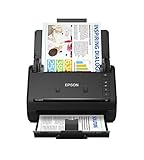
- FAST DOCUMENT SCANNING — Document scanner with feeder allows you to speed through stacks with a 50-sheet Auto Document Feeder (ADF); Efficient office scanner to help you scan more productively
- INTUITIVE, HIGH-SPEED SOFTWARE — Quickly scan with this desktop document scanner; Epson ScanSmart Software lets you easily preview scans, email files, upload to the cloud, and more; Plus, automatic file naming saves even more time
- SEAMLESS INTEGRATION — Easily incorporate your data into most document management software with the included TWAIN driver; Office document scanner integrates seamlessly with business workflows
- EASY SHARING — Duplex scanner allows you to scan straight to email or popular cloud storage2 services like Dropbox, Evernote, Google Drive, and OneDrive for simple storage and sharing
- SIMPLE FILE MANAGEMENT — Scanner allows the creation of searchable PDFs with Optical Character Recognition (OCR) and convert scans to editable Word or Excel files effortlessly; Designed for home and office document scanning
Recovery and version-history windows are listed as 30 days for Plus, 180 days for Standard, and one year for Advanced. Team plans also list team folders, sharing management, PDF editing, signatures, full-text search, and administrative features.
Dropbox’s history tracks actions such as edits, uploads, renames, moves, and deletions. However, it does not control the version history of Google Docs, Sheets, Slides, Dropbox Paper documents, or Microsoft Office Online files. Those files use the version controls of their respective applications.
What’s actually slowing this PC down?
Pick the symptom - the matching free tool is one click away.
Dropbox is less suitable when the business needs document metadata, formal approval states, retention schedules, legal holds, or compliance workflows. Also, do not rely on older articles claiming that every Dropbox Business plan includes unlimited storage or a one-year recovery period. Current Standard and Advanced listings differ.
4. Box: best for enterprise content management and unlimited storage
Box is stronger than a basic file-sharing service when an organization needs external collaboration, Microsoft 365 and Google Workspace integrations, e-signatures, metadata, governance, and predictable unlimited storage on business plans.
Current listed business pricing is:
| Plan | Annual billing | Storage | File versions |
|---|---|---|---|
| Business | $15/user/month | Unlimited | 50 |
| Business Plus | $25/user/month | Unlimited | 50 |
| Enterprise | $35/user/month | Unlimited | 100 |
| Enterprise Plus | Listed at $50/user/month under the applicable billing arrangement | Unlimited | Unlimited |
Business plans have a three-user minimum. Monthly prices are listed as $20, $33, and $47 per user for Business, Business Plus, and Enterprise respectively.
Box lists Box Sign, custom metadata, templates, and integrations with Microsoft 365, Google Workspace, and Slack. Optional Box Governance adds retention policies, legal holds, disposition, and records-management controls. Box Shield adds classification-based security controls and threat detection, while Box Zones can address data-residency requirements. Compliance options vary by plan and add-on and include support for frameworks such as SOC, HIPAA/HITECH eligibility, and FedRAMP options.
Do these 3 things before closing this tab:
1Repair Windows errors before they cause bigger problems2Fix the driver behind crashes, sound loss and screen glitches3Clear out junk files and repair common Windows errorsDo not compare Box’s 50 retained versions directly with Dropbox’s 180-day recovery period. A version count is not a time window. A file could accumulate 50 versions quickly or remain unchanged for years.
Rank #4

- Scanner type: Document
- Connectivity technology: USB
- With Auto Scan Mode, the scanner automatically detects what you're scanning
- Digitize documents and images
5. M-Files: best for metadata-driven document control
M-Files is designed for organizations that do not want important documents trapped in one folder hierarchy. A contract, for example, can be classified by customer, project, department, contract type, status, and renewal date without creating duplicate copies in multiple folders.
M-Files lists Essentials at $65 per seat per month and Enterprise at custom pricing. Essentials includes metadata-based document management, Microsoft 365 experiences, AI assistance, workflow automation, security and access controls, version control, lifecycle management, auditability, and compliance features. Enterprise adds capabilities including advanced AI agents, federated authentication, advanced version control, extended audit logging, controlled rendering and printing, watermarking, and secure external collaboration.
M-Files offers cloud-based and self-hosted deployment. Features, packaging, and pricing may vary by deployment model.
Free tools Windows power users keep installed
One-click scans. No signup required.
This is not a like-for-like alternative to a $7 or $15 file-storage subscription. M-Files is intended for businesses willing to configure a dedicated DMS around controlled documents, engineering files, contracts, or regulated content. It can reduce filing ambiguity, but implementation and administration are part of the cost.
Independent reader supportYour contribution helps us test, update, and keep practical guides available for everyone.6. DocuWare: best for OCR, capture, and approval workflows
DocuWare is the strongest option on this list when the central problem is processing incoming paperwork rather than simply storing files. It supports OCR and handwritten-text recognition, AI-based classification and extraction, intelligent indexing, full-text indexing, secure archiving, mobile upload, forms, and workflow automation.
That makes it relevant to accounts-payable teams handling invoices, companies processing forms, and organizations that need a scanned document to enter a defined approval process. It can extract information from invoices, purchase orders, identification documents, contracts, and other document types.
DocuWare generally uses a quote- and demo-led sales process rather than publishing one universal per-user price. Avoid treating an unverified price from a software directory as a dependable current cost.
Best Value

- OUR MOST ADVANCED SCANSNAP. Large touchscreen, fast 45ppm double-sided scanning, 100-sheet document feeder, Wi-Fi and USB connectivity, automatic optimizations, and support for cloud services. Upgraded replacement for the discontinued iX1600
- CUSTOMIZABLE. SHARABLE. Select personalized profiles from the touchscreen. Send to PC, Mac, mobile devices, and clouds. QUICK MENU lets you quickly scan-drag-drop to your favorite computer apps
- STABLE WIRELESS OR USB CONNECTION. Built-in Wi-Fi 6 for the fastest and most secure scanning. Connect to smart devices or cloud services without a computer. USB-C connection also available
- PHOTO AND DOCUMENT ORGANIZATION MADE EFFORTLESS. Easily manage, edit, and use scanned data from documents, receipts, photos, and business cards. Automatically optimize, name, and sort files
- AVOIDS PAPER JAMS AND DAMAGE. Features a brake roller system to feed paper smoothly, a multi-feed sensor that detects pages stuck together, and skew detection to prevent paper damage and data loss
One useful licensing detail is its Workflow User License. A user who does not archive documents but needs to perform workflow tasks can search, view, download, print, email, access document and workflow history, complete workflow decisions, and submit forms. That user does not receive a document tray. This can matter when occasional approvers should not be licensed like full document-capture operators.
How to choose document management software
- Identify the actual problem. If staff cannot find files across devices, start with Drive, Dropbox, SharePoint, or Box. If invoices must be extracted, routed, approved, and audited, look at DocuWare. If documents need context-based classification and lifecycle control, look at M-Files.
- Match the platform to your existing office suite. Microsoft 365 users usually face less training and integration work with SharePoint. Google Workspace users usually have the smoothest collaboration in Drive.
- Decide whether folders are enough. Folders work for straightforward team storage. Metadata becomes more valuable when a document belongs to several business categories or must move through statuses such as draft, approved, expired, and archived.
- Test version recovery with real files. Ask how many versions are retained, for how long, and whether the system covers PDFs, scanned files, native documents, and files edited in web applications.
- Map the approval process. List who submits, reviews, approves, rejects, and receives escalation notices. A storage tool with a comment box is not the same as a workflow system.
- Check capture and search. For paper and email-heavy operations, test OCR against poor scans, handwritten notes, multi-page invoices, and attachments. Filename search alone is not enough for a finance department.
- Design permissions before migration. Separate personal files, team working files, confidential payroll or tax records, and externally shared documents. Use groups where possible instead of assigning dozens of individual permissions.
- Calculate total cost. Include minimum seats, storage, add-ons for governance or eDiscovery, migration, implementation, administration, training, and the cost of exporting records later.
Which document management software is best for personal-finance readers?
For a small business already paying for Microsoft 365, SharePoint is usually the best starting point. For a Google Workspace business, use Shared drives rather than building the company archive inside one employee’s My Drive. Choose Dropbox when easy synchronization and client sharing matter more than formal controls.
Box is a better upgrade path when external collaboration, unlimited business storage, e-signatures, or governance are important. M-Files and DocuWare justify their higher, often quote-based cost when the business needs structured records, OCR, auditability, or repeatable approval processes.
For personal household records, none of these products is automatically necessary. A secure cloud storage plan with strong account security, a consistent folder structure, and a backup strategy may be sufficient. A business DMS becomes more valuable when several people handle the same records or when tax, legal, regulatory, or contractual evidence must be located and defended later.
FAQ
What is the best document management software for a small business?
SharePoint is usually the best value for a small business already using Microsoft 365, while Google Drive with Shared drives is the easiest choice for a Google Workspace business. Dropbox is simpler when the main need is syncing and sharing rather than formal records management.
Is Google Drive a document management system?
Google Drive provides storage, sharing, permissions, search, and file versions, and Google Docs adds collaborative editing. It is adequate for many teams, but it is not as specialized as M-Files or DocuWare for metadata-driven filing, OCR capture, complex approvals, retention, and audit-heavy processes.
What is the difference between document storage and document management?
Document storage puts files somewhere accessible. Document management adds controls such as indexing, metadata, version history, permissions, workflow, retention, and audit records. A storage service can be part of a DMS without providing every one of those controls.
Should I choose Dropbox or SharePoint?
Choose Dropbox for easy cross-device synchronization, team folders, and straightforward external sharing. Choose SharePoint when your organization uses Microsoft 365 and needs document libraries, metadata, coauthoring, Microsoft integrations, and more structured governance.
The Tool Desk
Outbyte Driver Updater FREEScan for outdated or missing drivers - takes under a minuteDriver Scan →Outbyte PC Repair FREEClear out junk files and repair common Windows errorsFree Scan →The Bottom Line
Bottom line: SharePoint is the best overall choice for Microsoft 365 organizations, and Google Drive with Shared drives is the best fit for Google Workspace teams. Dropbox wins on simple syncing, Box on enterprise content management with predictable storage, M-Files on metadata-driven control, and DocuWare on OCR and approval workflows.
Do not select a product based only on storage capacity or the lowest monthly price. Test how it handles version recovery, permissions, search, approvals, retention, and exporting records. Those details determine whether the software protects the business’s documents or merely gives it another place to lose them.
Quick Recap
Product prices and availability are accurate as of the date/time indicated and are subject to change. Any price and availability information displayed on Amazon at the time of purchase will apply.




