Do these 3 things before closing this tab:
1Fix the driver behind crashes, sound loss and screen glitches2Clear out junk files and repair common Windows errors3Scan for outdated or missing drivers - takes under a minuteThere is no single best CRM app for every business. HubSpot is the strongest starting point for many small businesses, Pipedrive is better for a focused sales pipeline, Zoho CRM offers an unusually broad feature set for the money, Salesforce is designed for complex organizations, and Close is strongest for outbound calling and messaging. If mobile work matters, prioritize offline capabilities—not merely whether a company has an iPhone or Android app.
This guide compares the leading CRM apps by workflow, price, mobile capability, hidden costs, and business size. Prices are primarily U.S. prices shown by vendors, generally with annual billing, and were checked against public pages around August 9, 2026. Pricing, taxes, seat requirements, regional availability, add-ons, and feature limits can change, so verify the linked vendor page before purchasing.
Best CRM apps at a glance
A CRM, or customer relationship management system, stores customer and prospect information and connects it to sales opportunities, follow-ups, communications, service history, and reporting. The best choice depends on what your team actually needs to do every day.
| Need | Recommended CRM | Why it stands out | Important limitation |
|---|---|---|---|
| Best overall starting point | HubSpot | Free CRM, strong inbound tools, and connected sales, marketing, and service products | Advanced features can become expensive; mobile records require an internet or data connection |
| Best visual sales pipeline | Pipedrive | Clear deal stages, activity management, forecasting, and offline mobile work | Marketing, projects, and lead-generation tools may cost extra |
| Best value and customization | Zoho CRM | Broad automation, reporting, AI, customization, and a large business-software ecosystem | More configuration and interface complexity than simpler alternatives |
| Best simple low-cost CRM | Bigin by Zoho | Designed for small teams moving beyond spreadsheets | Free plan is limited to one user and 500 records |
| Best enterprise CRM | Salesforce Sales Cloud | Complex data models, permissions, automation, integrations, and governance | Implementation and administration can be substantial |
| Best for Google Workspace | Copper | Works closely with Gmail, Google Calendar, Google Drive, and Workspace workflows | Higher entry price and plan-based contact limits |
| Best customizable no-code CRM | monday CRM | Flexible boards, dashboards, automations, and operational workflows | CRM plans start at three users and may require governance |
| Best built-in calling and SMS | Close | Native calling, email, SMS, call recording, workflows, and sales execution | Phone, SMS, and AI usage can increase the bill |
| Best value with built-in communication | Freshsales | Email, phone, chat, automation, scoring, and useful mobile field features | AI and document capabilities may be add-ons |
| Best CRM plus project delivery | Insightly | Connects sales opportunities to projects, tasks, reporting, and delivery | More expensive than a basic sales pipeline CRM |
These are use-case recommendations rather than an objective ranking. A sales team may prefer Pipedrive or Close to HubSpot, while a company with a complex approval structure may need Salesforce even if it costs more.
#1 Best Overall
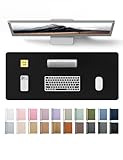
- DESK PROTECTOR: Durable PU Leather material adapted, which can protect your desk from scratches, stains, spills, heat and scuffs. Multi-color provided, change your mode by change the working atmosphere. Surface can be used as a large mouse pad, comfortable resting surface for your hands while writing, typing, and using the mouse. A must have office or study supplies.
- LARGE MOUSE PAD: With our large desk pad, say goodbye to small extra mouse pad. Make your desk top looks tiny and professional. With special suede design for back side,increase friction resistance with the desktop, Non slip. The friction resistance is increased by 70% than that of double-sided leather.
- EASY TO CLEAN: Waterproof leather desk pad. Just use cloth for basic clean: liquid, dust, grease and dirt. Wet cloth would be prefer if there are too much dirt in the desk mat.
- ABOUT BRAND YSAGi: YSAGi is a young brand founded in 2017, but with mature pad produce for over 15 years. Quality and cost effectiveness are our first principle of product designing and producing. During the 6 years, we have dual-side desk pad, multi-color desk pad, leather cork desk pad, leather cork desk pad with sewing, High-end business style desk pad. Every Pad you need, we will try our best to make.
- GOOD AFTER-SALES SERVICE: We are dedicated to providing our customers with well-made products and exquisite packaging and super service. A good choice for your family, friends, classmates and yourself.
Detailed reviews of the best CRM apps
1. HubSpot: best overall for free CRM and inbound growth
Best for: Startups, small businesses, and inbound-focused teams that want sales, marketing, and service data connected in one ecosystem.
HubSpot’s general CRM is advertised as free with no expiration and includes contact and deal management, a mobile app, and connections to more than 2,000 business apps. Its wider platform includes sales, marketing, service, content, data, payments, and AI products. See HubSpot’s CRM overview and mobile product page.
HubSpot’s sales-specific pricing needs careful reading. The Sales Hub page lists a free sales tier for up to two users, Starter at $7 per seat per month with annual billing or $20 monthly, Professional at $90 per seat per month annually, and Enterprise at $150 per seat per month annually. Professional has a one-time $1,500 onboarding fee, while Enterprise has a $3,500 onboarding fee. HubSpot also lists credits at $9 per 1,000 when paid annually. See the Sales Hub pricing page.
Strengths:
- Strong free starting point for basic contact and deal management.
- Good fit for inbound marketing, forms, content, lead capture, sales, and service.
- Large integration marketplace.
- Useful path for growing from a free CRM into a broader customer platform.
Main trade-off: The free CRM, Free Sales Hub, and paid Hubs are different commercial configurations. Costs can rise when you add automation, marketing contacts, service tools, AI, phone usage, or multiple Hubs. HubSpot is also a poor choice for disconnected field work: its mobile documentation says records require an internet or data connection to be created, edited, or viewed in the app. See HubSpot’s mobile record limitations.
2. Pipedrive: best for a clear sales pipeline
Best for: B2B sales teams, consultants, agencies, and sales-led service businesses that want reps to see exactly what happens next in every deal.
Pipedrive centers its product around leads, deals, contacts, activities, pipelines, follow-ups, forecasting, and sales workflows. Its current plans include email synchronization, automations, lead routing, customizable fields and pipelines, AI-powered reporting, and integrations with more than 500 apps. The pricing page lists Lite at $14 per seat per month, Growth at $39, Premium at $59, and Ultimate at $79, all with annual billing. There is no permanent free plan; the public offer is a 14-day trial. See Pipedrive pricing.
Pipedrive is one of the better options for field sellers because its iOS and Android apps support offline work. According to Pipedrive’s offline documentation, users can move deals, add notes and activities, and make changes without connectivity; the app synchronizes those changes when the connection returns. The listed minimum versions are Android 11 and iOS 18.
Strengths:
- Easy-to-understand visual pipeline.
- Strong activity and follow-up workflow.
- Good mobile experience for sales updates.
- Offline editing is explicitly documented.
Main trade-off: Pipedrive is primarily a sales CRM. Lead generation, marketing campaigns, projects, documents, and web-visitor tracking may require separate add-ons such as LeadBooster, Campaigns, Projects, Smart Docs, or Web Visitors. The real cost is therefore higher than the Lite seat price for some teams.
Free tools Windows power users keep installed
One-click scans. No signup required.
3. Zoho CRM: best for value, breadth, and customization
Best for: Budget-conscious businesses that need more automation, custom data structures, territories, reporting, or integrations than a very simple CRM provides.
Zoho CRM includes contacts, leads, deals, workflows, reporting, forecasting, automation, AI, customer journeys, territory management, custom functions, portals, and inventory-related capabilities depending on plan. It also connects to Zoho Books, Zoho Desk, Zoho Campaigns, Zoho Analytics, forms, booking, field service, and other products.
Zoho offers a free edition for up to three users, including core CRM functions, workflows, reports, and a mobile app. The official Zoho CRM pricing page is region- and currency-sensitive; during research it returned an INR view. Secondary 2026 coverage commonly lists paid plans starting around $14 per user per month with annual billing, followed by approximately $23, $40, and $52 tiers. Treat those as indicative only and use the U.S. currency selector before budgeting.
Zoho has native iPhone, iPad, and Android apps. Its mobile documentation describes locally stored records, offline work, and synchronization after reconnection. Mobile tools include business-card scanning, voice and AI features, maps, dashboards, and role-specific mobile apps. See Zoho’s mobility page.
Strengths:
- Broad capabilities at comparatively low prices.
- Strong fit for businesses already using other Zoho products.
- Multiple pipelines, automation, territories, custom functions, and custom fields.
- Explicit support for offline mobile work.
Main trade-off: Zoho’s breadth creates a configuration burden. Buyers should confirm which automation, AI, reporting, and customization features are included in their chosen edition instead of assuming the free or cheapest tier includes everything.
Rank #2
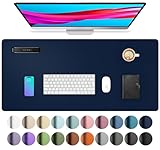
- PROTECT YOUR DESK:Made of durable PU leather material, which protects your desk from scratches, stains, spills, heat and scuffs. It also gives your office a modern and professional atmosphere when you put it on your desktop. Its smooth surface will make you enjoy writing, typing and browsing. It is perfect for both office and home.
- MULTIFUNCTIONAL DESK PAD:31.5 x 15.7 Inch Size is large enough to accommodate your laptop, mouse and keyboard. Its comfortable and smooth surface can be work as a mouse pad, desk mat, desk blotters and writing pad.
- SPECIAL NON-SLIP DESIGN: Special suede design for back side,increase friction resistance with the desktop,Non slip.The friction resistance is increased by 70% than that of double-sided leather.
- WATERPROOF AND EASY TO CLEAN:Made of water-resistant and durable PU leather, this desk pad protects your desktop from spilled water, drinks, ink and the other liquid. Easy to clean, just wipe with a wet cloth or paper.
- ONE YEAR WARRANTY:We are dedicated to providing our customers with high quality products and superior service.. If you are dissatisfied with our product, we can offer you a new one or 100% money back. A good gift choice for your family, friends and yourself.
4. Bigin by Zoho: best simple CRM for very small teams
Best for: Solopreneurs and small teams that have outgrown spreadsheets but do not need a complex enterprise CRM.
Bigin is built around simple pipelines, contacts, activities, automation, phone features, forms, business-card scanning, and mobile apps. It can also provide a progression into Zoho CRM as the business grows. Bigin lists a 15-day trial with no credit card requirement.
The free plan supports one user and 500 records. Express costs $7 per user per month annually or $9 monthly; Premier costs $12 annually or $15 monthly; and Bigin 360 costs $18 annually or $21 monthly. The Bigin pricing page has the current plan details.
Outdated Drivers Are Slowing You Down
One free scan finds every outdated or missing driver and matches the right update for your exact hardware.Free scan · exact hardware matchPC Slower Than It Used to Be?
A free scan shows the junk files, broken settings and background clutter dragging Windows down - then fixes them in one click.Free scan · Windows 10 & 11Strengths:
- Low-cost, small-business-focused design.
- Good alternative to managing prospects in spreadsheets.
- Mobile apps for iOS, iPadOS, Android, and macOS.
- Built-in phone tools and a straightforward path to Zoho CRM.
Main trade-off: The free plan’s one-user and 500-record limits are restrictive. Bigin is less appropriate for complex permissions, sophisticated analytics, large sales operations, or teams that need a highly customized data model. Clarify how records are counted across modules before relying on the free tier.
5. Salesforce Sales Cloud: best for complex organizations
Best for: Mid-market and enterprise companies that need custom objects, complex permissions, advanced automation, extensive integrations, governed data, and multiple departments working from one customer model.
Salesforce Sales Cloud includes accounts, contacts, leads, opportunities, forecasting, analytics, AI, and Agentforce-related capabilities. Its public pricing page lists Starter Suite at $25 per user per month, Pro Suite at $100, Enterprise at $175, Unlimited at $350, and Agentforce 1 Sales at $550, with the higher prices billed annually. See Salesforce Sales Cloud pricing and features.
Those are license prices, not a complete Salesforce budget. Implementation, administration, integrations, data products, support, telephony, custom development, and additional Salesforce clouds can substantially change total cost. Salesforce is powerful partly because it can be configured deeply, but that same flexibility can make it excessive for a small team with a simple pipeline.
The Tool Desk
Outbyte Driver Updater FREEFix the driver behind crashes, sound loss and screen glitchesFind Drivers →Outbyte PC Repair FREEClear out junk files and repair common Windows errorsFree Scan →Salesforce has a dedicated mobile sales workspace. Depending on edition and configuration, Mobile App Plus and Mobile Builder can support offline-first workflows. Salesforce’s mobile offline documentation describes creating, editing, and deleting records offline, followed by synchronization and conflict notifications.
Strengths:
- Extensive customization and governance.
- Strong permissions, audit, integration, and automation options.
- Suitable for complicated sales processes and custom objects.
- Configurable mobile and offline experiences.
Main trade-off: Salesforce usually requires an administrator, implementation partner, or internal technical capability. Do not select it solely because it is the most recognizable CRM or because an entry-level price appears affordable.
6. Copper: best for Google Workspace users
Best for: Agencies, consultancies, and project-based teams that spend most of the day in Gmail, Google Calendar, Google Drive, and related Workspace tools.
Copper is designed to keep CRM information close to Google Workspace workflows. It supports contacts, pipelines, projects, tasks, reports, email tracking, automations, integrations, and multi-currency at higher tiers.
What’s actually slowing this PC down?
Pick the symptom - the matching free tool is one click away.
The current official pricing page lists Basic at $23 per seat per month with annual billing, Professional at $59, and Business at $99. Contact limits are listed as 2,500 on Basic, 15,000 on Professional, and unlimited on Business. Copper offers a free trial without requiring a credit card. See Copper pricing and its Google Workspace CRM overview.
Strengths:
- Natural fit for Gmail- and Google Calendar-centric teams.
- Combines client relationships with project workflows.
- Useful for agencies and consultancies that do both sales and delivery.
Main trade-off: Copper is less compelling for Microsoft-centric organizations, and its entry price is higher than simple alternatives. Older comparison pages may quote Copper from $9, but the current official page used for this comparison lists Basic at $23, so use the vendor page rather than an outdated article when budgeting.
Rank #3
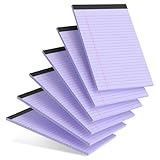
- Purple colored Legal Pads 5 x 8 Inch are perfect for students, teachers, and professionals. Made with premium 80gsm thick paper, these notepads provide a luxurious writing experience. The colored paper resists ink bleeding, while the black lines and double red margin lines offer ample space for your notes.
- Each package includes 6 College Ruled Purple Note Pads 5 x 8 Inch, perfect for writing notes, thoughts, and lists. The sturdy backing and durable bindings keep your important notes safe, while the perforated edges allow for easy sheet removal. Ideal for on-the-go writing.
- Legal Pads in Purple color are perfect for everyday use in various settings. With 6 notepads in a pack and 30 sheets per notepad, you'll always have plenty of paper on hand. The convenient 5 x 8 inch size makes them versatile for creating reminders, to-do lists, and notes.
- These Notepad offer a premium quality writing experience with premium paper and durable construction. These notepads are ideal for organizing thoughts and ideas. The vibrant purple colored paper and sturdy design make them perfect for creating thoughtful gifts.
- Small Legal Pads in purple color add a touch of personality to your notes. These must-have essentials provide a premium quality writing experience. The colorful design is sure to impress any recipient.
7. monday CRM: best for flexible no-code workflows
Best for: Teams that want CRM records, sales stages, project work, dashboards, and operational processes in a highly visual workspace.
monday CRM combines customizable boards and columns with dashboards, automations, quotes, invoices, communication timelines, email sequences, mobile apps, and shared workspaces. It can be a good fit where the sales process is unusual or closely connected to project and operations work.
Recommended Free Tools
Annual-billing prices on the current pricing page are approximately $12 per seat per month for Basic, $17 for Standard, and $28 for Pro; Ultimate requires contacting sales. Plans start at three users. monday CRM offers a 14-day trial but no ongoing free CRM version. See monday CRM pricing.
The platform lists iOS and Android apps and advertises offline access and updates on applicable plans. However, verify the exact offline behavior for the boards, automations, and data your team uses.
Strengths:
- Flexible no-code customization.
- Strong visual dashboards and workflow visibility.
- Useful when CRM and project or operational work overlap.
- Mobile apps for field updates.
Main trade-off: The three-user minimum makes monday CRM a poor fit for a solo operator. Its flexibility can also create inconsistent fields and processes unless someone governs the workspace.
8. Close: best for calling, email, SMS, and outbound sales
Best for: Inside-sales teams, outbound prospecting teams, agencies, and lead-generation businesses that spend much of the day communicating with prospects.
Quick wins for a faster PC:
Fix the driver behind crashes, sound loss and screen glitchesFind Drivers →Clear out junk files and repair common Windows errorsFree Scan →Close puts calling, email, SMS, workflows, forms, pipeline management, call recording, and AI sales assistance in one sales-focused product. Annual pricing is currently listed at $9 per user per month for Solo, $35 for Essentials, $99 for Growth, and $139 for Scale. Solo is limited to one user; monthly prices are $19, $49, $109, and $149 respectively. See Close pricing.
Seat pricing is not the whole bill. Close lists usage-based charges for calling, SMS, and AI. Its pricing page lists premium phone numbers at $19 per month per line and Call Assistant at $50 per month per organization plus $0.02 per minute. Test call quality, recording rules, deliverability, consent requirements, and expected usage before signing up.
Strengths:
- Native calling, SMS, email, and sales workflows.
- Strong fit for fast-moving outbound teams.
- Reduces the need to combine a CRM with separate sales-dialer software.
Main trade-off: Close is primarily a sales-execution tool rather than a broad marketing, service, or enterprise data platform. Usage-based communications and AI can make the total cost substantially higher than the advertised seat price.
9. Freshsales: best value for built-in communication and mobile field work
Best for: Small and midsize teams that want email, phone, chat, automation, lead scoring, and mobile tools in one relatively accessible sales CRM.
Freshsales supports contact lifecycle stages, chat, email, phone, templates, custom fields, workflows, contact scoring, deal insights, sales sequences, territory management, custom modules, sandboxes, and audit logs depending on plan. The official pricing page lists Growth at $9 per user per month with annual billing, Pro at $39, and Enterprise at $59. The fully loaded trial lasts 21 days. Freshworks also lists branded documents at $19 per user per month and Freddy AI Agent at $49 per 100 sessions as add-ons. See Freshsales pricing.
Its iOS and Android apps support features including Google Maps integration, check-ins, voice notes, Gmail and Outlook integrations, and mobile offline mode. See Freshsales features.
Strengths:
- Built-in phone, email, and chat capabilities.
- Useful mobile features for field sales.
- Good fit for businesses already using Freshdesk or Freshworks products.
Main trade-off: AI agents, documents, phone functionality, and usage-based features may add to the bill. Freshsales plan details and free-plan descriptions are inconsistent across some secondary articles, so treat the official Freshworks pricing page as authoritative.
Rank #4
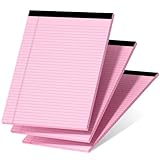
- Bright Pink 3-Pack Value Set: Get 3 pink legal pads (8.5" x 11") with 30 sheets each, totaling 90 pages. Ideal for personal users needing reliable supplies for projects, to-do lists, note-taking
- Precision Micro-Perforated Edges: Engineered with laser-cut micro-perforations for clean, effortless sheet removal. No torn edges or wasted paper – maintain clean presentation every time
- Durable Chipboard Backing: Rigid 1mm thick backing stabilizes writing surfaces on desks, laps, or standing setups. Resists bending even during mobile use between classrooms/offices
- College-Ruled Clarity: These note pads features 9/32" line spacing (standard college rule) for organized note-taking. Left-side margin and header space optimize document formatting for essays, meeting minutes, or lecture notes
- Multi-Purpose Color Coding: Assorted pastel covers (pink) help categorize subjects, priorities, or departments. Perfect for visual learners, project managers, and administrative workflows
10. Insightly: best for CRM plus project management
Best for: Agencies, consultancies, and professional-services businesses that need to turn won opportunities into trackable projects.
Insightly combines lead and contact management with project management, reporting, dashboards, workflow automation, lead routing, AI Copilot, products, pricebooks, quotes, sandboxes, and audit logging at higher tiers.
Annual pricing is listed at $29 per user per month for Plus, $49 for Professional, and $99 for Enterprise. Plus includes lead and contact management, project management, advanced reports, and prebuilt dashboards. Professional adds lead routing, workflow automation, and AI Copilot. Enterprise adds sandboxes, products, pricebooks, quotes, and comprehensive audit logging. See Insightly pricing.
Strengths:
- Links sales opportunities to project delivery.
- Good fit for project-driven professional services.
- Useful reporting and workflow options at higher plans.
Main trade-off: Insightly costs more than simple SMB CRMs, and marketing, service, and integration products may be priced separately. It is not the obvious choice if all you need is a clean sales pipeline.
Best CRM apps for mobile teams
“Has a mobile app” is an incomplete buying criterion. A useful mobile CRM should let a salesperson find a contact, log a call or meeting, update a deal, create a follow-up, and synchronize the changes reliably. For field teams, the decisive test is whether that workflow works with no signal and what happens when the device reconnects.
The Tool Desk
Outbyte PC Repair FREERepair Windows errors before they cause bigger problemsFix Now →Outbyte Driver Updater FREEScan for outdated or missing drivers - takes under a minuteDriver Scan →| CRM | Mobile platforms and evidence | Offline position | Mobile strengths |
|---|---|---|---|
| HubSpot | Official iOS and Android apps | Records require an internet or data connection | Caller ID, deal and task updates, dashboards, and AI tools |
| Pipedrive | iOS and Android | Explicit offline create, edit, and update with later synchronization | Pipeline updates, activities, notes, and follow-up |
| Zoho CRM | iPhone, iPad, and Android | Locally stored records can be used offline and synchronized later | Business-card scanning, maps, voice and AI features, dashboards |
| Freshsales | iOS and Android | Mobile offline mode advertised | Maps, check-ins, voice notes, phone, and email |
| Salesforce | Salesforce mobile app | Offline features depend on Mobile Offline or App Plus configuration | Custom layouts, offline-first experiences, and enterprise controls |
| monday CRM | iOS and Android | Offline access advertised on applicable plans | Boards, timelines, dashboards, and operational updates |
| Bigin | iOS, iPadOS, Android, and macOS apps | Confirm the exact offline scope for your workflow | Simple pipelines, phone tools, and card scanning |
| Copper | Mobile CRM available | Do not assume full offline parity without testing | Google Workspace context and activity capture |
Best mobile shortlist: Pipedrive and Zoho CRM are the clearest starting points when offline editing is essential. Freshsales is also worth testing for maps, check-ins, and voice notes. Salesforce can support sophisticated offline workflows, but configuration and administration matter. HubSpot is a strong general CRM but not the right choice when staff must work without connectivity.
For a mobile-first specialist, Forbes Advisor has identified OnePageCRM as a mobile-user category option. Its current pricing and exact offline scope are not established in the product evidence used here, so validate those details directly before choosing it. See Forbes Advisor’s comparison.
Airplane-mode mobile test
- Open an existing contact while offline.
- Add a note about a customer conversation.
- Move an opportunity to a new stage.
- Create a follow-up task and assign a due date.
- Add a new contact.
- Attach a photo or document if your workflow requires it.
- Reconnect to the internet.
- Confirm that every change synchronized correctly and check how conflicts are handled.
Run this test with the exact phone models, operating systems, user roles, and CRM edition your team will use. A vendor’s generic mobile claim does not guarantee that every feature works offline.
How much does a CRM really cost?
The advertised per-user price is only the starting point. Build the budget using:
Crashes, No Sound, or Screen Glitches?
Random freezes, missing sound and display glitches usually trace back to one bad driver. Find and replace yours safely.Free scan · under a minuteWindows Errors? Fix Them Before They Spread
Repair common Windows errors and clear accumulated junk for a smoother, more stable PC - no reinstall needed.Free scan · no reinstallAnnual subscription cost
+ required seats or minimum users
+ onboarding or implementation
+ phone and SMS usage
+ AI credits or agent sessions
+ marketing-contact charges
+ required add-ons
+ integrations
+ premium support
+ data migrationCommon CRM pricing traps
- Free does not always mean unlimited: Bigin’s free plan is one user and 500 records. HubSpot’s general free CRM and its Free Sales Hub tier are not identical offerings.
- Seat minimums matter: monday CRM plans start at three users, so a solo buyer cannot simply multiply the displayed price by one.
- Communication can be usage-based: Close charges separately for some calling, SMS, phone-number, and AI usage.
- Add-ons change the comparison: Pipedrive offers separate LeadBooster, Campaigns, Projects, Smart Docs, and Web Visitors products. Freshsales lists branded documents and Freddy AI Agent as add-ons.
- Onboarding can be substantial: HubSpot lists one-time onboarding fees of $1,500 for Professional and $3,500 for Enterprise Sales Hub.
- Enterprise license prices are not implementation budgets: Salesforce may require administration, data migration, integrations, custom development, support, and additional products.
- Contact limits can affect growth: Copper lists different contact limits by plan, including 2,500 on Basic, 15,000 on Professional, and unlimited on Business.
Compare the annual cost of the configuration you would actually buy—not the cheapest plan shown in a search result. Third-party articles can be outdated: for example, some coverage lists Pipedrive from $10 while its current official page lists Lite at $14 annually, and some lists Copper from $9 while Copper’s current official page lists Basic at $23.
Independent reader supportYour contribution helps us test, update, and keep practical guides available for everyone.How to choose the right CRM app
Start with the CRM type
- Sales CRM: Choose this when the priority is leads, contacts, deals, activities, pipeline stages, and forecasting.
- Marketing CRM: Look for forms, segmentation, campaigns, nurturing, attribution, and marketing-contact controls.
- Service CRM: Prioritize tickets, service-level agreements, customer portals, knowledge bases, and support history.
- Client or project CRM: Choose a platform that connects opportunities to proposals, projects, tasks, delivery, or retainers.
- Mobile CRM: Prioritize offline access, call logging, maps, check-ins, voice notes, and fast post-meeting updates.
- Enterprise CRM: Require permissions, audit controls, custom objects, APIs, sandboxes, governance, and implementation support.
Use this decision guide
- Need a free, broadly capable starting point? Compare HubSpot and Bigin. HubSpot offers a broader growth platform; Bigin is simpler and more tightly aimed at very small businesses.
- Need the clearest sales pipeline? Start with Pipedrive.
- Need low cost plus customization? Test Zoho CRM.
- Need Gmail and Google Workspace at the center? Consider Copper.
- Need native calling and SMS? Consider Close, then calculate expected usage charges.
- Need flexible boards and nonstandard workflows? Consider monday CRM.
- Need sales connected to project delivery? Consider Insightly or Copper.
- Need complex permissions, custom objects, and scale? Consider Salesforce.
- Need offline field work? Start testing Pipedrive, Zoho CRM, Freshsales, or a configured Salesforce deployment.
Score adoption, not just features
The most valuable CRM is usually the one that contains complete, current data. During a trial, measure:
- How many clicks it takes to log a call or meeting.
- Whether email and calendar activity are captured automatically.
- Whether a rep can update a deal in under a minute.
- Search speed and record clarity.
- Mobile usability immediately after a meeting.
- Whether managers can enforce data quality without creating excessive friction.
What to test before paying
Do not choose a CRM from a feature checklist or a polished demo. Use a trial or pilot with real—but appropriately protected—data and a complete workflow.
- Import a representative sample: Include contacts, companies, opportunities, activities, custom fields, and duplicates.
- Connect email and calendar: Test automatic logging, two-way versus one-way synchronization, ownership, conflicts, and privacy controls.
- Run one complete sales cycle: Capture a lead, qualify it, create an opportunity, schedule follow-ups, send communication, close the deal, and hand it to delivery or service.
- Test mobile work: Use the airplane-mode checklist above, not just the app-store download.
- Check permissions: Confirm that salespeople, managers, contractors, and administrators see and edit only what they should.
- Inspect reporting: Build the reports management actually needs and confirm that the underlying data can be captured consistently.
- Test exports: Export contacts, companies, deals, activities, notes, attachments, custom fields, and relationship links.
- Calculate the real bill: Include seats, minimum users, add-ons, phone and SMS usage, AI credits, onboarding, and migration.
- Ask about exit terms: Confirm account deletion, retention, data portability, API limits, and how attachments and email history are exported.
When a general CRM is the wrong tool
A CRM is not automatically the best system for every customer-facing business. Consider a specialized product when the primary job is:
Best Value

- No Desk? No Problem – Create a stable workspace on your bed, couch, or while traveling, so you’re never limited by your environment.
- Cluttered Surfaces? – Keep your laptop, tablet, and accessories organized on one surface instead of balancing them awkwardly on your lap.
- Neck & Shoulder Strain? – Elevates your device to a more ergonomic height, reducing discomfort from hunching over flat surfaces.
- Nowhere for a Mouse? – Built-in mouse pad provides smooth, accurate tracking so you don’t have to struggle with uneven couch cushions or blankets.
- Heavy & Bulky Lap Desks? – Lightweight design makes it easy to carry from room to room, or slip into your bag for travel.
- Field service: Dispatching, route optimization, estimates, invoices, recurring jobs, technician schedules, inventory, and payments may be better served by platforms such as Jobber, Housecall Pro, ServiceTitan, or an industry-specific system.
- Customer support: A help-desk platform may be more appropriate when tickets, service-level agreements, knowledge bases, and support queues matter more than opportunities.
- Project delivery: A project-management tool may be preferable when there is little sales activity and most work begins after the client signs.
- E-commerce: An e-commerce customer platform may provide better order, purchase, and retention data than a traditional sales CRM.
- Very early-stage solo work: A spreadsheet plus a disciplined follow-up system may be enough temporarily, although Bigin or HubSpot can provide a low-cost upgrade.
CRM risks for regulated or sensitive data
Do not assume a CRM is suitable for healthcare, financial, legal, or other regulated information merely because the vendor advertises security or compliance features. Verify the exact edition, geography, contract, and configuration.
Before storing sensitive information, check for:
- Business associate agreement or data-processing agreement availability.
- Data residency and subprocessor information.
- Encryption and access controls.
- Field-level permissions and audit logs.
- Retention, deletion, and account-termination rules.
- Call-recording consent and SMS or email consent controls.
- Industry-specific contractual terms.
AI requires a separate governance review. Ask whether AI is included in the plan, whether it uses credits or sessions, whether customer data is used to train models, whether administrators can disable it, whether outputs are logged, and whether a human must approve messages or record changes before they are sent or saved.
How to migrate from spreadsheets
- Preserve the original files before changing anything.
- Standardize names, phone numbers, dates, owners, and lifecycle stages.
- Remove duplicates and decide which record is authoritative.
- Separate people, companies, opportunities, activities, and products into the correct CRM objects.
- Map every spreadsheet column to a CRM field.
- Import a small test batch.
- Validate relationships, ownership, notes, and dates.
- Configure pipeline stages, required fields, and permissions.
- Connect email and calendar.
- Train a small group of power users.
- Import the remaining data only after validation.
- Keep the original source data until the migration and reports have been checked.
Migration is also the right time to remove fields nobody uses. Recreating every spreadsheet column in the CRM often produces a cluttered system that salespeople avoid.
Sources and pricing note
Product capabilities and prices in this article are linked primarily to vendor documentation: HubSpot, Pipedrive, Zoho CRM, Bigin, Salesforce, Copper, monday CRM, Close, Freshsales, and Insightly. Broader comparison context was checked against Zapier, Forbes Advisor, TechRadar, and Shopify.
Prices are not locked quotations. Confirm the currency, billing cycle, minimum seats, taxes, onboarding, usage charges, add-ons, and feature availability for your country and plan before committing.
Frequently Asked Questions
What is the best free CRM app?
HubSpot and Bigin are the strongest free starting points, but they serve different needs. HubSpot provides a broader free CRM and a path into sales, marketing, and service tools. Bigin is simpler for very small businesses, but its free plan is limited to one user and 500 records. Zoho CRM also offers a free edition for up to three users.
Which CRM app works best offline?
Pipedrive and Zoho CRM are the clearest starting points because their documentation explicitly describes offline work and later synchronization. Freshsales also advertises mobile offline mode. Salesforce can support offline workflows, but the experience depends on the edition and configuration. HubSpot’s mobile documentation says records require an internet or data connection.
What is the best CRM for a solo business owner?
Bigin Free and HubSpot’s free CRM are practical starting points. Close also offers a Solo plan, although calling, SMS, and AI usage can add to the cost. Avoid monday CRM unless its three-user minimum is acceptable, and avoid Salesforce unless your process genuinely requires enterprise-level customization.
Free tools Windows power users keep installed
One-click scans. No signup required.
Is a CRM worth paying for?
A CRM is usually worth paying for when missed follow-ups, duplicate records, poor pipeline visibility, or disconnected customer communication are costing more than the subscription. Test whether the team will consistently log activities and use the reports before upgrading for advanced automation or AI.
How should I compare CRM prices?
Compare the annual cost of the configuration you will actually use. Include seats or minimum users, onboarding, migration, phone and SMS usage, AI credits, marketing contacts, integrations, add-ons, premium support, and taxes. The lowest advertised seat price rarely represents the complete cost.
Can a CRM replace field-service software?
Usually not when the main requirements are dispatching, route optimization, technician scheduling, recurring jobs, estimates, invoices, inventory, payments, or field-service compliance. In that situation, compare a field-service platform with a CRM rather than assuming a general CRM can handle the entire operation.
The Bottom Line
Bottom line: Choose HubSpot for a broad, low-risk starting point; Pipedrive for a focused and mobile-friendly sales pipeline; Zoho CRM for value and customization; Bigin for a very small team; Close for outbound communication; Copper for Google Workspace; monday CRM for flexible workflows; Insightly for sales connected to projects; and Salesforce for complex, governed organizations. Before paying, test the complete workflow with real data, offline mobile use, exports, permissions, and the full all-in cost.
Quick Recap
Product prices and availability are accurate as of the date/time indicated and are subject to change. Any price and availability information displayed on Amazon at the time of purchase will apply.




