What’s actually slowing this PC down?
Pick the symptom - the matching free tool is one click away.
There is no single best credit card for everyone. In the April 2026 U.S. market snapshot, the strongest starting points were the Chase Sapphire Preferred® Card for flexible travel, the American Express® Gold Card for eligible dining and supermarket spending, the Chase Freedom Flex® for rotating-category cash back, the BankAmericard® credit card for a long 0% introductory period, and the Blue Cash Preferred® Card from American Express for qualifying grocery and streaming purchases.
The right choice depends on your credit profile, spending categories, travel habits, debt, ability to meet a welcome-bonus requirement and willingness to pay an annual fee. If you routinely carry a balance, a lower-interest or balance-transfer card is usually more important than rewards.
Best credit cards of April 2026 at a glance
The table below combines the leading April category picks with issuer terms available in the 2026 research snapshot. Volatile information—especially welcome bonuses, APRs and promotional credits—is dated or identified as requiring a live check.
#1 Best Overall

- Material: Genuine leather and PVC card slots.
- Size: 4.72"*3.15"*0.7" (12*8*1.8 CM)
- Large Capacity: The card holder has 26 cards slots. It is enough room for your ID card, credit cards, gift cards and dicounted cards. Small size is perfect to fit in your pockets or handbags.
- RFID Blocking: RFID Blocking designed lining keeps your vital information Secure. Be safe and protected from Electronic Pick pocketing.
- Great Gift Idea: Great gift for mother, daughter, grandmother and so on.
| Card | Best for | April 2026 offer or 2026 issuer offer | Annual fee | Core rewards or financing terms | Generally suited to | Biggest catch |
|---|---|---|---|---|---|---|
| Chase Sapphire Preferred® | Flexible travel | 75,000 points in the April snapshot; Chase’s later live page showed 100,000 points after $5,000 in three months | $95 | Travel, dining and other bonus categories; point transfers to travel partners | Good-to-excellent credit; travelers who will use points | Bonus and point value depend on eligibility and redemption choices |
| American Express® Gold | Dining and U.S. supermarket spending | Up to 100,000 Membership Rewards points after $6,000 in six months; personalized and not guaranteed | $325 | 4X at restaurants and U.S. supermarkets, subject to caps; multiple statement credits | High eligible spending; good-to-excellent credit | Credits and points require planning and may not offset the fee |
| Chase Freedom Flex® | Rotating-category cash back | $200 after $500 in three months on the April 2026 Chase page | $0 | 5% in activated quarterly categories up to $1,500 in combined purchases; 3% dining and drugstores; 1% elsewhere | Good-to-excellent credit; category trackers | Activation is required and the quarterly cap is shared |
| Capital One Venture X Rewards Credit Card | Premium travel value | 75,000 miles after $4,000 in three months on 2026 issuer terms; verify live offer | $395 | $300 Capital One Travel credit, 10,000 anniversary miles, 2X general spending and lounge access after enrollment | Frequent travelers with excellent credit | The credit is restricted to Capital One Travel |
| Blue Cash Preferred® | Qualifying groceries and streaming | Check issuer page for the live welcome offer | $0 first year, then $95 | 6% at U.S. supermarkets up to $6,000 yearly; 6% on select streaming; 3% gas and transit | Households with qualifying supermarket spending | Warehouse clubs and many superstores may not qualify; grocery rewards are capped |
| BankAmericard® | Long 0% purchase and balance-transfer period | 0% for 21 billing cycles on purchases and transfers made within 60 days | $0 | 14.99%–25.99% variable APR after the introductory period; 5% transfer fee | Good-to-excellent credit; borrowers with a payoff plan | A 5% fee is charged even though the promotional APR is 0% |
| Bank of America® Customized Cash Rewards for Students | Flexible student rewards | $200 after $1,000 in 90 days; 0% APR for 15 billing cycles shown by issuer | $0 | First-year 6% chosen category, 2% groceries and wholesale clubs, 1% elsewhere, subject to a $2,500 quarterly cap | Students who can manage category limits | The 6% rate is temporary and capped; approval is not guaranteed |
| Citi Strata Premier® | Gas, groceries, dining and travel points | 60,000 ThankYou points after $4,000 in three months on Citi’s benefits page | $95 | 3X air travel, hotels, restaurants, supermarkets and gas or EV charging; 10X selected Citi Travel bookings | Good-to-excellent credit; broad-category spenders | Point value and the $100 hotel benefit depend on Citi Travel use |
| Prime Visa | Amazon and Whole Foods purchases | $150 Amazon Gift Card on approval under the displayed offer | $0 | 5% at eligible Amazon properties, Whole Foods and Chase Travel with Prime; 2% gas, dining and transit | Existing Prime members who shop heavily at eligible merchants | The 5% rate depends on an eligible Prime membership |
| Capital One Quicksilver Secured Cash Rewards | Cash back while rebuilding credit | Check issuer page for approval and deposit terms | $0 | 1.5% cash back on every purchase; refundable deposit from $200 | Applicants building or rebuilding credit | The deposit ties up cash and approval is not guaranteed |
Offers and terms are not interchangeable across dates. For example, the April Forbes snapshot listed a 75,000-point Sapphire Preferred bonus, while Chase’s later page displayed a limited-time 100,000-point offer. Confirm the exact offer on the application page.
How these picks were selected
“Best” is a category judgment, not a promise that a card will maximize every household’s value. The April-dated Forbes Advisor list selected these category winners: Sapphire Preferred for travel, American Express Gold for dining, Freedom Flex for cash back, Venture X for excellent credit, Blue Cash Preferred for groceries, BankAmericard for balance transfers, Bank of America Customized Cash Rewards for Students, Citi Strata Premier for gas, Prime Visa for store rewards and Quicksilver Secured for bad credit.
Other major publications reached different conclusions. NerdWallet’s 2026 awards named Wells Fargo Active Cash its all-purpose cash-back winner, Citi Custom Cash its gas pick, Citi Simplicity its balance-transfer pick and Discover it Secured its credit-building pick. Bankrate’s staff picks included Wells Fargo Reflect, Chase Freedom Unlimited, Capital One Savor, Citi Double Cash and Capital One Platinum Secured in comparable categories. That disagreement is useful: it shows why a precise “best for” label is more honest than a universal No. 1 ranking.
Our comparison framework weighs:
- Net ongoing value—30%: realistic rewards, annual fees and usable credits.
- Welcome offer—20%: potential bonus value after considering the spending requirement, eligibility and time limit.
- Rewards flexibility—15%: cash redemption, transfer partners, portals and restrictions.
- Everyday earning power—15%: relevant categories, caps, exclusions and nonbonus rewards.
- Financing terms—10%: introductory APR, transfer fee, regular APR and late-payment consequences.
- Protections and usability—10%: travel and purchase protections, foreign-transaction policy, app experience and redemption simplicity.
1. Chase Sapphire Preferred: best flexible travel card
Verdict: Sapphire Preferred is the best starting point for a traveler who wants flexible Chase points without paying a premium-card annual fee.
Recommended Free Tools
- Annual fee: $95.
- April 2026 welcome offer: Forbes listed 75,000 points in its April snapshot.
- Later issuer-page example: Chase subsequently displayed a limited-time 100,000-point offer after $5,000 in purchases within three months. That later offer should not be treated as the April offer.
- Rewards: Elevated earning on Chase Travel, dining, select streaming, online groceries and other travel purchases, plus access to Chase transfer partners.
The card’s advantage is flexibility. You can generally use points through the issuer’s travel system or transfer them to eligible airline and hotel programs. Transfers can create more value, but they also require availability checks and some familiarity with loyalty programs. Cash-back users and occasional travelers may prefer a simpler no-fee card.
Who should get it
Consider it if you travel several times a year, can pay the statement balance in full and are willing to learn how Chase points and transfer partners work.
Who should skip it
Skip it if you rarely travel, would redeem points only as low-value cash or cannot reliably cover the $95 annual fee. Chase also applies eligibility restrictions to some welcome offers; prior card ownership or a previous bonus can matter. Read the offer’s terms rather than assuming every applicant qualifies.
Year-two test: Estimate the value of the points you will earn from normal spending, subtract $95 and assign no value to travel redemptions you would not otherwise make. If the result is weak without the welcome bonus, the card may be a poor long-term fit.
Free tools Windows power users keep installed
One-click scans. No signup required.
Consider instead: A no-annual-fee flat-rate cash-back card for simplicity, or a no-fee travel card for occasional trips. NerdWallet’s travel-card comparison also distinguishes between flexible travel cards, premium portal cards and airline or hotel co-branded products.
2. American Express Gold: best for high dining and supermarket spending
Verdict: Gold can be lucrative for someone who spends heavily at eligible restaurants and U.S. supermarkets and will actually use its credits. It is not automatically worthwhile for every food spender.
- Annual fee: $325.
- Displayed issuer offer: Up to 100,000 Membership Rewards points after $6,000 in purchases within six months. The offer is personalized and not guaranteed.
- Rewards: 4X at restaurants worldwide, up to $50,000 per calendar year; 4X at U.S. supermarkets, up to $25,000 per calendar year; 3X on flights booked directly with airlines or through Amex Travel; and 5X on prepaid hotels booked through Amex Travel.
- Credits: Dining, Uber, Resy and Dunkin’ credits may be available, but enrollment, merchant and timing restrictions apply.
Membership Rewards points do not have one fixed value. A statement credit, direct travel booking and transfer to a partner can produce different outcomes. Do not value the credits at face value unless you would have made the qualifying purchases without the card.
The major Gold-card calculation
Suppose you would spend $10,000 annually at eligible U.S. supermarkets and value the incremental rewards over a 1% card. The 4 percentage-point difference would be about $400 before considering the annual fee, category cap, redemption value and other cards you could use. That does not make the card automatically profitable: your actual supermarket coding, point-redemption method and willingness to use the credits determine the result.
Who should skip it
Skip it if you dislike monthly or enrollment-based credits, prefer predictable cash back or would carry a balance. Amex’s Pay Over Time feature does not mean every charge can be carried interest-free; some charges must be paid in full by the due date.
Consider instead: Blue Cash Preferred for more straightforward grocery and streaming cash back, or a no-fee cash-back card if your food spending is moderate.
Rank #2
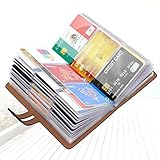
- 【Durable Materials】: Our credit card organizer is made of water-resistant and wear-resistant PU, reinforced with sealed edges and durable PVC credit card sleeves. It is scratch-resistant and water-repellent, resistant to dust and sweat, and easy to clean. The edges of the credit card holder are reinforced to provide the advantages of wrinkle resistance and crack resistance.
- 【RFID Blocking】The credit card holder has an anti-shield lining, which can effectively block the electronic scanning instrument from illegally scanning the credit card in the card holder to protect the security of your RFID chip card.
- 【Easy to Find & Read】The internal translucent anti-magnetic PVC card page makes it easy for you to find and read card information and quickly find the card you need.
- 【Large capacity / Multipurpose】A total of 32 card slots, each card can hold 3 cards. A total of 96 card slots, fully meet your needs for card storage. You can hold your important customer business cards, credit cards, debit cards, ID cards, membership cards, VIP cards, invoices, receipts, etc. to prevent loss and damage.
- This is the best choice to keep your credit card and business card organized and easy to manage. Can be used to store credit cards or business cards that are important but not commonly used.
3. Chase Freedom Flex: best for rotating-category cash back
Verdict: Freedom Flex can beat simple flat-rate cards for an organized cardholder who activates categories and stays below the quarterly limit.
- Annual fee: $0.
- April 2026 new-card offer: $200 after $500 in purchases within the first three months, as shown by Chase.
- April–June 2026 categories: Amazon, Whole Foods Market, Chase Travel and Feeding America.
- Rotating-category rate: 5% cash back on up to $1,500 in combined quarterly purchases after activation.
- Other earning: 5% on Chase Travel, 3% on dining and drugstores and 1% on other purchases, subject to the issuer’s detailed terms.
- Financing: A 0% introductory APR period on purchases and balance transfers was displayed, subject to the live offer and terms.
The maximum quarterly bonus is $75 in cash back before considering the value of other rewards. The $1,500 limit is shared across all bonus categories, not applied separately to Amazon, Whole Foods, Chase Travel and Feeding America.
Windows Errors? Fix Them Before They Spread
Repair common Windows errors and clear accumulated junk for a smoother, more stable PC - no reinstall needed.Free scan · no reinstallOutdated Drivers Are Slowing You Down
One free scan finds every outdated or missing driver and matches the right update for your exact hardware.Free scan · exact hardware matchTraps to check
Activation is manual. A purchase made before activation may not receive the bonus. Third-party payment services, digital wallets, marketplace transactions and other intermediaries may not code as the advertised category. “Amazon” and “Chase Travel” also have exclusions. Check Chase’s category definitions and its Q2 2026 announcement instead of relying on the store name alone.
Consider instead: A flat-rate 2% cash-back card if you do not want to remember quarterly activation dates or track a shared cap.
4. Capital One Venture X: best premium travel value for the right traveler
Verdict: Venture X can offer strong premium-travel value when you will use the Capital One Travel credit, anniversary miles and lounges. It is a poor fit if you insist on booking directly with airlines and hotels.
- Annual fee: $395.
- 2026 issuer-page offer: 75,000 miles after $4,000 in purchases within the first three months; verify the live offer because the date of the displayed offer matters.
- Travel credit: $300 annually for bookings through Capital One Travel.
- Anniversary benefit: 10,000 miles beginning on the first anniversary.
- Rewards: 2X miles on general purchases and higher rates on selected bookings through Capital One Travel.
- Lounge access: Available after enrollment at Capital One and participating Priority Pass locations, subject to the issuer’s current access terms.
The apparent fee offset is not unconditional. The $300 credit is portal-restricted, and its value is zero for a cardholder who would not use Capital One Travel. Portal pricing, cancellation rules and booking preferences should be part of your calculation.
The Tool Desk
Outbyte PC Repair FREERepair Windows errors before they cause bigger problemsFix Now →Outbyte Driver Updater FREEScan for outdated or missing drivers - takes under a minuteDriver Scan →Capital One also has fewer major U.S. airline transfer options than Chase or American Express, which can reduce flexibility for some travelers.
Consider instead: Sapphire Preferred for flexible points at a lower annual fee, or a no-annual-fee travel card if you travel only occasionally.
5. Blue Cash Preferred: best grocery and streaming cash back
Verdict: Blue Cash Preferred is compelling for a household with substantial purchases at qualifying U.S. supermarkets and eligible streaming services, but the $95 fee after the first year changes the calculation.
- Annual fee: $0 introductory annual fee for the first year, then $95.
- Supermarkets: 6% cash back at U.S. supermarkets on up to $6,000 per year, then 1%.
- Streaming: 6% on select U.S. streaming subscriptions.
- Other rewards: 3% at U.S. gas stations and on transit; 1% on other eligible purchases.
- Additional benefit: The issuer displays a Disney Streaming Credit with enrollment and qualifying-subscription restrictions.
Break-even example: Compared with a no-fee card earning 3% at supermarkets, the extra 3 percentage points generate about $95 on $3,167 of annual qualifying grocery purchases. That is the approximate break-even point for the annual fee before considering streaming rewards, gas, transit, credits, the $6,000 cap and the 1% rate after the cap.
Do these 3 things before closing this tab:
1Clear out junk files and repair common Windows errors2Scan for outdated or missing drivers - takes under a minute3Repair Windows errors before they cause bigger problemsWarehouse clubs, convenience stores and certain superstores may not qualify as supermarkets. Review the issuer’s category terms. A grocery purchase’s location and merchant code—not the fact that you bought food—controls eligibility.
Consider instead: A no-fee grocery card if annual qualifying supermarket spending is below the break-even level, or a card designed for warehouse-club purchases if that is where your household shops.
6. BankAmericard: best for a long 0% purchase and balance-transfer period
Verdict: BankAmericard is a strong financing tool for a borrower with good or excellent credit who has a specific plan to eliminate the balance before the promotion ends.
- Annual fee: $0.
- Introductory APR: 0% for 21 billing cycles on purchases and balance transfers made within 60 days of account opening, according to the issuer’s displayed terms.
- After the promotion: 14.99%–25.99% variable APR on the displayed issuer terms.
- Transfer fee: 5%.
- Penalty APR: The displayed terms state no penalty APR, but late payments can still result in fees and other consequences.
Transfer example: A $5,000 transfer with a 5% fee adds $250, producing a starting balance of $5,250. Paying that amount over 21 billing cycles requires approximately $250 per cycle, ignoring new purchases, payment timing and any changes to the account.
Rank #3

- This Credit Card Holder is made of aluminum shells, ABS plastic frame and clasp closure, RFID-blocking will protect your card data from RFID scanners and readers.
- The Size is 4.33 x 2.95 x 0.73 inches, Slim and small exterior design, are fit in your front pocket,suitable for travel and business carrying.
- Latches Safely and Securely when not in use. Rounded corner wouldn't damage on your clothes. With 7 accordion Slots, Capacity for up to more than 9 credit cards or more than 21 business cards.
- There are various patterns to choose from on the aluminum shell, including flowers, animals, and landscapes, to match your versatile style.
- This is an ideal gift that can express your thoughtfulness and kindness. Suitable for any day you want to express love on, such as Valentine's Day, birthdays, Mother's Day, etc.
Do not transfer a balance and then use the card for everyday spending unless you understand the interest-allocation rules. The CFPB warns that, for most cards, new purchases can accrue interest while a transferred balance remains. A 0% APR also does not mean no transfer fee: the CFPB explains that a fee may apply even to a zero-interest offer.
Consider instead: Compare the transfer fee, promotional length, post-promotion APR and purchase-interest rules with cards such as Citi Simplicity or Wells Fargo Reflect. The longest headline period is not always the lowest total-cost option.
7. Bank of America Customized Cash Rewards for Students: best flexible student rewards
Verdict: This student card is useful for a student who can track a chosen category and remain within its quarterly cap.
- Annual fee: $0.
- Welcome offer: $200 online cash-rewards bonus after $1,000 in purchases within the first 90 days.
- First-year chosen category: 6% cash back, consisting of the standard 3% reward plus a 3% first-year bonus.
- Other category rewards: 2% at grocery stores and wholesale clubs; 1% on other purchases.
- Cap: The 6% and 2% rates apply to a combined $2,500 in purchases per quarter, after which the rate falls to 1%.
- Choice categories: Gas and EV charging, online shopping, dining, travel, drugstores and home improvement.
- Category changes: The choice category can be changed once per calendar month.
- Financing terms shown: 0% introductory APR for 15 billing cycles and a 3% introductory balance-transfer fee during the first 60 days.
The headline 6% rate is temporary and capped. The bonus is not a reason to spend money you would not otherwise spend. Applicants must satisfy the issuer’s income, ability-to-pay and credit criteria; “student” does not mean guaranteed approval.
Consider instead: A simpler student card with uncapped flat-rate rewards, or a secured card if you cannot qualify for an unsecured student product.
8. Citi Strata Premier: best broad-category points card for gas, groceries and dining
Verdict: Strata Premier is a broad $95-fee option for a cardholder who wants points across groceries, gas, dining and travel rather than a single-category specialist.
- Annual fee: $95.
- Welcome offer: 60,000 ThankYou points after $4,000 in purchases within the first three months, according to Citi’s benefits page.
- Rewards: 3X on air travel, other hotel purchases, restaurants, supermarkets and gas or EV charging.
- Portal rewards: 10X on hotels, car rentals and attractions booked through Citi Travel.
- Hotel benefit: A $100 annual hotel benefit tied to a qualifying Citi Travel booking.
- Other spending: 1X.
The card is less compelling for someone who wants cash back because ThankYou point values depend on the redemption route. Its highest earning rate and hotel benefit also involve Citi Travel, so compare portal restrictions with your normal booking habits.
Merchant coding matters: a purchase that feels like gas, dining or groceries may not receive 3X if the merchant category does not match Citi’s definition.
Quick wins for a faster PC:
Fix the driver behind crashes, sound loss and screen glitchesFind Drivers →Clear out junk files and repair common Windows errorsFree Scan →Consider instead: Sapphire Preferred for Chase transfer-partner access, a no-fee cash-back card for predictable value or Citi Custom Cash if your spending is concentrated in one eligible category.
9. Prime Visa: best for eligible Prime members who shop heavily at Amazon
Verdict: Prime Visa is most attractive when you already pay for an eligible Prime membership and make substantial purchases at Amazon, Whole Foods Market or other qualifying Amazon properties.
- Annual fee: $0.
- Displayed offer: $150 Amazon Gift Card on approval.
- Top rate: 5% at Amazon.com, Audible.com, Whole Foods Market and Chase Travel with an eligible Prime membership.
- Other rewards: 2% at gas stations, restaurants and local transit or commuting, including rideshare; 1% elsewhere.
Calculate the card’s value after considering the cost of Prime. If you would not maintain Prime without the card, the 5% rate is not free. Also compare Amazon’s prices with other retailers: earning 5% back does not make an overpriced purchase a bargain.
Amazon Pay, international Amazon sites and other excluded transaction types may not earn the advertised 5%. Third-party transactions and merchant coding can also matter.
Consider instead: A general 2% cash-back card if you shop across many retailers or do not already pay for Prime.
10. Capital One Quicksilver Secured: best secured card for cash back
Verdict: Quicksilver Secured is a reasonable starting point for someone building or rebuilding credit who wants cash back, but it is still a secured card—not a guaranteed approval or a free line of credit.
Rank #4

- Made from heavy duty vinyl material. Made in USA.
- 8.5 Mil Matt clear Heavy duty vinyl material
- Vinyl wallet inserts size : 3.71"(L) x 2.71"(H) inches. (9.2 CM x 6.7 CM) which can fits American standard size banking cards (2.125 in X 3.370 inches), photo ID and similar item such as insurance card, picture or same size business card etc.
- Vinyl wallet inserts has 6page card sleeve which can hold upto six cars, photo ID, driver license etc.
- Comfortably fits into bifold and trifold wallets to hold some extra cards or ID.
- Annual fee: $0.
- Rewards: 1.5% cash back on every purchase.
- Deposit: A refundable security deposit from $200 under the issuer’s displayed comparison terms.
- Purpose: Credit building or rebuilding through responsible use and account reporting.
The deposit ties up cash and generally determines the starting credit line. Keep utilization low, pay on time and avoid carrying a balance at a high APR. Do not promise yourself that the account will automatically graduate to an unsecured card; ask the issuer about its current review policy and read the terms.
Consider instead: Discover it Secured or Capital One Platinum Secured may be worth comparing, particularly if a different deposit structure or product policy better fits your situation. Approval is not guaranteed for any secured product.
Which credit card is best for your situation?
If you carry a balance
Start with the interest rate and total financing cost, not rewards. The Consumer Financial Protection Bureau’s credit-card guidance says consumers who carry balances should focus on lower interest rates and compare total cost. A rewards card’s cash back is usually overwhelmed by interest at a high APR.
For an existing balance, compare BankAmericard with other balance-transfer offers by calculating the transfer fee and the amount you can pay each month. For a planned large purchase, compare the length of a 0% purchase APR—not just the welcome bonus.
If you want simple cash back
Look first at a flat-rate card, especially if you do not want to activate categories or track merchant coding. A 2% card can be easier and more valuable than a 5% rotating-category card when most of your purchases earn only 1% or when you forget to activate.
If you travel several times a year
Choose between flexible points and premium benefits. Sapphire Preferred is the lower-fee flexible-points starting point. Venture X may be better for a frequent traveler who will use the $300 Capital One Travel credit and lounges. A no-fee travel card can be more appropriate for occasional travelers. Brand-loyal travelers should also compare airline and hotel cards; NerdWallet’s travel coverage separates flexible, premium and co-branded options.
Recommended Free Tools
If groceries are your largest expense
Compare Blue Cash Preferred’s 6% rate and $6,000 annual cap with a no-fee grocery card and your actual stores. Warehouse-club spending may not qualify as U.S. supermarket spending. Include the $95 fee beginning in year two.
If you shop at Amazon
Prime Visa makes the most sense when you already pay for Prime and buy enough from qualifying Amazon and Whole Foods channels to justify using a store-focused card. Otherwise, a general cash-back card may provide better flexibility.
If you are a student or have limited credit
Student and secured cards are more realistic starting points than premium travel products. Compare annual fee, deposit, APR, reporting and upgrade policies. Apply for one product that fits rather than submitting several applications at once.
How to calculate a card’s real value
Separate first-year value from ongoing value
Use two calculations:
- First-year value: rewards from realistic spending + usable welcome bonus + usable credits − first-year annual fee − unavoidable fees.
- Ongoing annual value: rewards from realistic spending + recurring credits you would genuinely use − recurring annual fee.
Do not count a welcome bonus unless you can meet the spending requirement with ordinary expenses and pay them off. Do not count a merchant credit at 100% if you would not have made the purchase, and do not value travel points at a universal rate. Cash back is usually easier to value; issuer points, airline miles and hotel points depend on redemption method, availability and program rules. NerdWallet’s methodology uses baseline valuations rather than assuming every reader can maximize transfer partners.
The Tool Desk
Outbyte Driver Updater FREEFix the driver behind crashes, sound loss and screen glitchesFind Drivers →Outbyte PC Repair FREEClear out junk files and repair common Windows errorsFree Scan →Check the annual-fee break-even point
For a card charging $95 and earning an extra 3 percentage points over your alternative, the rough break-even spend is $95 ÷ 0.03 = about $3,167. The calculation changes if the rewards are capped, your alternative earns a different rate, the card includes usable credits or some purchases do not qualify.
Value portal credits conservatively
A $300 travel credit is worth $300 only if you would spend at least $300 on qualifying bookings through the required portal and would accept that portal’s prices, policies and restrictions. Check whether enrollment is required, whether the credit expires monthly or annually, whether unused amounts roll over, which merchants qualify and whether authorized-user purchases count.
0% APR and balance-transfer checklist
Before applying, write down each of these terms:
- Which APR is promotional? Purchase APR and balance-transfer APR can differ.
- How long is the promotion? “21 billing cycles” is not necessarily 21 calendar months from the application date.
- What is the transfer deadline? BankAmericard’s displayed terms require transfers within 60 days.
- What is the fee? A 5% fee on $5,000 is $250; a 3% fee is $150.
- What happens afterward? The remaining balance may be charged the regular variable APR.
- Will new purchases accrue interest? Avoid new purchases on a card carrying a transfer unless you understand the grace-period rules.
- What happens after a late payment? A missed payment can lead to fees, lost promotional benefits or other consequences, even when a card has no penalty APR.
- Can you pay it off? Divide the transferred balance plus fee by the number of promotional billing cycles, then add a margin for timing and new charges.
The CFPB warns that minimum payments may not be enough to eliminate a promotional balance before the offer expires. Treat 0% as a payoff window, not permission to make only minimum payments indefinitely.
Rewards traps that can reduce the advertised value
Merchant-category coding
The issuer’s coding—not your description of the purchase—usually determines the reward rate. Potential problems include:
Do these 3 things before closing this tab:
1Repair Windows errors before they cause bigger problems2Scan for outdated or missing drivers - takes under a minute3Clear out junk files and repair common Windows errorsBest Value
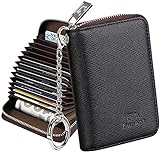
- Special Design: Multi-color optional and wear-proof classic business card holder looking.
- Plenty of Space: 16 card slots only measuring 4.1" x 3.0" x 1.1", including 13 credit card slots, 2 cash slots
- Protect Information Leakage: Prevents your vital information/cards from unnoticed scan with 2 outer layers RFID blocking materials.
- Extra Key Chain & Portable: Extra corns with key chain for your keys or lanyard. Portable use for shopping, traveling, etc.
- Great Gift: Practical compact wallet is the perfect gift. Give a thoughtful surprise to Men/Women on birthdays, holidays, celebrations, or any special occasion (e.g. Valentine's Day, Christmas, etc.).
- Warehouse clubs not counting as supermarkets for Blue Cash Preferred.
- Amazon Pay not qualifying as an Amazon.com purchase for a particular Chase category.
- Third-party delivery platforms coding differently from restaurants.
- A restaurant inside a hotel, stadium or store coding under the parent merchant.
- Transit, parking and rideshare purchases being defined differently by each issuer.
Read the card’s rewards terms and keep receipts when a category is important to your calculation.
Welcome-bonus mistakes
- Counting the deadline from the wrong date instead of the account-opening date.
- Returning purchases after meeting the spending requirement.
- Confusing statement credits with qualifying purchases.
- Applying through an offer that differs from the public page.
- Allowing the account to become past due or closed before the bonus posts.
- Assuming a previous bonus or prior ownership does not affect eligibility.
Never manufacture spending or carry debt simply to earn a bonus. The interest and fees can exceed the bonus value.
Annual-credit mistakes
Credits may require enrollment, a particular merchant, a portal booking, monthly use or a qualifying subscription. Unused credits may expire rather than roll over. Treat them as discounts on purchases you already wanted, not as cash income.
Credit profile, prequalification and applications
“Good credit” and “excellent credit” are guidelines, not approval guarantees. Issuers can also consider income, ability to pay, existing debt, payment history, utilization, recent applications and their internal relationship with you. A student card is not guaranteed because you are enrolled, and a secured card is not guaranteed because you provide a deposit.
Crashes, No Sound, or Screen Glitches?
Random freezes, missing sound and display glitches usually trace back to one bad driver. Find and replace yours safely.Free scan · under a minuteWindows Errors? Fix Them Before They Spread
Repair common Windows errors and clear accumulated junk for a smoother, more stable PC - no reinstall needed.Free scan · no reinstallA completed credit-card application generally creates a hard inquiry that may affect your credit score. Prequalification commonly uses a soft inquiry, but prequalification is not approval. The CFPB explains when card issuers can access credit reports, and myFICO provides additional guidance on shopping for credit.
- Check your credit reports for errors before applying.
- Use an issuer’s prequalification tool where available.
- Apply for the card that fits your actual profile and objective.
- Do not submit several applications merely to compare offers.
- Save the pricing-and-terms page for the exact offer you accept.
- Set automatic minimum payments and a separate payoff target.
- Keep utilization controlled and do not close an old account automatically after opening a new one.
What to verify before applying in August 2026 or later
Because April 2026 is a historical snapshot, use the issuer links in this article to confirm:
- The exact welcome bonus, spending requirement and deadline.
- Whether the offer is targeted, personalized or subject to prior-bonus restrictions.
- The annual fee after any first-year waiver.
- Purchase, balance-transfer, cash-advance and penalty APRs.
- Transfer fees and the deadline for completing a transfer.
- Reward caps, activation rules and merchant-category exclusions.
- Travel-partner, portal, lounge and insurance terms.
- Credit enrollment requirements, expiration rules and eligible merchants.
- Secured-card deposit, credit-line and possible graduation policies.
Federal Reserve credit-card rate data also distinguish between rates on all accounts and rates on accounts assessed interest. If you cite a market-rate statistic, identify the exact Federal Reserve G.19 series, date and population rather than calling one figure “the average APR.”
Frequently Asked Questions
What was the best overall credit card in April 2026?
There was no universal best card. Chase Sapphire Preferred was the strongest flexible-travel starting point, while Freedom Flex, BankAmericard, Blue Cash Preferred and other cards were better for specific spending or financing needs.
Are the April 2026 credit-card offers still available?
Not necessarily. April offers are historical snapshots. Bonuses, APRs and benefits may have changed, so verify the issuer’s live application terms. For example, Chase later displayed a 100,000-point Sapphire Preferred offer while the April snapshot listed 75,000 points.
Which card is best if I carry a balance?
Start with a low-interest or balance-transfer card rather than a rewards card. Compare the promotional period, transfer fee, regular APR and payoff schedule. Rewards rarely outweigh interest on a revolving balance.
Is a 0% balance transfer really free?
Usually not. A card may charge a balance-transfer fee even when the promotional APR is 0%. A 5% fee on a $5,000 transfer adds $250 to the balance.
How much should I spend to justify Blue Cash Preferred?
Using a no-fee alternative earning 3% at supermarkets as the comparison, the additional 3 percentage points offset the $95 ongoing annual fee at roughly $3,167 in annual qualifying supermarket spending. The result changes with streaming rewards, credits, caps, exclusions and your alternative card.
Quick wins for a faster PC:
Repair Windows errors before they cause bigger problemsFix Now →Fix the driver behind crashes, sound loss and screen glitchesFind Drivers →Clear out junk files and repair common Windows errorsFree Scan →Does prequalification guarantee credit-card approval?
No. Prequalification commonly uses a soft inquiry and can indicate that you may qualify, but the issuer can still conduct a full review and deny the application.
The Bottom Line
Bottom line: Choose the card that solves your main problem, not the one with the largest headline number. Use Sapphire Preferred for flexible travel, Gold for genuinely high eligible dining and supermarket spending, Freedom Flex for organized category maximizers, Venture X for travelers who will use its portal credit and lounges, Blue Cash Preferred for qualifying groceries and streaming, BankAmericard for a disciplined 0% payoff plan, and a student or secured card when credit-building is the priority. Before applying, verify the live offer, calculate year-two value, check every cap and exclusion, and never carry a balance for rewards.
Quick Recap
Product prices and availability are accurate as of the date/time indicated and are subject to change. Any price and availability information displayed on Amazon at the time of purchase will apply.




