Behind-the-meter (BTM) energy puts generation, batteries, controls or flexible loads on a data center’s side of the utility meter. It can reduce grid purchases, provide backup or primary power, and let a site operate as a microgrid during an outage. The most practical design is usually hybrid: retain a utility connection, add on-site resources and storage, and island only when reliability or economics justify it.
BTM is not automatically clean, cheap or independent. Gas engines and natural-gas fuel cells can deliver firm power but emit greenhouse gases and local pollutants. Solar and batteries cut operational emissions but generally need firm backup or a grid connection for continuous, high-density computing. A credible plan must account for power source, hourly carbon, water, air quality, outage performance, costs and effects on other utility customers.

Why data centers are looking beyond a conventional grid connection
Artificial-intelligence workloads are making data centers both larger and more electrically volatile. The U.S. Department of Energy (DOE) reports that U.S. data-center electricity use rose from about 58 TWh in 2014 to 176 TWh in 2023. DOE cites estimates of 325–580 TWh by 2028 and says individual projects have sought capacities as high as 4.5 GW; these are scenario estimates, not a single settled forecast. DOE’s 2026 analysis describes microgrids as one way to serve large loads while grid upgrades are still being planned.
Transmission and distribution work, transformer shortages, interconnection queues and local capacity limits can delay energization. A data center also needs power quality and continuity far above ordinary commercial service. On-site resources may shorten part of the schedule, but they do not eliminate fuel, environmental, fire, noise, safety, interconnection or construction approvals.
DOE identifies data centers as geographically constrained, continuously operating loads that can create challenges involving grid visibility, cost allocation, cooling water and islanded operation. The strategic question is therefore not simply “Can a site generate electricity?” It is “What combination of grid service, local generation, storage and flexible demand delivers the required power, reliability and emissions profile at acceptable total cost?”
What “behind the meter” means
The meter is the commercial and electrical boundary between a customer and its utility. A BTM resource is electrically on the customer side of that point of interconnection. The California Energy Commission’s BTM microgrid definition focuses on that customer-side boundary.
- BTM generation: On-site power that offsets electricity bought from the utility.
- Customer-sited storage: Batteries that charge from the grid, local generation or both.
- Microgrid: A bounded electrical system with local resources, controls and the ability to operate grid-connected or islanded. DOE explains these attributes at its microgrid systems page.
- Behind-the-meter microgrid: A microgrid whose utility point of interconnection is behind the retail meter.
- Off-grid data center: A facility designed to operate without utility power for its intended period. A BTM site can still depend heavily on the grid.
- Front-of-the-meter generation: Utility-scale power connected on the grid side of the customer meter.
“Behind the meter” does not by itself say whether power can be exported, whether the plant is utility-owned, or how long the facility can operate independently.
A typical BTM data-center architecture
Utility grid
     |
Point of interconnection / revenue meter
     |
Medium-voltage switchgear, transformers and protection
     |
Critical bus — UPS — IT, cooling and life-safety loads

Solar, batteries, thermal storage, generators and flexible loads
                         |
                 Microgrid controller
The physical layers commonly include utility service, medium-voltage switchgear, transformers, UPS systems, battery systems, generators, automatic-transfer and sectionalizing equipment, and critical-load buses. Cooling plants, thermal storage and controllable computing loads are part of the energy design, not afterthoughts.
Quick wins for a faster PC:
Clear out junk files and repair common Windows errorsFree Scan →Scan for outdated or missing drivers - takes under a minuteDriver Scan →Rank #2

- Portable battery storage box with battery tester
- Can hold 110 total batteries, including 36 AAA, 48 AA, 4 C, 4 D, 4 9V, 14 coin cells
- Carrying handle for easy portability; wall mountable
- Battery tester included; tests 1.5V and 9V batteries for usability
- Transparent cover allows you to see batteries without opening the lid
The control layer coordinates synchronization, black start, islanding, resynchronization, battery state of charge, generator ramp rates, load shedding, cooling constraints and power quality. DOE calls intelligent controllers essential for coordinating local resources and transitioning between grid-connected and islanded operation. Building-management systems, data-center-infrastructure-management software and supervisory-control systems must exchange trustworthy data with the microgrid controller.
Technology options: what each resource can and cannot do
| Resource | What it does well | Key constraints |
|---|---|---|
| Solar PV | Low operating emissions; modular daytime generation; pairs with batteries | Intermittent; land and roof limits; usually cannot supply 24/7 load alone |
| Battery storage | Peak shaving, ride-through, renewable shifting, frequency and voltage support | Finite duration, degradation, fire protection and replacement cost |
| Thermal storage and flexible cooling | Moves cooling demand away from peaks without directly interrupting computing | Equipment-efficiency, humidity, water and thermal-capacity limits |
| Gas engines or turbines | Dispatchable, familiar and capable of long-duration islanding | CO₂, nitrogen oxides, fuel-price and pipeline risk, noise and permitting |
| Fuel cells | Continuous on-site electricity with small footprint and no combustion at the stack | Natural gas, biogas and hydrogen still have fuel and lifecycle questions; vendor dependence |
| Geothermal | Potentially firm, low-carbon power | Resource, drilling, permitting, financing and schedule uncertainty |
| Nuclear | Firm, low-carbon generation potential | Long development, regulation, capital, fuel and public-acceptance requirements |
| Demand response | Reduces peaks using computing, cooling or charging flexibility | Service-level agreements may limit interruption or workload migration |
Solar photovoltaic generation
Solar can offset daytime purchases and reduce coincident peaks. It is familiar to permitting authorities and can be deployed in modules. Output, however, may not align with an AI campus’s highest load, and roof or land area may be insufficient. Islanded solar requires inverters, storage, protection and a firm resource that can establish grid voltage and frequency.
Batteries: specify power and energy separately
A battery rated at 100 MW is not necessarily a 100-MW resource for a day. Procurement documents should state MW, usable MWh, discharge duration at the intended rate, state-of-charge reserve, round-trip efficiency and degradation assumptions. Batteries can bridge generator start-up, smooth ramps, reduce demand charges and provide grid services, but short-duration systems are not multi-day power plants. DOE discusses storage and demand-response integration at its integration-study page; NREL’s modeling evaluates batteries, thermal storage and on-site generation for high-energy-demand systems at EDGES.
Thermal storage and cooling flexibility
Chilled-water or ice storage, pre-cooling, higher-temperature liquid cooling and carefully bounded set-point changes can shift electricity use. Non-urgent workloads may also be scheduled for cleaner or cheaper hours. NREL is studying underground thermal-energy storage that could reduce peak cooling demand, but it remains an emerging option rather than a universal solution: NREL’s program description.
The Tool Desk
Outbyte PC Repair FREERepair Windows errors before they cause bigger problemsFix Now →Outbyte Driver Updater FREEScan for outdated or missing drivers - takes under a minuteDriver Scan →Rank #3

- Material: Crafted from high-quality stainless steel, this product boasts durability and a sleek, modern appearance.
- Size: With dimensions of 415*700*263mm, this system cabinet is designed to fit seamlessly into your space while providing ample room for your devices.
- Battery Type: Compatible with 280Ah to 320Ah cells, this product offers reliable and long-lasting power for your servers and other compatible devices.
- Communication: Featuring both CANBUS and RS485 communication capabilities, this system cabinet ensures seamless connectivity and integration with your devices.
- Bulk Packaging: The stackable battery pack type allows for easy and efficient storage and transportation, making this product a convenient choice for your power needs.
Gas generation and fuel cells
Gas engines and turbines offer dispatchable, long-duration power when a grid connection is delayed. They still produce carbon dioxide and local pollutants and depend on fuel delivery. A shared pipeline or single central plant can become a campus-wide failure point.
Fuel cells have no combustion at the point of generation, but their climate result depends on fuel. Natural-gas systems have upstream and lifecycle emissions; biogas depends on feedstock and accounting; hydrogen is only as clean as its production and delivery. Bloom Energy markets systems using natural gas, biogas or hydrogen at its power-generation page and makes deployment and resilience claims for data centers at its industry page. Those are vendor claims, not universal independent performance results.
Geothermal and nuclear
Next-generation geothermal and advanced nuclear may eventually provide firm low-carbon power. DOE includes them among potential options at its clean-energy discussion, while noting the near-term importance of scalable solar, wind, storage and efficiency. Neither technology should be treated as a universally available near-term substitute for a utility connection.
Existing backup generators
Diesel sets are common for emergency continuity. Emergency-only operation, testing, peak shaving and prime operation have different air permits, fuel use and emissions consequences. A site that routinely dispatches backup sets is operating a materially different system from one that starts them only during outages.
Rank #4
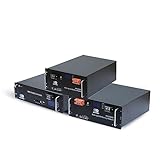
- 1.Provide a better service: We offer a panel customization service and a custom BMS online communication protocol to meet your needs. Our panel customization service allows you to customize the size, shape, colour and logo of your battery to suit your requirements. Customized battery management system (BMS) communication protocols so that you can better control and monitor the status of your batteries
- 2.Safe and reliable: Multiple protection functions, including overcharge protection, over-discharge protection, over-current protection and short-circuit protection, ensure the safety and reliability of the system.
- 3.Easy to install and maintain: This energy storage system is modular in design, making it very easy to install and maintain. You can select the appropriate module for assembly according to your needs.
- 4..Multiple application scenarios: It is suitable for various scenarios, including uninterrupted energy, banks, back-up power systems, home backup, small businesses, data processing centers, hospitals, small base stations. It can help you to become self-sufficient and provide backup power in the event of a power outage.
- 5.Long life: This energy storage system uses high quality battery components and is equipped with an intelligent control system to extend the life of the batteries. And, a wide range of sizes are available.
Why BTM does not automatically mean sustainable
“Renewable-powered” can describe physical electricity, a power-purchase agreement, annual renewable-energy certificates or hourly carbon-free matching. These are not interchangeable. Annual matching can coexist with fossil-generated grid electricity at night or during low-renewable periods.
EPRI’s 2026 modeling at Powering Intelligence finds that current-policy scenarios tend to add natural-gas generation as data-center demand grows, while 24/7 carbon-free scenarios produce larger contributions from wind, solar, nuclear and storage. Its modeled incremental data-center-load emissions intensity is roughly 0.3–0.4 metric tons of CO₂ per MWh under those scenarios; that is a model result, not a site-specific measurement.
Use five sustainability tests
- Carbon: Count direct combustion, purchased electricity, upstream fuel, construction and equipment manufacturing.
- Reliability: Measure how often fossil generation must run to protect critical loads.
- Water: Include cooling, generation, fuel production and local watershed stress.
- Air quality: Evaluate nitrogen oxides, particulates, formaldehyde and other local pollutants.
- Grid impact: Determine whether the project reduces peaks, provides flexibility or shifts costs and pollution elsewhere.
Reliability: islanding is an operating capability, not a marketing label
A resilient design defines its target: milliseconds of UPS ride-through, minutes until generators start, hours of battery support or multi-day islanding. It must also specify N+1 or 2N redundancy, black-start capability, fuel independence, dual utility feeds and critical versus noncritical loads.
- Test islanding, resynchronization and black start under load.
- Reserve battery state of charge for outage protection before selling capacity into markets.
- Model generator failure, fuel interruption, controller failure and communications loss.
- Check cooling capacity, spare parts, trained operators and fire suppression during a prolonged island.
- Evaluate common-mode risks in pipelines, switchgear, controllers and generation plants.
- Include cyberattack, utility voltage or frequency disturbances and sudden AI workload changes.
A facility may disconnect electrically yet lack fuel, cooling or personnel to remain islanded for the claimed duration.
PC Slower Than It Used to Be?
A free scan shows the junk files, broken settings and background clutter dragging Windows down - then fixes them in one click.Free scan · Windows 10 & 11Outdated Drivers Are Slowing You Down
One free scan finds every outdated or missing driver and matches the right update for your exact hardware.Free scan · exact hardware matchBest Value

- Material: Crafted from high-quality stainless steel, internal class-T 250A fuse and 250A circuit breaker,this product boasts durability and a sleek, modern appearance with JK 200A BMS,2A active balance function.
- Size: 80.2 x 51.2 x 34 cm (31.57 in x 20.16 in x 13.39 in), this system cabinet is designed to fit seamlessly into your space while providing ample room for your energy storage system.
- Battery Type: Compatible with 280Ah to 330Ah lifepo4 cells(size: 680*410*260mm), this product offers reliable and long-lasting power for your servers and other compatible solar energy system.
- Communication: Featuring both CANBUS and RS485 communication capabilities, this system cabinet ensures seamless connectivity and integration with your inverters.
- Bulk Packaging: The stackable battery pack type allows for easy and efficient parallel connection and transportation, making this product a convenient choice for your power needs.
How BTM resources can help—or complicate—the grid
With an agreed operating model, BTM resources can lower coincident peaks, defer distribution work, provide demand response, export surplus energy, support frequency and voltage, and reduce generator ramping. DOE describes these capabilities at its large-load microgrid analysis.
The same resources can create reverse power flows, protection miscoordination, unplanned islanding or sudden loss of a very large load. Utilities need interconnection studies, relay settings, telemetry, export rules, standby-service arrangements and clear restoration procedures. Private generation should not receive preferential treatment by shifting upgrade costs to other customers.
Comparing common configurations
| Configuration | Main benefit | Main weakness | Best fit |
|---|---|---|---|
| Grid, UPS and diesel backup | Familiar and robust | Interconnection delays, diesel emissions and little flexibility | Existing sites with adequate utility capacity |
| Grid, solar and batteries | Lower imports and peaks | Intermittency and finite battery duration | Sites with favorable rates and available land or roof |
| Grid, large battery | Peak management and ride-through | Cost, degradation and fire safety | Demand-charge-heavy or constrained sites |
| Grid, gas generation and battery | Fast, firm dispatchable capacity | Carbon, local pollution and fuel dependence | Urgent or transitional capacity needs |
| Fuel-cell primary power plus grid | Compact firm on-site supply | Fuel emissions, cost and vendor dependence | Land-constrained sites needing speed |
| Renewable microgrid plus long-duration storage | Potentially low-emission islanding | High capital and complex sizing | Sustainability-led campuses with space |
| Nuclear or geothermal co-location | Firm low-carbon potential | Long lead time and regulatory uncertainty | Long-term strategic developments |
| Fully off-grid campus | Maximum utility independence | Highest storage, fuel and redundancy burden | Remote or exceptionally strategic facilities |
Economics and contracting
Evaluate total delivered site power rather than a generator’s levelized cost alone. The model should include capital, engineering, construction, controls, interconnection, fuel infrastructure, operations and maintenance, utility energy and demand charges, standby or capacity charges, battery augmentation, backup fuel, carbon compliance, financing, decommissioning and the cost of unserved load.
Possible ownership structures include customer-owned assets, energy-as-a-service, power-purchase agreements and build-own-operate-transfer arrangements. Energy-as-a-service can avoid upfront equipment spending but creates a long-term payment and provider-performance obligation. Schneider Electric describes this model at its service page. Public vendor pages generally do not provide standardized data-center pricing.
What’s actually slowing this PC down?
Pick the symptom - the matching free tool is one click away.
Storage and control platforms from Tesla, Fluence and Eaton are typically sales-led. See Tesla’s software page, Fluence, Fluence services, Eaton Brightlayer and Eaton demand response. Buyers should require guarantees for net power, usable battery capacity, efficiency, islanding duration, response time, fuel consumption, emissions, availability, cybersecurity, maintenance windows and end-of-life replacement.
A decision checklist for developers and investors
- Map the load: Record peak, average and minimum MW, ramp rates, seasonal weather, AI volatility, cooling at worst-case conditions and critical versus flexible loads.
- Set reliability: Define UPS ride-through, outage hours, multi-day islanding, black start, redundancy, dual feeds and fuel reserves.
- Set the carbon boundary: Choose annual or hourly matching, direct-emissions limits, lifecycle accounting and treatment of certificates and offsets.
- Test time to power: Compare utility upgrades with equipment lead times, gas infrastructure, permitting, environmental review and construction sequencing.
- Check the site: Assess land, roof, noise, air quality, water, fire code, hazardous materials, flood, wildfire, hurricane and heat exposure.
- Model the tariff: Include energy, demand, standby, capacity and interconnection charges plus demand-response or ancillary-service revenue.
- Design utility coordination: Agree on protection, telemetry, exports, islanding, restoration, cost allocation and operating data.
- Stress-test operations: Simulate controller failure, cyberattack, cooling failure, fuel interruption, battery fire, generator failure and sudden workload changes.
Bottom line
Behind-the-meter energy is best understood as a flexible power-and-resilience architecture, not a single technology. For most large data centers, the strongest near-term design keeps a utility connection while combining appropriately sized batteries, renewables, efficient firm generation, flexible cooling and transparent hourly emissions accounting. A fully off-grid system can work in exceptional cases, but it carries the greatest complexity and failure burden. The right choice is the configuration that meets the site’s stated reliability and carbon targets without hiding fuel, water, air-quality, permitting or grid costs.
Quick Recap
Product prices and availability are accurate as of the date/time indicated and are subject to change. Any price and availability information displayed on Amazon at the time of purchase will apply.




