The Tool Desk
Outbyte PC Repair FREEClear out junk files and repair common Windows errorsFree Scan →Outbyte Driver Updater FREEScan for outdated or missing drivers - takes under a minuteDriver Scan →If credit card payments are becoming hard to manage, start by listing what you owe and what your household can realistically afford. Then protect essential bills, contact card issuers before a missed payment if possible, and compare any counseling or consolidation option by its costs and risks. The Consumer Financial Protection Bureau (CFPB) puts it plainly: “If you can’t pay your credit card bill, it’s important to act right away.”
Make a one-page snapshot of your debt and cash flow
Before choosing a payoff strategy, get the amounts and dates in one place. For every card, record the balance, annual percentage rate (APR), minimum payment, due date, and whether the account is current. Then list monthly take-home income and essential expenses, such as housing, utilities, food, transportation, and insurance.

As an Amazon Associate I earn from qualifying purchases.
This snapshot shows what is available for debt payments and gives you specific information for calls with issuers or a counselor. The CFPB recommends reviewing income and expenses before deciding what payment is affordable, especially if you cannot pay the minimum. See its guidance on what to do if you can’t pay your credit card bills.
Free tools Windows power users keep installed
One-click scans. No signup required.
While you build the plan, pause discretionary card charges where feasible. If spending continues to exceed income, a new loan or transferred balance may only move the debt around. Understanding how the balance accumulated and making a workable budget are part of addressing the cause, not just the account balance.
#1 Best Overall

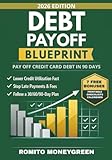
- Comprehensive Debt Management Tool:The debt payoff planner log offers a detailed table design to help users manage debt information comprehensively. Each page includes creditor details, target payoff dates, credit types, starting balances, minimum payments, interest rates, and other key data, ensuring users have a clear overview of each debt. With systematic tracking, users can create effective repayment plans and work towards becoming debt-free.
- High-Quality Materials and Practical Design:Featuring 110 pages of 80gsm high-quality paper with double-sided printing and a sturdy copperplate cover, this debt payoff tracker is both durable and professional. The 8.5 x 11-inch large page size is perfect for desktop use and portable enough to carry around. The spiral-bound design allows the debt payoff planner spiral bound to lay flat at 180 degrees for easy writing, and it works seamlessly with gel pens, ink pens, or pencils without smudging.
- User-Friendly Table Design:The credit card debt payoff planner features a simple and intuitive table layout, making it easy to add entries and track repayment progress. Each page includes columns for dates, starting and ending balances, payment amounts, confirmation numbers, and notes, enabling users to efficiently monitor every payment. This straightforward design simplifies debt management, even for first-time users.
- Versatile Use Cases:Whether for personal debt management, family financial planning, or small business cash flow tracking, the debt snowball planner is a versatile tool. Finance planner is ideal for students, professionals, freelancers, and small business owners, helping them clearly record and track debt in various scenarios. By staying organized, users can better manage their finances and reduce financial stress.
- Improve Credit Scores and Reduce Stress:With systematic debt tracking and repayment planning, the fbill tracker notebook helps users reduce their debt burden and improve credit scores over time. Clear repayment progress and goal-setting features provide peace of mind, empowering users to tackle financial challenges with confidence and work towards financial freedom.
Keep required payments in view and choose where extra money goes
Your minimum payment is the amount required under the account terms for that billing cycle. Paying only the minimum can extend repayment for years. Credit card statements include an estimate of how long it may take to pay off the current balance if you make no new purchases and pay the stated amount; new charges can change that outcome. The CFPB explains the estimate in its credit-card payoff estimate guidance.
If you can pay more than the minimums, choose a priority and keep paying required amounts on other accounts where possible. Two common approaches are:
- Smallest balance first: Put extra money toward the card with the smallest balance. Clearing an account can make progress feel tangible. The CFPB’s debt action plan tool includes this approach.
- Highest APR first: Put extra money toward the card charging the highest APR. This targets the costliest rate, though the time until an account is paid off depends on balances, rates, and payments.
There is no single ordering established as best for everyone. Choose a method you can follow while keeping essential expenses and required payments in view.
Contact your card issuer before a payment is missed
If you may not be able to make a minimum payment, call the issuer promptly rather than waiting for the account to fall further behind. The CFPB says issuers may be willing to work with customers facing a financial emergency, but hardship options and eligibility depend on the issuer and account.
Rank #3

- Organize Debts with a Debt Payoff Planner - Track all your debts efficiently using this debt payoff planner, including starting balances, minimum payments, due dates, and interest rates.
- Monitor Payments with a Debt Payoff Tracker - Log each payment, track end balances, and store confirmation numbers in this debt payoff tracker to stay on top of your finances.
- Plan Your Strategy with a Debt Snowball Planner - Prioritize debts, set goals, and create repayment strategies with this debt snowball planner for faster debt elimination.
- Track Bills with a Bill Tracker Notebook - Keep track of recurring bills, payment dates, and amounts with this bill tracker notebook, ensuring nothing is missed.
- Stay Motivated with a Debt Management Planner - Celebrate milestones and monitor progress using this debt management planner, perfect for anyone seeking control over their finances and achieving debt freedom.
Be ready to explain why the minimum is not affordable, how much you can pay, and when you expect regular payments might resume, if you know. Ask for a specific temporary payment amount or duration. Also ask whether the arrangement changes the interest rate, fees, or due date, and what happens if you miss a payment under the arrangement. The issuer might offer a lower minimum, fee relief, a reduced rate, or a different due date, but none of those terms is guaranteed. The CFPB’s payment difficulty guidance and debt consolidation guidance describe these possibilities.
Compare balance transfers and consolidation loans by total cost
Consolidation can simplify payments, but it does not automatically make debt cheaper or more manageable. Compare any offer with your existing cards, including the full repayment cost and whether the monthly payment fits your budget.
Balance transfer
A balance transfer may have a fee and a temporary promotional APR. Before accepting an offer, check the transfer fee, promotional rate and how long it lasts, the APR afterward, the credit limit, and the monthly amount you would need to pay to reduce the balance within the promotional period. The CFPB notes that if you are more than 60 days late, the issuer may increase the rate on all balances, including a transferred balance. Review the offer’s terms and the CFPB’s consolidation guidance; its credit card key terms page can help clarify common terms. Card offers and terms can change.
Consolidation loan
Compare the loan’s interest rate, fees, term, monthly payment, and total repayment cost with what you would pay on the cards. A lower monthly payment can result from taking longer to repay, which may increase the total cost. A loan also will not solve the underlying problem if household spending continues to exceed income.
Best Value
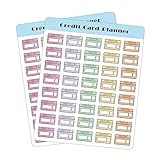
- 【Functional】:Credit card bill stickers are useful and effective to keep track of your credit card bills and payments on your planner and also functional decoration for any planner, calendar or agenda
- 【Premium materials】: All stickers are printed on premium removable matt adhesive paper. Easy to write and any pen will work. If you ruin it, just peel off the sticker again and position it.
- 【Colorful】: Various colors on one sticker sheet. The invoices are not fun but I have included 5 different colours so it is not an internal dimmer to remind yourself to pay your credit card bill.
- 【Payable size】:The space for the amount paid is 0.79 inch x 0.2 inch. Enough space for your writing. Page size is 15cm x 18.5cm and Individual Sticker is approximately 0.67" x 0.98"
- 【Include】: You will receive 2 pages of 80 Credit Card Invoice Terms Labels. The stickers are cut individually and are ready to peel and stick to your planner, calendar or agenda.
For either option, consider whether the payment is affordable, how long repayment may take, what happens if a payment is late, and whether you can avoid building new card balances while repaying. Do not judge an offer by its monthly payment alone.
Independent reader supportYour contribution helps us test, update, and keep practical guides available for everyone.Consider nonprofit credit counseling if the plan is hard to manage
A credit counselor can help review your budget and debts and may offer a debt-management plan. In such a plan, you generally make one payment to the counseling organization, which distributes payments to enrolled creditors. A plan may reduce monthly payments, interest, or fees, but services, creditor participation, eligibility, and fees vary.
Before enrolling, ask what services are included, whether there is a setup fee or monthly fee, and whether you will receive the agreement in writing. Confirm that creditors have accepted the proposed plan before sending payments to an organization administering it. You can check references and credentials and look for counselors through the National Foundation for Credit Counseling, the Financial Counseling Association of America, or the U.S. Department of Justice list of approved credit counseling agencies. The CFPB explains what credit counseling is and how it differs from other forms of debt relief.
Be cautious of debt-settlement promises
Be wary of companies that guarantee they can erase debt, pressure you to stop paying, or tell you to stop communicating with card issuers. A debt-settlement company may not collect fees before settling or otherwise resolving a debt. If you stop paying, interest and penalty fees can accrue, and you may face credit-reporting, collection, or legal consequences. The CFPB’s comparison of credit counseling, settlement, consolidation, and credit repair explains these distinctions.
If you cannot cover both essentials and minimum payments, contact your card issuers promptly and consider speaking with a reputable nonprofit credit counselor about your budget and options. No strategy guarantees a particular credit-score result or debt outcome.
Quick Recap
Product prices and availability are accurate as of the date/time indicated and are subject to change. Any price and availability information displayed on Amazon at the time of purchase will apply.




