Audio Loudness Explained: Why Numbers Matter More Than Ears
The most important measurement you’re probably not checking on your live stream is audio loudness, expressed in a unit called LUFS (Loudness Units relative to Full Scale). YouTube’s algorithm expects stream audio at -14 LUFS integrated loudness, and streams that deviate from this standard do two things that kill retention: they either sound muffled (if too quiet) or distort and clip (if too loud).
This is not optional. Audio loudness is part of YouTube’s quality scoring, which affects recommendation, watch time, and how likely the platform suggests your stream to new viewers. A stream with perfect video at 1080p but misaligned audio will underperform a lower-resolution stream with broadcast-quality audio.
The LUFS Standard and Why YouTube Enforces It
LUFS is not volume in the colloquial sense. A song that “sounds loud” to your ears might measure at -10 LUFS. Another that “sounds quiet” might be -12 LUFS. LUFS measures perceptual loudness, accounting for how human hearing perceives different frequencies differently. Speech requires different loudness than music. Music requires different loudness than ambience.
YouTube’s target is -14 LUFS integrated loudness, with a true peak of -1 dBFS (decibels relative to full scale). This means:
PC Slower Than It Used to Be?
A free scan shows the junk files, broken settings and background clutter dragging Windows down - then fixes them in one click.Free scan · Windows 10 & 11Outdated Drivers Are Slowing You Down
One free scan finds every outdated or missing driver and matches the right update for your exact hardware.Free scan · exact hardware match#1 Best Overall

- Pro performance with great pre-amps - Achieve a brighter recording thanks to the high performing mic pre-amps of the Scarlett 3rd Gen. A switchable Air mode will add extra clarity to your acoustic instruments when recording with your Solo 3rd Gen
- Get the perfect guitar and vocal take with - With two high-headroom instrument inputs to plug in your guitar or bass so that they shine through. Capture your voice and instruments without any unwanted clipping or distortion thanks to our Gain Halos
- Studio quality recording for your music & podcasts - Achieve pro sounding recordings with Scarlett 3rd Gen’s high-performance converters enabling you to record and mix at up to 24-bit/192kHz. Your recordings will retain all of their sonic qualities
- Low-noise for crystal clear listening - 2 low-noise balanced outputs provide clean audio playback with 3rd Gen. Hear all the nuances of your tracks or music from Spotify, Apple & Amazon Music. Plug-in headphones for private listening in high-fidelity
- Everything in the box: Includes Pro Tools Intro+, Ableton Live Lite, Cubase LE, and Hitmaker Expansion: a suite of essential effects, powerful software instruments, and easy-to-use mastering tools
- Integrated loudness at -14 LUFS: The entire stream, averaged over time, should measure at -14 LUFS.
- True peak at -1 dBFS: The loudest single sample should not exceed -1 dBFS, leaving 1 dB of headroom before digital clipping.
If your stream measures at -20 LUFS, YouTube’s gain adjustment kicks in, which can introduce artifacts. If it’s at -8 LUFS, the platform will compress it, reducing dynamic range. Neither is fatal, but both degrade perceived quality. The sweet spot is -14 LUFS ±1.
Why This Matters for Viewer Experience
A viewer puts on headphones expecting audio at a consistent level. If your stream is 6 dB quieter than the last video they watched, they adjust their volume. If it’s then 6 dB louder on a sudden spike, the jump is jarring. Streams that maintain consistent loudness feel professional and are more watchable.
The secondary effect is platform algorithm: YouTube’s recommendations account for stream quality. Streams with audio distortion, excessive loudness adjustment, or dynamic range that collapses into clipping receive lower recommendation weight. This is why automated channels (loops, ambience, 24/7 music) that maintain audio standards gain traction faster than channels where audio quality varies from stream to stream.
How to Measure LUFS in Your Setup
Most streaming software doesn’t measure LUFS natively. You need an external meter. The industry standard is a plugin or software meter that analyzes audio in real time. Free options include:
What’s actually slowing this PC down?
Pick the symptom - the matching free tool is one click away.
- Audacity: Export a test stream, import it, analyze with “Analyze > Loudness Normalization” to see approximate LUFS.
- LUFS Meter plugins: Youlean LUFS Meter (free version) is available for Windows/Mac and runs as a plugin in OBS, Streamlabs, or your DAW.
- Online loudness analyzers: If you export clips from YouTube after streaming, sites like
loudness.onlinewill analyze the clip’s LUFS for historical reference.
The workflow: run a test stream for 15–30 minutes, download the archive, and analyze it. If your audio is consistently 3+ dB away from -14 LUFS, adjust your mixer settings and retest.
Rank #2
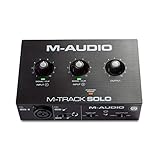
- Podcast, Record, Live Stream, This Portable Audio Interface Covers it All - USB sound card for Mac or PC delivers 48kHz audio resolution for pristine recording every time
- Be ready for anything with this versatile M-AUDIO interface - Record guitar, vocals or line input signals with one combo XLR / Line Input with phantom power and one Line / Instrument input
- Everything you Demand from an Audio Interface for Fuss-Free Monitoring - 1/8" headphone output and stereo RCA outputs for total monitoring flexibility; USB/Direct switch for zero latency monitoring
- Get the best out of your Microphones - M-Track Solo’s transparent Crystal Preamp guarantees optimal sound from all your microphones including condenser mics
- The MPC Production Experience - Includes MPC Beats Software complete with the essential production tools from Akai Professional
The Practical Fix: Gain Staging and Limiting
Proper gain staging is how you hit -14 LUFS. This is the process of setting input levels so that your loudest consistent content hits the right target.
- Identify your loudest content: What part of your stream is the loudest? For music, this is the chorus. For speech, this is when you’re closest to the mic or most emphatic. For ambience, this is peak action.
- Set input gain: Turn the fader on your mixer for that input to -6 dB initially. Listen to the loudest part of your content.
- Measure the result: Export a brief sample and measure LUFS. If it’s -18 LUFS, you’re too quiet. Increase gain. If it’s -10 LUFS, you’re too loud.
- Repeat until hitting -14 LUFS ±1.
- Add a limiter after the main output: Set the limiter to -1 dBFS. This catches any unexpected peaks and prevents clipping without affecting normal content.
This process takes 30 minutes. Once done, your stream will sound professional on every viewer’s device, and YouTube’s algorithm will classify your stream as broadcast-quality audio.
Multi-Source Audio: Balancing Voice, Music, and Ambience
For streams mixing multiple sources (a host talking over background music, interviews with guests, music with ambient sound layered), each input should be gain-staged separately before they’re mixed together.
The workflow:
– Set background music to hit -18 LUFS on the meter (music is aggressive and needs headroom when mixed with other sources).
– Set voice/speech to hit -12 LUFS on the meter (speech dominates and should be forward in the mix).
– Set ambience to hit -20 LUFS (it’s support, not primary content).
– Mix these together with the limiter at -1 dBFS on the main output.
– Measure the combined result. It should hit -14 LUFS integrated.
The math is not linear (dB is logarithmic), but the principle is simple: quieter inputs leave room for louder ones without clipping.
Rank #3

- Capture every detail of your sound: Imagine the perfect take, every note and beat, captured as if by magic. That's the MAONO PS22 Lite audio interface—designed for the recording enthusiast and streamer in you. With high-resolution recording at 24-bit/192kHz and a dynamic range of 106dB, this USB audio interface for PC and Mac ensures your sound is as clear and realistic as the original performance
- For Microphone Lovers: Podcasters and Voice Actors, the PS22 Lite XLR audio interface is perfect. It can handle condenser and dynamic microphones with up to 56 dB of preamp and 48V phantom power. Enjoy a warm and clear sound for your podcasts or voice-over work
- Create Your Music with Guitar: Whether you are a musician or a guitar enthusiast, an interface for recording music gives you rich, realistic sound. Plug into the audio interface's dedicated instrument input, adjust the impedance, and get guitar and vocal effects quickly. Stand out from the crowd with our recording music audio interface, and make sure every note you play is memorable
- Powerful ProStudio Routing Software: Live-Streamers or Social Media Influencers, take control of your live streams with the PS22 Lite. The ProStudio Routing Software included with this computer recording audio interface opens up a world of possibilities with additional virtual channels and loopbacks, and it's compatible with ASIO drivers for low-latency output, providing the flexibility needed for your broadcast
- For Beginners: Content Creators just starting in recording, The USB audio interface for pc is designed with intuitive modes for recording, live broadcast, and instruments, making it easy to switch between setups. Its plug-and-play capability and direct monitoring switch save time and streamline your creative process
Automation Channels and Consistent Loudness
For 24/7 streams that loop the same content repeatedly, audio loudness consistency is even more critical. If your first loop cycle is -14 LUFS and the third is -16 LUFS, viewers experience the channel as inconsistent and tune out.
Keep a 24/7 YouTube Stream Running Without Your PC
StreamNeo lets you upload a prerecorded video and paste in your YouTube stream key to start an always-on broadcast from the cloud while your PC stays off.
Recommended Free Tools
This workflow fits looped ambience, music, and other prerecorded channels that need reliable continuous broadcasting. StreamNeo checks stream health every 30 seconds and automatically restarts a dropped stream, reducing the need for hands-on monitoring.
You can test the workflow with a free 24-hour 720p/30fps trial, with no card required at signup. Upload representative content, then measure the broadcast archive to confirm that your audio remains within the -14 LUFS target.
The solution is to normalize your source material before the stream starts. If you’re streaming a pre-recorded video loop, use StreamNeo to upload once and stream continuously. The service encodes your video in the cloud with your YouTube stream key, eliminating the variability from local encoding. Your audio arrives at -14 LUFS on every cycle, the stream restarts automatically if the connection drops, and your computer stays off. This removes the biggest source of audio inconsistency in long streams: the human error of re-encoding or re-uploading with slightly different settings each time.
Rank #4

- ✔️[High-fidelity sound quality, accurate sampling] The Synido 2x2 audio interface uses a high-quality independent audio chip to reduce recording latency, support 24-bit depth and 48kHz sampling rate, and ensure every detail is restored. Whether it is recording or live broadcasting, it can provide a clear and natural sound quality experience
- ✔️[Three monitoring modes, easy to switch] The audio interface provides three monitoring modes to meet different needs. In Stereo mode, independent left and right channels present the original input (such as a microphone or instrument), which is suitable for accurate recording. Mix mode can mix input audio and computer audio in real-time, which is suitable for live broadcast or recording, and is easy to adjust instantly. USB mode only monitors computer audio, which is suitable for post-editing or audio processing. Whether it is recording, live broadcast, or post-production, the three modes can be easily switched to make audio creation more efficient and professional
- ✔️[User-friendly design] The audio interface is intuitively designed, and equipped with three independent control areas, and the XLR interface supports 6.35mm and XLR microphones, which are compatible with various devices. The green, orange, and red LED lights display the volume level, helping you to grasp the volume status at any time and avoid distortion. Supports easy switching between Line In and instrument input, adapts to different devices, reduces interference and distortion, and does not need to adjust gain frequently, improving efficiency
- ✔️[Professional 48V phantom power] Synido audio interface is equipped with 48V phantom power switch and supports 48V dynamic microphone with excellent noise reduction performance, provides a highly sensitive recording experience, accurately picks up sound, and effectively reduces noise interference, ensuring clear and stable sound quality output
- ✔️[Lightweight and portable, plug and play, create at any time] The USB audio interface weighs only 300g and measures 14 x 11.5x 4.5 cm. It is compact and portable and can be taken anywhere anytime. Equipped with a 3.5mm to 6.35mm adapter and a USB-C to USB-A data cable, you can easily use it by directly connecting to your mobile phone or computer
True Peak vs Integrated Loudness
These are two different measurements that both matter:
- Integrated loudness is the average loudness of your entire stream, measured in LUFS. This should be -14 LUFS.
- True peak is the loudest single sample (a single point in time). This should not exceed -1 dBFS.
A stream can be at -14 LUFS integrated but have a true peak at -3 dBFS, meaning occasional spikes. The limiter prevents this. A stream can also have a true peak of -1 dBFS but integrated loudness of -20 LUFS if the content is mostly quiet with occasional loud peaks. This sounds inconsistent.
Both must be true simultaneously: maintain -14 LUFS integrated and keep true peaks at or below -1 dBFS.
Testing and Iteration
After gain staging, run a test stream:
- Stream for at least 15 minutes of representative content.
- Let the stream run to completion (don’t stop early).
- Download the archive from YouTube.
- Measure LUFS with Audacity or a LUFS meter.
- Note the integrated loudness and true peak.
- If integrated loudness is within -13 to -15 LUFS and true peak is -2 to 0 dBFS, you’re done.
- If not, adjust gain staging and retest.
Most setups require 2–3 test iterations before hitting the target consistently.
Use StreamNeo‘s free 24-hour 720p/30fps trial with no card at signup as a final validation step: upload representative content, let the YouTube broadcast run, and measure its archive against the -14 LUFS target before committing to a longer 24/7 schedule.
Free tools Windows power users keep installed
One-click scans. No signup required.
Best Value

- HYBRID CONNECTIVITY: Dual USB ports with MFi-certified connectivity connect your computer and phone or iPad simultaneously. Record in GarageBand or Logic Pro, then stream or upload guitar & vocal covers directly from your mobile device. No workflow interruptions. The MAONO P2 USB-C audio interface instantly records to Mac, PC, iPhone, Android, or cameras. Perfect for creators and streamers who need total workflow freedom to record anywhere, anytime
- STUDIO-GRADE AUDIO: 56dB Dual XLR Audio Interface Compatible with Most Condenser and Dynamic Microphones. Ideal for podcasts, live streams, voiceovers, vocals, and home studio recording. Capture every vocal and guitar nuance in 24-bit/192kHz quality. Features a class-leading -130dB EIN for dead-silent recording in home studios. ASIO support deliver clean recordings and lower-latency monitoring for solo creators or music production
- STREAM AND RECORD WITHOUT THE GUESSWORK: Built for podcasters, streamers, and musician creators. Independent mute prevents unwanted noise during guitar or bass changes, while independent headphone and monitor mute controls provide greater flexibility during streaming and recording. Stream Mode sends your voice equally to both channels for a balanced listening experience
- ADVANCED CREATOR SOFTWARE PROSTUDIO 2: Record guitar tutorials, cover songs, and vocal streams with ease. Route FL Studio, Spotify, TikTok, or browser audio directly to dedicated channels without digging through complex PC settings. Add VST effects for cleaner vocals, real-time noise reduction, and studio sound. Built-in loopback captures your instrument, voice, backing tracks, and desktop audio in one seamless workflow
- HEAR EVERY DETAIL IN REAL TIME: Ideal for podcast recording and music production. Direct monitoring delivers low-latency audio, so you hear your voice or instrument without distracting delays. Independent headphone and monitor controls let creators customize monitoring levels with ease. Real-time signal indicators make it easy to track input levels, avoid clipping, and capture clean recordings every time
FAQ
Does LUFS matter if I’m streaming speech only?
Yes. Speech at -14 LUFS integrated is broadcast standard. Speech that’s too quiet or too loud will cause YouTube to adjust it, degrading perceived quality.
Can I normalize audio after streaming?
You cannot retroactively adjust a live stream’s loudness. The archive retains the loudness of the live broadcast. You can re-upload a normalized version as a separate video, but the stream archive is final.
If my stream is at -12 LUFS, will YouTube reject it?
No. YouTube accepts streams from -10 to -18 LUFS without issue. Outside that range, the platform applies dynamic range compression, which can distort. Aim for -14 LUFS to avoid any platform adjustment.
Do I need expensive audio gear to hit -14 LUFS?
No. A USB microphone and an open-source DAW like Audacity can achieve proper loudness. The measurement tools are free. Gain staging is technique, not equipment.
The Tool Desk
Outbyte Driver Updater FREEScan for outdated or missing drivers - takes under a minuteDriver Scan →Outbyte PC Repair FREERepair Windows errors before they cause bigger problemsFix Now →What if my content naturally varies in loudness?
Use a compressor before the limiter. A compressor reduces the distance between loud and quiet parts, making your stream more consistent. Combined with a limiter at -1 dBFS, this maintains -14 LUFS throughout dynamic content.
Quick Recap
Product prices and availability are accurate as of the date/time indicated and are subject to change. Any price and availability information displayed on Amazon at the time of purchase will apply.




