Free tools Windows power users keep installed
One-click scans. No signup required.
Arthur Hayes’s argument is that the AI buildout could outrun the demand and revenue needed to pay for it. If that happens, he expects a downturn, a policy bailout and more liquidity flowing into Bitcoin and other crypto. That is his speculative investment thesis—not an established forecast, and not a recommendation to buy crypto or bet against AI.
What is Hayes’s argument about AI spending?
In a CNBC interview at the Gamma Prime Investing Conference in Singapore, Hayes described spending on AI data centers as “wasting multi-trillion dollars.” That is his characterization, not a measured spending estimate with a defined scope. The full interview report is reproduced by KhanList; a second syndicated copy appeared at Finance News Today.
His concern is that companies may build more data-center and computing capacity than customers can use profitably or afford to pay for. The core question is not simply whether AI is useful. It is whether adoption, utilization and end-user revenue grow quickly enough to support the infrastructure commitments being made.
Hayes summarized his historical analogy this way: “If you study financial history and you study every single major technological rollout, it always is overbuilt. There always is a crash, and there always is a bailout.” This is his interpretation of past technology cycles, not proof that the same sequence must happen with AI.
#1 Best Overall

- 【Leading AI Mini Workstation】MINISFORUM AI MS-S1 Max Workstation comes with AMD Ryzen AI Max+ 395 processor, which uses AMD's latest generation Zen 5 architecture. It has 16 Cores and 32 Threads, the boost clock is up to 5.1GHz. The overall processor performance is up to 126 TOPS, and the NPU performance reaches up to 50 TOPS. AMD Ryzen AI enables improved productivity, advanced collaboration, and improved efficiency.
- 【AMD Radeon 8060S Graphics 】The MS-S1 Max Mini PC equipped with AMD Radeon 8060S Graphics which built on the new generation of RDNA 3.5 architecture AMD graphics, it brings ultra-high frame rate experiences and advanced content creation features anywhere and delivers staggering performance. It can handle all your computing and multimedia tasks efficiently.
- 【Five 8K Video Output】This MS-S1 Max Workstation comes with five video outputs, 1x HDMI (8K@60Hz), 2x USB4(40Gbps,Alt DP2.0,PD out 15W) and 2x USB4 V2(80Gbps,Alt DP2.0,PD out 15W) Outputs, which support multiple monitors display at the same time and provide a larger and wider filed of view and improve your work efficiency. It is used in fields that require high-performance computing and graphics processing, including digital signage and securities trading, as well as work that uses CAD, such as engineering design, scientific calculations, animation production, and post-production for movies and television.
- 【 Fast and Stable Wire & Wireless Speed】It comes with Two 10G Lan Ports for wired connection and and Wi-Fi 7 / BT5.4 for wireless connection, which increased the network speed greatly and expand its functions and improved performance of computer to a large extent and allows you to use more networks such as software routers (OpenWRT / DD-WRT / Tomato etc.), firewalls, NAT, network isolation etc.
- 【Large Storage & Flexible Expandability】This Workstation equipped with 128GB LPDDR5-8000MHz + 2TB M.2 2280 PCIe4.0 SSD. There is another PCIe4.0 SSD slot available for up to 8TB, these SSD slots are compatible with RAID0 and RAID1, you can store movies, videos, photos, important files easily. What’s more, it also comes with 1x standard PCIex16 slot(PCIe4.0x4) inside.
What does he think happens next?
- Capacity arrives faster than sustainable demand. Hayes estimates that substantial data-center capacity now under construction could come online in late 2027 or 2028. He expects the payment obligations for committed compute to become more salient around then; this is his timing estimate, not a confirmed industry-wide delivery schedule.
- Some infrastructure users struggle to pay. If AI services do not produce enough revenue to cover compute commitments, providers could face excess capacity or payment shortfalls. The reports describe Hayes naming SpaceX, OpenAI and Anthropic as compute users that do not make money, but those are his attributed claims, not independently verified financial findings in the articles.
- Financial stress prompts a bailout. Hayes expects policymakers to respond to a severe downturn with support that adds liquidity to the financial system. The reports do not establish that a bailout will occur or specify its form.
- Crypto benefits from the liquidity. Hayes argues that new liquidity would help Bitcoin and other crypto assets. “Thankfully, we have bitcoin and other crypto to soak up that excess liquidity, and so we know the asset that’s going to perform the best when the bailout comes,” he said. That is a forecast about how markets might respond, not a demonstrated relationship or guaranteed outcome.
In a separate interview report published by TheStreet Crypto on June 30, 2026, Hayes put his timing more directly: “The AI bubble will pop in or around 2028.” The same report quotes him saying the thesis could be invalidated if politicians implemented austerity and were re-elected in democracies, or received implicit support from elites in autocracies. The interview report corroborates what Hayes has said; it does not independently validate the forecast.
Is Hayes betting against AI?
Not in the simple sense of recommending that investors short AI companies. The CNBC report says Hayes dislikes betting on falling prices and does not want to short AI. He also acknowledges a bullish possibility: AI could become “so useful” over the next 12 months that demand grows enough for AI companies to become profitable.
Rank #2
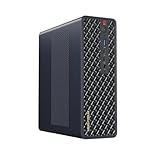
- 【Leading AI Mini Workstation】MINISFORUM AI MS-S1 Max Workstation comes with AMD Ryzen AI Max+ 395 processor, which uses AMD's latest generation Zen 5 architecture. It has 16 Cores and 32 Threads, the boost clock is up to 5.1GHz. The overall processor performance is up to 126 TOPS, and the NPU performance reaches up to 50 TOPS. AMD Ryzen AI enables improved productivity, advanced collaboration, and improved efficiency.
- 【AMD Radeon 8060S Graphics 】The MS-S1 Max Mini PC equipped with AMD Radeon 8060S Graphics which built on the new generation of RDNA 3.5 architecture AMD graphics, it brings ultra-high frame rate experiences and advanced content creation features anywhere and delivers staggering performance. It can handle all your computing and multimedia tasks efficiently.
- 【Five 8K Video Output】This MS-S1 Max Workstation comes with five video outputs, 1x HDMI (8K@60Hz), 2x USB4(40Gbps,Alt DP2.0,PD out 15W) and 2x USB4 V2(80Gbps,Alt DP2.0,PD out 15W) Outputs, which support multiple monitors display at the same time and provide a larger and wider filed of view and improve your work efficiency. It is used in fields that require high-performance computing and graphics processing, including digital signage and securities trading, as well as work that uses CAD, such as engineering design, scientific calculations, animation production, and post-production for movies and television
- 【 Fast and Stable Wire & Wireless Speed】It comes with Two 10G Lan Ports for wired connection and and Wi-Fi 7 / BT5.4 for wireless connection, which increased the network speed greatly and expand its functions and improved performance of computer to a large extent and allows you to use more networks such as software routers (OpenWRT / DD-WRT / Tomato etc.), firewalls, NAT, network isolation etc.
- 【Large Storage & Flexible Expandability】This Workstation equipped with 64GB LPDDR5-8000MHz + 2TB M.2 2280 PCIe4.0 SSD. There is another PCIe4.0 SSD slot available for up to 8TB, these SSD slots are compatible with RAID0 and RAID1, you can store movies, videos, photos, important files easily. What’s more, it also comes with 1x standard PCIex16 slot(PCIe4.0x4) inside.
He distinguishes companies that buy compute from companies that supply it. In the report, he says Nvidia and memory-chip makers are already making money, while raising the question of whether their forward earnings justify their valuations. The article supplies no valuation analysis or earnings forecast that answers that question.
That distinction matters: a possible excess of data-center capacity does not by itself show that every AI-related company is unprofitable, or that every supplier’s stock is overvalued. Hayes’s concern is about whether future demand and customers’ ability to pay will support the amount of infrastructure being built.
Rank #3

- Built for Local AI and Advanced Workflows – The BOSGAME M5 AI Mini PC is powered by AMD Ryzen AI Max+ 395 with 16 cores, 32 threads, up to 5.1GHz, 50 TOPS NPU performance and up to 126 TOPS total AI performance. It is designed for local AI inference, private AI assistants, coding, data analysis, virtualization, content creation and demanding multitasking while keeping sensitive data on the device.
- 128GB Unified Memory for Large Models and Creative Projects – M5 includes 128GB LPDDR5X-8000 unified memory, giving the CPU and Radeon 8060S graphics access to a large shared memory pool. This helps support memory-intensive AI workloads, large project files, multiple virtual machines, 3D work, video editing and complex professional applications without the capacity limits of typical 32GB or 64GB mini computers.
- Radeon 8060S Graphics for Creation, Rendering and Gaming – Integrated Radeon 8060S graphics with 40 RDNA 3.5 compute units delivers high-end visual performance without a separate graphics card. Use the M5 creator workstation for 4K video editing, 3D rendering, CAD, AI image workflows, high-resolution media and modern gaming, while maintaining a compact desktop footprint.
- 2TB PCIe 4.0 SSD and Flexible Expansion – A pre-installed 2TB NVMe PCIe 4.0 SSD provides fast access to models, datasets, media libraries and project files. A second M.2 2280 PCIe 4.0 slot allows additional storage expansion, while the SD 4.0 card reader supports efficient photo and video workflows for creators and production teams.
- Professional Connectivity and Four-Display Support – Dual USB4 ports, HDMI 2.1 and DisplayPort 1.4 support up to four displays and resolutions up to 8K@60Hz. WiFi 7, Bluetooth 5.4 and 2.5GbE deliver fast networking for cloud collaboration, NAS access and business deployment. Windows 11 Pro, performance-mode switching, Wake-on-LAN and auto power-on support flexible workstation use.
Where does Flop fit into the thesis?
Flop is described as a planned AI-agent payments project, expected to launch in the first quarter of 2027—not as an operating marketplace with established performance. Its stated aim is a spot market for computing power: participants supplying GPUs and carrying out AI inference would receive Flop tokens.
Hayes explains the premise this way: “If agents can convert a currency directly into compute, which is what they eat and consume, then they will use this currency. That’s our bet.” The available reports provide no independent project documentation, launch confirmation or operating data. The project therefore illustrates Hayes’s view that compute could become a market for digital payments; it does not demonstrate that his broader AI-cycle or crypto-price forecast is right.
Rank #4

- Speed up your tasks with AI: Unlock new levels of productivity and creativity by upgrading to Intel Core Ultra processors with built-in AI.
- Supports multiple monitors: Connect up to four FHD monitors using DisplayPort and Daisy Chaining*. Or connect two 4K displays using HDMI 2.1 port and DisplayPort.
- Effortless upgrades: The tool-less entry and removable side panel let you quickly access the internal components, making upgrades convenient and stress-free.
- Ready for business: Keep your data secure with a hardware TPM security chip. And when you need to step away from your desk, simply secure your desktop using the built-in lock slot or padlock loop.
- Style meets sustainability: Dell Tower Desktop seamlessly combines elegance with sustainability. Its sleek, modern design, crafted from recycled materials and featuring refined corners, makes it a stylish addition to any home or office.
What would make the thesis stronger or weaker?
Hayes’s scenario depends on several linked outcomes. Evidence for one part would not automatically prove the rest: excess capacity would not establish that a bailout follows, and a bailout would not establish that liquidity flows to crypto.
| Question | What would support Hayes’s concern | What would weaken it |
|---|---|---|
| Will demand absorb new compute? | Adoption and utilization fail to keep pace with capacity coming online. | AI use expands enough to keep new infrastructure meaningfully utilized. |
| Can customers pay for it? | End users cannot turn AI services into enough revenue to meet compute commitments. | Customers monetize AI sufficiently to sustain their infrastructure spending. |
| When does supply arrive? | Large amounts of capacity arrive before demand catches up; late 2027 or 2028 is Hayes’s estimate. | Demand grows before or alongside the capacity actually delivered. |
| How would policymakers respond? | A downturn leads to a bailout that adds liquidity, as Hayes expects. | Policymakers do not provide the kind of support he anticipates; Hayes also identifies austerity as a possible way his thesis could be invalidated. |
| Would crypto benefit? | Investors direct some resulting liquidity into Bitcoin and other crypto assets. | Liquidity does not reach crypto, or crypto prices respond differently than Hayes expects. |
| Are AI suppliers priced for too much growth? | Forward earnings do not support suppliers’ valuations, the question Hayes raises. | Future earnings do support those valuations; the reports do not resolve this issue. |
What should personal-finance readers take from the forecast?
Treat the argument as a chain of conditional predictions, not as a timetable or a ready-made portfolio strategy. Hayes’s view requires overbuilding, a shortfall in demand or payment, a policy response, and a favorable crypto-market reaction. The cited reports attribute these expectations to him but do not establish their probability or timing.
Quick Recap
- Separate business risk from price risk. AI infrastructure could face commercial pressure without every AI-related stock falling; conversely, a profitable company’s share price can still depend on whether its valuation is justified.
- Do not treat “around 2028” as a deadline. It is Hayes’s estimate for when capacity and payment obligations may matter, not a verified delivery schedule or a prediction readers can rely on for a specific financial decision.
- Do not infer a crypto guarantee. Even if AI investment slows or policymakers provide support, the reports do not show that Bitcoin or other crypto would necessarily rise.
- Keep the downside in view. The forecast can be wrong at multiple steps, and crypto assets can lose value. A thesis about possible future liquidity is not a substitute for assessing personal risk tolerance, time horizon and ability to absorb losses.
Product prices and availability are accurate as of the date/time indicated and are subject to change. Any price and availability information displayed on Amazon at the time of purchase will apply.




