PC Slower Than It Used to Be?
A free scan shows the junk files, broken settings and background clutter dragging Windows down - then fixes them in one click.Free scan · Windows 10 & 11Crashes, No Sound, or Screen Glitches?
Random freezes, missing sound and display glitches usually trace back to one bad driver. Find and replace yours safely.Free scan · under a minuteArsenic has been detected in tested rice products, but results vary by sample and rice type. Consumer Reports’ 2026 testing covered 52 products; its findings point to some lower-level patterns, not a guarantee about every package or lot. For people who eat rice often, the practical response is variety and informed preparation—not assuming that a brand or “organic” label eliminates arsenic.
What testing found in rice
Consumer Reports reported inorganic arsenic in the rice products included in its 2026 testing, with levels varying. It said white basmati rice from California, India, and Pakistan, as well as white sushi rice, tended to have lower levels in the products tested. These are category and origin patterns, not a complete brand ranking or a prediction for a particular current package. Consumer Reports’ testing and guidance does not establish that every product in those categories is low.
As an Amazon Associate I earn from qualifying purchases.
A separate 2025 report by Healthy Babies Bright Futures (HBBF) tested 145 rice samples and 66 samples across nine alternative-grain types. In those samples, average total heavy metals were 108 parts per billion (ppb) in rice and 33 ppb in alternative grains. HBBF reported average arsenic 28 times higher in rice, while average cadmium was 1.5 times higher in alternative grains. Those comparisons are sample-based and contaminant-specific: they do not mean every alternative grain is lower in every contaminant, or that a combined “heavy metals” average predicts the risk of an individual food. HBBF’s May 2025 report provides the study details.
Do these 3 things before closing this tab:
1Repair Windows errors before they cause bigger problems2Scan for outdated or missing drivers - takes under a minute3Clear out junk files and repair common Windows errorsWhat a test result can—and cannot—tell you
Arsenic occurs in the environment, and rice tends to absorb it more readily than many other crops. The FDA distinguishes inorganic arsenic, the form of greatest health concern in food, from organic arsenic, a chemical classification that does not mean food grown under an organic label. A test result describes the sample tested; it does not certify every package, later harvest, or lot sold under the same brand. The FDA’s overview explains the forms of arsenic and its presence in food: Arsenic in Food.
#1 Best Overall

- DO-IT-YOURSELF screening of any freshwater supply for Arsenic (tap water, well water, ponds, lakes, streams etc.). Arsenic occurs naturally in the earth's crust, is found in more than 50% of U.S. water supplies and can cause organ-cancer in humans and animals.
- PATENT PENDING DIY TECHNOLOGIES indicate Arsenic concentration ranges of 0 - 500 PPB.
- CERTIFIED “ACCURATE” by EPA-certified scientists with over 150 years of combined experience in testing drinking water. 10 PPB is the USEPA’s Maximum Contamination Level for Arsenic in drinking water. However, no amount of Arsenic is safe to consume.
- FAST RESULTS: At-home screening delivers your test results in just 30 minutes. Unlike most other DIY kits, this kit tests without messy test strips. Includes detailed instructions. One test per kit. NOTE: Testing for Arsenic at a lab can cost hundreds of dollars, making this kit a cost-effective at-home option to screen for Arsenic.
- OPTIONAL TESTING AT OUR EPA-CERTIFIED LAB: Inside this same package is a second kit that provides everything needed to collect a water sample and send it to our EPA-certified lab for professional analysis. You have multiple testing packages to choose from, for up to 48 different parameters (see attached list). *Note: Fees are required for optional testing at our EPA-certified lab.
Reports sometimes compare results with 100 ppb. That figure is the FDA’s action level for inorganic arsenic in infant rice cereal; it is not a general legal limit for ordinary rice. HBBF reported that 28% of its tested rice samples exceeded 100 ppb, but that finding should not be recast as a finding that those samples violated a general rice limit. The FDA’s arsenic guidance describes the regulatory context.
How to choose rice if you eat it often
Use variety rather than treating one product or label as a complete solution. Consumer Reports’ results make white basmati from California, India, or Pakistan and white sushi rice reasonable types to consider when seeking rice that tended to have lower inorganic arsenic in that testing. The result is not a guarantee for any named brand or current lot, and brown, parboiled, or other rice should not be assumed to match those results without comparable testing.
Rank #2

- Sushi Rice test paper measures the pH of sushi rice between 3.0 and 5.0
- Test Paper Roll provides 15 feet of test tape
- Rotate rice with other grains and vary the kinds of rice you serve.
- Compare findings only when they identify the rice type and origin, the arsenic measure (total or inorganic), and the scope of sampling.
- Do not use “organic” as a proxy for low inorganic arsenic; the word refers to a food-production label, not the chemical meaning of organic arsenic.
Cooking rice with excess water: arsenic reduction and nutrient trade-off
The FDA says cooking rice like pasta in six to ten parts water to one part rice, then draining the excess, can reduce inorganic arsenic by 40–60%, depending on the rice type. The same method can reduce added folate, iron, niacin, and thiamine by 50–70% in enriched polished and parboiled rice. The reduction is therefore not a cost-free step, particularly where enriched rice contributes nutrients to the diet. The FDA’s preparation guidance explains the method and trade-off.
Rinsing rice has minimal effect on arsenic, according to the FDA, and can wash off added nutrients. If you use the excess-water method, follow the rice package’s food-safety preparation instructions as applicable and account for the potential loss of enrichment; do not treat rinsing alone as an arsenic-reduction method.
Rank #3

- Accurate Arsenic Water Test Kit - Designed to detect arsenic levels in water with a testing range of 0–0.5 ppm (0–500 ppb). The reading scale includes 0.01, 0.025, 0.1, 0.25, and 0.5 ppm. To convert ppm to ppb, simply multiply by 1,000. The color on the chart changes from light to dark, allowing for clear and easy interpretation of results.
- Easy-to-Follow Testing Process - Please read the instructions carefully before use. To begin, pour 100ml of your water sample into the provided reaction bottle. Add the reagents as directed and mix well. Bend the test strip and secure it in the cap so that the reactive pad is exposed to the gas inside the bottle—do not submerge the strip in the liquid. After 30 minutes, compare the test strip to the color chart on the bottle to determine the arsenic level.
- Versatile Applications - This arsenic test kit is suitable for a variety of water sources. Whether you're testing home tap water, private well water, or water in outdoor, agricultural, or industrial settings, it offers reliable and convenient performance wherever you need it.
- What's Included - Arsenic test kit provides materials for five complete tests. It includes a reusable reaction bottle, one bottle of multi-use Reagent I, five single-use tubes of Reagent II and Reagent III, a vial with five arsenic test strips, and five pairs of disposable gloves.
- Safety Note - Always perform the test in a well-ventilated area. Do not touch the reactive pad on the test strips. Use the included gloves during testing, and be sure to read the full instructions before getting started.
Rice cereal and grain choices for infants and toddlers
The FDA advises offering infants and toddlers a variety of grains. Iron-fortified oat, barley, and multigrain cereals are alternatives; rice cereal does not need to be the only or first cereal. The infant-cereal action level of 100 ppb applies specifically to inorganic arsenic in infant rice cereal, not ordinary rice eaten by the household. See the FDA’s advice on limiting arsenic exposure for feeding guidance.
Quick Recap
Best Value
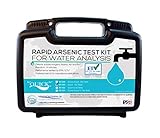
- DETECTION LEVELS: Arsenic 0, 5, 10, 20, 30, 40, 50, 60, 80, 100, 150, 200, 250, 300, 400, 500, >500 ppb
- EASY TO USE: Clearly labeled materials, and safe to use reagents make the product ideal for technical and non technical users alike for detection of Arsenic in water. Gives results in 12-14 minutes
- COMPLETE KIT: Plastic Black Case contains 3 Reagents, Easy Read Color Chart, 3 Plastic Spoons, 100 Arsenic Test Strips, 2 Reaction Bottles, 2 Yellow Caps, 2 White Caps With Turrets
- ACCURATE AND RELIABLE: EPA/ETV Test Verified Performance. Components are tested by Quality Control personnel at each step and are rejected if they are outside of specifications. Standards are prepared using calibrated equipment, and concentrations are confirmed by recognized reference methods
- HIGHEST QUALITY: ITS, manufactures water quality testing products in their USA facility in an environment that allows for reproducibility, accuracy, and traceability based on Good Manufacturing Practices
Rank #4

- ✔DETECTION LEVELS: Arsenic 0, 5, 10, 20, 40, 50, 60, 70, 80, 90, 100, 120, 170, >250, >400, >500 ppb
- ✔EASY TO USE: Clearly labeled materials, and safe to use reagents make the product ideal for technical and non technical users alike for detection of Arsenic in water. Gives results in 12-14 minutes. Great for use in field
- ✔COMPLETE KIT: Contains 3 Reagents, Easy Read Color Chart, 5 Arsenic Test Strips, Reaction Bottle, Yellow Cap, and a White Cap with Turret
- ✔ACCURATE AND RELIABLE: Components are tested by Quality Control personnel at each step and are rejected if they are outside of specifications. Standards are prepared using calibrated equipment, and concentrations are confirmed by recognized reference methods
- ✔HIGHEST QUALITY: ITS, manufactures water quality testing products in their USA facility in an environment that allows for reproducibility, accuracy, and traceability based on Good Manufacturing Practices
What the evidence does not establish
- It does not support a definitive current ranking of popular brands based on the available Consumer Reports findings.
- It does not establish that all rice from a particular origin, all organic rice, or every product in a lower-testing category will have low arsenic.
- HBBF’s sample averages do not show that every alternative grain is safer across arsenic, cadmium, lead, and other contaminants.
Product prices and availability are accurate as of the date/time indicated and are subject to change. Any price and availability information displayed on Amazon at the time of purchase will apply.




