Quick wins for a faster PC:
Scan for outdated or missing drivers - takes under a minuteDriver Scan →Clear out junk files and repair common Windows errorsFree Scan →The U.S. Geological Survey estimates that southern Arkansas’s Smackover Formation contains 5.1 million to 19.0 million metric tons of lithium dissolved in brines. That is lithium estimated to be present—not proven reserves or battery material ready for sale. USGS says its estimate does not establish whether the lithium can be extracted economically or with existing technology. The headline comparison with global electric-vehicle demand therefore depends on a condition: commercial recovery.
How much lithium is in Arkansas?
In 2024, the U.S. Geological Survey estimated 5.1–19.0 million metric tons of lithium present in brines in the southern Arkansas portion of the Smackover Formation. The agency’s estimate is an in-place resource estimate, not a count of proven reserves, a production forecast, or a measure of saleable lithium product. USGS explicitly says it “does not consider the technological and economic feasibility of extracting the lithium from the brines.” USGS’s estimate and its limitations should be read together.
The scale claim that attracts attention comes from a separate comparison in the USGS news release: the low-end estimate would equal more than nine times the International Energy Agency’s projected global lithium demand for EVs in 2030 if it were commercially recoverable. That is a comparison of estimated lithium in place with projected demand. It does not mean Arkansas can currently supply nine years of EV production, or that the entire estimate could become usable battery material.
What the estimate measures—and what it does not
The Smackover is a broad petroleum and brine system. Oil, gas, and brine operations already bring lithium-bearing brine to the surface, often as a waste stream. USGS estimated that approximately 5,000 metric tons of dissolved lithium were brought up in southern Arkansas in those streams in 2022. That figure describes lithium carried in produced brine; it is not the amount captured, refined, or sold as battery-grade material.
What’s actually slowing this PC down?
Pick the symptom - the matching free tool is one click away.
#1 Best Overall

- UN Approved Container for Dry Cell Batteries -- Easily recycle various dry cell batteries such as Alkaline, Nickel Cadmium (NiCad), Zinc-Carbon (Zn), Rechargeable Lithium-ion, Nickel-Metal Hydride, mercury, Silver-Oxide, AA, AAA, C, D and 9 Volts.
- Easy and Convenient Recycling Process -- Our kit offers an easy process. You will receive a container in a box, and a free return label. Just drop your batteries, attach the label, and send for recycling—no stress or extra fees.
- Prevention of Landfill Disposal -- Recycling makes sure that batteries don't end up in landfills. This prevents dangerous materials from getting into the environment and helps keep our ecosystems safe.
- Recycling You Can Trust -- We are certified recycling experts who share our dedication to the environment. Your batteries will be handled responsibly, reducing the negative impact of improper disposal.
- Be a Part of Something Bigger -- Recycling batteries isn't just responsibility – it's a step towards a circular economy. By doing your part, you're helping to conserve valuable resources and lessen the demand for new materials.
USGS built its estimate from historical brine chemistry records collected between 1965 and 2018, samples collected in 2022, and predictive mapping informed by reservoir and geological data. Across the Gulf Coast Smackover data, reported lithium concentrations range from about 1 to 477 milligrams per liter. That broad range is not a grade guarantee for every Arkansas well or proposed site. The USGS assessment explains its data and method.
How direct lithium extraction is intended to work
The Arkansas projects described in the cited federal and company material are pursuing direct lithium extraction (DLE) from brine. In the proposed SWA Lithium design, brine would be pumped to the surface, lithium separated from it, and the lithium converted into lithium carbonate. The remaining brine would then be reinjected underground to help maintain reservoir pressure. This proposed route is described in the U.S. Department of Energy’s May 2026 final environmental assessment.
Rank #2
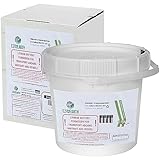
- Container for Wide range of Lithium Batteries -- Easily recycle various lithium batteries from diverse devices, promoting hassle-free disposal and reducing electronic waste. Hold up to 41.8 lbs of Lithium batteries.
- Easy and Convenient Recycling Process -- Our kit offers an easy process. You will receive a container in a box, and a free return label. Just drop your batteries, attach the label, and send for recycling—no stress or extra fees.
- Prevention of Landfill Disposal -- Recycling makes sure that lithium batteries don't end up in landfills. This prevents dangerous materials from getting into the environment and helps keep our ecosystems safe.
- Recycling You Can Trust -- We are certified recycling experts who share our dedication to the environment. Your batteries will be handled responsibly, reducing the negative impact of improper disposal.
- Be a Part of Something Bigger -- Recycling your lithium batteries isn't just responsibility – it's a step towards a circular economy. By doing your part, you're helping to conserve valuable resources and lessen the demand for new materials.
The assessment gives a proposed maximum brine rate of up to 200,000 barrels per day. That is a design parameter for the project, not an observed commercial operating rate or proof that the design can sustain that throughput. The estimate of lithium in the formation also does not tell readers what share a DLE process could recover, how consistently it could operate, or what the recovered product would cost.
Is Arkansas already producing lithium for EV batteries?
The available milestones are not the same as sustained commercial supply. ExxonMobil said in 2024 that it had produced lithium carbonate in a pilot and announced a non-binding memorandum of understanding with SK On for possible offtake of up to 100,000 metric tons from its first planned Arkansas project. A pilot product demonstrates a different milestone from ongoing production at commercial scale; a non-binding MOU is not a completed binding purchase contract. These are company statements, not independent confirmation of long-term output. ExxonMobil’s announcement describes the company’s claims and the MOU’s status.
Rank #3

- Pre-Paid Return Shipping Label for Full Recycle Kit
- Properly recycle sealed lead acid batteries
- Lead Acid Battery Recycling Kit includes all shipping and packing materials needed
- Obtain Certificate of Recycling online after processing
- Leaking or broken batteries, car batteries, and dry cell batteries prohibited for this kit
DOE’s May 2026 finding of no significant impact concerns environmental review of its proposed cost-shared support for the SWA Lithium project. It is an environmental-review milestone tied to that proposed federal action; it does not establish that the plant is operating, that all permits are complete, or that commercial extraction has been proven. The DOE finding should not be confused with a production announcement. The federal permitting dashboard provides project and review context, but schedules can change and a dashboard entry is not evidence of completion or operation.
Independent reader supportYour contribution helps us test, update, and keep practical guides available for everyone.What still has to be demonstrated
The central question is practical recoverability: what portion of the estimated lithium can be extracted reliably at commercial scale, at what cost, on what schedule, and with what long-term environmental performance. The USGS estimate does not answer those questions. Nor do a pilot result, a proposed plant design, an environmental-review finding, or a non-binding offtake discussion answer them on their own.
Rank #4

- Durable Metal Construction: Made from sturdy metal material for long-lasting use.
- Large Size: Measures 11.5 inches long, 6 inches wide, and 6 inches high for ample storage.
- Multipurpose Use: Ideal for recycling and storing cell phones, batteries, and accessories.
- Easy to Use: Comes with built-in hinges for easy opening and closing.
- Compact Design: Slim profile takes up minimal space in your home or office.
- Resource is not reserve: the USGS number estimates lithium present in brine, not an economically mineable quantity.
- Brine is not product: lithium dissolved in fluid brought to the surface is not yet refined lithium carbonate for batteries.
- Proposal is not throughput: a design rate does not establish actual, sustained output.
- Interest is not a sale: the SK On MOU is non-binding, and does not establish delivered supply.
- Environmental review is not commercial proof: DOE’s finding addresses the proposed federal support action, not whether extraction will operate profitably or perform as intended over time.
For consumers, the distinction matters because a large geological estimate is not the same thing as a dependable new supply of battery materials. Arkansas may hold a consequential lithium resource, but its importance to EV production will depend on whether projects can convert that resource into consistent, commercially viable product.
Quick Recap
Best Value
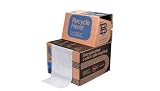
- Durable Construction: Made from sturdy cardboard with reinforced edges for long-lasting use.
- Secure Storage: Hinged lid keeps items safely inside while the large size holds multiple devices.
- Easy to Use: Simply slide devices into the box until it's full, then seal it shut for safe disposal.
- Environmentally Friendly: Recycles old batteries and cellphones in an environmentally responsible way.
- Convenient Size: Compact rectangular shape fits easily in any room or office space.
Product prices and availability are accurate as of the date/time indicated and are subject to change. Any price and availability information displayed on Amazon at the time of purchase will apply.




