Crashes, No Sound, or Screen Glitches?
Random freezes, missing sound and display glitches usually trace back to one bad driver. Find and replace yours safely.Free scan · under a minuteWindows Errors? Fix Them Before They Spread
Repair common Windows errors and clear accumulated junk for a smoother, more stable PC - no reinstall needed.Free scan · no reinstallAre banks quietly refusing reimbursements to fraud victims? In the UK, there are documented cases where a bank initially refused to refund someone and later changed its decision after an appeal or Financial Ombudsman Service review. But available evidence does not show that banks are coordinating refusals or establish how often eligible claims are refused. A complaint count is not a refusal rate.
The first question is what happened: did someone make a payment without your consent, or did a scammer deceive you into authorising a transfer? Those situations follow different rules.
What evidence is there that victims have been refused?
There are documented examples of initial refusals, including decisions later overturned. They show that a refusal can be challenged; they do not establish how common refusals are.
A bank reversed an initial decision after an appeal
In qualitative victim-journey research, the UK Home Office described a woman whose bank initially refused reimbursement because it believed she had willingly moved the money and taken out a loan. After she appealed and explained that she had been frightened into acting, a bank manager reversed the decision and refunded her. This is one interviewee’s account, not evidence of a general bank policy or a measure of refusal frequency.
What’s actually slowing this PC down?
Pick the symptom - the matching free tool is one click away.
#1 Best Overall
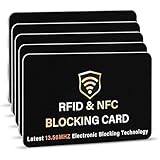
- SECURE YOUR WALLET FROM e-PICKPOCKETING: Prevent potential identity and financial theft through your contactless cards. This is the simplest and most effective prevention solution! Block RFID and NFC signals, protect your personal information, and enjoy peace of mind wherever your travels or business take you.
- JAMMING CHIP: An antenna and jamming chip makes up the main components of the card. The antenna will sense incoming radio waves and draw power for the chip to create a jamming signal. Lifetime usage as the card does not require battery.
- BROAD WORKING DISTANCE: With a 2.4” working distance, your entire wallet stays protected. The premium RFID blocking card helps secure cards within 1.2” on either side, providing reliable protection against electronic pickpocketing.
- ULTRA-THIN & COMPACT: At the size of a standard credit card and at only 0.03” thick, the card will fit into any wallet, purse or card case. Keep your wallet compact with no added bulk from this card. Best for travel, business, and everyday use.
- TEST THE CARD: Test the card is working at your local supermarket. At the self-service checkout machines, combine the card and a contactless card on the payment reader. Payment with the contactless card will be blocked and an error message should occur on the reader.
The Ombudsman found that authorisation did not settle one case
In a Financial Ombudsman Service (FOS) case study, “Anna” authorised a £14,500 transfer after a fraudster impersonated her bank and told her to move money to a safe account. Her bank initially said it was not liable because she had authorised the payment. The Ombudsman considered whether the bank should have recognised the risk and asked further questions, and concluded that it should refund her. That outcome illustrates how one complaint was assessed; it does not mean every authorised transfer qualifies for a refund.
Complaint totals and reimbursement figures do not reveal a refusal rate
The FOS received around 31,300 fraud and scam complaints in 2025, including around 20,000 about authorised payments. In April–June 2025, the first quarter of 2025/26, it received 6,800 fraud and scam complaints, around 3,400 involving APP scams. These figures count complaints received, not reimbursement claims refused, eligible claims, or all scam incidents.
Rank #2

- Advanced RFID secure sleeve designed to protect credit cards, money cards, identification cards from electronic fraud or theft; RFID shields are a superb debit card protector, RFID blocking to provide superior travel security.
- Made from special RFID blocking material, this credit cards holder is thin and lightweight. certified secure sleeves for credit cards protect against scanning of digital and electronic chips by thieves, tear- and water-resistant
- RFID sleeve with electronic armor is the identity theft protection for your bank cards. this credit card and ID holder prevents electronic access to your cards. valuable credit card protection, an ID card protector. RFID to block scanning and skimming
- Credit card protection sleeve designed with color coding system to find each card easily and quickly. RFID credit card holder have different colors for superior convenience. the special high quality rigid aluminum foil coating of these tiny slim RFID blocking wallets ensures you will never be a victim of high-tech crime
- Includes 12x RFID credit card protector sleeves for ultimate fraud prevention and travel safety
| Measure | Figure and period | What it tells you |
|---|---|---|
| FOS fraud and scam complaints | Around 31,300 in 2025; around 20,000 involved authorised payments. Source: Financial Ombudsman Service, 2025. | Complaint volume, not the number or share of eligible reimbursement claims refused. |
| FOS fraud and scam complaints | 6,800 in April–June 2025; around 3,400 involved APP scams. Source: Financial Ombudsman Service, Q1 2025/26. | Complaints received during that quarter, not a refusal rate or a count of all victims. |
| Money returned under the APP scheme | 88% of money lost to in-scope APP scams in the scheme’s first ten months, October 2024–June 2025. Source: HM Treasury, 2026 response reporting. | A scheme outcome metric; it does not show the outcome for every type of fraud or identify a bank-by-bank refusal rate. |
| Claims closed within five business days | 83% in the scheme’s first ten months, October 2024–June 2025. Source: HM Treasury, 2026 response reporting. | Processing time for claims in that reporting period, not whether every claimant was reimbursed. |
| Claims made | 126,000 in the scheme’s first ten months, October 2024–June 2025. Source: HM Treasury, 2026 response reporting. | Claim activity, not a count of refusals. |
| In-scope APP fraud losses reimbursed | 88% (£173 million) in the first year. Source: UK Home Office, 2026 Fraud Strategy. | A first-year scheme result, not proof that refusals are widespread or absent. |
Together, the case examples and published figures show that individual disputes happen and that the APP scheme has returned a substantial share of in-scope losses. They do not answer how often an eligible claimant is refused, because the figures do not provide a denominator of eligible claims and final reimbursement decisions.
Which reimbursement rules apply to your payment?
Do not treat “I was scammed” as enough to identify the route. Consent, payment method, date and claim circumstances matter.
Do these 3 things before closing this tab:
1Repair Windows errors before they cause bigger problems2Fix the driver behind crashes, sound loss and screen glitches3Clear out junk files and repair common Windows errorsRank #3

- PROTECTION: Protect yourself with the super thin blocker cards against the readout of your credit card data.
- SLIM: With 0.03 inch the blocker card is very thin compared to most of the usual blocker cards. This makes it easy to slip the credit card protector card behind a credit card in your purse.
- SET: With the 6 included blocking cards you can protect several credit cards and passport in your wallet.
- CUSTOMIZED: The Blocker cards are suitable for all common cards with the dimensions 3.37" × 2.13". Thus also suitable for wallet, purse and card case with corresponding compartment.
- APPLICATION: As long as the Blocker card is behind a bank card is exactly fitting, it is shielded and you are protected against reading. To pay, simply remove the payment card from your wallet. Now the NFC function is usable and the card can interact with the cash terminal.
| What happened | Relevant route | Key distinction |
|---|---|---|
| A payment was made without your consent | Unauthorised-payment protections | This is a separate framework from APP scam reimbursement. Contact your provider promptly and ask it to assess the transaction as unauthorised. |
| You were deceived into authorising a transfer | Potential authorised push payment (APP) scam claim | The UK reimbursement scheme described below applies to qualifying Faster Payments and CHAPS transfers, subject to its conditions. |
| You paid by card, cash or cheque, or used another payment route | Not covered by these APP scheme rules | Other protections may apply, but do not assume the APP scheme applies to these payment types. |
For qualifying APP transfers made on or after 7 October 2024
The UK Payment Systems Regulator’s APP reimbursement protections began on 7 October 2024. They cover qualifying Faster Payments and CHAPS transfers between UK accounts. Eligible claimants include individuals, microenterprises and charities. The normal maximum reimbursement is £85,000 per claim; a provider may choose to reimburse more than the scheme minimum.
- Report the scam to your payment provider promptly and within 13 months of the relevant payment.
- A provider may apply an optional excess of up to £100. The excess cannot be applied to vulnerable consumers.
- Providers usually should reimburse within five business days. They can pause that clock to gather specified information, but must reach an outcome within 35 business days.
- The claim must meet the scheme’s criteria. The fraud exception and gross-negligence exception can affect eligibility; the PSR describes gross negligence as a high bar and says that exception does not apply to vulnerable consumers.
FOS decision DRN-5857289 summarises other coverage tests, including whether the payment was connected with fraud rather than a private civil dispute and whether the claimant was a party to the fraud. The decision and the applicable scheme criteria—not simply the fact that the customer authorised the payment—matter to the assessment.
Rank #4
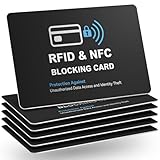
- Total RFID Protection: Engineered with state-of-the-art RFID blocking technology, this card offers superior defense against unauthorized scanning and data theft, ensuring your personal and financial information stays secure
- Ultra-Thin, Sleek Design: Designed to fit seamlessly in your wallet or pocket, our RFID blocking card features an ultra-slim profile without bulk. Enjoy maximum security in a minimalistic form factor
- Premium Quality Materials: Constructed from high-grade materials, this safe card protector is built to last. Its robust design withstands everyday wear and tear while providing consistent, reliable performance
- Versatile and Convenient: Whether you’re traveling, shopping, or commuting, this RFID blocking solution ensures your cards are safe from electronic identity theft. Its stylish design makes it the perfect accessory for any lifestyle
- Easy to Use & Maintain: No installation or batteries required. Simply insert your card into the wallet and experience immediate protection. The card is easy to clean and maintains its performance over time
For APP payments made before 7 October 2024
The current mandatory rules should not be assumed to apply retrospectively. An older APP payment may be considered under the former voluntary Contingent Reimbursement Model (CRM) Code if the provider was a signatory and the claim meets the relevant conditions.
Independent reader supportYour contribution helps us test, update, and keep practical guides available for everyone.What should you do if your provider refuses?
- Contact the provider promptly through a trusted channel. Use a number from your bank card or official statement rather than a number in a suspicious message. Report the scam and ask it to secure the account and try to trace or stop the payment where possible.
- Ask which payment route and rules it assessed. Explain whether you authorised the transfer, how it was made, when it happened, and whether you believe it was fraud or an unauthorised transaction. Ask the provider to identify the scheme or framework it applied.
- Keep the evidence. Save transaction details, messages, call records, emails, and any documents showing how the fraudster persuaded you to act. Note when you reported the incident and what the provider told you.
- Request the reasons in writing. Ask the provider to explain the facts and rules behind its decision, including whether it says the payment was authorised, outside the scheme’s scope, or affected by an exception.
- Make a formal complaint if you disagree. Set out what happened, why you think the decision is wrong, and what evidence supports your account. Follow the provider’s complaint process.
- Check whether you can refer the complaint to the FOS. The Ombudsman considers complaints individually. It may reach a different view from the provider, but a referral does not guarantee a refund.
What a refusal does—and does not—mean
An initial “no” is not always the end of the matter: the Home Office account and the FOS case show decisions changing after more information or independent review. But neither example proves that a particular refusal is wrong. Some claims may fall outside the relevant scheme, and an authorised transfer is not automatically reimbursable.
Quick wins for a faster PC:
Clear out junk files and repair common Windows errorsFree Scan →Scan for outdated or missing drivers - takes under a minuteDriver Scan →Repair Windows errors before they cause bigger problemsFix Now →Best Value
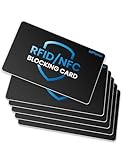
- Secure Your Information: Simply insert the RFID blocking card into your wallet to protect against digital pickpocketing. Block unauthorized scanning of your contactless cards, including credit/debit cards, passports, driver's licenses - to safeguard your identity and financial security
- Effective Protection: Our RFID blocking card utilizes advanced electromagnetic shielding technology, which features an embedded antenna mesh and chip that instantly detects and scrambles scanning attempts, providing consistent and reliable protection for the entire wallet
- Ultra Slim & Easy to Use: Credit-card-sized and just 0.03 inches (0.76 mm) thick, it slips easily into your wallet, purse or card holder adding no bulk. No charging or batteries needed. It will not demagnetize other cards, nor interfere with your phone signals
- A Thoughtful Gift: Give the practical gift of security. Effortlessly protecting your loved ones from digital theft – offering instant peace of mind, which is a truly meaningful way to show your care
- Test the Card: Test our RFID blocking card at self-checkout: Layer your contactless card with our RFID card on the reader - payment fails instantly, error message pops up
When assessing a refusal, keep these questions separate: whether you consented to the payment; whether the payment type and date are covered; whether the claim meets the applicable conditions; and whether the provider handled the payment or complaint appropriately. A provider’s explanation should make clear which issue led to its decision.
The evidence is specific to the UK. It does not establish the reimbursement rules or refusal patterns in the United States, the EU or other countries.
Quick Recap
Product prices and availability are accurate as of the date/time indicated and are subject to change. Any price and availability information displayed on Amazon at the time of purchase will apply.




