What’s actually slowing this PC down?
Pick the symptom - the matching free tool is one click away.
Financial account aggregation lets a service combine and analyze information from multiple financial accounts after you authorize access. It can support budgeting, payments, account monitoring, and other financial tools. In the United States, access may be handled directly by the service you choose or through a separate data aggregator, so it is important to check which accounts and information are involved, how access works, and how to end it.
What financial account aggregation means
Aggregation is a form of consumer-authorized financial data sharing. You give a service permission to access information from one or more accounts, and the service combines or analyzes that information for a particular purpose. For example, a budgeting app might bring bank-account and credit-card information together so you can view spending in one place. The Consumer Financial Protection Bureau (CFPB) describes data sharing as accessing, standardizing, and transporting data with the consumer’s explicit permission (CFPB consumer guide to data sharing).
The service you chose may connect to your financial institution itself, or it may use a separate company—often called an aggregator—to facilitate access. “Aggregation,” “consumer-authorized data sharing,” and “open banking” are related terms, but they are not interchangeable in every country or legal framework. This overview focuses on the U.S. context.
How account aggregation works
1. You authorize access
You choose a service and authorize it to access particular account information. Depending on the task, access may be one-time—for example, to verify identity or support an application—or ongoing, such as for budgeting, payments, or account monitoring. Review what data is requested and whether permission continues after the immediate task.
Do these 3 things before closing this tab:
1Scan for outdated or missing drivers - takes under a minute2Repair Windows errors before they cause bigger problems3Fix the driver behind crashes, sound loss and screen glitches#1 Best Overall

- 【HIGH CAPACITY】Product size is 10.2*5.1inch. 13 individual pockets, maximum 350 sheets of coupon. it is large enough to keep all of your important documents securely, help to classify and find your files effectively
- 【HIGH QUALITY MATERIAL】Made of premium environmentally friendly PP material, Acid-free, PVC-free, and archival quality for safe storage. Waterproof and moisture-proof material enough to keep your documents in good condition and not easy to break & deform
- 【RAINBOW COLORED DESIGN】Nicecho 13 Pockets File Folder is updated with nice colored inner pages for better visual sense. Small colored labels can give your files a convenient classification, so that you can quickly find the paper you need
- 【UNIQUE ELASTIC BUCKLE】We've upgraded the elastic string & button closure from the previous folder organizer,making it easier for users to open and close. It makes your work more relaxed and pleasant, perfect for all people to store all of their loose paperwork
- 【MULTIFUNCTIONAL APPLICATION】Our accordion folders can store invoices, paper, cards, receipt, coupon and other documents. Suitable for home, office, school and travel use. In addition, the stylish and simple design is the best gift for friends and family
2. A connection retrieves and transfers information
The service or its aggregator connects to the financial institution and retrieves permitted information. The CFPB taskforce report describes two broad connection approaches (CFPB taskforce report on consumer-authorized financial data sharing):
- Credential-based access, or screen scraping: A connection uses the customer’s online credentials to access and copy account information.
- Application programming interfaces (APIs): A structured connection may let the customer authenticate with the financial institution, which can issue an access token to the aggregator. An API can limit access to selected account information or services.
These are broad technical patterns, not guarantees about a particular service. A label alone does not establish how secure a connection is, and a provider may use more than one approach.
Rank #2

- All-In-One Monthly Organizer: Keep all your important documents in one place with Sooez Accordion File Organizer. 13 pockets design works great for Monthly organizing and protecting all your important paperwork, bills, taxes, receipts, invoices and more. Perfect for letter size.
- Expandable Capacity: The accordion file folder can be stretched up to 12 inches. 13 pockets allow you to store more than 2000 sheets. No matter how many documents you need to store, this folder can accommodate your needs as it can be easily expanded according to your requirements.
- Efficient Organization & Easy Lookup: To enhance your file organization, we provide blank labels along with this folder. You can personalize them to suit your requirements, such as labeling sections by month for effortless file retrieval.
- Stable & Portable: Stand on its own on the desk and not easy to tip over. Designed with portability in mind, allowing you to effortlessly move it between your desk, cabinet, and any other preferred locations.
- Maximum Protection and Durability: Well made, made from durable wipe-clean polypropylene. Waterproof & sturdy. Tear-resistant plastic provides durable structure. Acid-free, PVC-free, and archival quality for safe storage. Adjustable snap closure helps keep contents secure. Use 2 additional front pockets for business cards, project title cards or notes.
3. The service uses the data for its function
The information may be organized or analyzed to deliver the service you requested. Check whether the service describes the access as one-time or recurring, what information it collects, and whether it shares that information with other companies.
What account aggregation can be used for
The CFPB identifies a range of possible uses for consumer-authorized financial data sharing. A service may use account information to:
Rank #3
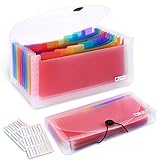
- 2 Pack 13 expanding pockets, colored tabs for easy subdivision and indexing, help to effectively classify documents
- Use high environmental quality and safety material, water and pressure resistant, not easily broken and deformed
- About 10.2 x 5.1 x 0.8 inches, available for receipts, coupons, tickets, vouchers, checks, notes, business cards and bills
- Buckle design, effectively protect the contents of documents and prevent documents from falling off
- Easy to use and easy to carry, suitable for daily archiving and storage, is a good helper for office, student and business travel
- Build a budget or provide financial advice.
- Monitor accounts, save money, or send and receive payments.
- Shop for financial products or support a lending decision.
- Verify identity or help improve a credit profile.
These examples describe possible functions, not a promise that every service offers them or that sharing data will produce a particular financial result. The value depends on the service and the information it needs.
What to check before granting access
Permission is not a substitute for understanding what you are authorizing. Before connecting an account, consider the following:
Rank #4
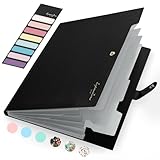
- Eye-Catching Colors: Designed to stand out, this folder combines fresh, vibrant hues with sleek patterns, making organization not just functional but stylish. Perfect for adding a touch of charm and energy to your workspace
- Upgraded Spine for Larger Capacity: Our accordion file organizer with expandable spine design is more stretchy to fit over 250 sheets without bulking up too much. Unlike regular spines that can easily get dented, our spine is made for quality and not easy to deform in transit
- Easy Organization: This expanding file folder makes sorting and organizing your papers a breeze. Featuring 5 pockets with tabs and colorful labels for quick sorting and retrieval
- Made to Last: Reinforced plastic document folders resists tearing and creasing, with a secure snap closure to keep papers in place
- Portable & Lightweight: 13 x 9.5 inches. Fit A4/letter size documents. Compact and lightweight for easy carrying. Easily take your paperwork to a meeting or school
- Accounts and data fields: Which accounts does the service want to access, and what specific information will it retrieve?
- Purpose and duration: Is access for a single transaction or ongoing use? Does the stated purpose match what you want the service to do?
- Connection method: Does the provider explain whether it uses screen scraping, an API, or another method? Do not treat the method’s name as proof of security.
- Use and sharing: What does the service say about how it uses your information and whether it shares it?
- Retention and deletion: How long does the service retain collected data, and how can you request deletion?
- Accuracy and support: How current does the displayed information appear, and how can you get help or dispute a problem?
- Provider legitimacy: The CFPB advises checking whether a service appears legitimate, looking for credible reviews and contact information, and understanding how it uses account data (CFPB consumer guide to data sharing).
How to stop sharing data
If you stop using a service, cancel its authorization and, when applicable, contact the service to ask it to delete collected data. The steps for revoking access can differ by service and financial institution, so check both the service’s instructions and your institution’s account settings. Ending authorization addresses future access; ask the provider separately about information it already collected and its deletion practices.
Independent reader supportYour contribution helps us test, update, and keep practical guides available for everyone.U.S. rules and the CFPB’s role
Aggregator disclosures under 12 CFR 1033.431
The current text of 12 CFR 1033.431 says an aggregator may perform authorization procedures for a third party, but the third party remains responsible for complying with those procedures. The authorization disclosure must identify the aggregator and briefly describe the services it will provide. This provision addresses that intermediary role; it is not a complete summary of the rule.
The Tool Desk
Outbyte PC Repair FREEClear out junk files and repair common Windows errorsFree Scan →Outbyte Driver Updater FREEFix the driver behind crashes, sound loss and screen glitchesFind Drivers →Best Value

- Check-Size Design: This check-size expanding file is specially designed for coupons organizer. The size of 10" x 5.5" x 1" fits for coupons, receipts or cash size
- Thirteen Pockets: Accordion folder is featuring thirteen pockets with a 6" expansion, that could stands up and expands fully on a desk or counter, contents are easy to access
- Five Colors: Offer five colors for choose, the durable shell and multiple colored pockets make coupons and receipts organized well
- Polypropylene Material: Made of polypropylene material, lightweight and strong, elastic and button closure keeps contents secure, even on the move, perfect for slipping into your purse
- Labels for Organization: Offer adhesive A-Z, Monthly and Blank tab labels to help you locate each pocket for adaptable filing to suit your needs
The Personal Financial Data Rights Rule
In an October 2024 announcement, the CFPB described its Personal Financial Data Rights Rule as covering data associated with bank accounts, credit cards, mobile wallets, payment apps, and other products. The Bureau said the rule aimed to set privacy limits and move the market away from screen scraping (CFPB announcement on finalizing the Personal Financial Data Rights Rule). That announcement records the Bureau’s position when it finalized the rule; it does not establish its current implementation or litigation status. Check current official sources for the rule’s legal status and applicable dates.
The CFPB’s consumer-protection principles
In 2017, the CFPB set out principles covering access, scope and usability, informed consent and control, security, transparency, accuracy, accountability, and dispute resolution (CFPB principles for consumer-authorized financial data sharing). These are the Bureau’s stated principles, not a finding that every service meets them. The CFPB said the principles were not intended to alter, interpret, or provide guidance on existing statutes or regulations. In the Bureau’s October 18, 2017 newsroom release, Director Richard Cordray described them as “our vision for realizing an innovative market that gives consumers protection and value.”
Quick Recap
Product prices and availability are accurate as of the date/time indicated and are subject to change. Any price and availability information displayed on Amazon at the time of purchase will apply.




