What’s actually slowing this PC down?
Pick the symptom - the matching free tool is one click away.
Amazon’s Project Kuiper—renamed Amazon Leo in November 2025—was conceived as more than satellite broadband for homes. Its AWS connection was intended to support the network’s operations and give remote businesses a private route to cloud workloads; its 2023 Japan partnership was designed to bring the service to enterprise and government customers through established telecom and satellite companies.
What the 2023 announcements said
Amazon announced a strategic collaboration with NTT, NTT DOCOMO, NTT Communications, and SKY Perfect JSAT on November 27, 2023. The companies described plans for Japanese enterprise and government connectivity, with NTT Group companies also intending to use the service. On November 28, AWS highlighted Kuiper’s planned private connectivity for customers. These were announcements of intended capabilities, not proof that the service was commercially available in Japan. Amazon’s Japan announcement and GeekWire’s November 28 coverage document the timing.
Kuiper was Amazon’s planned low-Earth-orbit (LEO) satellite broadband network, initially intended to extend service to unserved and underserved communities. Amazon also described residential, enterprise, telecommunications, and government customers as potential users. A satellite connection can serve as a last-mile link to a remote location, a backup path during an outage, or connectivity for telecom equipment; it is distinct from the private routing and cloud services that may sit behind that link. Amazon’s AWS account of manufacturing operations describes the broader network and its industrial context: AWS IoT SiteWise and Project Kuiper manufacturing.
How AWS fit into Kuiper
Operating the service
Amazon said AWS would support Kuiper’s backend operational and business systems, including customer registration, billing, provisioning, customer service, and software-defined network management. Those functions could help Amazon manage a service across regions and scale its customer operations. This describes AWS as part of the operating model; it does not mean AWS itself was the satellite network. Amazon’s explanation of Kuiper and AWS sets out these planned roles.
Free tools Windows power users keep installed
One-click scans. No signup required.
#1 Best Overall
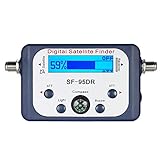
- High Quality Component: and professional design; Designed with a compass for easier and quicker tuning. Powered by the receiver, nice tool for campers.
- Less Signal Loss:Built-in amplifier compensates insertion loss.We offer one year warranty and 24 hours customers survice~
- Useful Tool|:Connect to your LNB and receiver to the satellite finder to track the clearest setting for the satellite you wish to tune to.
- Easy To Use:With electronic buzzer, easy operation, audio tone and LCD display with backlight to show the satellite signal intensity.
- No External Power or batteries required: power supplied from your satellite receiver.
Connecting remote sites to AWS
The proposed customer-facing offer was private connectivity from remote locations into AWS, so a business or public agency could send data to cloud workloads without routing that traffic over the public internet. Potential users include remote industrial facilities, government sites, telecom infrastructure, and IoT deployments. Amazon also said it intended to support private connections to customer data centers and other public clouds in the future; those extensions should be treated as stated plans, not assumed features of the 2023 offering.
In simplified terms, a site terminal would connect through the satellite network and its ground infrastructure, then reach the customer’s cloud environment over a private path. “Private” describes the intended network path; it does not mean every customer receives a dedicated physical circuit or that all shared infrastructure disappears. Nor does private transport replace encryption, identity and access controls, endpoint security, network segmentation, logging, or application hardening. Satellite links also have different latency, capacity, obstruction, and availability characteristics from fiber.
Rank #2

- AUTOMATIC SATELLITE ACQUISITION: Self-pointing portable antenna locates DISH satellites in minutes without manual pointing. Designed for RV and mobile use, the antenna locks onto signal quickly and maintains stable HD reception.
- WATCH TWO CHANNELS SIMULTANEOUSLY: Independent viewing capability allows two compatible DISH receivers to operate simultaneously. This makes it easy to watch different channels on separate TVs.
- RUGGED OUTDOOR CONSTRUCTION: Engineered for field-ready durability with a weather-resistant housing to withstand road travel and extended outdoor exposure. Compact dome design measures approximately 14.3” in diameter and 13.5” in height.
- BROAD DISH COMPATIBILITY: Works with DISH Wally and select ViP receivers for seamless integration into existing satellite setups. Compatible with pay-as-you-go programming, which is great for RVs, tailgating, and camping.
- TRUSTED U.S.-BASED DESIGN: Built on decades of Winegard technology expertise, delivering dependable performance, and U.S.-based servers for privacy and security, eliminating foreign monitoring concerns.
Do not conflate this planned satellite-enabled service with AWS PrivateLink. PrivateLink is a separate AWS service for private access to supported AWS services, partner services, and resources; the available description does not establish that Kuiper’s service used PrivateLink. AWS Interconnect is another part of AWS’s connectivity portfolio, but there is no basis here to identify it as Kuiper’s implementation. See AWS PrivateLink and AWS Interconnect for their respective descriptions.
Using AWS in satellite manufacturing
The AWS relationship also had an internal operational dimension. AWS documented Project Kuiper’s use of AWS IoT SiteWise, SiteWise Edge, Amazon Athena, and Amazon QuickSight to collect and analyze satellite-manufacturing equipment data, including from CNC machinery. The stated applications included monitoring equipment, tracking cycle times and defects, analyzing overall equipment effectiveness, finding bottlenecks, and managing data across storage tiers. This is evidence of AWS services supporting Kuiper’s manufacturing operation—not a performance guarantee for the satellite network. The account is in AWS’s manufacturing case study.
Crashes, No Sound, or Screen Glitches?
Random freezes, missing sound and display glitches usually trace back to one bad driver. Find and replace yours safely.Free scan · under a minutePC Slower Than It Used to Be?
A free scan shows the junk files, broken settings and background clutter dragging Windows down - then fixes them in one click.Free scan · Windows 10 & 11Rank #3
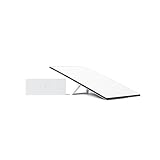
- Starlink provides reliable high-speed, low-latency, internet wherever you live
- Service plan required, activate STARLINK by selecting a service plan that is customized to meet your personal needs
- Select from plans suited for households or travel
- Get online in minutes, set up STARLINK with just 2-steps, plug it in and point at the sky
- STARLINK comes with everything needed to get online including a kickstand, gen 3-router, cables and power supply
Why Japan was a logical early partner market
Japan has extensive terrestrial networks, so the satellite proposition was not simply to replace fiber or mobile broadband nationwide. Mountains, islands, remote facilities, and exposure to earthquakes, typhoons, and other disasters make backup paths and hard-to-reach sites meaningful use cases. Satellite connectivity can help maintain communications or restore a link when terrestrial infrastructure is damaged, but a resilient design still needs to account for power, gateways, equipment access, and provider diversity.
The announced roles drew on different capabilities rather than treating the partners as one company:
Rank #4

- Bundle Includes: STARLINK - Mini Kit AC Dual Band Wi-Fi System - White
- FAST SATELLITE INTERNET ANYWHERE: Access high-speed, low-latency internet even in and rural areas using the global Starlink satellite network. Designed by SpaceX, the Starlink Mini Kit provides dependable connectivity without wired infrastructure, making it ideal for travel, camping, work, off-grid cabins, RV setups, and locations with no traditional broadband options.
- COMPACT AND PORTABLE DESIGN: The Starlink Mini is small enough to carry in a backpack yet powerful enough for daily use. Its portable, all-in-one design includes an integrated Wi-Fi router, DC power input, and rugged housing suitable for on-the-go applications. Whether at a campsite, construction site, or temporary location, Starlink Mini offers quick deployment and reliable performance.
- EASY TWO-STEP SETUP: Get online in minutes—simply plug in the Mini, point it at the sky, and connect. The kit includes everything needed for installation, including a kickstand, pipe adapter, power cable, and power supply. Use the Starlink app to find a clear sky view, check obstructions, explore mounting options, and manage your Starlink account and hardware settings.
- BUILT-IN ROUTER WITH WI-FI 5: The Starlink Mini includes an integrated dual-band Wi-Fi 5 router for strong wireless coverage and stable speeds. A built-in ethernet port provides wired connectivity for routers, mesh systems, gaming devices, or network hardware. Average power consumption of 25–40 watts supports efficient operation in off-grid or mobile power setups.
- NTT: A telecommunications and technology group positioned as a strategic partner and channel to enterprise customers.
- NTT DOCOMO: A mobile operator that planned to use Kuiper connectivity for rural or hard-to-reach sites and links back to its network.
- NTT Communications: An NTT Group communications and enterprise-networking company included in the collaboration.
- SKY Perfect JSAT: A satellite operator and communications provider that, with NTT, planned to distribute Kuiper service to Japanese enterprise and government customers.
The companies also identified uses such as IoT, predictive maintenance, fleet management, remote manufacturing, and disaster resilience. For a manufacturer, for example, satellite backhaul could connect remote equipment to cloud analytics; for a mobile operator, it could provide transport from a remote site toward the core network. Whether a particular deployment works depends on capacity, radio and core-network design, installation conditions, and service terms—not merely on satellite coverage. The partner roles and use cases come from Amazon’s November 2023 release.
Independent reader supportYour contribution helps us test, update, and keep practical guides available for everyone.Timeline and what changed
- November 27, 2023: Amazon and the NTT/SKY Perfect JSAT group announced their Japan collaboration.
- November 28, 2023: AWS’s planned Kuiper private-connectivity role received attention at AWS re:Invent and in news coverage.
- Second half of 2024: Amazon said beta testing with selected customers and partners was expected to begin. That dated expectation is not evidence of current availability.
- November 13, 2025: Amazon renamed Project Kuiper Amazon Leo. Amazon said more than 150 satellites were in orbit at the time and named customers and partners that had signed up to deploy the service. It said broader rollout would follow additional coverage and capacity. These are Amazon’s statements in its rebrand announcement.
- March 2, 2026: AWS announced that NTT DOCOMO had launched a commercial 5G Core network in a hybrid AWS and on-premises environment. This shows a broader AWS–NTT telecom relationship; it does not establish that Leo’s Japanese satellite service had launched commercially. See AWS’s DOCOMO announcement.
For current service availability, a reader should distinguish a partner announcement, a beta, a limited customer deployment, and a generally available commercial service. The 2023 material establishes the intended partnership and capabilities, not nationwide Japanese availability, published service-level terms, or a standard retail plan. Amazon directs interested parties to Amazon Leo for information and updates.
Recommended Free Tools
Best Value

- Precisely align your dish so the strongest signal is sent to your receiver with this pocket-sized Finder
- This Finder makes tuning into C-band, Ku-band, and Digital a breeze for the best picture
- Includes high sensitive tone function – tone changes as the signal strength increases
- Equipped with meter to display dbu and powered directly via satellite receiver
What the strategy could mean for businesses
For a company already using AWS, combining a remote-site connection with cloud workloads could simplify some network architecture and operations. The larger strategic implication is vertical integration: Amazon could bring together satellite capacity, terminals, network software, cloud infrastructure, customer operations, and partner distribution. Japan’s partners offered local telecom and satellite experience that Amazon could not replicate merely by launching spacecraft.
That integration has trade-offs. An AWS-centered design may deepen dependence on one cloud provider and be less attractive to organizations standardized on another cloud or private data centers. A satellite backup can still be useful in a cloud-neutral WAN, but customers should define routing, encryption, identity, failover, and data-residency requirements independently. Industrial sites may also need local or edge processing if connectivity is intermittent or constrained.
Before choosing a satellite link, a business should check whether it can install and power the terminal with a suitable sky view; what capacity, latency, support, and availability are offered in its location; how the connection integrates with existing carriers and cloud regions; and whether regulatory, spectrum, procurement, and data-sovereignty rules permit the design. A Japan disaster-recovery plan should avoid relying on a single satellite provider, terrestrial gateway, power source, or cloud region.
How it fits against other connectivity choices
Amazon Leo is one possible part of a network design, not a universal substitute for terrestrial broadband. The right comparison depends on the site, required performance, and whether the goal is primary access, backup, mobile backhaul, or cloud routing.
Quick Recap
| Option | Best fit | Key consideration |
|---|---|---|
| Fiber or fixed wireless | Sites with good terrestrial coverage and predictable demand | Usually the more direct choice for capacity and latency where available; it may be vulnerable to local infrastructure damage. |
| Amazon Leo | Remote-site access, backup, or satellite-enabled enterprise connectivity where service is available | Verify location-specific availability, capacity, terminal requirements, commercial terms, and the status of private-connectivity features. |
| Starlink or another satellite provider | Organizations evaluating satellite coverage, support, or service terms | Compare actual local availability, enterprise support, terminals, network integration, and contract terms rather than relying on general market visibility. |
| Carrier-managed SD-WAN or multicloud networking | Organizations seeking provider diversity and centralized traffic policy | Can combine terrestrial and satellite links, but still requires suitable access circuits and careful failover design. |
| Private 5G or local wireless | Industrial sites needing on-premises wireless coverage | Solves local connectivity; it does not by itself provide the site’s backhaul to the internet or cloud. |
Product prices and availability are accurate as of the date/time indicated and are subject to change. Any price and availability information displayed on Amazon at the time of purchase will apply.




