Windows Errors? Fix Them Before They Spread
Repair common Windows errors and clear accumulated junk for a smoother, more stable PC - no reinstall needed.Free scan · no reinstallCrashes, No Sound, or Screen Glitches?
Random freezes, missing sound and display glitches usually trace back to one bad driver. Find and replace yours safely.Free scan · under a minuteAmazon’s first 20 years are best measured from its 1994 incorporation through 2014—not from its 1995 store opening or 1997 IPO. In that period, it grew from an online bookseller into a connected system of retail, third-party sellers, fulfillment, Prime, devices, digital content and cloud computing. The garage origin is memorable, but the deeper story is how Amazon reused technology and infrastructure across businesses, investing heavily in scale while accepting real financial and operational risks.
Why count Amazon’s first two decades from 1994?
Jeff Bezos founded Amazon in 1994, when the company was incorporated in Washington. Its online store opened in July 1995, and the company reincorporated in Delaware in 1996. Amazon’s IPO followed on May 15, 1997, at $18 per share before later stock splits. Those are three different milestones; this article uses 1994–2014 as the frame for Amazon at 20. Amazon’s investor FAQ records the incorporation, store opening and IPO chronology.
Amazon is often described as a garage startup. The shorthand captures its modest beginnings in the Bellevue area, but it can obscure what mattered more: internet adoption, a product category suited to online sales, access to public capital, and a willingness to build systems that could support far more than books.
Why start with books?
Books offered an unusually large catalog for a new online store. A physical shop could display only a fraction of the titles available, while a searchable online catalog could make far more of them discoverable. Books were also standardized products: customers could identify a title and edition without needing to inspect a unique item in person.
Do these 3 things before closing this tab:
1Clear out junk files and repair common Windows errors2Scan for outdated or missing drivers - takes under a minute3Repair Windows errors before they cause bigger problems#1 Best Overall

- Your favorite music and content – Play music, audiobooks, and podcasts from Amazon Music, Apple Music, Spotify and others or via Bluetooth throughout your home.
- Alexa is happy to help – Ask Alexa for weather updates and to set hands-free timers, get answers to your questions and even hear jokes. Need a few extra minutes in the morning? Just tap your Echo Dot to snooze your alarm.
- Keep your home comfortable – Control compatible smart home devices with your voice and routines triggered by built-in motion or indoor temperature sensors. Create routines to automatically turn on lights when you walk into a room, or start a fan if the inside temperature goes above your comfort zone.
- Do more with device pairing – Fill your home with music using compatible Echo devices in different rooms, or create a home theatre system with Fire TV.
- Say goodbye to drop-offs and buffering - With eero Built-in, Echo Dot doubles as a mesh wifi extender, adding up to 1,000 sq. ft. of wifi coverage to your existing eero network.
That made books a practical proving ground for the core tasks of online commerce: organizing product information, helping customers find items, processing payments, managing orders and shipping purchases. Amazon’s early business was therefore not just about selling literature; it was a way to develop retail technology and operating practices that could later serve other categories.
Going public while betting on growth
Amazon’s 1997 IPO raised its profile and gave it access to public-market financing while the internet economy was expanding. Its first annual letter reported more than 1.5 million customers and $147.8 million in revenue by the end of 1997. Those figures show early traction, but not that the business model was already proven. The SEC-hosted reproduction of Bezos’s 1997 shareholder letter presents the figures alongside management’s long-term orientation.
Amazon invested in technology, selection, customer acquisition and fulfillment rather than treating near-term profit as the only measure of progress. That was a deliberate but risky choice, not proof that every expansion would work. The company had to manage inventory, shipping expense, international growth, competition and the complexity of scaling operations. Its filings explicitly identified growth management, fulfillment, inventory, competition and investment in new opportunities as risks. Amazon’s 2014 Form 10-K details those exposures.
From bookseller to retail platform
Amazon expanded into categories including music, video, electronics, toys, household goods and apparel. A broader catalog gave shoppers more reasons to return, but also made the operation more demanding: each product category brought different inventory, shipping, returns and customer-service needs. Search, reviews and recommendations helped customers navigate the growing selection, while the fulfillment network had to handle an increasingly varied flow of goods.
What’s actually slowing this PC down?
Pick the symptom - the matching free tool is one click away.
Rank #2

- Your favorite music and content – Play music, audiobooks, and podcasts from Amazon Music, Apple Music, Spotify and others or via Bluetooth throughout your home.
- Alexa is happy to help – Ask Alexa for weather updates and to set hands-free timers, get answers to your questions and even hear jokes. Need a few extra minutes in the morning? Just tap your Echo Dot to snooze your alarm.
- Keep your home comfortable – Control compatible smart home devices with your voice and routines triggered by built-in motion or indoor temperature sensors. Create routines to automatically turn on lights when you walk into a room, or start a fan if the inside temperature goes above your comfort zone.
- Do more with device pairing – Fill your home with music using compatible Echo devices in different rooms, or create a home theatre system with Fire TV.
- Say goodbye to drop-offs and buffering - With eero Built-in, Echo Dot doubles as a mesh wifi extender, adding up to 1,000 sq. ft. of wifi coverage to your existing eero network.
Three roles in one shopping system
- First-party retail: Amazon buys or owns the inventory and sells it directly to customers.
- Third-party marketplace: Outside merchants list and sell products through Amazon’s platform.
- Fulfillment services: Merchants can pay Amazon to store, pick, pack and ship goods through Fulfillment by Amazon.
The distinction matters. A wider assortment does not require Amazon to buy every item itself. Marketplace sellers could add selection and reach Amazon customers, while Amazon could earn fees and make the platform more useful. More sellers could attract more shoppers; more shoppers could make the marketplace more attractive to sellers. The resulting network effect strengthened the platform, but also created tensions around seller dependence, product quality, counterfeit goods and Amazon’s dual position as marketplace operator and competing retailer. Amazon’s 2014 shareholder materials identify Marketplace and Fulfillment by Amazon as central strategic ideas.
Prime turned shipping into a membership relationship
Prime began as a shipping-focused membership. Its strategic value was not limited to the delivery benefit: membership gave customers a reason to shop more often and to consider Amazon first when they needed something. Over time, Prime added digital benefits. In the 2014 period, Amazon described Prime as including free shipping on millions of items, streaming access to movies and television programs, and Kindle-related reading benefits. The 2014 Form 10-K describes the benefits then offered.
The model could reinforce itself: membership encouraged repeat purchases; more orders helped support investment in fulfillment and delivery; convenience and selection made membership more valuable. That loop also raised the cost of the promise. Fast shipping, streaming content and dependable service required continuing investment in warehouses, transportation, technology and customer support.
The warehouse behind the website
Amazon’s digital storefront depended on physical operations. Fulfillment centers and inventory systems had to determine where products should be stored, coordinate orders, and guide picking, packing and dispatch. Software and forecasting could make those processes more efficient, but speed and convenience still required buildings, employees, transportation and inventory close enough to customers.
Free tools Windows power users keep installed
One-click scans. No signup required.
Rank #3

- Your favorite music and content – Play music, audiobooks, and podcasts from Amazon Music, Apple Music, Spotify and others or via Bluetooth throughout your home.
- Alexa is happy to help – Ask Alexa for weather updates and to set hands-free timers, get answers to your questions and even hear jokes. Need a few extra minutes in the morning? Just tap your Echo Dot to snooze your alarm.
- Keep your home comfortable – Control compatible smart home devices with your voice and routines triggered by built-in motion or indoor temperature sensors. Create routines to automatically turn on lights when you walk into a room, or start a fan if the inside temperature goes above your comfort zone.
- Do more with device pairing – Fill your home with music using compatible Echo devices in different rooms, or create a home theatre system with Fire TV.
- Say goodbye to drop-offs and buffering - With eero Built-in, Echo Dot doubles as a mesh wifi extender, adding up to 1,000 sq. ft. of wifi coverage to your existing eero network.
Fulfillment by Amazon extended that infrastructure to merchants. Sellers could use Amazon’s storage and delivery network rather than build their own, giving customers a more consistent purchasing and shipping experience. For Amazon, the service made the marketplace more useful and increased the volume moving through its network. The trade-off was capital and labor intensity: a large logistics system can create scale advantages, but it also raises fixed costs and makes operations harder to manage.
AWS made Amazon an infrastructure provider
Amazon had developed substantial computing capabilities to operate its own business. AWS turned computing, storage and related technology infrastructure into services that outside developers and enterprises could use, rather than requiring each customer to build all of that capacity itself. Amazon’s filings describe AWS as serving developers and businesses of different sizes. The 2013 Form 10-K documents the service and its customer base.
This changed the meaning of Amazon’s technology business. Retail earns through product transactions; a cloud service sells access to infrastructure as customers use it. AWS was a distinct business-to-business technology platform, not merely an internal IT department. Alongside Marketplace and Prime, it was one of the strategic ideas Amazon emphasized in its 2014 shareholder materials. The evidence supports its importance as a separate business; it does not justify reducing Amazon’s retail economics to a claim that AWS simply funded the store.
Kindle and devices extended Amazon into homes
Kindle took Amazon from selling physical books toward a digital reading ecosystem that joined hardware, software, content and distribution. Later device lines, including Fire and Echo, as well as Alexa, extended the company’s presence into entertainment and the home. Amazon’s corporate materials describe these device and service businesses. Its corporate leadership biography lists Kindle, Fire, Echo, Alexa and AWS among Amazon’s businesses.
Quick wins for a faster PC:
Scan for outdated or missing drivers - takes under a minuteDriver Scan →Clear out junk files and repair common Windows errorsFree Scan →Fix the driver behind crashes, sound loss and screen glitchesFind Drivers →Rank #4

- Alexa can show you more - Echo Show 5 includes a 5.5” display so you can see news and weather at a glance, make video calls, view compatible cameras, stream music and shows, and more.
- Small size, bigger sound – Stream your favorite music, shows, podcasts, and more from providers like Amazon Music, Spotify, and Prime Video—now with deeper bass and clearer vocals. Includes a 5.5" display so you can view shows, song titles, and more at a glance.
- Keep your home comfortable – Control compatible smart devices like lights and thermostats, even while you're away.
- See more with the built-in camera – Check in on your family, pets, and more using the built-in camera. Drop in on your home when you're out or view the front door from your Echo Show 5 with compatible video doorbells.
- See your photos on display – When not in use, set the background to a rotating slideshow of your favorite photos. Invite family and friends to share photos to your Echo Show. Prime members also get unlimited cloud photo storage.
One way to understand these devices is as routes into Amazon’s services and content, rather than only as products whose success depended on standalone hardware profits. That is a strategic interpretation, not a claim about the economics of every device. These bets also exposed Amazon to competition in markets where established technology companies already had strong positions, and they did not all have the same outcome.
Bezos’s long-term operating philosophy
Bezos repeatedly argued for customer focus and decisions made with a long horizon. In his 1997 letter, he emphasized long-term shareholder value and said Amazon would make investment choices with long-term market leadership in mind. The company’s shareholder-letter archive preserves his letters; they are useful evidence of management’s stated philosophy, though not neutral accounts of the company’s performance.
That philosophy helps explain Amazon’s willingness to make large bets and accept delayed returns when management believed those bets could improve selection, convenience or price. It cannot, by itself, explain the outcome. Capital, internet adoption, employees, technical systems, customer demand and operating execution all mattered. Long-term investment can build durable capabilities, but it can also destroy value if the assumptions behind a bet fail.
Independent reader supportYour contribution helps us test, update, and keep practical guides available for everyone.The costs and conflicts behind convenience
Amazon’s model brought clear benefits to many shoppers: broad selection, price comparison, reviews and delivery to the home. It also shifted competitive pressure onto traditional bookshops and other retailers, and strengthened the company’s position relative to suppliers and merchants who depended on its customer reach. A platform that sells its own goods while hosting outside sellers faces an inherent conflict: it sets the rules for businesses with which it may compete.
Best Value
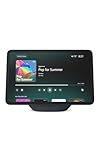
- New size, more viewing area: The 11“ smart display features a vibrant Full-HD touchscreen with 60% more viewing area versus Echo Show 8 (2025 release), built-in smart home hub, AZ3 Pro chip for powerful performance, and Omnisense technology for highly personalized experiences.
- Content looks and sounds incredible: Watch shows on Prime Video, Netflix, and more on the vibrant Full-HD 11" screen and enjoy room-filling spatial audio, crisper vocals, wider sound stage, and up to 2x bass versus Echo Show 8 (2023 release). With Alexa+, find the name of that song you love and discover new shows based on your preferences.
- Your everyday assistant: The 11" display makes it easy to see recipes and calendars at a glance, find meal inspo, and manage your shopping lists. With Alexa+, find recipes based on foods you love, make reservations, order groceries, and more.
- Simple Smart Home control: Pair and control thousands of devices that work with Alexa without needing a separate smart home hub. Easily view your camera feeds. Manage lights, thermostats, and more using the display or your voice. With Omnisense technology, you can activate routines via temperature, presence, or visual ID detection.
- Crystal-clear video calls: Video calls feel natural on the vibrant 11" screen with a centered, auto-framing camera, 3.3x zoom, and noise reduction technology. Use live view to check in on your family, pets, and more while you're away.
- Labor and operations: Fast fulfillment depends on labor-intensive warehouse and delivery work. Growth and speed put pressure on working conditions and operational management.
- Environmental effects: Individual shipments and packaging create material and delivery impacts, while faster service can require more intensive logistics.
- Seller dependence and trust: Marketplace breadth benefits shoppers, but sellers may depend on Amazon’s access to customers, and customers need protection from poor-quality or counterfeit products.
- Profitability and investment: Low prices and rapid delivery can attract customers while compressing margins and increasing infrastructure costs.
These were not side issues to a cost-free story of innovation. They were part of the trade-offs Amazon’s growth strategy created, alongside the risk factors the company itself disclosed in its filings.
What Amazon had become by 2014
By the end of its first two decades, Amazon was no longer adequately described as an online bookstore—or even solely as an online retailer. It connected several layers: a consumer-facing store, a merchant marketplace, fulfillment infrastructure, a paid membership tied to shipping and media, devices and content, and cloud computing sold to outside organizations. These businesses reinforced one another through customer relationships, technology, scale and infrastructure, even as each brought distinct costs and risks.
That is the basis for calling Amazon a technology powerhouse at 20: not that retail had ceased to matter, or that growth made every decision successful, but that the company had learned to turn capabilities built for its own commerce into platforms and services used by customers, sellers, developers and businesses.
Quick Recap
Product prices and availability are accurate as of the date/time indicated and are subject to change. Any price and availability information displayed on Amazon at the time of purchase will apply.
The Tool Desk
Outbyte Driver Updater FREEScan for outdated or missing drivers - takes under a minuteDriver Scan →Outbyte PC Repair FREERepair Windows errors before they cause bigger problemsFix Now →



