The Tool Desk
Outbyte PC Repair FREERepair Windows errors before they cause bigger problemsFix Now →Outbyte Driver Updater FREEScan for outdated or missing drivers - takes under a minuteDriver Scan →AI acceleration features prominently in EE Times’ 2025 Silicon 100: 25 of the 100 semiconductor startups focus on it, a count the publication says is similar to 2024. The list’s AI examples span chips aimed at AI PCs, edge devices, data-center inference and scientific computing—not one interchangeable class of product.
What the 2025 Silicon 100 says about AI startups
In “AI Companies Top the Silicon 100,” published July 31, 2025, Sally Ward-Foxton reports that 25 of the list’s 100 startups are focused on AI acceleration. The Silicon 100 is EE Times’ annual semiconductor-startup report, curated by Peter Clarke; the article covers selected companies rather than ranking all 100 against each other. Read the EE Times article.
One change within that group is the number focused on edge applications: EE Times reports a rise from 11 in the preceding comparison year to 14 in 2025. The article suggests that more mature edge use cases may help explain the increase, but presents that as an interpretation, not a demonstrated cause.
How the featured companies differ
These examples pursue different workloads and computing methods. Their figures and development status come from EE Times’ account, which does not provide a common benchmark for comparing speed or efficiency.
#1 Best Overall

- NVIDIA Volta GV100 Architecture — 4,608 CUDA Cores, 640 1st-Gen Tensor Cores delivering 14 TFLOPS FP32 and 112 TFLOPS deep learning performance for AI training, inference, HPC, and scientific computing workloads
- 32GB HBM2 ECC Memory — 900 GB/s Bandwidth — High-bandwidth memory on a 4096-bit bus with ECC error correction provides the memory capacity and throughput required for the largest AI models, simulations, and datasets
- PCIe 3.0 x16 Interface — 250W TDP — Standard PCIe Gen3 connectivity with passive cooling designed for enterprise rack server deployment in HPE ProLiant, Dell PowerEdge, and Supermicro platforms with adequate chassis airflow
- NVLink — Scale to 96GB Unified Memory — Connect two V100 GPUs via NVLink at 300 GB/s bi-directional bandwidth to scale GPU memory from 32GB to 96GB for larger AI training and HPC workloads
- Multi-Precision Computing — Supports FP64 (7 TFLOPS), FP32 (14 TFLOPS), FP16 (112 TFLOPS) and INT8 precision modes for flexible deployment across training, inference, and scientific simulation workloads
| Company and chip | Target workload or location | Approach and status described by EE Times | What the reported evidence does—and does not—show |
|---|---|---|---|
| EnCharge / EN100 | AI PCs | Capacitor-based analog compute-in-memory; described as a new entrant. | EE Times relays company-reported performance of 200 TOPS at INT8 and efficiency above 40 TOPS/W. These are not independent test results. The article compares 200 TOPS with Microsoft’s 40-TOPS Copilot+ PC requirement and mentions real-time translation and image generation as possible uses. |
| TetraMem / MX100 | Edge devices, including possible AR/VR, health-monitoring and voice-recognition uses | Memristor-based RRAM compute-in-memory; described as a new entrant. | EE Times says the chip supports INT4 and INT8. The article notes precision as a challenge and reports that research had demonstrated 11 bits per cell; that research result is not the same as a product benchmark. |
| Fractile | Data-center LLM inference | Developing an in-memory-compute accelerator using a modified CMOS SRAM cell. | The company’s goal, as reported by EE Times, is tokens two orders of magnitude faster than Nvidia’s H100. This is an aspiration, not demonstrated comparative performance. |
| NextSilicon / Maverick | Scientific computing, including HPC and AI workloads | Runtime-reconfigurable accelerator. EE Times describes second-generation single- and dual-die versions with HBM as available. | The article describes the product positioning and configurations but supplies no comparable benchmark against the other startups here. |
| Recogni | From ADAS toward data-center inference | Moving from a first-generation ADAS chip to a second-generation design for lower-cost LLM-scale inference; rack-scale systems are in development. | Development of rack-scale systems does not establish that they were commercially available. |
| Q.ANT | AI compute | Developing photonic chips based on thin-film lithium niobate. | EE Times reports 16-bit precision and says the company intends to increase precision in a subsequent generation. The article supplies no cross-vendor speed or efficiency comparison. |
Why the performance numbers are not a leaderboard
TOPS, TOPS per watt, bits per cell, token-generation speed and numerical precision describe different properties. The EE Times article does not establish shared measurement conditions across these startups, so its figures cannot be combined into a fair ranking of which chip is fastest or most efficient. In particular, the EN100 figures are company claims relayed by the publication, while Fractile’s comparison with the H100 is a stated target.
Product maturity also varies. The article describes some configurations as available, while other systems or next-generation capabilities remain under development or are expressed as company intentions. It is an industry overview, not a buyer’s guide or confirmation that the named chips are retail products.
Rank #2

- High-Performance AI Processing: The MX3 is designed to handle the most demanding AI computer vision workloads, delivering exceptional performance and efficiency.
- Flexible Integration: The MX3 can be easily integrated into your existing systems via its M.2 M-key form factor and support for Linux operating systems.
- Energy Efficient: The MX3 is designed to provide high performance while minimizing power consumption.
- Comprehensive Software Development Kit (SDK): The MX3 is supported by a comprehensive SDK that simplifies development and deployment.
- Hardware compatability: The MX3 is compatible with the PCI-SIG M.2 M-key 2280 Specification. It can be used with the Raspberry Pi 5 with a M-key 2280 HAT.
Does a stable count mean “peak AI”?
Peter Clarke, the Silicon 100 curator, is associated in the article with the phrase “peak AI,” in the context of a stable AI-startup count and recent exits including Untether and Esperanto. That is a possible interpretation, not proof that investment, technical progress or demand for AI chips has peaked. The 25-startup figure is a count within this edition of the list, not a measure of funding, sales or market share.
EE Times’ Silicon 100 topic page lists the 2025 report alongside the 2024 and 2023 editions. The article does not enumerate all 100 startups or explain the report’s full selection methodology, so the examples above should be read as a cross-section, not a complete inventory.
Do these 3 things before closing this tab:
1Repair Windows errors before they cause bigger problems2Scan for outdated or missing drivers - takes under a minute3Clear out junk files and repair common Windows errorsQuick Recap
Best Value

- Professional AI & Creator Workstation: AMD Radeon AI PRO R9700 GPU with 32GB GDDR6 is engineered for AI development, professional content creation, and compute-intensive workloads.
- Massive 32GB Memory Capacity: 32GB of GDDR6 memory on a 256-bit bus provides ample bandwidth for large AI models, 8K video editing, and complex 3D rendering.
- Advanced RDNA 4 with AI Accelerators: 64 Compute Units with 3rd Gen Ray Tracing and dedicated 2nd Gen AI Accelerators for groundbreaking AI performance and visual computing.
- Professional Blower Cooling: Efficient single blower design exhausts heat directly out of the chassis, ideal for multi-GPU workstation and server configurations.
- Enterprise-Grade Thermal Solution: Vapor chamber heatsink with industrial Honeywell PTM7950 thermal interface material ensures reliable cooling under sustained professional loads.
Rank #4
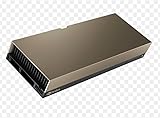
- 48GB AI graphics accelerator
Rank #3

- ✅Powered by 26 Tera-Operations Per Second (TOPS) Hailo-8 AI Processor. 2.5W typical power consumption
- ✅Scalable, enabling simultaneous processing of multi-streams & multi-models
- ✅Enabling real-time, low latency and high-efficiency AI inferencing on the edge devices
- ✅Supports TensorFlow, TensorFlow Lite, ONNX, Keras, Pytorch frameworks
- ✅Supports Linux and Windows. Supports the temperature range of -40°C to 85°C
Product prices and availability are accurate as of the date/time indicated and are subject to change. Any price and availability information displayed on Amazon at the time of purchase will apply.




