Massachusetts has not been confirmed as opting in or out of the federal Education Freedom Tax Credit. The program is scheduled to begin January 1, 2027, and education and civil-rights groups are urging Gov. Maura Healey to reject participation, warning that it could deepen inequities and put added pressure on public schools. Those are advocates’ forecasts, not measured effects: the program has not launched, and no Massachusetts impact data is available.
What the Education Freedom Tax Credit would do
Under the U.S. Treasury’s proposed rules, a donor who gives cash to a qualifying scholarship-granting organization (SGO) could claim a dollar-for-dollar federal income-tax credit of up to $1,700 per person, or up to $3,400 for a married couple filing jointly. An SGO is a qualifying public charity that awards scholarships to eligible K–12 students. The maximum tax credit is not a guaranteed scholarship amount, and a student’s eligibility does not ensure an award.
Treasury describes the credit as a way to expand family choice and educational options. Treasury Secretary Scott Bessent called it “a new chapter in educational freedom and opportunity by establishing America’s first nationwide school choice incentive and empowering states to give students and families more options.” That is the administration’s rationale for the program.
Who could qualify and what scholarships could cover
Treasury says a student who is eligible to enroll in a public elementary or secondary school may qualify if household income is no more than 300% of area median gross income, adjusted for family size. Listed expenses include private or religious school tuition, tutoring, special-education services, books, supplies, and qualifying extended-day programs.
Do these 3 things before closing this tab:
1Clear out junk files and repair common Windows errors2Scan for outdated or missing drivers - takes under a minute3Repair Windows errors before they cause bigger problems#1 Best Overall

- A+ Teacher Planner: Organize schedules, lesson plans, classroom curriculum, and more with the 128-page Carson Dellosa We Belong Together Teacher Planner—the perfect, inspirational 8” x 11” undated planner for your classroom management needs.
- Classroom Organization: Use the checklists in the daily, weekly planner, and monthly planner to track grades, attendance, and homework completion, and use the notes section to jot down other important information.
- Goal-Setting Lesson Plan Book: Use the comprehensive informational section in the lesson planner to record substitute information, log communication, store contact information, create year-long plans and goals, and more.
- Teacher Planner Features: This teacher plan book includes 116 planner stickers, including 16 tab, 9 to-do list, 64 reminder, 6 note, and 21 accent stickers to organize your spiral planner and keep track of progress with ease.
- Why Carson Dellosa: For more than 45 years, Carson Dellosa has provided solutions for parents and teachers to help their children get ahead and exceed learning goals. Carson Dellosa supports your child’s educational journey every step of the way.
Scholarships would depend on participating states, eligible students, donated funds, and individual SGO decisions. Treasury also says donors may give to an SGO in a participating state even if the donor’s own state has not joined. Scholarships must serve eligible students who live in a state where that SGO is listed.
What Massachusetts must decide—and what is known so far
Participation is voluntary. The Massachusetts Association of School Superintendents says Healey is the state’s sole decision-maker. The federal schedule gives states until January 1, 2027, to elect to participate; Treasury’s fact sheet says the initial list of qualifying SGOs is due February 15, 2027. As of October 7, 2026, available reporting does not confirm Healey’s decision. The federal regulations were proposed on October 1, 2026, and are not final.
If Massachusetts opts in, it would identify qualifying SGOs under the federal framework, making scholarships for eligible Massachusetts residents possible through listed organizations. If it opts out, Massachusetts residents could still donate to an SGO in another participating state, but scholarships under the program must go to eligible students residing in a state where the SGO is listed. The practical question for Massachusetts, therefore, is not simply whether its residents can claim the credit; it is whether the state will enable listed organizations to award program scholarships to eligible students living there.
Rank #2
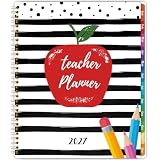
- 𝟐𝟎𝟐𝟕 𝐓𝐞𝐚𝐜𝐡𝐞𝐫 𝐏𝐥𝐚𝐧𝐧𝐞𝐫 - This teacher planner 2027 contains 12 months of monthly and weekly planning pages, which is from January 2027 - December 2027, good for your classroom management needs. The teacher planner2027 measures 8.5'' x 11'' that is easy to carry in your teacher's bag
- 𝐌𝐨𝐧𝐭𝐡𝐥𝐲 𝐏𝐚𝐠𝐞𝐬 - Each monthly page of this teacher planner 2027 contains an overview of the month and adequate notes section, convenient to record your creative ideas. It’ s thoughtful to design the holiday reminders and past & future monthly reference, remind you of the important activities. In addition, inspirational quotes encourage you to move forward positively
- 𝐖𝐞𝐞𝐤𝐥𝐲 𝐏𝐚𝐠𝐞𝐬 - This teacher planner 2027 contains 12 months of monthly and weekly planning pages, which is from January 2027 - December 2027, good for your classroom management needs. The teacher planner 2027 measures 8.5'' x 11'' that is easy to carry in your teacher's bag
- 𝟐𝟎𝟐𝟕 𝐓𝐞𝐚𝐜𝐡𝐞𝐫 𝐏𝐥𝐚𝐧𝐧𝐞𝐫 - This teacher planner 2027 contains 12 months of monthly and weekly planning pages, which is from January 2027 - December 2027, good for your classroom management needs. The teacher planner 2027 measures 8.5'' x 11'' that is easy to carry in your teacher's bag
- 𝐆𝐨𝐨𝐝 𝐂𝐡𝐨𝐢𝐜𝐞 - The 2027 teacher lesson planner with sturdy spiral bound allows it to lay flat 360°. If you want to focus on your most important things and enjoy a more organized life, our teacher planner 2027 is a perfect choice for you
Why opponents want Massachusetts to opt out
The Massachusetts Teachers Association and a coalition of education, civil-rights, parent, and community organizations argue that the program could channel public tax revenue toward private education while weakening the public systems serving all students. Their concerns are about potential effects, not outcomes yet observed in Massachusetts.
Unequal ability to attract donations
Critics argue that established private-school networks may be better positioned than public districts to attract donors and distribute scholarship funds. Mary Bourque, executive director of the Massachusetts Association of School Superintendents, said the program’s structure leaves public schools at a disadvantage: “The services that students in public schools can receive through scholarship funds are far more limited and can only be provided to families who apply for the scholarships and can demonstrate income eligibility.” That is Bourque’s assessment of the program’s design.
MassBudget similarly argues that the structure could advantage private schools and higher-income households. Whether that would happen in Massachusetts, and on what scale, has not been established.
Rank #3

- [2026-2027 ACADEMIC YEAR TEACHER PLANNER] - Designed for elementary, high school, and college teachers as well as homeschooling parents, this 2026-2027 teacher planner covers July 2026 to June 2027, with extra planning pages for May and June 2026. The spacious 8.5" x 11" Letter Size layout offers ample writing space for lesson planning, scheduling, and daily classroom organization.
- [MONTHLY PLANNING PAGES WITH TABS] - This academic year planner features spacious monthly overview pages with large daily blocks for lesson preparation, key events, deadlines, and goal setting. Each monthly spread includes marked holidays, Julian dates, and previous & next month reference calendars for easier long-term scheduling and smooth planning transitions. Laminated color-coded monthly tabs help teachers quickly flip to the desired month and improve organization efficiency during busy academic days.
- [7-PERIOD WEEKLY LESSON PLANNING LAYOUT] - Weekly planning pages are specially designed for teachers with Monday–Friday layouts and structured 7-period lesson planning sections. Each week provides dedicated space for assignments, classroom activities, reminders, and progress tracking, helping teachers stay organized and manage daily instruction with ease throughout the entire 2026-2027 academic year.
- [SMOOTH WRITING & DURABLE DESIGN] - Built to survive the school year, this teacher planner features premium 100gsm no-bleed paper that is ideal for colorful gel pens and highlighters without ink ghosting. The sturdy spiral binding allows for a 360° lay-flat writing experience, while the water-resistant cover and tear-resistant laminated tabs withstand daily wear in your backpack for long-lasting school-year use.
- [Bonus Features] - More than a basic planner, this teacher organizer includes 2027 Yearly Overview | Quick Reference | Student Information | Communication Log | Special Date | Plans.Goals.Ideas | Graph Pages | Daily Schedules | Student Log/Checklist | Holiday Calendar | Note Pages. This lesson planner includes a movable bookmark ruler with both centimeter and inch scales for quick page navigation and precise measurements, alongside a convenient inner pocket for storing loose sheets and essential records.
School funding, enrollment, and equity
The coalition warns that shifting donations toward scholarships could reduce resources available to public schools and exacerbate existing enrollment and equity challenges. The superintendents’ association also warns that the program could add strain to districts already dealing with declining enrollment. These are forecasts by the organizations opposing participation; there is no measured Massachusetts effect to report before the program begins.
Vatsady Sivongxay, a public-school parent and executive director of the Massachusetts Education Justice Alliance – Education Fund, said the coalition fears the program would “send our public tax dollars to private schools, defunding the public schools that serve all kids while bypassing the strong local education standards” in Massachusetts. The claim that the tax credit would produce those consequences is the coalition’s position, not a demonstrated result.
Oversight and administrative demands
Opponents also question how much authority Massachusetts would have to screen or regulate participating SGOs under the federal rules, and whether administering the program would divert staff or other resources. The proposed rules and the concerns raised by advocates do not establish the eventual scale of any administrative burden or the safeguards the state might use. The federal regulations remain proposed.
Rank #4

- Weekly lesson planning pages for up to 45 weeks for 7 classes.
- Space for your seating charts.
- Attendance and grades pages for the entire 180-day school year for 7 classes, with up to 35 students per class.
- Extra pages for notes.
- Acid-free archival-quality paper takes pen or pencil.
Why some advocates support opting in
Supporters say participation could make scholarships available to Massachusetts students for tuition, tutoring, and other eligible services. Former Boston City Councilor and public-school teacher Annissa Essaibi George argued that Massachusetts could benefit by joining rather than letting contributions flow elsewhere. As she put it, “Massachusetts taxpayers will be eligible to take advantage of this program whether the governor opts in or not. The only question is whether those dollars come back to Massachusetts children, or instead flow to students in states that moved faster.”
That argument highlights a real feature of the proposed program: a Massachusetts donor may support an SGO in another participating state even if Massachusetts opts out. But whether opting in would attract donations to Massachusetts SGOs, how much funding would reach local students, and how scholarships would affect public schools remain unknown.
Independent reader supportYour contribution helps us test, update, and keep practical guides available for everyone.What Treasury projects—and what those estimates do not show
Treasury and the Internal Revenue Service estimated in 2026 that by 2030 the program could draw more than 11 million donors and $26 billion in annual contributions, and support 600–700 SGOs. Their scenarios also estimated about 2 million full-time scholarships averaging $12,000, or 5 million part-time scholarships averaging $4,500, per year. These are federal projections, not current participation or Massachusetts-specific forecasts; actual awards would depend on state participation, donations, and SGO decisions.
Crashes, No Sound, or Screen Glitches?
Random freezes, missing sound and display glitches usually trace back to one bad driver. Find and replace yours safely.Free scan · under a minutePC Slower Than It Used to Be?
A free scan shows the junk files, broken settings and background clutter dragging Windows down - then fixes them in one click.Free scan · Windows 10 & 11Best Value

- PROFESSIONAL GRADE ORGANIZATION- Elevate your classroom management with this 8.5" x 11" teacher supplies must-have. Featuring a detailed 7-period lesson plan layout, it spans July 2026 to June 2027 for a complete academic cycle
- PREMIUM INK-PROOF PERFORMANCE- Our teacher planner 2026-2027 uses 110gsm paper, 20% thicker than standard sheets. Engineered to resist bleeding and ghosting, it provides a pristine surface for every ink type and fountain pen
- DAILY SCHEDULING & GOALS- This comprehensive teacher planner includes 12 monthly views and 52 weekly spreads. Each day offers vertical slots for class periods, ensuring you stay ahead of curriculum deadlines and student assessments
- VIBRANT & INSPIRATIONAL DESIGN- More than just teacher essentials, our planner features 12 unique holiday-themed illustrations. The sturdy hardcover and twin-wire binding combine durability with the aesthetic charm of cute school supplies
- VERSATILE TEACHING COMPANION- Perfect for elementary educators or homeschoolers, this happy planner style organizer includes monthly review sections and habit trackers to foster both professional growth and personal well-being
AFT Massachusetts made a separate claim in an October 1, 2026 statement, asserting the program could involve $50 billion per year and $500 billion over 10 years. Those figures are the union’s claims and should not be confused with Treasury and IRS estimates. Neither set of projections measures how much Massachusetts schools would gain or lose.
How to assess the choice
The central trade-off is whether Massachusetts should enable a new source of scholarship funding for eligible residents despite concerns about uneven access, public-school resources, oversight, and administration. The current evidence establishes the proposed tax-credit structure and the arguments on each side, but it cannot establish the program’s eventual effects on Massachusetts schools.
Quick Recap
- Potential benefit: eligible students could receive scholarships for a range of educational expenses if the state participates, donors contribute, and SGOs award funds.
- Key uncertainty: neither the amount of money Massachusetts SGOs would attract nor the distribution of awards is known.
- Potential risk raised by critics: scholarship funds and administrative attention could favor private-school networks and compound pressure on public districts; these effects are not yet measured.
- Decision status: Healey’s choice had not been confirmed in available reporting as of October 7, 2026; the state election deadline is January 1, 2027.
Product prices and availability are accurate as of the date/time indicated and are subject to change. Any price and availability information displayed on Amazon at the time of purchase will apply.




