A deferred call provision prevents an issuer from exercising its ordinary optional redemption right during an initial period. It gives bond investors temporary call protection and more predictable near-term cash flows, but the bond may still be called after that period, leaving investors exposed to reinvestment risk.
For issuers, deferring the call can make a bond more attractive to investors while limiting refinancing flexibility during the protected period. The bond’s actual terms—including call dates, prices, and exceptions—determine how much the provision is worth.
What is a deferred call provision?
A deferred call provision, also called a non-call period or call protection, prevents the issuer from using its ordinary optional redemption right during a specified period after the bond is issued. The SEC’s Investor.gov guidance describes a 10-year bond that cannot be called during its first five years, but the actual period is set by each bond’s documents.
A call is an option belonging to the issuer, not the bondholder. The issuer may redeem the bonds before maturity, but it is not required to do so. The bond documents state when the call becomes available, how much the issuer must pay, how much notice it must give, and whether it may redeem all or only part of the issue. See FINRA’s overview of callable bonds.
The Tool Desk
Outbyte Driver Updater FREEScan for outdated or missing drivers - takes under a minuteDriver Scan →Outbyte PC Repair FREEClear out junk files and repair common Windows errorsFree Scan →#1 Best Overall
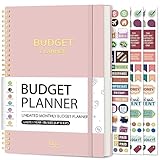
- Effective Budget Planning - Take control of your finances with the budget account book. This comprehensive planner allows you to plan and track your income, expenses, savings, and financial goals in one convenient place. With its intuitive layout and easy-to-use sections, you can stay organized and make informed decisions to achieve financial success.
- User-Friendly Layout - The budget planner features a user-friendly layout designed for easy navigation and organization. Each month, you'll find dedicated budget pages where you can set financial goals, track your income, and plan your expenses. Additional sections include debt trackers, savings goals, bill payment trackers, and more, making it simple to stay on top of your finances.
- Undated Monthly Calendar & Bonus Stickers - Featuring undated calendar each month, you'll have ample space to mark paydays, bills due, appointments, and important dates. Say goodbye to difficult writing spaces. Plus, we've included 3 cute sticker sheets that allow you to personalize your financial organizer and make budgeting more fun. Dates are not pre-printed and are completed by the user.
- Reliable and Convenient Design - Our monthly budget planner is designed for your convenience and built to last. The elastic band keeps everything securely in place, and the dual-sided pocket provides extra storage. Experience a budget planner that combines practicality and durability.
- Master Budgeting with Ease - Our financial planner includes a complete guidebook that provides valuable insights and instructions for optimal usage. From setting financial goals to tracking expenses, this guidebook offers step-by-step guidance and practical tips. Whether you're new to budgeting or an experienced user, this resource will help you make the most of your budget planner, empowering you to achieve financial success.
Suppose a bond has these terms:
| Term | Example |
|---|---|
| Original maturity | 10 years |
| Deferred call period | First 5 years |
| First optional call date | Year 5 |
| Call price in year 5 | 102% of face value |
| Call price in year 6 | 101% of face value |
| Call price thereafter | 100% of face value |
The issuer ordinarily cannot exercise the optional call in years one through four. Beginning in year five, it may redeem the bonds at the applicable price. The first call date is the earliest date on which redemption is permitted—not the date on which redemption is certain.
The exact rules come from the prospectus, official statement, or indenture. A deferred ordinary call may coexist with other early-redemption provisions, including sinking-fund, tax, extraordinary, make-whole, change-of-control, or special-mandatory redemptions.
Advantages for investors
1. Protection from an early optional call
The main advantage is a defined period during which the issuer cannot ordinarily end the investment by calling the bond. If you buy a bond to receive its coupon for several years, the non-call period gives you more confidence that those scheduled payments will continue.
This is especially useful when the bond’s coupon is attractive relative to available alternatives. Without call protection, the issuer could potentially redeem the bond soon after issuance, returning your principal before you have received much of the expected income.
Recommended Free Tools
2. Lower reinvestment risk during the protected period
Issuers are more likely to call bonds when market interest rates fall below the bond’s coupon rate. They can then repay the old debt and refinance at a lower cost. The investor receives principal back, but may have to reinvest it at a lower yield.
A deferred call postpones that particular risk until the first permitted call date. It does not remove reinvestment risk permanently. After the non-call period ends, the issuer can still call the bonds when refinancing is financially advantageous. Investor.gov’s callable-bond guidance explains this risk.
3. More predictable short-term income planning
During the non-call period, an investor can generally forecast the bond’s scheduled coupon payments more reliably than with a bond that is immediately callable. That can help with planning for expenses, tuition, or other known liabilities.
The protection is not absolute. Default, restructuring, extraordinary redemption, sinking-fund requirements, and other provisions can still change the expected cash flows.
4. Possible yield or coupon compensation
Callable bonds sometimes offer a higher coupon or yield than comparable noncallable bonds. That extra return is intended to compensate investors for accepting call risk, reinvestment risk, and the possibility of losing future above-market coupons.
Rank #2

- Effective Budget Planning - Take control of your finances with the budget account book. This comprehensive planner allows you to plan and track your income, expenses, savings, and financial goals in one convenient place. With its intuitive layout and easy-to-use sections, you can stay organized and make informed decisions to achieve financial success.
- User-Friendly Layout - The budget planner features a user-friendly layout designed for easy navigation and organization. Each month, you'll find dedicated budget pages where you can set financial goals, track your income, and plan your expenses. Additional sections include debt trackers, savings goals, bill payment trackers, and more, making it simple to stay on top of your finances.
- Undated Monthly Calendar & Bonus Stickers - Featuring undated calendar each month, you'll have ample space to mark paydays, bills due, appointments, and important dates. Say goodbye to difficult writing spaces. Plus, we've included 3 cute sticker sheets that allow you to personalize your financial organizer and make budgeting more fun. Dates are not pre-printed and are completed by the user.
- Reliable and Convenient Design - Our monthly budget planner is designed for your convenience and built to last. The elastic band keeps everything securely in place, and the dual-sided pocket provides extra storage. Experience a budget planner that combines practicality and durability.
- Master Budgeting with Ease - Our financial planner includes a complete guidebook that provides valuable insights and instructions for optimal usage. From setting financial goals to tracking expenses, this guidebook offers step-by-step guidance and practical tips. Whether you're new to budgeting or an experienced user, this resource will help you make the most of your budget planner, empowering you to achieve financial success.
A deferred call can improve the structure for investors because it provides initial protection instead of allowing the issuer to call immediately. However, do not assume that every deferred-call bond offers a superior return. Compare the bond’s price, credit quality, maturity, liquidity, yield to call, and yield to worst with genuinely similar alternatives.
Disadvantages for investors
1. The bond can still be called after the non-call period
Once the first optional call date arrives, the issuer may redeem the bond according to the contract. You generally cannot insist on receiving coupons through the original maturity date.
This makes yield to call particularly important. Yield to maturity assumes the bond remains outstanding until maturity. Yield to call assumes it is redeemed on a specified call date at the stated call price. If the bond is trading above par or has a high coupon, the yield to call may be much lower than the yield to maturity. FINRA explains these return measures in its callable-bond guidance.
2. Reinvestment risk begins when rates may be lowest
A call is most economically attractive to the issuer after interest rates have declined. Unfortunately for the investor, that is often the same environment in which replacement bonds offer lower yields.
For example, imagine buying a $10,000 bond paying 6% annually. If it is called after five years and comparable bonds now pay 4%, your $600 annual interest may be replaced by only $400 on a similar $10,000 investment. The call premium may provide some compensation, but it does not replace the entire future income stream.
3. Limited price appreciation
When rates fall, a noncallable bond with an above-market coupon can rise significantly in value. A callable bond may not appreciate as much because the market expects the issuer to redeem it near the contractual call price.
The call price is an important pricing reference, but it is not an unconditional ceiling. A bond may trade above a stated call price when that call is not yet exercisable, when a make-whole formula applies, or when other contractual features affect its value. FINRA discusses the effect of call provisions on bond prices in its guidance on callable bonds.
Do these 3 things before closing this tab:
1Fix the driver behind crashes, sound loss and screen glitches2Repair Windows errors before they cause bigger problems3Scan for outdated or missing drivers - takes under a minute4. Less certain cash flow after the first call date
After the protected period, the bond may continue paying coupons, be partially redeemed, or be fully redeemed. A sinking fund can create additional early-redemption exposure by requiring the issuer to retire portions of the issue on a schedule.
A sinking-fund redemption differs from an optional call: the issuer may be required to redeem a stated amount rather than simply choosing whether to do so. Either way, you may receive principal earlier than expected and need to find a new investment.
Rank #3

- Effective Budget Plan Book – Take control of your finances with the SUNEE budget account book. This all-in-one budget planner allows you to plan and track your income, expenses, savings, and financial goals. Its intuitive layout and easy-to-use sections help you stay organized and make smart decisions to reach financial success. Our financial planner also included a comprehensive guidebook with valuable tips and instructions to help you get the most out of your budgeting planner.
- Full-Page Calendars – Each month’s full-page calendar provides plenty of space to track paydays, bills due dates, appointments, and important events. No more cramped boxes or tight writing areas, you can easily plan and organize your schedule at a glance.
- Colorful Pages Layout and Tabs – This vibrant budget planner features a user-friendly design for easy navigation and organization. Each month includes dedicated budget pages to set financial goals, track income, and plan expenses. Additional sections like debt trackers, savings goals, and bill payment trackers make managing your finances a breeze. The colorful backgrounds on each page offer clear, instant visibility.
- Bonus 4 Stickers and Convenient Design – This monthly budget planner is built for convenience and durability. Water-resistant cover protects against spills, while the elastic band keeps everything secure, and the dual-sided pocket offers extra storage. Plus, we’ve included 4 adorable sticker sheets to personalize your planner and make budgeting more enjoyable. Experience a budget planner that combines practicality with lasting quality.
- UNDATED DESIGN & 1 YEAR USE - Undated finance books start with 1 page-financial goals, 1 page-Mind Map, 1 page-Financial Strategy, 1 page-Tactics, 2 pages-Important Dates, 4 pages-Bill Tracker, 4 pages-Saving Tracker, 8 pages-Debt Tracker, followed by 12 Months(10 pages per month, 1 unique color for each month). 2 pages-Christmas Budgeting, 2 pages-Yearly Summary, 2 pages-Check Register and 12 pages-Notes(dotted). It is UNDATED, so you could start at any time, suitable for 1 year use.
5. A call premium may be modest
Some call schedules pay more than the bond’s face value during the first callable years—for example, 102% of par, followed by 101%, and eventually 100%. Other bonds may offer little or no premium.
Even a premium does not necessarily make the investor whole. A 2% premium on a $10,000 bond is $200, which may be small compared with the value of several years of lost coupons.
Quick wins for a faster PC:
Fix the driver behind crashes, sound loss and screen glitchesFind Drivers →Repair Windows errors before they cause bigger problemsFix Now →Scan for outdated or missing drivers - takes under a minuteDriver Scan →Advantages for issuers
1. Future refinancing flexibility
The issuer retains the ability to refinance the debt after the non-call period. If interest rates fall, the issuer’s credit improves, or another financing opportunity becomes available, it may be able to repay the old bonds and issue debt on better terms.
2. Potentially better pricing than immediate-call debt
Investors generally value the initial call protection. Because the deferred structure is more attractive than a bond callable immediately, the issuer may be able to offer a lower yield than it otherwise would.
This is not a guaranteed discount or a fixed pricing rule. The result depends on the bond’s credit risk, maturity, liquidity, coupon, call schedule, market conditions, and the value of the issuer’s call option.
3. Broader investor appeal
A non-call period can make a callable issue more acceptable to investors who need a minimum period of income protection. That may expand demand compared with an immediately callable bond.
4. Time to use the borrowed funds
The issuer can deploy the bond proceeds for a project, acquisition, capital program, or other purpose without normally facing an optional redemption immediately after issuance. The issuer gets time to use the financing before deciding whether a later refinancing is worthwhile.
Disadvantages for issuers
1. No ordinary refinancing if rates fall immediately
If interest rates decline soon after the bonds are issued, the issuer ordinarily cannot use the optional call during the protected period. It must continue paying the original coupon or rely on another redemption mechanism permitted by the documents.
2. A call premium increases refinancing costs
The issuer may have to pay more than face value to redeem the bonds in the early callable years. It must compare the premium, transaction expenses, and new-issue costs with the interest savings from refinancing.
Rank #4

- ALL-IN-ONE B5 BUDGET PLANNER: With 15+ Functional Inserts –it covers every money-management pain point for beginners & pros. Stop juggling messy notebooks or incomplete trackers! The budget planner includes, monthly budget, bill expense detail, debt tracker, bill tracker, saving tracker...matches 90% of "how to manage money" search queries
- DURABLE BUDGET BOOK: Our budget organizer features a PVC waterproof cover and elastic band—no more ruined pages, made of 100GSM thick paper—no smudges or ghosting, coming with a heavy-duty double spiral binding—lays flat for easy writing. Built for daily use: toss it in your work bag, backpack, or purse without worry
- CONVENIENT B5 SIZE (7.3”X10.15”): No more choosing between "too small to write" or "too bulky to carry"! The B5 budget planner gives ample space to log expenses, note bill due dates, or map financial goals—without being cumbersome. Fits easily in laptop bags, backpacks, or purses—perfect for "on-the-go budget tracking
- UNMATCHED VALUE & COMPREHENSIVE GUIDEBOOK: Comes with 5 practical, high-quality freebies crafted, plus a comprehensive user guide that takes the guesswork out of financial planning. You’ll get: PVC waterproof colorful monthly tabs & wide range of label stickers, a ribbon bookmark, an elastic pen holder, a elastic band, an inner pocket, and a detailed step-by-step user guide handbook
- VISUAL CLARITY & LESS FATIGUE: Unlike plain black-and-white budget planners, our vivid color highlights reduce eye strain during long budgeting sessions, helping you track expenses, savings, and bills quickly and accurately. It’s the perfect fit for working professionals, international students, family financial managers, freelancers, new graduates, retirees
For example, refinancing a $50 million issue at a lower rate may look attractive, but a 2% call premium alone would cost $1 million before legal, underwriting, and other expenses.
Free tools Windows power users keep installed
One-click scans. No signup required.
3. Investors may demand compensation for the call feature
Even with deferred protection, investors are accepting the possibility that the issuer will end the bond early. The issue may therefore require a higher coupon or yield than comparable noncallable debt.
4. More complicated documentation
The contract must define the first call date, later redemption prices, notice periods, partial-redemption rules, accrued interest, allocation procedures, and exceptions. Ambiguous or poorly administered provisions can produce operational errors and disputes.
Important exceptions to check
“Non-call for five years” does not necessarily mean that no bond can be redeemed during those five years. Review the documents for:
- Sinking-fund redemptions: scheduled retirement of part of the issue.
- Extraordinary redemptions: early repayment after specified events, such as damage to financed assets or failure of a project.
- Make-whole redemptions: repayment using a formula based on the present value of remaining payments, often tied to Treasury yields.
- Tax calls: redemption rights triggered by changes in tax law or the bond’s tax treatment.
- Change-of-control provisions: repayment rights or requirements following a specified ownership change.
- Special-mandatory redemptions: required repayment when a stated financing or project condition occurs.
- Partial calls: redemption of only some bonds, rather than the entire issue.
Make-whole protection is not the same as a fixed-price deferred call. The formula and assumptions vary, and the payment may not equal the full value of every future coupon. Similarly, a sinking fund is not an optional call because it may require the issuer to redeem bonds even when rates have not fallen.
Crashes, No Sound, or Screen Glitches?
Random freezes, missing sound and display glitches usually trace back to one bad driver. Find and replace yours safely.Free scan · under a minutePC Slower Than It Used to Be?
A free scan shows the junk files, broken settings and background clutter dragging Windows down - then fixes them in one click.Free scan · Windows 10 & 11How to evaluate a deferred-call bond
- Find the first optional call date. Confirm the exact date and whether calls occur on set dates or continuously afterward.
- Read the call-price schedule. Note any premium above par and when it declines or disappears.
- Compare yield measures. Check yield to maturity, yield to call, and yield to worst. The last of these is often the most conservative figure for a callable bond.
- Identify partial-redemption risk. Determine whether the issuer can call a portion of the issue and how selected bonds will be allocated.
- Look for other redemption provisions. Search for sinking-fund, extraordinary, make-whole, tax, change-of-control, and special-mandatory language.
- Check whether the bond is already callable. A bond past its non-call period may have materially different risk from a newly issued bond with several years of protection remaining.
- Assess credit risk separately. Call protection does not prevent missed payments, default, restructuring, or bankruptcy.
- Plan for reinvestment. Consider what comparable investments might be available if the bond is called and rates have declined.
- Consider liquidity and taxes. A higher quoted yield may reflect lower liquidity, greater credit risk, or tax differences rather than valuable call protection.
The prospectus or indenture contains the controlling terms. FINRA recommends reviewing the specific redemption provisions and understanding yield to call before purchasing a callable bond; see its investor guidance.
Common misconceptions
“The bond cannot be redeemed early.”
Usually, only the ordinary optional call is deferred. Other permitted or required redemption mechanisms may still apply.
“A callable bond always pays a higher yield.”
Callable bonds often offer additional yield, but comparisons are meaningful only when credit quality, maturity, liquidity, tax treatment, and structure are similar. A higher yield may reflect a different risk rather than call compensation.
“The first call date is when the bond will be called.”
No. It is the first date on which the issuer may call the bond. The issuer can decide to leave it outstanding.
Best Value

- 【ACHIEVE YOUR FINANCIAL GOALS】This budget financial planner provides a simple and efficient money management instruments that allows you to plan and track your income, expenses and savings in one convenient place. Take control of your money on a daily, monthly and yearly basis with the budget planner, enabling you to manage your personal finance and make decisions to achieve financial goals.
- 【TRACK SAVINGS, DEBT & BILLS PAYMENTS】Keeping track of savings, debt, and bill payments can help you understand your income and expenses, giving you a clearer picture of your financial situation. In addition, you can identify spending habits and appropriately reduce unnecessary spending.
- 【WELL-DESIGNED】The monthly budget planner is undated and covers 16 months. Every month features a calendar, a budget plan, and 4 pages expense tracker. At the end of the month, review your performance and consider how to improve. Additional sections include 4 savings, 6 debt trackers and more, making it simple to stay on top of your finances.
- 【EASY TO USE】The financial planner notebook cover is made by premium Faux Leather/ Fabric, High quality and durability. A5 size (5.7'' × 8'') is perfect for on-the-go. 100gsm paper has no bleed through. It also comes with an elastic pen loop and pocket. In addition, 2 bookmarks is useful to find any page you need easily.
- 【PERFECT GIFT】A Budget Planner makes for an incredibly thoughtful and practical gift, as it helps individual keep track of their finances, set savings goals, and manage their spending more effectively. Whether for a friend, family member, or colleague, this essential tool fosters financial literacy and encourages responsible budgeting habits.
“The call price is always the highest possible market price.”
Not necessarily. It can limit appreciation when the call is exercisable, but a bond may trade above that price before the call right is available or when a different redemption formula applies.
“Coupons are guaranteed throughout the deferred period.”
That overstates the protection. The provision normally protects against an ordinary optional call, not against default, restructuring, sinking-fund redemptions, extraordinary events, or every other contractual exception.
FAQ
Is a deferred call provision good for bond investors?
It can be beneficial because it prevents an ordinary issuer call during the protected period and makes near-term income more predictable. The benefit must be weighed against later call risk, reinvestment risk, credit risk, and the bond’s price and yield.
What happens when the deferred call period ends?
The issuer becomes eligible to redeem the bond on the permitted call dates and at the stated call prices. It may call the bond, but the first call date does not mean redemption is certain.
What’s actually slowing this PC down?
Pick the symptom - the matching free tool is one click away.
Does a deferred call protect against all early repayment?
No. It typically defers only the ordinary optional call. Sinking-fund, extraordinary, make-whole, tax, change-of-control, and special-mandatory provisions may allow or require earlier redemption.
Should I use yield to maturity or yield to call?
Review both, along with yield to worst. Yield to maturity assumes the bond remains outstanding until maturity, while yield to call assumes redemption on a specified call date. For a callable bond, yield to worst can provide a more conservative comparison.
Can a callable bond trade above its call price?
Yes. The call price may limit upside when the call is currently exercisable, but it is not an unconditional price ceiling. Timing, make-whole provisions, and other contractual features can affect the market price.
The Bottom Line
A deferred call provision is a compromise rather than a complete safety feature. Investors receive temporary protection from an issuer’s ordinary optional redemption and can plan near-term income with more confidence. In return, they still face the possibility of a call after the protected period, lower reinvestment yields, limited price appreciation, and other early-redemption provisions.
Free tools Windows power users keep installed
One-click scans. No signup required.
For issuers, the provision can improve investor acceptance and preserve future refinancing flexibility, but it removes that flexibility during the non-call period and may increase borrowing or refinancing costs. The practical value of the provision depends on the full call schedule, redemption exceptions, and yield-to-worst—not on the phrase “deferred call” alone.
Quick Recap
Product prices and availability are accurate as of the date/time indicated and are subject to change. Any price and availability information displayed on Amazon at the time of purchase will apply.




