Outdated Drivers Are Slowing You Down
One free scan finds every outdated or missing driver and matches the right update for your exact hardware.Free scan · exact hardware matchPC Slower Than It Used to Be?
A free scan shows the junk files, broken settings and background clutter dragging Windows down - then fixes them in one click.Free scan · Windows 10 & 11Organizations adapt to new threats by treating risk management as a continuous decision process: connect changing conditions to objectives, assess likelihood and impact, choose a resourced response, assign ownership, and revisit the assessment as evidence changes. The strongest current guidance in this area is organizational and cybersecurity-focused; the same process can inform other domains, but each organization must identify its own material risks and constraints.
What proactive risk management means
Proactive risk management is the practice of looking ahead for events that could affect objectives, then making and updating decisions before those events—or their consequences—are fully realized. It covers threats and opportunities, not just hazards. It is not a promise that every threat can be predicted or prevented.
| # | Preview | Product | Price | |
|---|---|---|---|---|
| 1 |

|
Fundamentals of Risk Management: Understanding, Evaluating and Implementing Effective Enterprise... | $41.66 | Buy on Amazon |
| 2 |
|
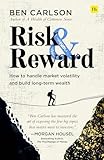
Risk and Reward | $15.54 | Buy on Amazon |
| 3 |
|
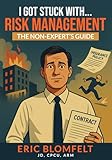
I Got Stuck with Risk Management - the Non-Expert's Guide | $19.95 | Buy on Amazon |
| 4 |

|
Against the Gods: The Remarkable Story of Risk | $14.71 | Buy on Amazon |
| 5 |

|
Risk: A User's Guide | $23.96 | Buy on Amazon |
The process begins with context. An organization needs to know which objectives, services, assets, and external dependencies matter; what constraints apply; and how much risk leaders are prepared to accept. That context determines which emerging conditions deserve attention. ISO/TS 31050:2023 is guidance specifically for managing emerging risks to enhance resilience. ISO describes it as applicable to any organization, customizable to context, and complementary to ISO 31000: ISO/TS 31050:2023.
How to identify and prioritize changing risks
The following is a practical implementation outline synthesized from the cited guidance, not a sequence mandated verbatim by ISO or NIST. Apply it at a level of detail that fits the organization and the evidence available.
Do these 3 things before closing this tab:
1Scan for outdated or missing drivers - takes under a minute2Clear out junk files and repair common Windows errors3Fix the driver behind crashes, sound loss and screen glitches#1 Best Overall
- Set the context. Identify objectives, critical services and assets, supplier and other external dependencies, risk appetite, and operational or regulatory constraints.
- Describe plausible scenarios. Look for changes in technology, suppliers, workforce, and operating conditions that could affect those objectives. Include relevant opportunities as well as threat events. Record the evidence behind each scenario separately from assumptions.
- Estimate likelihood and impact. Use a scale appropriate to available evidence. Where uncertainty is high, document it rather than implying that a precise score is reliable.
- Prioritize against objectives and tolerance. Compare the estimated exposure with stated appetite and tolerance. Translate technical findings into potential consequences for services, finances, obligations, or other organizational goals, and identify an accountable owner.
- Select and resource a response. Decide what action is justified, assign people and budget, and note dependencies, residual risk, and conditions that should trigger escalation.
- Monitor and reassess. Track relevant indicators and whether the response is working. Revisit the assessment when objectives, operating conditions, assumptions, or evidence change.
- Communicate and plan for capability. Use shared language so decision-makers can compare risks across organizational units. Include workforce capacity and skills when they affect the ability to carry out the response.
Make the risk register useful for decisions
A risk register is a working record, not a substitute for judgment. For cybersecurity risk in an enterprise-risk context, NIST IR 8286A Rev. 1 describes documenting risk scenarios, likelihood, and impact, and using registers to support prioritization, communication, response, and monitoring. The revision was published in December 2025 and supersedes the 2021 version: NIST IR 8286A Rev. 1.
For each material scenario, record the affected objective or asset, the event and its plausible consequences, evidence and assumptions, likelihood and impact estimates, owner, chosen response, resources or dependencies, residual risk, and monitoring or escalation criteria. This makes it easier to see why a risk has a particular priority and who is responsible for the next decision. Keep uncertainty visible: a score without its basis can create false confidence.
Rank #2
Connect cybersecurity risk to enterprise decisions
Cybersecurity teams may describe vulnerabilities, systems, and technical controls; leaders need to understand how those findings relate to organizational objectives. NIST’s Cybersecurity Framework (CSF) provides common language and outcomes for organizing cybersecurity risk information. NIST SP 1303 explains how to integrate that information into enterprise risk-management practice, including monitoring, evaluation, and adjustment across organizational units. It was published October 21, 2024: NIST SP 1303.
This connection helps leaders compare cyber exposure with other risks and make decisions about ownership and resources. It does not make technical detail unnecessary: teams still need enough system-level information to select and maintain appropriate safeguards.
Choose guidance by the decision it supports
These resources address different levels and purposes; they are complementary options, not interchangeable frameworks or a universal ranking.
| Resource | Useful for | Scope and fit |
|---|---|---|
| ISO/TS 31050:2023 | Guidance focused on emerging risks and resilience. | Broad organizational applicability; complements ISO 31000 and allows customization to context. |
| NIST Cybersecurity Framework (CSF) | Organizing cybersecurity risk understanding and communicating it through common language and outcomes. | Cybersecurity-centered; supports communication across organizational levels and supply chains. |
| NIST Risk Management Framework (RMF) | Integrating security and privacy risk management into system lifecycles, including risk-based control selection and ongoing monitoring. | System-focused, including cyber supply-chain risk in system development and operation. |
| NIST SP 1303 | Connecting CSF outcomes and cybersecurity risk information to enterprise risk-management practice. | Focuses on integration with wider enterprise risk processes. |
Choose based on the threat domain, organizational level, applicable legal or regulatory context, system detail required, and the effort needed to maintain assessments and controls. ISO’s emerging-risk guidance can inform a broad organizational process; NIST’s resources are especially relevant where cybersecurity risk must be managed at enterprise or system level. None of these publications, by itself, identifies which threats are material to a particular organization or guarantees prevention.
Rank #4
Include workforce capacity in adaptation
A response plan can fail if the organization lacks the skills or capacity to carry it out. NIST SP 1308 connects cybersecurity, enterprise risk management, and workforce management. The National Institute of Standards and Technology’s March 2026 guide says: “This Quick-Start Guide (QSG) addresses the need for agile, continuous workforce adaptation to rapidly evolve for emerging threats and technologies.” It is a reminder to consider whether roles, skills, and staffing can keep pace with changing threats and technologies: NIST SP 1308.
What this process can—and cannot—do
Proactive risk management makes decisions, ownership, uncertainty, and changing assumptions more visible. Its value depends on maintaining the process as conditions change, not on producing a one-time assessment. The guidance cited here does not specify which risks matter for every organization, prescribe a universal control set, or replace applicable regulation or professional advice. Sector-specific decisions require the relevant organization, jurisdiction, assets, and threat domain to be considered.
Quick Recap
Best Value
Product prices and availability are accurate as of the date/time indicated and are subject to change. Any price and availability information displayed on Amazon at the time of purchase will apply.




