PC Slower Than It Used to Be?
A free scan shows the junk files, broken settings and background clutter dragging Windows down - then fixes them in one click.Free scan · Windows 10 & 11Crashes, No Sound, or Screen Glitches?
Random freezes, missing sound and display glitches usually trace back to one bad driver. Find and replace yours safely.Free scan · under a minuteExascend’s PE4 is a real 16TB-class M.2 SSD, but the “$16,000” headline refers to a historical Amazon listing observed on March 19, 2026—not a guaranteed current price. The drive offers about 15.36TB of cited usable capacity in one M.2 2280 module, making it unusually dense but exceptionally expensive for most buyers.
The Amazon page later showed a 16TB variation with “Currently unavailable” messaging and no exposed current price. Treat the figure below as a reported listing price, not a standing manufacturer price.
What the $16,000 SSD actually is
The product is the Exascend PE4, an industrial/professional drive sold in an M.2 2280 form factor. HotHardware reported that an Amazon listing showed it at $15,935 on March 19, 2026. The listing and coverage identify these specifications:
| Specification | Reported detail |
|---|---|
| Advertised capacity | 16TB |
| Cited usable capacity | Approximately 15.36TB |
| Form factor | M.2 2280 |
| Interface | PCIe 4.0 x4 |
| Protocol | NVMe 1.4 |
| Advertised sequential read | Up to 3,270MB/s |
| Advertised sequential write | Up to 2,980MB/s |
| Warranty signal on listing | Five years; verify the applicable terms |
| Positioning | Professional, embedded, content-creation, post-production, gaming and edge workloads |
The product page is Amazon’s Exascend PE4 listing. Product-description statements about industrial-grade construction, thermal management and firmware optimization are manufacturer or listing claims, not independent test results.
#1 Best Overall

- This product has been replaced by our latest generation. Please search for the SANDISK Optimus GX PRO 850X NVMe SSD
- TRANFORM YOUR PC: Insane speeds up to 7,300MB/s (1TB - 4TB models) deliver top-tier performance with ridiculously short load times for your gaming PC or workstation — for the elite experience you’ve been waiting for.
- MORE ROOM FOR MORE GAMES: Capacities up to 8TB built with SANDISK TLC 3D NAND, means you get to keep more games at the ready — and get into the action even faster.
- DO MORE WITH WD_BLACK DASHBOARD: The downloadable WD_BLACK Dashboard (Windows only) monitors your drive’s health, lets you customize your RGB lighting, and, exclusively on the SN850X SSD, enables Game Mode 2.0 to transform your gaming experience.
- FUTURE FORWARD FREATURES: The WD_BLACK SN850X SSD boasts a powerful suite of features, including Predictive Loading, Overhead Balancing, and Adaptive Thermal Management (ATM).
Why 16TB becomes about 15.36TB
SSD makers advertise decimal capacity: 1TB means 1,000,000,000,000 bytes. Operating systems display a smaller figure after unit conversion, partitioning and the space reserved for formatting or overprovisioning. The cited coverage describes this model as 16TB with approximately 15.36TB usable.
Your formatted free space can differ by operating system, partition layout and the drive’s reserved area, so 15.36TB should be treated as the cited reference rather than a guaranteed number in every installation.
What the historical price means
At $15,935, the drive worked out to roughly $996 per advertised terabyte or $1,037 per cited usable terabyte. That premium buys density and simplicity: one module can hold more than 15TB without a drive cage, U.2 backplane, RAID card or external enclosure.
It does not mean the SSD is currently priced at $15,935. Amazon Marketplace sellers can change prices or stock quickly, and the later fetched page did not expose that price. Check the exact 16TB variation, seller, warranty and availability before treating any live figure as actionable.
What’s actually slowing this PC down?
Pick the symptom - the matching free tool is one click away.
Rank #2
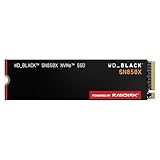
- TRANFORM YOUR PC: Insane speeds up to 7,300MB/s (1TB - 4TB models) deliver top-tier performance with ridiculously short load times for your gaming PC or workstation — for the elite experience you’ve been waiting for.
- MORE ROOM FOR MORE GAMES: Capacities up to 8TB built with SANDISK TLC 3D NAND, means you get to keep more games at the ready — and get into the action even faster.
- HEATSINK FOR THE WIN: The WD_BLACK SN850X NVMe SSD 1TB and 2TB drives have an optional heatsink version that not only looks awesome but also helps your rig maintain peak performance through the most intense gaming sessions.
- DO MORE WITH WD_BLACK DASHBOARD: The downloadable WD_BLACK Dashboard (Windows only) monitors your drive’s health, lets you customize your RGB lighting, and, exclusively on the SN850X SSD, enables Game Mode 2.0 to transform your gaming experience.
- FUTURE FORWARD FREATURES: The WD_BLACK SN850X SSD boasts a powerful suite of features, including Predictive Loading, Overhead Balancing, and Adaptive Thermal Management (ATM).
Why a single M.2 drive costs so much
Capacity in a compact package
Putting very high-capacity NAND into one standard-looking M.2 module requires dense packaging and qualification. The buyer is paying for capacity per slot as well as the flash itself.
Professional positioning
Industrial and professional products may be sold with firmware validation, sustained-workload design, thermal provisions and longer-term product support. Exascend’s listing makes those claims, but the available coverage does not independently verify endurance, controller choice or sustained-write behavior.
A premium for fewer components
One device can simplify installation in an embedded system or workstation with limited drive bays. That convenience can be rational when redesigning the system costs more than the storage premium. For a normal desktop, it is usually an expensive way to avoid using two or more drives.
Is it fast?
Its advertised 3,270MB/s read and 2,980MB/s write rates are far above SATA SSD sequential throughput. They are nevertheless midrange by current NVMe standards: HotHardware contrasted the drive with Samsung’s SSD 9100 PRO, reported at more than 13GB/s in sequential performance.
Recommended Free Tools
Rank #3

- This product has been replaced by our latest generation. Please search for the SANDISK Optimus GX PRO 8100 PCIe 5.0 NVMe SSD.
- EXPERIENCE PCIe Gen 5: Drastically enhance your gaming and content creation experience with this PCIe Gen 5.0x4 NVMe M.2 SSD.
- BREAKNECK SPEEDS: Your drive reaches sequential read speeds up to an astonishing 14,900MB/s, sequential write speeds up to 14,000MB/s (2TB-4TB model), and over 2,300,000 IOPS (2TB-4TB Models) of random performance.
- AN INDUSTRY-LEADER IN POWER EFFICIENCY: Enjoy over 100% more power efficiency (1TB – 4TB models) than our PCIe Gen4 drive at an average operating power of 7.5W or under. Experience astonishing speeds without any added stress to your system.
- ROOM FOR REVOLUTION: Hold your biggest projects and still have room for OS updates, models for AI-powered applications, and your game library thanks to immense capacities up to 8TB. SANDISK SOFTWARE: Help maximize your drive’s performance, monitor its health and keep it up to date with SANDISK Dashboard (Windows only). Plus, effortlessly migrate your data with Acronis True Image for Sandisk.
Those are peak advertised sequential figures, not independent benchmark results. They do not establish random I/O, latency, sustained-write behavior, endurance, thermal throttling or application performance. The practical description is: extreme capacity, but not flagship sequential speed.
Who could justify it?
- Post-production teams needing a very large local scratch or project volume.
- Workstations staging large datasets for AI, scientific or engineering workloads.
- Systems holding many virtual-machine images or large local game libraries.
- Embedded and edge devices with one available storage slot and a high value on compactness.
- Buyers who specifically need one physical volume and have budget approval for the premium.
For office work, ordinary gaming, photo libraries and general desktop use, a smaller NVMe SSD paired with cheaper bulk storage is normally more sensible.
Compatibility: M.2 is not enough
M.2 describes a physical form factor, not a performance class. M.2 devices can use SATA or NVMe, PCIe 3.0, 4.0 or 5.0, and can be consumer, industrial or enterprise products.
Before buying, confirm all of the following in your motherboard or system manual:
Rank #4

- MEET THE NEXT GEN: Consider this a cheat code; Our Samsung 990 PRO Gen4 SSD helps you reach near max performance with lightning-fast speeds; Whether you’re a hardcore gamer or a tech guru, you’ll get power efficiency built for the final boss
- REACH THE NEXT LEVEL: Gen4 steps up with faster transfer speeds and high-performance bandwidth; With a more than 55% improvement in random performance compared to 980 PRO, it’s here for heavy computing and faster loading
- THE FASTEST SSD FROM THE WORLD'S FLASH MEMORY BRAND: The speed you need for any occasion; With read and write speeds up to 7450/6900 MB/s you’ll reach near max performance of PCIe 4.0 powering through for any use
- PLAY WITHOUT LIMITS: Give yourself some space with storage capacities from 1TB to 4TB; Sync all your saves and reign supreme in gaming, video editing, data analysis and more
- IT’S A POWER MOVE: Save the power for your performance; Get power efficiency all while experiencing up to 50% improved performance per watt over the 980 PRO; It makes every move more effective with less consumption
- The socket accepts PCIe/NVMe drives; an M.2 SATA-only socket will not work.
- The slot provides the required PCIe lanes and does not disable another device you need.
- The board firmware and operating system support a drive of this capacity.
- The module’s single- or double-sided construction and heatsink fit physically.
- Cooling is adequate for sustained transfers.
- Your boot configuration, partition table and backup plan can handle a volume of this size.
Laptops, USB enclosures and embedded systems can impose additional restrictions. The motherboard or system manual is the authoritative compatibility source.
PlayStation 5 warning
Available coverage did not verify this drive in a PlayStation 5. Physical fit alone is insufficient; Sony’s expansion requirements also involve performance, dimensions and cooling. Do not buy it for PS5 expansion without platform-specific confirmation.
Independent reader supportYour contribution helps us test, update, and keep practical guides available for everyone.Cheaper configurations expose the premium
The following historical comparisons use prices reported in the coverage. Amazon Marketplace prices are volatile and the alternatives require more hardware than a single M.2 module.
| Configuration | Historical arithmetic | Nominal capacity | Approximate storage cost | Main trade-off |
|---|---|---|---|---|
| Exascend PE4 | $15,935 for one drive | 16TB | About $996/TB | One compact device, very high premium |
| Three Solidigm D5-P5336 16TB drives | 3 × $4,539 = $13,617; three $17.99 adapters add $53.97 | 48TB | About $284.81/TB including adapters | Requires U.2 connectivity, cabling, power and mounting |
| Eight Samsung 870 QVO 8TB drives | 8 × $1,396 = $11,168; an eight-port controller at $39.78 brings the total to about $11,207.78 | 64TB | About $175.12/TB including controller | SATA performance, many devices, power and volume-management complexity |
The three-drive U.2 calculation uses the Solidigm D5-P5336 comparison and a historical GLOTRENDS U.2 adapter listing. The SATA calculation uses the Samsung 870 QVO 8TB listing.
Quick wins for a faster PC:
Fix the driver behind crashes, sound loss and screen glitchesFind Drivers →Repair Windows errors before they cause bigger problemsFix Now →Scan for outdated or missing drivers - takes under a minuteDriver Scan →Best Value

- HUGE SPEED BOOST: Get random read/write speeds that are 40%/55% faster than 980 PRO; Experience up to 1400K/1550K IOPS, while sequential read/write speeds up to 7,450/6,900 MB/s reach near the max performance of PCIe 4.0*
- BREAKTHROUGH POWER EFFICIENCY: Use less power and get more performance; Enjoy up to 50% improved performance per watt over 980 PRO, plus optimal power efficiency with max PCIe 4.0 performance**
- SMART THERMAL CONTROL: Samsung's own nickel-coated controller delivers effective thermal control; With its slim size, 990 PRO is a perfect fit for desktops and laptops that meet the PCI-SIG D8 standard***
- THE CHAMPION MAKER: Up to 65% improvement in random performance enables faster loads for an ultimate gaming experience on PS5 and DirectStorage PC games****
- SAMSUNG MAGICIAN SOFTWARE: Get the most out of your SSD with Samsung Magician's advanced yet intuitive optimization tools; Monitor drive health, protect valuable data, and receive important updates for your 990 PRO
Eight 8TB drives provide 64TB, not 96TB. The lower-cost array also creates eight separate failure domains and may need a controller, cables, mounting, airflow, backup capacity and a deliberate RAID or filesystem design. A single 16TB drive is simpler, but a single failure can put more data at risk at once.
What to check before spending anything
- Define the capacity need: determine whether more than 15TB must be online on one device or whether cold data can move to a NAS, hard-drive array or external storage.
- Check the platform: verify PCIe/NVMe support, M.2 2280 clearance, lane sharing and firmware support.
- Match the workload: look beyond sequential ratings at random I/O, queue depth, sustained writes and thermal limits.
- Verify endurance and warranty: request the TBW or DWPD rating, warranty conditions and seller authorization; these details are not established in the available coverage.
- Budget for resilience: include backup storage, replacement strategy and restore time. A large drive is still one failure domain.
- Normalize the total cost: include heatsinks, adapters, controllers, cables, power, mounting and any platform upgrade.
Verdict for buyers
The Exascend PE4 demonstrates that roughly 15.36TB can fit in an M.2 2280-class module. It is a technically interesting solution for specialized professional, industrial or embedded systems where one compact device matters more than cost per terabyte.
For most consumers, the economics are difficult to defend. The historical $15,935 listing buys far less capacity than multi-drive alternatives, while the drive’s advertised PCIe 4.0 performance trails current flagship PCIe 5.0 consumer SSDs. Unless your system specifically requires a single, ultra-high-capacity M.2 device, distribute the budget across cheaper storage and a serious backup plan.
Frequently Asked Questions
Is the Exascend PE4 16TB SSD currently available for $15,935?
No current price is established here. $15,935 was an Amazon listing price reported on March 19, 2026; later page data showed unavailable-status messaging and no exposed price.
The Tool Desk
Outbyte Driver Updater FREEFix the driver behind crashes, sound loss and screen glitchesFind Drivers →Outbyte PC Repair FREERepair Windows errors before they cause bigger problemsFix Now →Can I install this SSD in any M.2 slot?
No. The slot must support PCIe/NVMe, provide suitable lanes and firmware support, and have enough physical clearance and cooling. Some M.2 sockets support SATA only.
Is this SSD compatible with a PS5?
Compatibility was not verified in the available coverage. Do not treat its M.2 format or price as proof that it meets Sony’s expansion requirements.
Quick Recap
Product prices and availability are accurate as of the date/time indicated and are subject to change. Any price and availability information displayed on Amazon at the time of purchase will apply.




