Free tools Windows power users keep installed
One-click scans. No signup required.
Layer 2 (L2) systems aim to increase blockchain capacity by processing transactions away from a base layer such as Ethereum, then using that base layer for some combination of data availability, settlement, and verification. Rollups can inherit important security properties from Ethereum, but “L2” is not a blanket security guarantee: the data a system publishes, its proof and exit mechanisms, operator powers, upgrade controls, and bridge design all matter.
What is a layer 2?
A layer 2 is a system designed to handle activity outside a blockchain’s base layer (L1) while relying on that base layer for some important function. Ethereum rollups are a prominent example: they execute transactions off mainnet and post transaction data to Ethereum, where the rollup’s state changes can be settled or verified.
Batching lets a rollup group many transactions together. When data and costs are shared across a batch, each transaction can require less L1 capacity than if it were processed individually on Ethereum. The security connection comes from more than running a separate execution environment: what the rollup posts to Ethereum, and what Ethereum verifies, help determine whether users can check the result and recover if the rollup’s operators fail.
Not every faster chain is an Ethereum L2 in the same security sense. The important distinction is whether and how it relies on Ethereum for settlement and data availability, rather than simply whether it connects to Ethereum or uses a compatible interface.
Crashes, No Sound, or Screen Glitches?
Random freezes, missing sound and display glitches usually trace back to one bad driver. Find and replace yours safely.Free scan · under a minutePC Slower Than It Used to Be?
A free scan shows the junk files, broken settings and background clutter dragging Windows down - then fixes them in one click.Free scan · Windows 10 & 11#1 Best Overall

- Proven security at scale: Over 9 years and millions of cards issued with no known remote hacks, while military‑grade EAL6+ security keeps your private keys locked inside the chip. Your cryptocurrencies stay strongly protected from online attackers.
- Tap once to manage your entire crypto wallet across 90 blockchains - no USB cables or Bluetooth, no batteries, no setup. Access 14,100+ coins & tokens, DeFi, NFTs, and staking instantly from your phone
- Smart backup: Use your second Tangem Wallet as your Backup keys with end‑to‑end encryption; no more papers, pictures. If one card is lost, the remaining can still restore full access, with an optional seed phrase available for advanced users.
- Engineered to last up to 25 years: Waterproof (IP69K), shockproof and tested for extreme temperatures from −25°C to 50°C. A durable cold wallet with long‑term protection and independently audited security.
- Trusted by 6 million users worldwide - buy, sell, swap, stake, and spend cryptocurrency directly. The secure offline storage wallet designed for how people actually use crypto wallets
How rollups scale Ethereum
Ethereum’s base layer provides consensus and settlement, while a rollup performs transaction execution elsewhere. The rollup sends information about its activity back to Ethereum. This division can reduce the amount of execution Ethereum mainnet must perform directly, while leaving Ethereum as an anchor for verifying or resolving the rollup’s state.
Data availability is central to that relationship. Users, independent operators, and—depending on the design—fraud challengers need access to relevant data to reconstruct the rollup’s state or check a disputed result. A proof that a state transition is valid does not, by itself, make the underlying data available.
Optimistic and zero-knowledge rollups: what differs?
| Design | How correctness is checked | What data availability contributes | A practical consideration |
|---|---|---|---|
| Optimistic rollup | Initially treats a posted batch as valid. During a challenge period, a challenger can contest an incorrect result with a fraud proof. | Data must be accessible so a challenger can check or re-execute the relevant transactions and users can reconstruct state. | A challenge period can delay withdrawals through the rollup’s canonical bridge. Operator censorship or downtime also makes escape and forced-inclusion paths important. |
| Zero-knowledge (validity-proof) rollup | Submits a validity proof for a proposed state transition. The L1 contract verifies the proof before accepting the transition. | Published data supports independent state reconstruction and user interaction; the proof does not replace data availability. | After proof verification, an L1 withdrawal may not face the same fraud-challenge wait, but timing depends on the particular system and bridge. Proof systems also differ in their setup, hardware, and decentralization trade-offs. |
Optimistic rollups
The “optimistic” assumption means a batch is accepted unless someone successfully challenges it within the system’s challenge period. If a fraud proof establishes that a result is invalid, the system can reject that result and correct its state. This model depends on people being able to access the transaction data and submit a challenge in time.
Rank #2

- Proven security at scale: Over 9 years and millions of cards issued with no known remote hacks, while military‑grade EAL6+ security keeps your private keys locked inside the chip. Your cryptocurrencies stay strongly protected from online attackers.
- Tap once to manage your entire crypto wallet across 90 blockchains - no USB cables or Bluetooth, no batteries, no setup. Access 14,100+ coins & tokens, DeFi, NFTs, and staking instantly from your phone
- Smart backup: Use your second Tangem Wallet as your Backup keys with end‑to‑end encryption; no more papers, pictures. If one card is lost, the remaining can still restore full access, with an optional seed phrase available for advanced users.
- Engineered to last up to 25 years: Waterproof (IP69K), shockproof and tested for extreme temperatures from −25°C to 50°C. A durable cold wallet with long‑term protection and independently audited security.
- Trusted by 6 million users worldwide (4.9 App Store, 4.8 Google Play) - buy, sell, swap, stake, and spend cryptocurrency directly. The secure offline storage wallet designed for how people actually use crypto wallets
A rollup operator or sequencer may order transactions and can affect how quickly users’ transactions are included. Some designs provide a way to submit transactions through L1 if the sequencer censors users or stops operating; the mechanism and conditions are network-specific. Ethereum.org describes optimistic rollups as offering “up to 10-100x improvements in scalability.” Treat that as a general documentation estimate, not a measured result for a particular network, workload, or fee market.
Zero-knowledge rollups
A zero-knowledge rollup, often called a ZK-rollup, submits a succinct validity proof that a batch’s state transition follows from its transactions. Ethereum verifies the proof before accepting the transition. This lets the base layer check correctness without re-executing every transaction in the batch.
Proof systems are not interchangeable. Their setup assumptions, performance characteristics, hardware demands, and implications for who can operate a prover vary. Ethereum.org notes that some SNARK designs involve trusted setup concerns and that specialized hardware can contribute to operator concentration. A “ZK” label alone does not tell you how a particular network addresses those issues.
Rank #3

- EAL5+ CERTIFIED SECURE ELEMENT + FINGERPRINT PROTECTION — Your private keys stay encrypted offline on a certified EAL5+ chip, the same security tier used in EMV bank cards. Built by DCENT, securing crypto since 2018. Fingerprint authentication adds a second layer no PIN-only wallet can match.
- 10,000+ ASSETS NATIVE ON 100+ BLOCKCHAINS — Hold Bitcoin, Ethereum, XRP, Solana, Cardano, popular stablecoins (USDT, USDC), and NFTs in one wallet. No third-party apps, no fragmented setup — every supported asset works straight out of the box.
- TAP-TO-SIGN MOBILE EXPERIENCE — Pair your wallet with the DCENT mobile app over Bluetooth. Manage tokens, review transactions, and access in-app swap features directly from your phone — no cables, no desktop required.
- WEB3 & dAPP ACCESS VIA METAMASK — Connect to MetaMask and other browser extension wallets to manage NFTs, claim airdrops, and access dApps. A large screen and intuitive 4-button interface keep every transaction clearly visible before you sign.
- SEAMLESS FIRMWARE UPDATES & 30-DAY MONEY-BACK GUARANTEE — Apply security updates without resetting your wallet or migrating funds. Backed by Amazon's 30-day money-back guarantee — your purchase is risk-free.
Does a zero-knowledge rollup make transactions private?
No. In a scaling design, “zero-knowledge” refers to a proof technique; it does not automatically mean transactions are confidential. Rollups generally publish data needed to reconstruct state, commonly through Ethereum calldata or blobs. Confidentiality requires additional design at the network or application level, such as encryption and local proving.
How rollups differ from other scaling designs
Rollups are one approach to scaling, not a synonym for every system that processes transactions off-chain. Ethereum.org distinguishes rollups that use Ethereum for security and data availability from designs with different trust arrangements.
The Tool Desk
Outbyte PC Repair FREERepair Windows errors before they cause bigger problemsFix Now →Outbyte Driver Updater FREEFix the driver behind crashes, sound loss and screen glitchesFind Drivers →- Sidechains manage their own security rather than relying on Ethereum in the same way a rollup does.
- Validiums use validity proofs but keep transaction data off Ethereum. That changes the availability and recovery assumptions compared with a rollup that posts its data to Ethereum.
- State channels let participants transact off-chain and settle with mainnet. They are a separate design, not a subtype of rollup.
These categories describe broad design choices. A project’s actual contracts and operating procedures determine how those choices work in practice.
Rank #4

- Proven security at scale: Over 9 years and millions of cards issued with no known remote hacks, while military‑grade EAL6+ security keeps your private keys locked inside the chip. Your cryptocurrencies stay strongly protected from online attackers.
- Tap once to manage your entire crypto wallet across 90 blockchains - no USB cables or Bluetooth, no batteries, no setup. Access 14,100+ coins & tokens, DeFi, NFTs, and staking instantly from your phone
- Smart backup: Use your second Tangem Wallet as your Backup keys with end‑to‑end encryption; no more papers, pictures. If one card is lost, the remaining can still restore full access, with an optional seed phrase available for advanced users.
- Engineered to last up to 25 years: Waterproof (IP69K), shockproof and tested for extreme temperatures from −25°C to 50°C. A durable cold wallet with long‑term protection and independently audited security.
- Trusted by 6 million users worldwide (4.9 App Store, 4.8 Google Play) - buy, sell, swap, stake, and spend cryptocurrency directly. The secure offline storage wallet designed for how people actually use crypto wallets
What to check before using a specific L2
Do not infer a network’s safety from its “L2,” “rollup,” or “ZK” label alone. Check the system’s current documentation and contracts, especially if you plan to hold substantial value or need to withdraw on a deadline.
- Find where transaction data is available. Determine whether data is posted to Ethereum as calldata or blobs, or kept off-chain. Ask who can retrieve it and how long access is guaranteed.
- Identify the correctness mechanism. For an optimistic design, look for an operational fraud-proof process and its challenge period. For a validity-proof design, check which proof system is used and how proofs are submitted and verified.
- Understand finality and withdrawal routes. Distinguish settlement through the system’s canonical bridge from a faster third-party liquidity service. A fast transfer through a liquidity provider is not the same thing as the L1 completing settlement.
- Check what users can do during censorship or downtime. Find out whether a force-inclusion or L1 escape mechanism exists, how to invoke it, and what prerequisites or delays apply.
- Review operator and upgrade powers. Determine who controls sequencing, can pause contracts, or can upgrade them, and whether those powers are restricted by delays, multisignature arrangements, or other controls.
- Trace the bridge implementation. Verify which contracts custody or release assets, what conditions authorize withdrawals, and whether the route you intend to use is the canonical bridge or a separate service.
- Separate privacy from scaling. If confidentiality matters, look for explicit privacy features and their limits; do not treat validity proofs as evidence that transaction details are hidden.
Data availability, blobs, and recovery
Ethereum blobs are a data-availability mechanism, not permanent archival storage. Ethereum.org describes a protocol serving window of roughly 18 days for blob data. That is a protocol retention distinction, not a claim that the data necessarily disappears on day 18: longer-term access can depend on archival services and other ecosystem participants.
This matters because a rollup’s ability to prove a transition and a user’s ability to reconstruct the state are different questions. Before relying on a network, check its documented recovery process and who is expected to preserve data beyond the protocol serving window.
Do these 3 things before closing this tab:
1Clear out junk files and repair common Windows errors2Fix the driver behind crashes, sound loss and screen glitches3Repair Windows errors before they cause bigger problemsBest Value
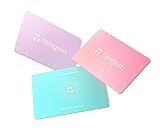
- Security at scale: Over 9 years and millions of cards issued with no known remote hacks, while military‑grade EAL6+ security keeps your private keys locked inside the chip. Your cryptocurrencies stay strongly protected from online attackers.
- Tap once to manage your entire crypto wallet across 90 blockchains - no USB cables or Bluetooth, no batteries, no setup. Access 14,100+ coins & tokens, DeFi, NFTs, and staking instantly from your phone
- Smart backup: Use your second Tangem Wallet as your Backup keys with end‑to‑end encryption; no more papers, pictures. If one card is lost, the remaining can still restore full access, with an optional seed phrase available for advanced users.
- Engineered to last up to 25 years: Waterproof (IP69K), shockproof and tested for extreme temperatures from −25°C to 50°C. A durable cold wallet with long‑term protection and independently audited security.
- Trusted by 6 million users worldwide (4.9 App Store, 4.8 Google Play) - buy, sell, swap, stake, and spend cryptocurrency directly. The secure offline storage wallet designed for how people actually use crypto wallets
What “inherits Ethereum security” does—and does not—mean
A rollup’s Ethereum security relationship depends on its actual use of Ethereum for settlement and data availability, as well as the correctness checks and escape mechanisms its design provides. It does not eliminate risks from sequencer operation, censorship, contract bugs, bridge implementation, or governance and upgrade controls.
Optimistic and validity-proof designs also produce different withdrawal experiences: optimistic systems use a challenge period, while a ZK withdrawal can proceed after proof verification. The exact user-facing delay still depends on the network and bridge route. Ethereum.org cautions that L2 systems are not as battle-tested as Ethereum mainnet; that makes project-specific review important, rather than treating the category as a security rating.
Quick Recap
Product prices and availability are accurate as of the date/time indicated and are subject to change. Any price and availability information displayed on Amazon at the time of purchase will apply.




