The best current 0% APR credit-card offers reach 21 months or 21 billing cycles. As of August 10, 2026, the longest publicly verified offers in this comparison are the Chase Slate, U.S. Bank Shield Visa, BankAmericard and Wells Fargo Reflect.
Those cards are not interchangeable. Some offer 0% on both purchases and balance transfers, some charge a lower transfer fee but give you less time, and rewards cards may require quarterly activation or spending-cap management. Choose based first on whether you need purchase financing, a balance transfer or both; then compare the transfer fee, payoff period, credit limit and regular APR.
Offers checked August 10, 2026: These are U.S. consumer-card offers. APRs, bonuses, transfer fees, eligibility, credit limits and promotional periods can change by application channel, state, date and applicant. The issuer’s application disclosure controls.
Quick picks
- Best overall for a long 0% period: Chase Slate, subject to its balance-transfer eligibility rules.
- Best long offer with card protections: U.S. Bank Shield Visa.
- Best long offer with no penalty APR: BankAmericard.
- Best for a long transfer-completion window: Wells Fargo Reflect.
- Best lower-fee balance-transfer option: Bank of America Customized Cash Rewards, if you can repay within 15 billing cycles.
- Best first-year rewards offer: Discover it Cash Back.
- Best simple rewards card: Chase Freedom Unlimited.
- Best customizable rewards card: Bank of America Customized Cash Rewards or U.S. Bank Cash+ Visa Signature, depending on your spending.
A 0% balance-transfer offer is not free: the transfer fee is added to the balance even when the promotional APR is 0%. For example, transferring $10,000 with a 3% fee creates a $10,300 balance; a 5% fee creates a $10,500 balance.
#1 Best Overall
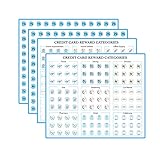
- Easy to apply: Fit on your cards perfectly and these decals are die cut,super easy to peel and apply
- Organized: Work perfectly to keep your cards organized.Make it so easy to track which card to use for which category to maximize points and miles
- Premium materials: Made with waterproof paper ,Clear print,long-lasting inks,bubble-free and removable
- Variety of categories and multipliers: There are 15 categories. And come with some blank labels,so you can write my own categories and X/%'s on them, pen or sharpie write well on the paper
- Includes: 502 lables.Size:0.39 inch/1cm in diameter,perfect size for credit cards
Comparison of the 10 best 0% APR cards
The purchase and balance-transfer columns are separate because a card can offer different terms for each transaction type. A transfer deadline is also separate from the length of the 0% period: you may have 21 months to repay a qualifying transfer but only 60 or 120 days after opening the account to request it.
| Card | Best for | Purchase intro APR | Balance-transfer intro APR | Transfer deadline and fee | Regular variable APR | Annual fee |
|---|---|---|---|---|---|---|
| Chase Slate | Longest all-around offer | 0% for 21 months | 0% for 21 months | 5% or $5 minimum, whichever is greater; transfer eligibility may be restricted | 18.24%–28.24% | $0 |
| U.S. Bank Shield Visa | Long financing plus protections | 0% for 21 billing cycles | 0% for 21 billing cycles | Transfers within 60 days; 5%, $5 minimum | Check live application disclosure | $0 |
| BankAmericard | Long period with no penalty APR | 0% for 21 billing cycles | 0% for transfers made within 60 days, for 21 billing cycles | 5%; cannot transfer Bank of America accounts | 14.99%–25.99% | $0 |
| Wells Fargo Reflect | Extra time to complete a transfer | 0% for 21 months | 0% for 21 months on qualifying transfers | Transfers within 120 days; 5%, $5 minimum | 17.49%, 23.99% or 28.24% | $0 |
| Bank of America Customized Cash Rewards | Choice-category cash back | 0% for 15 billing cycles | 0% for transfers within 60 days, for 15 billing cycles | 3% during first 60 days; 5% afterward | 17.49%–27.49% | $0 |
| Chase Freedom Flex | Rotating-category rewards | 0% for 15 months | 0% for 15 months | Balance-transfer fee applies; verify current pricing terms | 18.24%–27.74% | $0 |
| Chase Freedom Unlimited | Simple everyday rewards | 0% for 15 months | 0% for 15 months | Balance-transfer fee applies; verify current pricing terms | 18.24%–27.74% | $0 |
| Blue Cash Everyday from American Express | Groceries, gas and online retail | 0% for 15 months | 0% for 15 months | Confirm the current fee in the personalized rates-and-fees disclosure | 19.49%–28.49% | $0 |
| Discover it Cash Back | First-year Cashback Match | 0% for 15 months | 0% for 15 months | 3% through September 10, 2026; future transfers may cost 5% | 17.49%–26.49% | $0 |
| U.S. Bank Cash+ Visa Signature | Customizable bonus categories | 0% for 15 billing cycles | 0% for transfers within 60 days, for 15 billing cycles | 5%, $5 minimum | Check live application disclosure | $0 |
Important: The regular APR is the rate that generally applies to an unpaid balance after the introductory period. It is variable, and the rate offered to you may differ from the range shown. Billing cycles are not necessarily identical to calendar months.
How we chose these cards
This is an editorial comparison, not a guarantee of approval or savings. No hands-on application testing or approval-odds claims were used. The ranking weighs:
- Promotional value, 30%: the length of purchase and balance-transfer offers, whether the period is stated in months or billing cycles, and the transfer deadline.
- Total cost, 25%: the transfer fee, annual fee, regular APR and other relevant charges.
- Use-case fit, 20%: whether the card works best for debt consolidation, a large purchase, rewards or another specific need.
- Long-term value, 15%: rewards, protections and the usefulness of keeping a no-annual-fee account after the introductory offer ends.
- Operational risk, 10%: transfer eligibility, posting delays, category activation, spending caps, same-issuer restrictions and unclear or personalized terms.
Promotional length was not treated as the only measure of value. A 3% transfer fee on a 15-month card can be cheaper than a 5% fee on a 21-month card if you can pay the balance quickly. Conversely, the longer offer may be the safer choice if the lower required payment is what makes repayment possible.
Free tools Windows power users keep installed
One-click scans. No signup required.
The 10 best cards in detail
1. Chase Slate: best overall for the longest pure 0% window
Current offer: The Chase Slate offers 0% introductory APR for 21 months from account opening on purchases and balance transfers. Its ongoing variable APR is listed as 18.24%–28.24%, and it has no annual fee. See the Chase Slate product page and Chase pricing and terms before applying.
Transfer terms: The fee is $5 or 5% of the transfer amount, whichever is greater. Chase’s public terms say total transfer requests, including fees and interest charges, cannot exceed available credit or $15,000, whichever is lower. The account may not be eligible for balance transfers, so do not assume approval means the requested transfer will be accepted. The public pricing terms also do not provide a simple universal transfer deadline; follow the account-specific instructions.
Chase says a transfer can take up to three weeks to process. Continue making at least the minimum payment on the old account until the transfer is confirmed there.
Choose it if: You want the longest verified purchase and transfer window and are comfortable with a 5% fee and no rewards.
Do these 3 things before closing this tab:
1Fix the driver behind crashes, sound loss and screen glitches2Repair Windows errors before they cause bigger problems3Scan for outdated or missing drivers - takes under a minuteSkip it if: Your priority is the lowest transfer cost, you need rewards, or you need certainty that a particular balance is eligible for transfer.
2. U.S. Bank Shield Visa: best long offer with protections
Current offer: The U.S. Bank Shield Visa offers 0% on purchases for 21 billing cycles and 0% on balance transfers made within 60 days of account opening for 21 billing cycles. It has no annual fee.
Benefits: U.S. Bank advertises up to $600 in cell-phone protection when you pay the monthly cellular bill with the card, subject to the benefit’s terms. The page also advertises a $20 statement credit after 11 consecutive calendar months of purchases, subject to account conditions, and a three-month $0-fee ExtendPay offer after the introductory purchase APR expires. These benefits should not be allowed to distract from the payoff plan.
Transfer terms: The fee is 5%, with a $5 minimum. The issuer page currently does not reliably expose the regular APR in its HTML, so check the live application disclosure rather than relying on a third-party range.
Recommended Free Tools
Important update: U.S. Bank’s March 2025 launch announcement described a 24-billing-cycle offer, but the current product page says 21 billing cycles. The current public offer is the figure used here.
Choose it if: You want a 21-cycle purchase and transfer window and value cell-phone protection or other card benefits.
Skip it if: You want the lowest transfer fee or need to know the post-intro APR before opening an application without reviewing personalized disclosures.
3. BankAmericard: best long offer with no penalty APR
Current offer: The BankAmericard offers 0% for 21 billing cycles on purchases and 0% for balance transfers made within 60 days of account opening. The ongoing variable APR is 14.99%–25.99%, and the annual fee is $0.
Transfer terms: Bank of America charges a 5% balance-transfer fee. You cannot use the card to transfer a balance from another Bank of America account.
No penalty APR: Bank of America states that the card has no penalty APR, meaning a late payment does not automatically raise the APR. That does not make late payments harmless. A late payment can still result in a fee, credit-reporting consequences and possible loss of promotional benefits under the account terms. Pay at least the minimum by the due date.
Choose it if: You want the longest period, a relatively low published regular-APR floor and no penalty APR, and you are transferring debt from an issuer other than Bank of America.
Skip it if: You need rewards or a lower transfer fee.
Quick wins for a faster PC:
Fix the driver behind crashes, sound loss and screen glitchesFind Drivers →Clear out junk files and repair common Windows errorsFree Scan →Bank of America also lists a student version with the same 21-billing-cycle purchase and transfer offer. It is a separate eligibility path, not a reason to count the same basic offer twice in a general top-10 list.
4. Wells Fargo Reflect: best for a long transfer deadline
Current offer: The Wells Fargo Reflect offers 0% for 21 months from account opening on purchases and qualifying balance transfers. Transfers made within 120 days qualify for the introductory rate. The annual fee is $0.
Transfer terms: The fee is 5%, with a $5 minimum. The listed regular variable APR is 17.49%, 23.99% or 28.24%. Wells Fargo says a transfer can take up to 14 days to post, so keep paying the old account while you wait. If requested transfers plus fees exceed available credit, Wells Fargo may send a reduced amount or no transfer. Transfers between Wells Fargo credit-card accounts or affiliates are not available.
The 120-day window is the major advantage over cards requiring action within 60 days. It gives you more time to organize account information and decide how much you can safely transfer.
The Tool Desk
Outbyte PC Repair FREEClear out junk files and repair common Windows errorsFree Scan →Outbyte Driver Updater FREEScan for outdated or missing drivers - takes under a minuteDriver Scan →Rank #2

- This Credit Card Holder is made of aluminum shells, ABS plastic frame and clasp closure, RFID-blocking will protect your card data from RFID scanners and readers.
- The Size is 4.33 x 2.95 x 0.73 inches, Slim and small exterior design, are fit in your front pocket,suitable for travel and business carrying.
- Latches Safely and Securely when not in use. Rounded corner wouldn't damage on your clothes. With 7 accordion Slots, Capacity for up to more than 9 credit cards or more than 21 business cards.
- There are various patterns to choose from on the aluminum shell, including flowers, animals, and landscapes, to match your versatile style.
- This is an ideal gift that can express your thoughtfulness and kindness. Suitable for any day you want to express love on, such as Valentine's Day, birthdays, Mother's Day, etc.
Choose it if: You need the longest verified period and want four months to complete the transfer.
Skip it if: You need rewards, are transferring another Wells Fargo balance or can repay within 15 billing cycles and want to minimize the upfront fee.
5. Bank of America Customized Cash Rewards: best lower-fee rewards option
Current offer: The Bank of America Customized Cash Rewards offers 0% for 15 billing cycles on purchases and on balance transfers made within the first 60 days. It has no annual fee and a listed regular variable APR of 17.49%–27.49%.
Transfer terms: Transfers receive a 3% introductory fee during the first 60 days, then a 5% fee. That lower initial fee can save $200 on a $10,000 transfer compared with a 5% fee, but the repayment window is six billing cycles shorter than the 21-cycle cards.
Outdated Drivers Are Slowing You Down
One free scan finds every outdated or missing driver and matches the right update for your exact hardware.Free scan · exact hardware matchWindows Errors? Fix Them Before They Spread
Repair common Windows errors and clear accumulated junk for a smoother, more stable PC - no reinstall needed.Free scan · no reinstallRewards: The current public offer advertises 6% cash back for the first year in a selected category, 2% at grocery stores and wholesale clubs, and 1% elsewhere. The 6% and 2% rates apply only to the first $2,500 in combined purchases each quarter. After the first year, the choice-category rate becomes 3%. You can change the selected category once each calendar month.
Because of the quarterly cap, the headline rate is not a blanket 6% return on all spending. For a reader carrying a promotional balance, rewards are a secondary benefit; they do not compensate for interest after the introductory period.
Choose it if: You can repay the transferred balance within 15 billing cycles and your planned purchases fit the available choice categories.
Skip it if: You need 21 months, will not track category rules or are likely to exceed the quarterly rewards cap.
What’s actually slowing this PC down?
Pick the symptom - the matching free tool is one click away.
6. Chase Freedom Flex: best for rotating-category cash back
Current offer: The Chase Freedom Flex offers 0% for 15 months from account opening on purchases and balance transfers. It has no annual fee, a listed regular variable APR of 18.24%–27.74%, and a $200 bonus after $500 in purchases during the first three months, subject to the offer terms.
Rewards: You earn 5% on up to $1,500 in combined purchases each quarter in activated bonus categories, 5% on Chase Travel purchases, 3% on dining and drugstores, and 1% on other purchases. Quarterly categories must be activated; otherwise eligible purchases earn only the applicable base rate. The issuer’s page listed gas stations, public transit, EV charging, select live entertainment and United Way for July–September 2026. October–December categories had not yet been published when the page was crawled.
Transfer terms: A balance-transfer fee applies, but the exact current pricing should be checked in the live offer and pricing disclosure.
Choose it if: You will actively activate categories and can repay the balance within 15 months.
Skip it if: You want an automatic, simple rewards structure or need the longest available promotional period.
7. Chase Freedom Unlimited: best simple rewards option
Current offer: The Chase Freedom Unlimited offers 0% for 15 months from account opening on purchases and balance transfers. It has no annual fee, a regular variable APR of 18.24%–27.74% and a $200 bonus after $500 in purchases during the first three months, subject to the offer terms.
Rewards: The card earns 1.5% cash back on other purchases, 3% on dining and drugstores and 5% on travel purchased through Chase Travel. Unlike Freedom Flex, it does not require rotating-category activation for its core rewards.
Transfer terms: A balance-transfer fee applies. Check the live Chase pricing terms before applying because the fee can affect the cost comparison substantially.
Choose it if: You want rewards during a planned purchase-financing period without tracking quarterly categories.
Skip it if: You are primarily consolidating debt and cannot repay within 15 months, or you can maximize Freedom Flex categories.
8. Blue Cash Everyday from American Express: best for groceries, gas and online purchases
Current offer: The Blue Cash Everyday from American Express offers 0% on purchases and balance transfers for 15 months from account opening. It has no annual fee, and the listed regular variable APR is 19.49%–28.49%.
Rewards: You earn 3% cash back at U.S. supermarkets, U.S. gas stations and U.S. online retail purchases, up to $6,000 per year in each category, then 1%. Other eligible purchases earn 1%. The categories have separate annual caps, so spending above a category’s threshold does not continue earning 3%.
Transfer terms: The public product page confirms the balance-transfer promotion but does not reliably expose every transfer fee in the crawlable product text. Check the personalized American Express rates-and-fees disclosure before treating this as a balance-transfer choice. American Express also lists a 2.7% foreign-transaction fee, making this a poor choice for purchases abroad.
Choose it if: Your planned spending is concentrated in U.S. groceries, gas or online retail and you can clear the balance within 15 months.
Skip it if: You need a fully documented low-fee transfer, travel frequently outside the U.S. or will carry the balance beyond the promotional period.
9. Discover it Cash Back: best first-year rewards match
Current offer: The Discover it Cash Back offers 0% for 15 months on purchases and balance transfers. It has no annual fee, and the listed regular variable APR is 17.49%–26.49%.
Rank #3

- Material: Genuine Cowhide Leather and PVC card slots.
- Size: 7.48"*3.54"*0.98" (19*9*2.5 CM)
- Large Capacity: The card holder has 60 cards slots and 2 ID Windows. It is enough room for your ID card, credit cards, gift cards and dicounted cards. Small size is perfect to fit in your pockets or handbags.
- RFID Blocking Design: RFID Blocking designed lining keeps your vital information Secure. Be safe and protected from Electronic Pick pocketing.
- Great Gift: Great gift for mother, daughter, grandmother and so on.
Rewards: Discover automatically matches all cash back earned during the first year after account opening, with no stated dollar cap. The card earns 5% in rotating quarterly categories when activated, up to the applicable quarterly limit, and 1% on other purchases. The match can be valuable for a reader who will use the card for ordinary spending while also paying down a purchase balance.
Transfer terms: The official offer crawled for 2026 lists a 3% introductory balance-transfer fee through September 10, 2026. Future transfers may be subject to a 5% fee. Because that date is close to the research date, verify it immediately before publication and again before applying.
Choose it if: You want a first-year rewards match and can manage rotating-category activation.
Skip it if: You need 21 months, want simple flat-rate rewards or are applying after the temporary 3% transfer-fee window without checking the new terms.
Recommended Free Tools
10. U.S. Bank Cash+ Visa Signature: best customizable category card
Current offer: The U.S. Bank Cash+ Visa Signature offers 0% on purchases for 15 billing cycles and 0% on balance transfers made within 60 days of account opening for 15 billing cycles. It has no annual fee, and the current transfer fee is 5%, with a $5 minimum.
Rewards: You can earn 5% cash back on the first $2,000 in combined eligible purchases each quarter in two selected categories. You also choose one everyday category, such as grocery stores, restaurants, gas stations or EV charging stations, for 2% cash back. Other eligible purchases earn 1%. Category selection is required each quarter; if you do not select categories, eligible purchases earn 1%.
The product page rendered a $200 welcome bonus after $1,000 in eligible purchases within the first 90 days. Other U.S. Bank pages have displayed different bonus amounts, so the live application disclosure controls.
Choose it if: You will reliably select categories, remain below the $2,000 quarterly cap and can repay within 15 billing cycles.
Skip it if: You want a simple flat-rate card, do not want to manage quarterly selections or need the longest promotional term.
Best 0% card by goal
Best for the longest purchase period
Start with the four verified 21-month or 21-billing-cycle cards: Chase Slate, U.S. Bank Shield Visa, BankAmericard and Wells Fargo Reflect. For a large planned purchase, compare protections and the post-intro APR as well as the promotional length. Chase Slate has the clearest 21-month purchase offer but no rewards. Shield and Reflect advertise cell-phone protection, while BankAmericard offers a no-penalty-APR policy.
Best for the longest balance-transfer period
Chase Slate is the strongest pure long-term option if the account is eligible for the intended transfer. U.S. Bank Shield, BankAmericard and Wells Fargo Reflect also reach 21 billing cycles or 21 months. Reflect is especially useful when you need up to 120 days to arrange the transfer rather than 60 days.
Best for the lowest verified transfer fee among the main picks
Bank of America Customized Cash Rewards charges 3% during its first 60 days, compared with the 5% fee listed for the long-term cards. A $10,000 transfer costs $300 at 3% versus $500 at 5%. The trade-off is a 15-billing-cycle promotional period, a quarterly rewards cap and the need to transfer within 60 days.
What’s actually slowing this PC down?
Pick the symptom - the matching free tool is one click away.
Best for cash back
Discover it Cash Back is the standout for first-year rewards because of its automatic Cashback Match. For ongoing category rewards, compare Bank of America Customized Cash Rewards, Chase Freedom Flex, Blue Cash Everyday and U.S. Bank Cash+ based on where you actually spend. A reward rate is useful only if the account is repaid before the regular APR begins.
Best for simple use
Chase Freedom Unlimited is easier than rotating-category cards because its core rewards do not require quarterly activation. For debt payoff with no interest in rewards, a no-reward 21-month card may be simpler still: you will not be tempted to spend for cash back and can focus on repayment.
Best for phone protection
U.S. Bank Shield Visa and Wells Fargo Reflect advertise cell-phone protection of up to $600, subject to their respective terms. Paying the wireless bill with the card is generally required, so review exclusions, deductibles and claim conditions before assigning value to the benefit.
What 0% APR actually means
A 0% introductory APR is temporary financing. It applies only to the transaction types named in the offer—usually purchases, balance transfers or both—and ends on the issuer’s stated expiration date. Afterward, the regular variable APR generally applies to the remaining promotional balance going forward.
Free tools Windows power users keep installed
One-click scans. No signup required.
A genuine 0% APR offer is different from a store-card deferred-interest promotion. With deferred interest, often described as no interest if paid in full, interest can accrue from the original purchase date and be added if the promotional balance is not completely paid by the deadline. The Consumer Financial Protection Bureau explains the difference.
Do not assume that 0% applies to cash advances. Cash advances normally have separate fees and interest rules. Read the rates-and-fees disclosure for the specific card.
Purchase APR versus balance-transfer APR
Every comparison should answer four separate questions:
- Does 0% apply to purchases?
- Does 0% apply to balance transfers?
- How long does each promotional rate last?
- By what date must the transfer be made to qualify?
For example, U.S. Bank Shield has 0% on purchases for 21 billing cycles, but its balance-transfer promotion requires transfers within 60 days. Wells Fargo Reflect also provides 21 months, but gives 120 days for qualifying transfers. Bank of America Customized Cash Rewards provides a lower introductory transfer fee but only 15 billing cycles. Calling all three simply 0% cards would conceal the differences that determine the actual cost.
The Tool Desk
Outbyte PC Repair FREEClear out junk files and repair common Windows errorsFree Scan →Outbyte Driver Updater FREEFix the driver behind crashes, sound loss and screen glitchesFind Drivers →How much does a balance transfer really cost?
The transfer fee is charged even when the transfer APR is 0%. The CFPB says the fee is generally a percentage of the transferred amount, sometimes subject to a minimum.
For planning purposes:
Required monthly payment = (balance transferred + balance-transfer fee) ÷ promotional months| Transfer scenario | Calculation | Approximate payment needed |
|---|---|---|
| $5,000 at a 3% fee over 15 months | $5,000 + $150 = $5,150; $5,150 ÷ 15 | $343.33 per month |
| $5,000 at a 5% fee over 21 months | $5,000 + $250 = $5,250; $5,250 ÷ 21 | $250 per month |
| $10,000 at a 3% fee over 15 months | $10,000 + $300 = $10,300; $10,300 ÷ 15 | $686.67 per month |
| $10,000 at a 5% fee over 21 months | $10,000 + $500 = $10,500; $10,500 ÷ 21 | $500 per month |
These are payoff targets, not issuer minimum-payment requirements. Add a buffer for transfer-posting delays, new charges, returned payments and the exact final statement date. Paying the balance off at least one billing cycle early reduces the chance that a small remaining amount reaches the regular APR.
How to compare a 21-month card with a 15-month card
Use the longer card when the lower monthly payment is necessary to repay the balance on time. Use the shorter card when you can pay faster and its lower transfer fee produces a meaningful saving.
- Calculate the fee: Multiply the transfer amount by the advertised percentage and apply any minimum.
- Calculate the payoff target: Add the fee to the balance and divide by the promotional period.
- Check your realistic cash flow: Use the amount you can pay every month, not an optimistic figure.
- Check the likely credit limit: The transfer plus its fee must generally fit within available credit.
- Check eligibility: The card may not accept transfers from the same issuer or may restrict transfers altogether.
- Check the regular APR: If repayment may run past the promotional deadline, the post-intro rate becomes important.
- Check how you will use the account: Mixing new purchases and transferred debt can complicate payment allocation and grace-period rules.
- Value rewards and protections last: A 5% reward rate is not a substitute for a workable debt-payoff plan.
Example: A $10,000 transfer costs $300 at 3% and $500 at 5%. The 3% option saves $200 upfront but requires roughly $686.67 per month over 15 months. The 5% option requires $500 per month over 21 months. If you can afford $687 every month, the shorter, lower-fee card may be cheaper. If you cannot, the longer card may reduce the risk of a much more expensive post-intro APR.
PC Slower Than It Used to Be?
A free scan shows the junk files, broken settings and background clutter dragging Windows down - then fixes them in one click.Free scan · Windows 10 & 11Outdated Drivers Are Slowing You Down
One free scan finds every outdated or missing driver and matches the right update for your exact hardware.Free scan · exact hardware matchRank #4
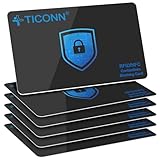
- RFID Protection: An electromagnetically opaque layer helps block unauthorized scans, protecting credit card, debit card, and passport information from nearby readers; This RFID blocking card helps prevent digital skimming by shielding your wallet from electronic theft
- Threats Stay Outside: Digital pickpockets use hidden readers to skim contactless cards in crowds, transit and checkout lines; This credit card protector works as an RFID blocker the moment it's placed in your purse or wallet, stopping electronic theft before it occurs
- Invisible Yet Active: Ultra-thin and sized to fit any wallet slot, this rfid blocking card adds no bulk; Invisible protection helps shield your debit cards and IDs from electronic skimming without changing the way you carry your wallet
- One Card Protects All: Forget slipping every card into a separate RFID sleeve, just one RFID blocking card protects every contactless card, passport, and license all at once; Carry it in a purse, travel pouch or cardholder and stay shielded at airports, transit hubs and during daily commutes
- Drop and Defend: Keep the RFID blocking card in your wallet or travel bag, or save it as a backup; Simply insert it alongside your credit and debit cards for immediate protection against identity theft — no charging, no setup
How to complete a balance transfer safely
- Apply and confirm the approved credit limit. Do not assume the limit will equal the amount you want to move.
- Read the final disclosure. Confirm the purchase APR, transfer APR, expiration dates, fee, deadline, minimum payment and any penalty-APR provision.
- Confirm the old account is eligible. Same-issuer transfers are commonly excluded. BankAmericard cannot transfer Bank of America accounts; Wells Fargo excludes transfers between its credit-card accounts or affiliates; Chase Slate terms exclude Chase or affiliate balances.
- Leave room for the fee. A $10,000 request at 5% may require $10,500 of available credit. If the fee pushes the request over the limit, the issuer may reduce or reject it.
- Submit the request early. Shield, BankAmericard, Customized Cash Rewards and Cash+ require action within 60 days. Reflect allows 120 days. Chase Slate requires you to follow the current account-specific instructions.
- Continue paying the old account. A submitted transfer request is not a completed payment. Wells Fargo says transfers may take up to 14 days to post; Chase Slate terms say processing may take up to three weeks.
- Confirm both sides. Check that the new account shows the transfer and that the old creditor received and posted the payment.
- Stop adding debt. Remove the old card from your wallet or freeze it if possible rather than using it for new discretionary purchases.
- Set an automatic payoff amount. Pay more than the minimum and schedule the final payoff at least one billing cycle before the promotional rate expires.
- Track the exact expiration date. Use the card agreement and statements, not an estimate based only on the approval date.
What happens if you miss a payment?
There is no universal rule that every missed payment immediately ends a 0% promotion. The account agreement controls. However, every cardholder must make at least the required minimum payment by the due date.
A late payment can cause a late fee, credit-reporting consequences and, depending on the issuer and the seriousness of the delinquency, a change to promotional terms. The Chase Slate pricing terms state that the introductory APR ends if a required minimum payment is 60 days late and that a penalty APR may apply. The CFPB also warns that being more than 60 days late can allow an issuer to increase the APR on all balances, including transferred balances, subject to applicable terms.
BankAmericard’s no-penalty-APR feature means a late payment does not automatically raise the APR, but it does not waive the minimum payment, late fee, credit consequences or other account remedies.
Should you make new purchases on a balance-transfer card?
Usually, separate the jobs when possible: use a purchase-focused 0% card for a planned purchase and a balance-transfer card to repay existing debt. Avoid new spending on the transfer card unless you have a written plan for repaying the entire combined balance.
Quick wins for a faster PC:
Repair Windows errors before they cause bigger problemsFix Now →Fix the driver behind crashes, sound loss and screen glitchesFind Drivers →When transferred debt and new purchases coexist, payment allocation and grace-period rules can become complicated. Do not assume every new purchase remains interest-free. Read the card agreement and avoid carrying new discretionary spending on the account until the transferred balance is gone.
Credit scores, approval and credit limits
What credit score do you need?
There is no universal minimum score for these cards. Issuers consider credit reports, income, existing debt obligations, application information and internal underwriting criteria. A comparison site’s good or excellent label is an estimate, not a promise.
A prequalification tool, when available, may provide an initial indication without a hard inquiry. Prequalification is not approval, and it does not guarantee a credit limit large enough to transfer your debt.
Can you transfer the entire balance?
Only if the issuer approves enough available credit. The requested transfer plus the fee generally must fit within the credit limit. Someone with $10,000 of existing debt could receive a $4,000 limit and be able to transfer only part of the balance. Chase Slate’s public terms expressly cap total requests, including fees and interest charges, at available credit or $15,000, whichever is lower. Wells Fargo similarly warns that requests plus fees exceeding available credit may be reduced or rejected.
Do not apply assuming a specific dollar amount will be approved. If only part of the debt transfers, continue paying the old account and include both balances in your repayment budget.
Will a balance transfer affect your credit?
The application can create a hard inquiry, and opening a new account can change the average age and total available credit in your profile. A transfer itself does not make debt disappear: the amount remains your obligation, and a high balance relative to the new limit can produce high utilization. Paying down the debt and making every payment on time matter more than the promotional label.
Should you close the old card?
Do not close the old account automatically after a transfer. Closing it can reduce your total available credit and increase utilization. Keeping it open can preserve available credit, but it may encourage new spending or be impractical if the card has an annual fee.
A reasonable middle path is to remove the old card from your wallet, delete it from shopping accounts or freeze it, and keep monitoring statements for residual interest or fees. Close it only after considering the effect on your credit profile, confirming there is no remaining balance and deciding that the spending risk or annual fee outweighs the available-credit benefit.
Do these 3 things before closing this tab:
1Fix the driver behind crashes, sound loss and screen glitches2Clear out junk files and repair common Windows errors3Scan for outdated or missing drivers - takes under a minute0% APR mistakes to avoid
- Confusing 0% APR with deferred interest: Store-card promotions may add accrued interest retroactively if you do not pay in full by the deadline.
- Ignoring the transfer fee: A 3% fee on $10,000 is $300; a 5% fee is $500.
- Missing the transfer deadline: A 21-month benefit may require the transfer to be made within 60 days or 120 days.
- Assuming a transfer request is complete: Continue paying the old creditor until the payment posts.
- Forgetting the fee consumes credit: The transfer plus fee must fit within available credit.
- Using the transfer card for new spending: New purchases increase the payoff amount and can complicate grace-period rules.
- Paying only the minimum: Minimum payments keep the account current but may not clear the balance before the promotion ends.
- Finishing on the expiration date: Pay at least one billing cycle early and follow the exact date in the agreement.
- Assuming no penalty APR means no consequences: Late fees, credit damage and loss of promotional benefits can still apply.
- Overvaluing rewards: Cash back cannot offset a high variable APR after the offer expires.
- Closing the old card immediately: Consider utilization and spending-control trade-offs first.
- Relying on cached bonuses or rates: Verify the final application disclosure, especially for U.S. Bank bonuses, Discover’s temporary transfer fee and personalized APRs.
Alternatives worth checking
Citi Simplicity
Citi’s educational material currently describes Citi Simplicity as offering 0% introductory APR on purchases and balance transfers for 18 months, with no annual fee, no late fees and no penalty rate. Citi also says the maximum introductory offer can vary by application timing and creditworthiness, and the product page’s crawlable pricing fields are not reliably populated. Check the live application terms before comparing it with the verified offers above.
Bank of America Unlimited Cash Rewards
Bank of America Unlimited Cash Rewards is another reasonable alternative to Chase Freedom Unlimited. Current public materials show a 15-billing-cycle 0% offer on purchases and qualifying balance transfers, no annual fee and either 1.5% cash back or a first-year enhanced rate depending on the offer channel. Because the reward presentation has varied across Bank of America pages, use the live application disclosure.
U.S. Bank Altitude Go
U.S. Bank listings show 0% introductory offers on some rewards cards, but offer lengths and footnote numbering vary across comparison pages. It should not replace the more clearly documented Shield or Cash+ offers without checking the current product page and disclosure.
Student cards
Bank of America publicly lists a BankAmericard for Students with the same 21-billing-cycle purchase and balance-transfer offer. Students should compare eligibility and income requirements separately rather than assume the general BankAmericard is available to them.
Personal loans and nonprofit debt management
If your budget cannot repay the balance during the introductory period, a 0% card may only postpone the problem. Compare the total cost of a fixed-rate personal loan and consider speaking with a reputable nonprofit credit counselor about a debt-management plan. Do not choose a card based solely on the introductory APR if the projected payment is unaffordable.
Frequently overlooked costs
No annual fee does not mean no cost. Potential charges include balance-transfer fees, cash-advance fees, late fees, returned-payment fees, foreign-transaction fees, interest after the introductory period and optional payment-plan fees. Read the complete rates-and-fees disclosure before applying.
Rewards and promotional financing also serve different purposes. Rewards reduce the net cost of eligible purchases; they do not prevent interest from accruing once the promotional APR ends. The safest 0% card is the one whose fee, credit limit and required monthly payment fit your actual budget.
Frequently Asked Questions
Can I transfer a balance from any credit card?
No. The receiving issuer may exclude balances from the same issuer or its affiliates, and some accounts may not be eligible for transfers at all. BankAmericard excludes Bank of America accounts, Wells Fargo excludes transfers between Wells Fargo credit-card accounts or affiliates, and Chase Slate terms exclude Chase or affiliate balances. Check the final disclosure before submitting a request.
Does 0% APR apply to cash advances?
Usually not. A promotional rate generally applies only to the transaction types named in the offer, such as purchases and balance transfers. Cash advances typically have separate fees and interest rules. Review the card’s rates-and-fees disclosure.
Can I transfer my entire debt to a 0% card?
Only if the issuer approves enough available credit. The transfer fee also uses part of the credit line, so a $10,000 transfer at 5% may require $10,500 of available credit. An issuer may approve a smaller amount or reject the request.
What happens when the 0% period ends?
The regular variable APR generally applies to the remaining promotional balance going forward. Check the exact expiration date in your agreement and statements, and aim to repay the balance at least one billing cycle early.
Should I close the old credit card after a balance transfer?
Not automatically. Closing it can reduce total available credit and increase utilization, while keeping it open can tempt new spending or expose you to an annual fee. Consider removing it from your wallet or freezing it instead, after confirming the old account has been paid and monitoring for residual charges.
Outdated Drivers Are Slowing You Down
One free scan finds every outdated or missing driver and matches the right update for your exact hardware.Free scan · exact hardware matchWindows Errors? Fix Them Before They Spread
Repair common Windows errors and clear accumulated junk for a smoother, more stable PC - no reinstall needed.Free scan · no reinstallIs a balance-transfer card worth it if I cannot repay the debt during the promotion?
It may still reduce interest for a time, but the regular APR can be high after the promotion. Calculate the required monthly payment, include the transfer fee and compare a fixed-rate personal loan or nonprofit debt-management option if full repayment is not realistic.
The Bottom Line
The longest verified 0% offers in this comparison are 21 months or 21 billing cycles from Chase Slate, U.S. Bank Shield Visa, BankAmericard and Wells Fargo Reflect. Pick among them based on eligibility, transfer deadline, fee, protections and your ability to repay. If you can clear the balance faster, Bank of America Customized Cash Rewards may save money with its 3% introductory transfer fee. For rewards, Discover it Cash Back is strongest for first-year matching, while Freedom Unlimited is simpler and the category cards can earn more with active management. Whatever you choose, add the transfer fee to the balance, keep paying the old account until the transfer posts and finish repayment before the introductory APR expires.
Quick Recap
Product prices and availability are accurate as of the date/time indicated and are subject to change. Any price and availability information displayed on Amazon at the time of purchase will apply.




