Nominal GDP is the market value of final goods and services produced within an economy, measured at the prices current during the period. Calculate it by adding consumption, investment, government spending, and exports, then subtracting imports. Use it to discuss output in current prices; use real GDP when you want to compare the volume of output over time without the effect of price changes.
What nominal GDP measures
Gross domestic product (GDP) measures production within a country’s borders, not all production by that country’s residents wherever they happen to work. Nominal GDP values that domestic final output using the prices prevailing when it was produced. The U.S. Bureau of Economic Analysis (BEA) calls these current-dollar estimates: they are valued at the prices of the period when transactions occurred, or at market value. BEA explains the definition and national-accounting treatment of GDP.
Because it uses current prices, nominal GDP reflects both how much was produced and the prices attached to that production. A rise in nominal GDP between periods does not, on its own, show that the economy produced a greater volume of goods and services.
How to calculate nominal GDP
The expenditure approach adds spending on domestically produced final output:
What’s actually slowing this PC down?
Pick the symptom - the matching free tool is one click away.
#1 Best Overall
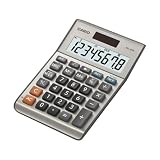
- LARGE EIGHT-DIGIT DISPLAY – Clear and easy-to-read 8-digit display, perfect for everyday calculations and ensuring accurate results in home or office settings.
- TAX & CURRENCY EXCHANGE FUNCTIONS – Effortlessly handle tax calculations and convert home currency to other currencies for easy financial management.
- GENERAL PURPOSE CALCULATOR – Ideal for a wide range of applications, from basic math to business and personal use, with memory keys for quick storage and recall.
- USER-FRIENDLY KEYBOARD – Easy-to-use layout, featuring square root, percent calculation, and simple functions that make it perfect for everyday tasks.
- COMPACT & PORTABLE DESIGN – Space-saving design that fits easily on any desk or in a briefcase, making it ideal for both home and office use.
GDP = C + I + G + (X − M)
- C is personal consumption expenditures.
- I is gross private domestic investment.
- G is government consumption expenditures and gross investment.
- X is exports.
- M is imports.
Imports are subtracted because consumption, investment, or government spending may include goods produced abroad. Subtracting imports removes that foreign production from the total, while exports are added because they were produced domestically even if buyers are abroad. The BEA’s official definition uses these components, including net exports. See the BEA’s GDP definition and components.
Illustrative calculation
Suppose, purely for illustration, that an economy has consumption of 500, investment of 120, government spending of 180, exports of 90, and imports of 70, all measured in the same currency and period:
500 + 120 + 180 + (90 − 70) = 820
The illustrative nominal GDP is 820 currency units. These made-up values are not an official estimate.
Rank #2

- Two-way Power Desk Calculator: Use solar power or battery power,In the case of sunlight or light, it can also be used without battery (Provide 2 AA batteries, only 1 needed).
- Optimized for Desk Use: The angled display offers a better viewing angle, especially when placed on a flat surface.
- Ergonomic Screen Tilt: Reduces neck strain with a user-friendly viewing angle, naturally aligning with your line of sight for a more comfortable experience.
- 10-Key Calculator with Large Buttons: Easy-to-use design follows computer keyboard layout.
- Desktop Basic Office Calculator:Perfect for daily use in offices, businesses, schools, retail stores, shopping centers, and home offices.
Three ways to measure GDP
The expenditure approach sums final spending. National accounts can also measure GDP from the production side by adding value added at each stage, or from the income side by totaling income generated through production. These approaches are conceptually equivalent, but published estimates can differ because they draw on different source data and compilation methods. In the United States, the BEA describes GDP and gross domestic income (GDI) as conceptually equal but practically different for this reason. The IMF outlines the three approaches; the BEA discusses the relationship between GDP and GDI.
When to use nominal GDP—and when to use real GDP
Nominal GDP is useful when your question concerns the value of production at the prices prevailing in a particular period—for example, the current-price size or composition of an economy, or a ratio comparing a current-currency amount with another current-currency amount. It does not isolate changes in production volume.
For comparisons of output over time, use real GDP or another appropriate inflation-adjusted series. Real GDP adjusts for price changes so that changes more closely reflect changes in the volume of production. A nominal increase may result from higher quantities, higher prices, or both. The BEA explains current-dollar and real GDP estimates; the IMF describes GDP measurement.
Rank #3
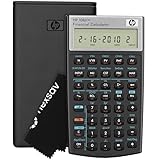
- HP 10BII+ FOR STUDENTS & PROFESSIONALS – This HP calculator is built for business, finance, accounting, and statistics courses. Perfect for learners and professionals who need to solve common financial problems quickly without memorizing formulas or relying on spreadsheets.
- 100+ FUNCTIONS FOR REAL WORLD MATH – Quickly solve time value of money, interest rates, loan payments, NPV, IRR, cash flows, and more. The 10bII+ also includes probability distributions for statistics courses—a feature not often found in financial calculators.
- ALGORITHMIC INPUT WITH DEDICATED KEYS – This high-school/college calculator uses algebraic and chain logic with minimal keystrokes. Layout appears the same as standard calculators for easy learning. Dedicated keys give quick access to commonly used financial and statistical functions
- APPROVED FOR MAJOR EXAMS – The HP 10bII+ algebra calculator is permitted for use on SAT, PSAT/NMSQT, and AP tests. An ideal statistics calculator and business calculator for school finance and accounting students preparing for class, coursework, or standardized exams.
- INCLUDES TRAVEL CASE, CLEANING CLOTH & BATTERIES– Slim, durable, and easy to keep on hand or store in a backpack or locker. Includes a protective case, cleaning cloth, and batteries so it’s ready out of the box. Large screen with clear contrast (non-backlit) is easy to read during exams or lectures.
Nominal GDP and the GDP deflator
A useful conceptual relationship is:
GDP deflator = nominal GDP ÷ real GDP × 100
This identity applies when the nominal and real series use consistent index and reference conventions. It is not a universal recipe for constructing a modern real GDP series: the BEA describes methods including price deflation, quantity extrapolation, and direct valuation.
The GDP deflator covers prices of domestically produced goods and services, including exports and excluding imports. A consumer price index (CPI), by contrast, tracks prices paid by consumers for a consumer basket. The measures have different scopes, so CPI inflation is not interchangeable with the GDP deflator. The BEA describes GDP price measures; the IMF explains GDP measurement and price adjustment.
How to compare nominal GDP across countries
A country’s nominal GDP expressed in U.S. dollars depends on how its national-currency figure is converted. For its current-U.S.-dollar GDP measure, the World Bank uses single-year official exchange rates, with an alternative conversion factor in some cases where the official rate does not effectively represent transactions. Market-exchange-rate comparisons can be useful for comparing values at prevailing currency rates, but exchange-rate movements can change the converted figures even when domestic production has not changed correspondingly. The World Bank describes its current-U.S.-dollar GDP conversion.
Rank #4

- 【5 Inch LCD Display&Large Button】When you put the calculator on the desktop, the 30°large display is just opposite your sight, more clear than a straight display. Large and separated keys, make your every press more accurate.
- 【Large Accounting Calculator】Silver panel with orange,blue and gray color buttons,vibrant color matching.The functions on the panel meet the needs of your accounting work and daily used.
- 【ABS Engineering Plastic】This calculator is made of ABS high strength engineering plastics, light weight but durable. It can withstand the impact of falling on the height of the desktop for several times.
- 【Solar and Battery Supply】The calculator uses high conversion rate solar panels,solar power can be used in well-lit areas.At the same time, we provide matching battery(included one AA battery)double safe uninterruptible power.The calculator will shut down automatically after 8 minutes without operation.
- 【Use Occasion】This calculator is suitable for all occasions.Fit for everyone using in school, office, home and supermarket. As a gift for children, parents and friends is also a good choice.
Purchasing power parity (PPP) uses a different conversion basis intended to account for differences in price levels. The IMF’s World Economic Outlook FAQ describes PPP GDP as nominal GDP in national currency divided by the PPP exchange rate. Market exchange rates and PPP answer different questions; specify which basis a comparison uses. The IMF also notes that it does not report a global constant-price GDP series in a common currency. See the IMF World Economic Outlook FAQ.
Independent reader supportYour contribution helps us test, update, and keep practical guides available for everyone.How to read a reported GDP figure
GDP estimates are revised as more information becomes available. In the United States, the BEA typically publishes advance, second, and third estimates for quarterly GDP. It commonly reports quarterly values at annual rates and seasonally adjusts the data to remove recurring seasonal patterns. These are U.S. reporting conventions; other countries’ statistical agencies may report figures differently. The BEA explains its GDP release conventions.
When citing or comparing a current GDP level or growth figure, identify the release date and estimate vintage rather than treating the newest published figure as final. The BEA’s September 2026 methodology summary says that its 2026 annual update improved current-dollar GDP, current-dollar GDI, and real GDP estimates. Read the BEA’s 2026 annual-update summary.
Choose the measure that fits the question
| Question | Measure or detail to use |
|---|---|
| What was production worth at the prices of that period? | Nominal GDP in current prices. |
| Did the volume of output grow over time? | Real GDP or another suitable inflation-adjusted series. |
| How did prices of domestically produced output change? | The GDP deflator; it includes exports and excludes imports. |
| How did consumer-basket costs change? | A consumer price index, not the GDP deflator. |
| How does one country’s GDP compare with another’s in a common currency? | State whether conversion uses market exchange rates or PPP. |
| Is a U.S. quarterly GDP figure comparable with another release? | Check whether it is annualized, seasonally adjusted, and which estimate vintage it uses. |
GDP is a comprehensive measure of economic activity and is used by policymakers and businesses, but it measures production rather than every dimension of economic welfare. The IMF provides an overview of what GDP measures.
Quick Recap
Product prices and availability are accurate as of the date/time indicated and are subject to change. Any price and availability information displayed on Amazon at the time of purchase will apply.




