Windows Errors? Fix Them Before They Spread
Repair common Windows errors and clear accumulated junk for a smoother, more stable PC - no reinstall needed.Free scan · no reinstallOutdated Drivers Are Slowing You Down
One free scan finds every outdated or missing driver and matches the right update for your exact hardware.Free scan · exact hardware matchEPA approved three dicamba products for over-the-top (OTT) use on dicamba-tolerant soybeans and cotton for the 2026 and 2027 growing seasons only. The federal limits include no more than two applications per year, at 0.5 pound of dicamba per acre per application, plus 40 ounces per acre of an approved volatility reduction agent (VRA) with each application. Endangered Species Act (ESA) conservation practices, product-label directions, and state requirements also shape whether and how a field can be treated.
What changed in the 2026 dicamba rules?
On February 6, 2026, the U.S. Environmental Protection Agency (EPA) announced a time-limited registration for three OTT dicamba products on dicamba-tolerant cotton and soybean. The registration covers the 2026 and 2027 growing seasons and is subject to further review. It is a new federal registration decision, not a continuation of the earlier approvals.
EPA describes the following federal use limits in its February 6 announcement:
| Requirement | EPA’s stated limit |
|---|---|
| Applications | Maximum of two applications per year |
| Rate per application | 0.5 lb dicamba per acre |
| Annual total | Maximum of 1.0 lb dicamba per acre per year across dicamba products |
| Volatility reduction agent | 40 oz/acre of an approved VRA with each application |
| Registration period | 2026 and 2027 growing seasons only |
These are EPA’s headline limits, not a substitute for the directions on the specific product label. The February 6, 2026 Engenia label, for example, is an authoritative product-specific reference; users should consult the current label for the product they intend to apply. EPA says every label restriction is a legal requirement under the Federal Insecticide, Fungicide, and Rodenticide Act (FIFRA).
#1 Best Overall

- Visible Results in One Hour - Spruce dehydrates to kill roots, showing visible results in just 1 hour, dead weeds in 1 day. The hardworking weed sprayer can kill all types of broadleaf and grassy weeds including dandelions, large crabgrass, white clover, dollarweed and morning glory vines.
- Ready to Use Worry-Free Formula - Spruce grass and weed killer is safe to use around people, pets, and bees when used as directed, and one bottle can treat up to 400 weeds. This versatile weed killer spray is made with water, essential oils and surfactant.
- No Mixing Formula - Eliminate measuring, pouring, or diluting for quick and convenient spot treatment on lawns and gardens with 64 oz of our refillable herbicide. For best results, use at the first sign of weed growth.
- How to Use - Slide switch to 'Unlocked' position and hold paddle until product sprays. Hold the weed sprayer nozzle twelve inches from weeds, and spray the entire plant until it is thoroughly wet. After use, slide to 'Locked' position. Reusable sprayer works for up to 5 years (20 uses/year).
- The Snap and Spray Kit - This simplified grass and weed killer kit comes with 2 additional AA batteries to power the reusable wand and 64 oz bottle of our no-mix, no-pour, no-mess herbicide. Try our newly formulated EZ-AIM weed killer spray as well for precision in tough cracks and edges.
Can you spray dicamba over the top?
OTT use is registered for the 2026 and 2027 growing seasons on dicamba-tolerant soybeans and cotton, but that does not mean every dicamba product, crop, field, or application is eligible. Before planning a treatment, confirm that the crop and trait system, exact product, location, and intended use all match the current label and applicable state requirements.
Do not carry over a product name or direction from an older approval without checking. EPA’s registration materials and the current product label identify the products and uses that apply to this registration. The available information does not establish a universal recommendation that dicamba is suitable for a particular field or weed problem.
Rank #2

- KILLS WEEDS AND GRASSES: Use on driveways and walkways, and around fences, trees, flower beds, shrubs and other listed areas
- ACCUSHOT SPRAYER: Includes continuous power sprayer with extendable wand
- KILLS THE ROOT: Visible results as fast as 3 hours — replant new flowers, trees and shrubs the same weekend
- RAINFAST: Rainfall or watering 15 minutes after application will not wash away effectiveness
What does the new dicamba label require?
The federal announcement provides the rate, annual-use, and VRA limits, while the applicable product label supplies the operational directions. EPA’s 2026 materials also describe temperature restrictions intended to reduce exposure and volatility risks, and conservation practices intended to protect endangered species. The precise requirements—including applicable timing, buffers, application conditions, and recordkeeping—must be checked in the label for the product being used.
Do not infer a temperature threshold, buffer distance, nozzle, application window, or other specific condition from a summary of the registration. These details can be product- and location-specific, and the source materials do not establish one universal set of directions for every approved product and state. Follow the complete label and any applicable state label amendment. The Engenia label also requires application recordkeeping; a field spray log can help organize records, but keeping a log does not itself establish compliance with every legal requirement.
Recommended Free Tools
Rank #3
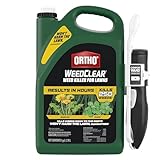
- LAWN FRIENDLY FORMULA: Our lawn friendly weed killer spray formula contains three proven ingredients that specifically target common lawn weeds, so it won't harm your grass (when used as directed)
- EASY APPLICATION: The continuous spray Comfort Wand weed killer sprayer applicator makes it easy to apply for lawn care, allowing for precise spray control and maximum accuracy without any pumping required
- LAWN WEED CONTROL: Use Ortho WeedClear Weed Killer for Lawns with Comfort Wand, a lawn weed killer, to kill weeds down to the root without harming your grass (when used as directed), with visible results in hours
- KILLS OVER 250 WEEDS: This broadleaf weed killer for lawns targets over 250 common broadleaf lawn weeds, including dandelions, clover, poison ivy, chickweed, and dollarweed (see product label for complete weed list)
- FAST VISIBLE RESULTS: See visible results in hours; this lawn care formula that is rainproof in 1 hour after drying, and people and pets may re-enter the treated area after the spray has dried
How do endangered species affect dicamba use?
EPA’s 2026 registration materials require conservation practices intended to protect endangered species. The 2026 Engenia label references EPA’s final ecological risk assessment and biological evaluation, including effects determinations for federally listed species and designated critical habitat. In practical terms, conservation measures are part of the current use conditions and must be checked alongside the other label directions.
Do not use EPA’s 2020 conclusion for the earlier registration as proof that the 2026 action has no effect on listed species. That 2020 FAQ addressed a different registration. EPA’s broader dicamba registration-review materials also address ecological risks, but they are a separate review track; they should not be treated as a substitute for the requirements and findings tied to the 2026 OTT registration.
Rank #4

- TOUGH WEED CONTROL: Ortho Ground Clear Super Weed & Grass Killer1 kills even the toughest listed weeds and grasses down to the root so they don't come back
- WHERE TO USE: Use this weed and grass killer around landscape plants, shrubs or trees; on patios, walkways, driveways, gravel, mulch beds; along fences, around buildings; when preparing landscaped areas or preparing a lawn for renovation
- EASY TO USE: The ready-to-use Ortho GroundClear Super Weed & Grass Killer1 with Comfort Wand weed spray provides continuous spray for easy, targeted application
- WHAT IT KILLS: This grass and weed killer effectively controls tough weeds like Crabgrass, Dandelion, Clover, Alder, Knotweed, Milkweed, Ragweed, and other listed weeds
- FAST-ACTING FORMULA: Our fast-acting herbicide formula starts working immediately, delivering visible results within hours
Why do state rules matter?
Federal registration does not settle every state-level question. States may add conditions or determine product availability under their own requirements. Minnesota’s agriculture agency, for example, announced additional state-specific restrictions for the 2026 season. Those restrictions are a reason to check the rules where the field is located, not a basis for assuming the same conditions apply nationwide.
Because requirements vary by state and can change, confirm the current state pesticide regulator’s listing and any state label amendment for the exact product. A product’s federal registration alone does not establish that it is registered or usable in a particular state under the conditions you intend.
Quick wins for a faster PC:
Clear out junk files and repair common Windows errorsFree Scan →Fix the driver behind crashes, sound loss and screen glitchesFind Drivers →Best Value
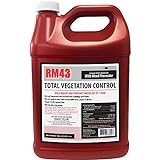
- Concentrated mix with water, add to sprayer
- Serious Weed Control
- Up to one year control
- Total Vegetation control
How to build a 2026 weed-control plan
- Identify the crop and trait system. Verify that the crop is dicamba-tolerant and that the proposed use is within the crop and use directions on the label.
- Select the exact product. Use current EPA registration materials and the current product label, rather than relying on product names or instructions from earlier approvals.
- Check state registration and restrictions. Consult the state pesticide regulator’s current information and applicable state amendments for the field’s location.
- Translate the label into field conditions. Verify rate and annual total, VRA, temperature and timing restrictions, conservation practices, buffers, and recordkeeping requirements that apply to the product and location.
- Compare locally appropriate weed-control options. Consider crop and trait compatibility, target weeds and resistance status, timing and expected efficacy, off-target and ESA safeguards, label and state limits, operational costs, and fit with an integrated weed-management plan. Use local agronomic advice where needed; there is no universal recommendation established for every field.
EPA’s February 6, 2024 history is relevant when checking old records: a federal district court vacated the earlier registrations for XtendiMax, Engenia, and Tavium. EPA later issued an existing-stocks order allowing limited disposition and use of certain stocks under that order’s conditions. That historical order is not the 2026 registration; old labels and directions should not be used as a proxy for current use requirements.
Which source should you use before application?
- For the federal registration period and general conditions: EPA’s 2026 registration materials.
- For product-specific application directions: The current EPA label for the exact product.
- For state availability and added conditions: The pesticide regulator in the state where the field is located, including any current state label amendment.
Where these sources do not establish a detail—such as a particular state’s current product availability or a field-specific ESA obligation—do not assume it. Verify the applicable label and state requirements before making an application plan.
Quick Recap
Product prices and availability are accurate as of the date/time indicated and are subject to change. Any price and availability information displayed on Amazon at the time of purchase will apply.




