What’s actually slowing this PC down?
Pick the symptom - the matching free tool is one click away.
If you earn income that is not fully covered by withholding, you may need to make estimated tax payments to New York. For calendar-year 2026, the installments are due April 15, June 15, and September 15, 2026, and January 15, 2027. Whether you must pay—and how much—depends on your expected tax, withholding, credits, prior-year return, and circumstances.
Who must make estimated tax payments?
Estimated tax pays tax on income when no tax—or not enough tax—is withheld. New York names self-employed people, sole proprietors, contractors, freelancers, cash earners, temporary or seasonal workers, and per-diem workers as examples of people who may need to pay. Being in one of these work categories does not automatically mean you owe estimates; the deciding factor is your expected tax after withholding and applicable credits. See the New York State Tax Department’s Estimated taxes page.

For tax year 2026, the general individual trigger is an expected balance of at least $300 in New York State, New York City, or Yonkers income tax after accounting for withholding, applicable credits, and specified estimated payments. The 2026 Form IT-2105 instructions describe exceptions when withholding is sufficient to meet a required payment target: generally at least 90% of 2026 tax or 100% of tax shown on the 2025 return. The prior-year target rises to 110% for certain taxpayers above a New York adjusted gross income threshold; the threshold and rules depend on filing status, including a different threshold for married people filing separately. The 2025 return generally must cover a full 12 months. Farmers and fishermen have special rules. Consult the current IT-2105-I instructions for tax year 2026 for the applicable tests rather than treating $300 as a universal rule.
Your obligations can involve New York State tax, New York City tax, Yonkers tax, or the Metropolitan Commuter Transportation Mobility Tax (MCTMT), depending on your situation. The IT-2105 voucher keeps these amounts separate.
#1 Best Overall

- 2026 2027 Yearly Tax Organizer: includes 2 spiral bound tax organizer designed to help you collect, sort, and store important tax records throughout the year, keeping receipts, income records, bills, and other paperwork in one easy to manage place
- Large Size for Everyday Documents: cover measures about 13 x 9.65 inches, with inside pages about 9.65 x 6.5 inches; The spacious pocket design provides room for receipts, statements, records, and tax-related papers without taking up too much desk or shelf space
- 12 Monthly Pockets for Easy Sorting: the tax record organizer features 12 pockets, making it simple to separate documents by month or category; Useful for organizing medical expenses, charitable donations, prescriptions, invoices, income folders, and monthly bill receipts
- Spiral Bound for Convenient Access: the secure spiral binding lets pages turn smoothly, so you can quickly add, remove, or review documents whenever needed; A practical design that helps simplify filing and reduce last-minute stress during tax season
- Widely Applied: this annual tax organizer is suitable for managing annual taxes, tracking receipts and preparing for audits all year round, making your tax preparation more systematic and manageable, and it is very suitable for annual tax returns, document storage and filing, professional tax services and tax agencies
When are New York estimated tax payments due?
These are the New York Tax Department’s dates for individual calendar-year filers making 2026 estimated payments:
| Installment | Due date |
|---|---|
| First | April 15, 2026 |
| Second | June 15, 2026 |
| Third | September 15, 2026 |
| Fourth | January 15, 2027 |
The due dates are listed on the state’s estimated tax due dates page for tax year 2026. If a due date falls on a Saturday, Sunday, or legal holiday, the payment is due the next regular workday. A taxpayer may pay the full estimate with the first installment or, when appropriate, pay in four equal installments.
Fiscal-year filers generally use the fifteenth day of the fourth, sixth, and ninth months of their fiscal year and the first month of the following year. Farmers and fishermen have special timing rules; use the current-year instructions for those cases.
If your income changes during 2026
A substantial change in income, self-employment earnings, deductions, additional taxes, or credits may mean you need to revise an estimate or begin paying after March 31. The 2026 instructions give later installment dates for those situations and describe the annualized income installment method, which can account for when income was earned rather than assuming it arrived evenly throughout the year.
Rank #3
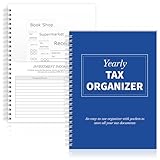
- Sufficient Quantity: you will receive 1 annual tax organizers to organize and store important tax records
- Spiral Binding: with spiral security binding, you can sort and access your monthly tax documents all year round; Help simplify tax time
- Durable: our tax document organizer is made of paper, which is very durable and convenient for you to use frequently in your daily work
- Large Capacity: this tax document organizer has 12 pockets, which makes it convenient for you to sort and file receipts and records and store them in a centralized manner; With this document organizer, you can organize various documents such as medical expenses, prescription drugs, charitable donations, etc. throughout the year, and face tax season confidently and efficiently
- Widely Applied: this annual tax organizer is suitable for managing annual taxes, tracking receipts and preparing for audits all year round, making your tax preparation more systematic and manageable, and it is very suitable for annual tax returns, document storage and filing, professional tax services and tax agencies
A qualifying taxpayer who files the 2026 return by January 31, 2027, and pays the full balance does not need to make the otherwise due January 15, 2027, installment. Check the IT-2105-I instructions to confirm the conditions apply to you.
Independent reader supportYour contribution helps us test, update, and keep practical guides available for everyone.How do I make an estimated tax payment?
For individual estimated payments, New York offers online payment through an Individual Online Services account, bank-account debit, credit card, approved commercial tax software, or a paper IT-2105 voucher. The state’s estimated tax payment page lists bank debit as free and says it provides instant confirmation and advance scheduling. The page states a 2.20% convenience fee for credit-card payments; check the live page before paying because fees and online options can change.
Rank #4

- PERFECT LEDGER BOOK FOR SMALL BUSINESSES: This accounting ledger book for small businesses will help you organize finances, sort and summarize transactions, create balance summaries and set you up for financial success.
- SWITCH TO EFFICIENT & STRESS-FREE ACCOUNTING: This accounting book is undated and lasts a whole year and has 113 pages, including 53 weekly views, an annual summary, empty note pages, and, at the back, a spacious pocket for receipts.
- TAKE CONTROL OF YOUR FINANCES & SUCCEED: With this detailed record of all transactions and totals, you will be able to easily analyze your finances and quickly prepare accurate financial statements.
- COMPACT A5 FORMAT & DURABLE DESIGN: This bookkeeping record book comes in A5 format (5.8 by 8.3 inches) and has an eco-leather hardcover, 120gsm no-bleed paper, elastic, pen loop, bookmark, pocket for notes, and a user guide.
- 60-DAY MONEY-BACK GUARANTEE: We will exchange or refund your receipt book for small business if you aren’t satisfied with your expense tracker notebook for any reason. Reach out to us via message to refund your small business supplies.
| Method | What to know |
|---|---|
| Bank-account debit through the state | Listed as free; offers instant confirmation and advance scheduling on the state payment page. |
| Credit card | The state payment page states a 2.20% convenience fee. |
| Approved commercial tax software | An option for taxpayers who prefer to use state-approved software. |
| Paper voucher | Use the current-year IT-2105 and follow that form’s mailing instructions if paying by check or money order. |
Which form should I use?
Individuals use Form IT-2105 for tax year 2026 and its IT-2105-I instructions. Fiduciaries use Form IT-2106 and the IT-2106-I instructions. The IT-2105 voucher asks you to enter New York State, New York City, Yonkers, and MCTMT amounts separately, then provide the total. Use the current-year forms and follow their payment-specific instructions; mailing addresses can differ by form and payment type. Form IT-2105.9 and its instructions address underpayment calculations.
Why does payment timing matter?
Meeting a safe-harbor target at year end does not necessarily erase a penalty for an installment that was late or too small. For 2026, the general target described in the IT-2105 instructions is at least 90% of 2026 tax or generally 100% of tax shown on the 2025 return; certain higher-income taxpayers may need to use 110% of the prior-year amount. Farmers and fishermen generally use a 66⅔% current-year target instead of 90%, subject to the special rules in the instructions. Filing status, income, and other qualifications affect which target applies.
Do these 3 things before closing this tab:
1Scan for outdated or missing drivers - takes under a minute2Repair Windows errors before they cause bigger problems3Fix the driver behind crashes, sound loss and screen glitchesNew York’s 2025 IT-2105.9 instructions illustrate that a later payment can make up a shortfall in total dollars but still leave a penalty for an earlier underpaid installment. If your earnings are uneven or seasonal, review the annualized income installment method in the current-year instructions; four equal payments may not reflect when you received income.
Quick Recap
Product prices and availability are accurate as of the date/time indicated and are subject to change. Any price and availability information displayed on Amazon at the time of purchase will apply.




