What’s actually slowing this PC down?
Pick the symptom - the matching free tool is one click away.
Sensei Farms, the greenhouse venture co-founded by Larry Ellison and physician David Agus, is still active—but available reporting does not show that it has become profitable or solved the problems described in 2025. That report detailed wind damage and cost overruns at the company’s Lānaʻi greenhouses. Later company and regional-development updates show continued produce operations and a planned Texas expansion, not proof of financial recovery.
What is Sensei Farms?
Sensei Ag, which operates as Sensei Farms, is the farming venture behind the headline. Ellison, the Oracle co-founder and a major landowner on Lānaʻi, co-founded it with Dr. David Agus. It is separate from the Sensei wellness resort brand.
The company’s stated aim is to use technology to grow food while conserving resources. Its current company pages describe six solar-powered greenhouses at a two-acre flagship farm on Lānaʻi and say it sells produce across the Hawaiian islands. Those pages represent the company’s account of its operations, not independent verification of its output or financial performance. Sensei Farms’ Lānaʻi page also says more than 85% of Hawaiʻi’s food is imported; that statewide figure is distinct from the estimate for Lānaʻi cited in the 2025 reporting.
Why did the startup struggle?
A February 24, 2025 Gizmodo report, summarizing a Wall Street Journal investigation and citing people familiar with the matter, described repeated operational setbacks at the Lānaʻi greenhouses. The report said roofs were blown off by high winds, construction costs rose well beyond the initial estimate, and systems intended to support the operation did not work reliably.
Recommended Free Tools
#1 Best Overall
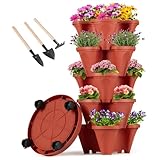
- SAVE FLOOR SPACE - Stackable vertical planter tower
- EASY 360° MOBILITY - 4 lockable swivel wheels
- PREVENT OVERWATERING - Bottom drainage holes for breathable pots
- RIGHT MOISTURE - Soil board holds a little water to keep soil moist
- VIBRANT & ROOT-SAFE: PATENTED SOIL BOARDS - Our vertical garden design features specialized airflow gaps and a patented soil-holding board that prevents root rot. This breathable system ensures your indoor or outdoor herbs stay lush, green, and healthy from the top tier to the bottom.
- Damage and overruns: The report said the project was initially expected to cost $12 million, but costs came closer to $50 million after damage and overruns. These are reported estimates, not audited project accounts.
- Power: Planned solar power reportedly proved unreliable, leaving fans and pumps often dependent on diesel generators.
- Connectivity and controls: Wi-Fi problems reportedly interfered with sensors and cameras used to monitor growing conditions.
Gizmodo also reported that the Lānaʻi operation comprised 120,000 square feet of greenhouses and that 80–90% of the island’s food was imported. Both figures belong to that report and should not be conflated with statewide food-import figures published by Sensei Farms. The available sources do not include an independent technical audit or audited project accounts, so the reported failures and costs should not be treated as verified financial statements.
Why can indoor farming be hard to make profitable?
Sensei’s reported setbacks illustrate challenges that apply more broadly to indoor agriculture. Vertical farms stack crops, often growing them under artificial lighting in nutrient-enriched water. Fully enclosed facilities can use less land, potentially reduce water use, shelter crops from some weather, and locate production close to customers. But those advantages do not automatically offset the cost of buildings, equipment, electricity, staffing, and reliable growing systems.
Rank #2

- Space-Saving : This strawberry planter maximizes your gardening space by stacking 5 layers to grow more plants in a compact area. The strawberry tower planter is ideal for patios, balconies, or indoor use
- Efficient Self-Draining: This vertical garden planter’s built-in drainage feature prevents waterlogging, keeping plants healthy by automatically channeling excess water away
- Soil Moisture Retention: Designed to maintain ideal moisture levels, the greenstalk vertical planter keeps soil hydrated longer, reducing the need for frequent watering and helping plants thrive
- Easy to Move: The strawberry pot’s movable wheels make the vertical planter tower simple to transport for optimal sun exposure or to rearrange spaces
- Suitable for Multiple Plants: This tiered planter is perfect for herbs, flowers, vegetables, or succulents, this planter accommodates diverse plant types, letting you build a mini garden with ease
An Associated Press report on indoor farming describes several key trade-offs:
- Energy and infrastructure: Lighting, ventilation, pumps, and climate control require dependable systems and can add substantial operating costs. Facility design and local energy conditions matter.
- Crop economics: A high-cost indoor setup is difficult to support with lower-priced crops such as lettuce unless yields, prices, or costs make the numbers work. Crop growth cycles and selling prices also affect returns.
- Pests: A controlled environment may reduce exposure to some outdoor pests, but it can also provide favorable conditions for pests such as aphids, thrips, and spider mites. Ecologist Hannah Burrack told AP, “If you’re creating the perfect environment for plants, in many cases, you’re also creating a perfect growing environment for their pests.”
- Scaling and market access: A facility must reliably produce and sell enough of the right crops to cover its capital and operating costs. Proximity to buyers can help, but it does not itself establish profitable scale.
The alternative is not always open-field farming. AP describes high tunnels, or hoop houses, as partly open structures that shelter crops and can extend growing seasons with less fully enclosed infrastructure. Which approach makes sense depends on crop, climate, energy source and cost, water and land use, pest management, and access to customers. Indoor production is not inherently more sustainable or more economical in every case.
The Tool Desk
Outbyte PC Repair FREERepair Windows errors before they cause bigger problemsFix Now →Outbyte Driver Updater FREEFix the driver behind crashes, sound loss and screen glitchesFind Drivers →Rank #3

- SAVE FLOOR SPACE - Stackable vertical planter tower
- EASY 360° MOBILITY - 4 lockable swivel wheels
- PREVENT OVERWATERING - Bottom drainage holes for breathable pots
- RIGHT MOISTURE - Soil board holds a little water to keep soil moist
- VIBRANT & ROOT-SAFE: PATENTED SOIL BOARDS - Our vertical garden design features specialized airflow gaps and a patented soil-holding board that prevents root rot. This breathable system ensures your indoor or outdoor herbs stay lush, green, and healthy from the top tier to the bottom.
Is Sensei Farms still operating, and what is happening in Texas?
Later sources show continuing company activity after the 2025 account. Sensei Farms’ own pages describe its Lānaʻi produce operation, while a January 2, 2026 announcement from the Hays Caldwell Economic Development Partnership says Sensei Ag Holdings purchased warehouse and greenhouse facilities on a 24.58-acre site in Lockhart, Texas.
The partnership said the project is expected to bring up to $51 million in investment and dozens of jobs. That is an expected project figure, not evidence that the full amount has been spent; the announcement says incentives are performance-based and contingent on company benchmarks. Sensei’s Texas page describes the site as part of its greenhouse network, and a February 2026 industry report said construction was underway. These updates support describing Texas as an expansion project. They do not establish that the facility is complete, producing at planned capacity, or profitable.
Rank #4

- [MINIMAL FOOTPRINT & MAXIMIZED SUNLIGHT] Save your valuable floor area! Designed to occupy very little ground space, this ergonomic trapezoid 5-tier vertical garden planter raised bed maximizes your growing capacity vertically. The smartly staggered structure ensures no plant is shaded, allowing every leaf to receive full sunlight and moisture. Whether on a narrow balcony or compact patio, this versatile vertical raised garden bed is perfect for harvesting fresh veggies, herbs, and blooms!
- [STABLE BASE & DETACHABLE BINS] Designed with a sturdy freestanding base, you can securely position your vertical garden plant stand in any desired corner. Want to replant comfortably at your table? Each independent vertical planting box simply lifts right off the main frame, allowing incredibly flexible, free-range planting.
- [STURDY STRUCTURE & FOOD-SAFE MATERIALS] Designed for reliable stability and everyday outdoor use. Constructed with rust-resistant painted steel, fortified triangular brackets, and two additional bottom fixing rods, this frame provides a secure and balanced foundation for your plants. Built to hold up well in typical outdoor environments, the high-quality vertical raised garden planter boxes are crafted from durable, 100% food-safe PP material—capable of safely supporting heavy damp soil without breaking.
- [SMART CASCADING DRAINAGE SYSTEM] Stop rotting roots or making messy patios! This innovative vertical garden bed features 3 strategically placed side holes per tier, channeling excess water seamlessly downward. Brilliantly, the bottom box has sealed hole knockouts (you can choose to open them), ensuring no muddy spills ever ruin your indoor floors.
- [BONUS STORAGE STATION & FAST SETUP] Go beyond standard planters—our comprehensive vertical herb garden uniquely features a heavy-duty Textilene mesh bottom and 5 hanging hooks for neatly organizing trowels and fertilizers! Complete setup in minutes with included clear manual and step-by-step installation video.
What do Sensei’s yield and capacity figures show?
Sensei Farms advertises “18x More Yield per sq ft vs conventional open field lettuce farms” and “Over Half a Million Pounds” of growing capacity on 120,000 square feet. These are company claims, not independently verified measurements. Capacity is not the same as actual production, and neither figure establishes revenue, profit, or a return on the investment.
As of the available reporting, no audited Sensei revenue, profit, operating-cost, or production figure was verified. It is therefore not possible to say from these sources whether the company is losing money, breaking even, or earning a profit.
Quick wins for a faster PC:
Fix the driver behind crashes, sound loss and screen glitchesFind Drivers →Clear out junk files and repair common Windows errorsFree Scan →What should a reader conclude about the headline?
The 2025 “struggling to grow” framing was based on reported problems at the Lānaʻi greenhouses, including damage, cost overruns, and unreliable systems. Later updates show that Sensei Farms remained active and pursued a Texas expansion. They do not show that the reported operating difficulties were resolved or that the business reached profitable scale. The evidence supports a story of continued operations and an expansion effort, with profitability still unestablished.
Quick Recap
Product prices and availability are accurate as of the date/time indicated and are subject to change. Any price and availability information displayed on Amazon at the time of purchase will apply.




