What’s actually slowing this PC down?
Pick the symptom - the matching free tool is one click away.
There is no recession-proof investment strategy. For long-term goals, the sounder approach is to keep your choices aligned with your time horizon and tolerance for loss, protect your ability to stay invested, diversify, and follow a sustainable contribution and rebalancing plan. Those steps can help you make deliberate decisions; they cannot prevent investment losses or predict when markets will recover.
Start with your goals, time horizon, and risk tolerance
Before changing investments because of a recession or market drop, look at your overall financial situation and the purpose of each account. Money needed soon has a different job from money invested for a goal decades away. The right balance of stocks, bonds, and cash depends on when you expect to use the money and how much fluctuation you can withstand; there is no universally appropriate recession allocation.


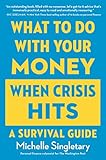
The SEC advises investors to review their goals and comfort with risk before reacting to market volatility. Its investor alert puts the point plainly: “While we can’t tell you how to manage your investment portfolio during a volatile market, we are issuing this Investor Alert to give you the tools to make an informed decision.” Read the SEC alert.
Protect the financial foundation that lets you stay invested
Keep accessible savings for emergencies
An emergency reserve can help cover an unexpected expense or interruption in income without forcing you to sell investments at an inconvenient time. The SEC alert notes that some people keep as much as six months of income in savings. That describes a practice, not a required amount for every household; choose a reserve based on your expenses, income stability, and other available support. The SEC alert discusses emergency savings.
Quick wins for a faster PC:
Clear out junk files and repair common Windows errorsFree Scan →Scan for outdated or missing drivers - takes under a minuteDriver Scan →#1 Best Overall
Address high-interest debt
Investor.gov warns that high-interest credit-card debt can cost more than an investment can be guaranteed to earn. Paying down expensive debt may therefore be a more dependable priority than taking extra investment risk, especially if the balance is growing or difficult to manage. Investor.gov’s saving and investing guidance covers this trade-off.
Use diversification without treating it as a shield
Diversification spreads exposure among investments and asset classes, which can reduce the impact of a poor result in any one holding. It does not eliminate losses: broad markets can fall, and stocks and bonds can both lose value. A mutual fund or ETF is not automatically diversified, either. A fund concentrated in one sector or a narrow slice of the market may leave you exposed to the same risks as a small number of individual holdings.
Rank #2
Review what you actually own, rather than relying on a fund’s name or label. Consider whether your holdings spread risk across asset classes and investments, and whether any one company, sector, or type of asset dominates. Investor.gov explains diversification and asset allocation in its investing basics.
Keep contributions sustainable and rebalance deliberately
Continue investing only at a pace your finances can support
Regular contributions can help build wealth over time when they fit your budget and goals. Dollar-cost averaging means investing the same amount on a regular schedule; when prices are lower, that amount buys more shares, and when prices are higher, it buys fewer. It does not ensure a profit or protect you from losses. If a recession affects your income or essential expenses, adjust contributions to a level you can sustain rather than borrowing or neglecting near-term needs. Investor.gov explains regular saving and investing, and the SEC alert describes dollar-cost averaging.
Rank #3

- Product Details: Paperback: 320 pages
- Publisher: Simon & Schuster (January 6, 2009)
- Language: English, ISBN-10: 0743884906, ISBN-13: 978-0743884907
- ASIN: 0743224906, Product Dimensions: 8.3 x 5.4 x 0.9 inches, Shipping Weight: 6.4 ounces (View shipping rates and policies)
- Average Customer Review: 4.2 out of 5 stars See all reviews (302 customer reviews), Amazon Bestsellers Rank: #6,501 in Books (See Top 100 in Books
Rebalance to restore your intended mix
Over time, market movements can push your portfolio away from its planned allocation. Rebalancing brings it back toward that target; it is not a reliable way to forecast what will rise next. Official investor guidance describes relatively infrequent rebalancing as typical. Decide in advance how and when you will review your allocation, and account rules, fees, and taxes before making transactions. Investor.gov’s investing basics discusses rebalancing.
Compare investments by the job they need to do
| Investment type | Time horizon and liquidity | Risk and potential loss | Diversification and fit |
|---|---|---|---|
| Stocks | More appropriate for goals with time to withstand market swings than for money needed imminently; individual shares can generally be sold, but their price may be down when you need the money. | Can lose value, including substantially; a recession does not establish when a decline will end. | One stock is a concentrated holding. A diversified mix may spread company-specific exposure, but cannot remove broad-market risk. |
| Bonds | May serve a different role from stocks in a portfolio, but their suitability depends on when funds are needed and the specific bond or fund. | Can lose value; risk and return vary by bond and fund. | Bond exposure can broaden an asset mix, but does not guarantee stability or gains. |
| Cash and cash equivalents | Can be more accessible for near-term spending or emergencies, depending on the account and its terms. | Have different risk and return characteristics from stocks and bonds; holding more cash can also mean missing market gains. | Useful for liquidity needs, but moving an entire long-term portfolio to cash is not a universal recession strategy. |
| Diversified mutual funds or ETFs | Suitability depends on the fund’s holdings and your goal’s horizon; liquidity depends on the fund and account. | Can lose value with the assets they hold. | A broad fund can hold many investments, but a narrowly focused fund may be concentrated. Check holdings, not just the label. |
| Target-date funds | Designed around a target year, which may be relevant to a particular long-term goal. | Still exposed to investment risk and can lose value. | Review the fund’s underlying holdings and allocation to see whether they fit your circumstances; the target date alone does not make it right for everyone. |
These are general characteristics, not a recommendation to buy or sell a particular security. Investor.gov notes that all investments involve risk and that investors should allow for market fluctuations over time. See Investor.gov’s introduction to investing.
A practical sequence for recession-time decisions
- Review the goal. Identify what the money is for and when you expect to need it. Separate near-term spending from long-term investing.
- Check your financial buffer. Assess emergency savings and whether high-interest debt is taking priority over investing.
- Inspect your actual allocation. Check the holdings in your accounts and look for concentration, including sector-focused funds that may not be broadly diversified.
- Set a sustainable contribution amount. Continue regular investing if your budget permits; reduce or pause contributions if essential expenses or income disruption require it.
- Rebalance according to a plan. Use your intended allocation and a deliberate review schedule rather than making repeated changes in response to headlines.
- Get qualified help for consequential decisions. If a change could materially affect your finances, or you are unsure how your goals, taxes, or accounts interact, consider speaking with a qualified financial professional.
What not to assume about a recession
The cited SEC and Investor.gov materials do not identify securities that everyone should buy during a recession, predict the market bottom, or give a date for recovery. No strategy described here guarantees a profit or prevents loss. Market timing can leave an investor out of the market during a recovery as well as reduce exposure during a decline; decide based on your plan rather than a forecast presented as certain.
The SEC and Investor.gov guidance is U.S.-oriented. Readers in other countries should check the protections, account rules, and tax treatment that apply where they live.
The Tool Desk
Outbyte Driver Updater FREEFix the driver behind crashes, sound loss and screen glitchesFind Drivers →Outbyte PC Repair FREEClear out junk files and repair common Windows errorsFree Scan →Quick Recap
Product prices and availability are accurate as of the date/time indicated and are subject to change. Any price and availability information displayed on Amazon at the time of purchase will apply.




